
Between dolorism and perfectionism, contours of a political theology of vulnerability
Original title : “Zwischen Dolorismus und Perfektionismus. Konturen einer politischen Theologie der Verwundbarkeit”
Even after centuries of confrontation, the relationship between politics and religion has not been clarified. On the contrary, conflicting encounters are intensifying. Recurring patterns of totalitarian discourse and action call for a deeper reflection on the place of religion in politics.
In a critical confrontation with Talal Asad’s analysis of the secular, the author asks what contribution religions can make to the common good in an era of secularity and plurality. The outline of a “political theology of vulnerability” puts the perspectives of anthropology, social psychology and political theory in dialogue with theology and shows the need for a productive treatment of the fragility of human existence as a condition of resistance to religious and political totalitarianism.
Titre original : “Zwischen Dolorismus und Perfektionismus. Konturen einer politischen Theologie der Verwundbarkeit”
Même après des siècles d’affrontements, la relation entre la politique et la religion n’a pas été clarifiée. Au contraire, les rencontres conflictuelles s’intensifient. Les modèles récurrents de discours et d’actions totalitaires appellent à une réflexion approfondie sur la place de la religion dans la politique.
Dans une confrontation critique avec les analyses de Talal Asad sur le séculier, l’auteur s’interroge sur la contribution que les religions peuvent apporter au bien commun à une époque marquée par la sécularité et la pluralité. L’ébauche d’une “théologie politique de la vulnérabilité” met en dialogue les perspectives de l’anthropologie, de la psychologie sociale et de la théorie politique avec la théologie et montre la nécessité d’un traitement productif de la fragilité de l’existence humaine comme condition de la résistance aux totalitarismes religieux et politiques.
لم تتوضّح العلاقة بين الدين والسياسة حتى بعد قرون من المواجهات، بل على العكس تزدادُ المجابهات حدّةً. لذا تفرضُ الأنماط المتكررة للخطابات والإجراءات الاستبداديّة تفكيراً معمّقاً في مكانة الدين في السياسة.
لم تتوضّح العلاقة بين الدين والسياسة حتى بعد قرون من المواجهات، بل على العكس تزدادُ المجابهات حدّةً. لذا تفرضُ الأنماط المتكررة للخطابات والإجراءات الاستبداديّة تفكيراً معمّقاً في مكانة الدين في السياسة.
في مقارنة حاسمة لتحليلات طلال أسد المتعلّقة بالعلمانية، يتساءلُ المؤلّف حول المساهمات التي قد تقدّمها الدياناتل لمصلحة العامة في عصرٍ تطبعُه العلمانيّةُ والتعدديّة. إنّ ولادة “لاهوت سياسي للضعف” يُنشأ حواراً بين وجهات نظر الانثروبولوجيا وعلم النفس الاجتماعي والنظرية السياسية من جهة واللاهوت من جهة أخرى ويُثبتُ ضرورة معالجة هشاشة الحياة البشرية معالجة مثمرة كشرط أساسي لمقاومة الاستبداد الديني والسياسي.
By the same author on Pluriel
 The 19th century as a new ‘axial era’. Some epistemological aspects of the authority crisis
Michaela Quast-Neulinger Conference « Religious Authority in Islam », organised by the Centre for the Study of Cultures and Religions and the Research Unit of the…
 The Question of Otherness in Classical Islam | Respondents
Michaela Quast-Neulinger · Tobias Specker · Alessandro Ferrari Following the lecture: "The question of Otherness in Classical Islam" given by Raja SAKRANI, three members of the scientific committee of the PLURIEL network…
 A comparative study of Talal Asad’s and Abdullahi Ahmed An-Na-im’s discussions of Muslims and their (non-)belonging in the secular-liberal state
Michaela Quast-Neulinger Conference of Michaela NEULINGER during the second international Congress of PLURIEL in Rome. In contemporary times, the principle “citizenship” is defended as an inclusive…
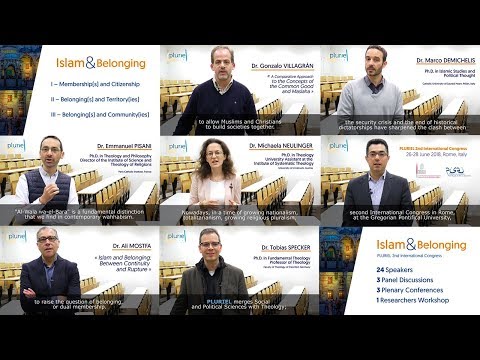 Presentation of the congress “Islam and Belonging” of PLURIEL
Michel Younès · Gonzalo Villagrán · Marco Demichelis · Emmanuel Pisani · Michaela Quast-Neulinger · Mohamed-Ali Mostfa · Tobias Specker With the voices of members of the Scientific Comittee
