
Building community without communitarianism. The corporate world and the challenge of religion
More than at any other time in recent history, “making community” appears as a requirement for cohesion, unity and solidarity. At a time when societies are fragmenting, the call to “make community” very often reflects a weakening of the common good that ensures a necessary living together. The cultural or religious dimension adds an additional complexity. Here, “making community” is synonymous with community compartmentalisation, marked by a self-enclosure. The context in which modern societies, particularly in the West, find themselves accentuates this impression. Greater cultural and religious plurality is increasingly described as a retreat from neutral and homogeneous national unity.
The company is not immune to this type of phenomenon. Confronted with the rise of a displayed visibility, communitarianism calls into question the means of group cohesion. Is it a question of “making community” from individuals or “making community” from groups? What role do affinities, cultural and religious sensitivities play? At what point do demands become identity-based? Basically, what is a community and how can it be distinguished from a communitarianism? What are the signs in societies and organisations of a shift towards a self-enclosure that excludes difference? How can we anticipate, analyse and deal with them?
This is the type of question that a team of academics and business actors sought to answer. For three years, it studied the history of notions and ideas, the changes in the way they are approached, their conceptual and sometimes imaginary background. By analysing the legal framework in France, she examined the managerial issues at stake in concrete situations encountered in the field. The present work extends a reflection on the company confronted with the religious problem (L’entreprise au défi des religions, Chronique sociale).
Plus qu’à tout autre moment de l’histoire récente, le « faire communauté » apparaît comme une exigence de cohésion, d’unité et de solidarité. À l’heure de la fragmentation des sociétés, très souvent, l’appel à « faire communauté » reflète une fragilisation du bien commun qui assure un vivre-ensemble nécessaire. La dimension culturelle ou encore religieuse rajoute une complexité supplémentaire. Ici, le « faire communauté » est synonyme de cloisonnement communautaire, marqué par un enfermement sur soi. Le contexte dans lequel se trouvent les sociétés modernes, notamment occidentales, accentue cette impression. Une plus grande pluralité culturelle et religieuse est de plus en plus décrite comme un recul de l’unité nationale neutre et homogène.
L’entreprise n’est pas à l’abri de ce type de phénomènes. Confrontée à la montée d’une visibilité affichée, le communautarisme met en cause les moyens de la cohésion du groupe. « Faire communauté » à partir des individus ou « faire communauté » à partir des groupes ? Quelles places tiennent les affinités, les sensibilités culturelles et religieuses ? À partir de quand les revendications deviennent-elles identitaires ? Au fond, qu’est-ce qu’une communauté et comment la distinguer d’un communautarisme ? Quels sont les signes dans les sociétés et les organisations du basculement vers un enfermement sur soi qui exclut la différence ? Comment les anticiper, les analyser, les traiter ?
C’est à ce type de question qu’une équipe composée d’universitaires et d’acteurs d’entreprise a cherché à répondre. Durant trois ans, elle a étudié l’histoire des notions et des idées, les changements dans la manière de les aborder, leur arrière-fond conceptuel, parfois imaginaire. En analysant le cadre juridique de la France, elle a examiné les enjeux managériaux des situations concrètes rencontrées sur le terrain. L’actuel ouvrage prolonge une réflexion sur l’entreprise confrontée à la problématique religieuse (L’entreprise au défi des religions, Chronique sociale).
By the same author on Pluriel
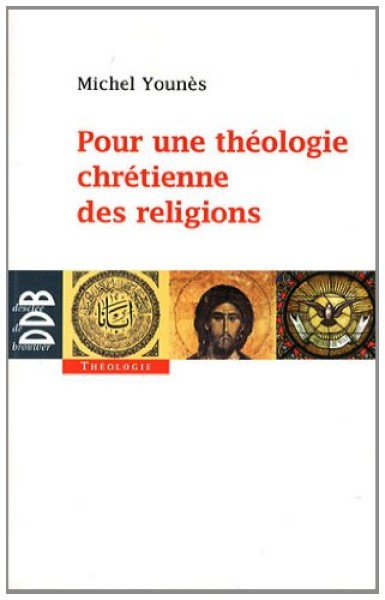 For a Christian Theology of Religions
Michel Younès Faced with contemporary religious diversity, how can Christian theology make sense of the place that other religions occupy in God’s design? Michel Younès examines…
 Comparative Theology as a Vehicle for a New Approach to Religious Diversity?
Michel Younès Published in the special issue “Islam and Interreligious Dialogue” of the journal Laval théologique et philosophique (vol. 82, no. 1, 2026, pp. 7-25), this…
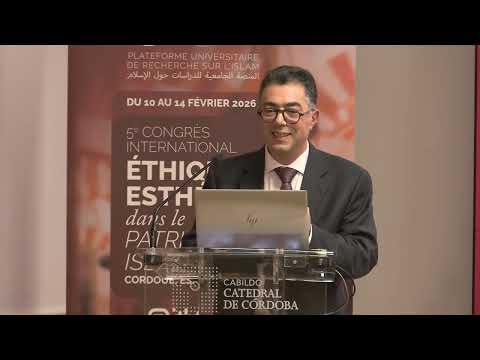 Opening address of the Cordoba congress
Michel Younès On Tuesday 10 February 2026 in Cordoba, Michel Younès, general coordinator of Pluriel and dean of the Faculty of Theology of the Catholic University…
 Islam and Muslims. Doctrines, Schools of Thought, and Current Trends
Michel Younès Publication date: April 16, 2026. Islam, as a historical, religious, and civilizational reality, is difficult to define. It can be perceived as a form…
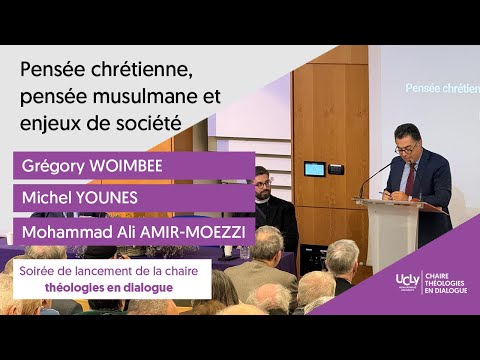 Christian Thought, Muslim Thought and Societal Issues: Launch of the “Theologies in Dialogue” Chair
Mohammad Ali Amir-Moezzi · Michel Younès On Wednesday, September 25, 2024, this inaugural conference presents a new chair entitled "Theologies in Dialogue" at the Faculty of Theology of the Catholic…
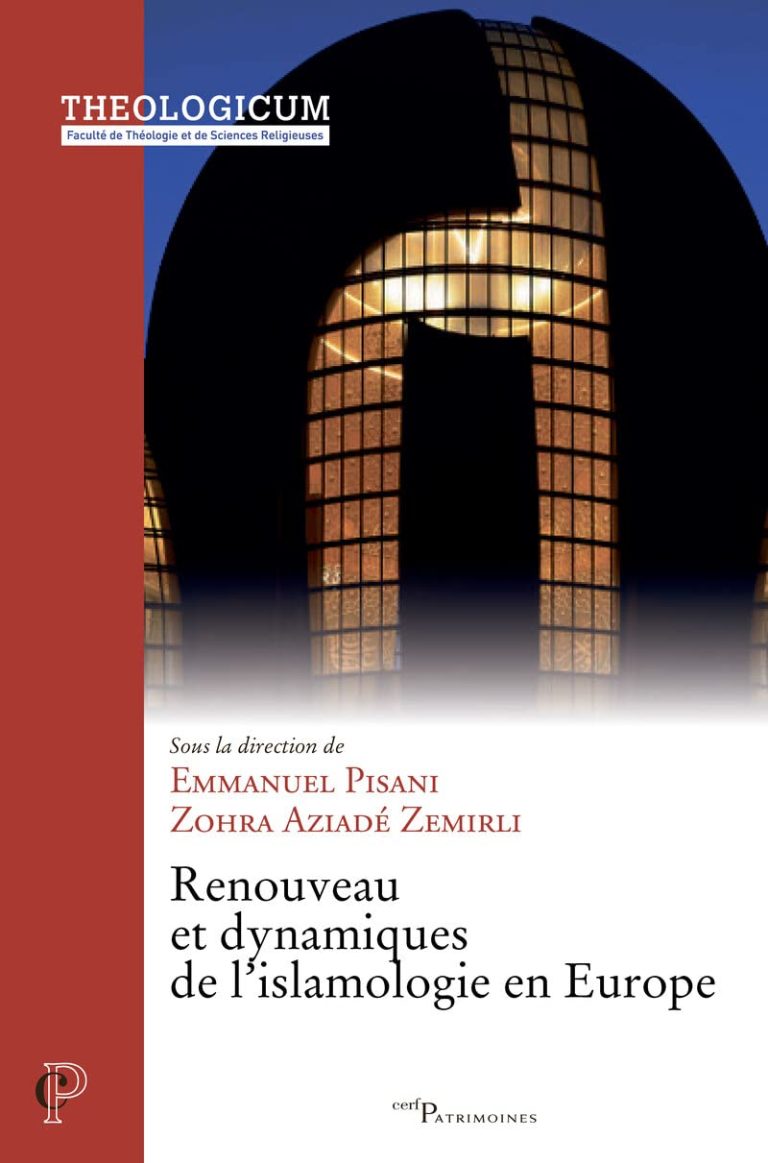 Revival and Dynamics of Islamic Studies in Europe
Michel Younès · Emmanuel Pisani · Cédric Baylocq · Zohra Aziadé Zemirli · Michele Brignone · Haoues Seniguer “In a troubled international context where Islam is sometimes defined as an ideological marker of many conflicts, academic research drawing on history, sociology, and…
Related resources: « Religion at work »
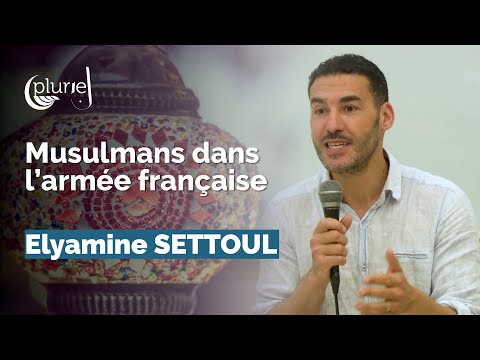 Between Standardization And Otherness: Being A Muslim In The In The French Armed Forces
Elyamine Settoul Already present since the colonisation process, the question of Islam within the French army has reappeared strongly with the settling down of the populations…
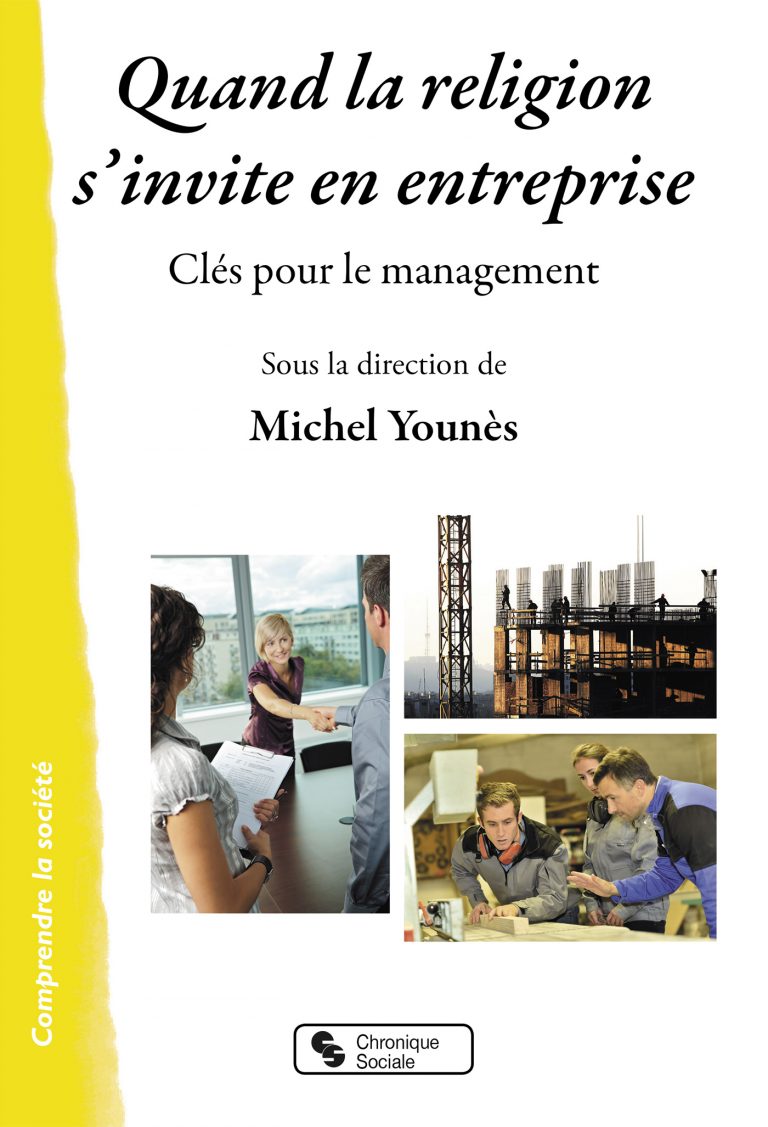 When Religion Invites Itself into Business: Tools for Management
Michel Younès How to approach the different facets of the religious when it arises in the field of the enterprise? What role can the common law…
 The corporate world and the challenge of religion. Crossed views from the Mediterranean area
Michel Younès We are currently witnessing a significant growth in religious demands, which are increasingly interfering with professional life and have impacted the world of work.…