
Discourses and strategies of otherness: Crossed perspectives and analyses
Summary:
The interest of discourse analysis is to highlight the articulations of texts and social locations (Maingueneau, 2012). Questioning the functioning of these formations and the conditions of their production allows us to decipher the relationship to the world around us and its textual structuring. This perspective is the basis of the new status of writing, which never ceases to show and prove its universality in order to transform itself into a receptacle of the humanities, where the other assumes a place in the diversity of cultures. Seizing the figures of the other in the event of discourse inevitably raises the question of reality as a closed organising centre. At the heart of the transformation of this reality is the deconstructivist approach to which discourse analysis is intimately linked. The enterprise consists in dismantling “a founding immobility and a reassuring certainty (…) removed from the game” (Derrida, 1967).
If certain discursive productions thus contribute to awakening consciousness, or to illuminating realities hitherto kept in the dark, conversely, they also sometimes lead to the blurring of representations or to ideological manipulation. In this case, they contribute to the confinement of difference under the control of a closed and reductive dogmatic system; for example, a certain Orientalist discourse so well analysed by E. W. Said in his magnum opus of the same name.
Contributors to this book: Béatrice Blanchet, Maria-Laura Moreno-Sainz, Tristan Vigliano, Mouhamadoul Khaly Wélé, Laura Alba-Juez, Moreno Campetella, Véronique Magaud, Magdalena Brunel, Laurent Lagarde.
Résumé :
L’intérêt de l’analyse de discours est de mettre en évidence les articulations de textes et de lieux sociaux (Maingueneau, 2012). S’interroger sur les fonctionnements de ces formations et les conditions de leur production permet de décrypter le rapport au monde qui nous entoure et sa structuration textuelle. Cette perspective fonde le nouveau statut de l’écriture qui ne cesse de montrer et de prouver une universalité pour se transformer en un réceptacle des humanités, où l’autre s’assigne une place dans la diversité des cultures. Saisir les figures de l’autre dans l’événement du discours suscite immanquablement la question de la réalité en tant que centre organisateur fermé. Au cœur de la transformation de cette réalité est inscrite la démarche déconstructiviste à laquelle l’analyse de discours est intimement liée. L’entreprise consiste à démanteler « une immobilité fondatrice et une certitude rassurante (…) soustraite au jeu » (Derrida, 1967).
Si certaines productions discursives contribuent donc à réveiller les consciences, ou à éclairer des réalités jusque-là maintenues dans l’obscurité, à l’inverse, elles conduisent aussi, parfois, au brouillage des représentations ou à la manipulation idéologique. Dans ce cas, elles contribuent à enfermer la différence sous la coupe d’un système dogmatique clos et réducteur ; comme par exemple, un certain discours orientaliste si bien analysé par E. W. Saïd dans son opus magnum du même nom.
Ont contribué à cet ouvrage : Béatrice Blanchet, Maria-Laura Moreno-Sainz,Tristan Vigliano, Mouhamadoul Khaly Wélé, Laura Alba-Juez, Moreno Campetella, Véronique Magaud, Magdalena Brunel, Laurent Lagarde.
“يهدف تحليل الخطابات إلى تسليط الضّوء على الروابط بين النّصوص والمواقع الاجتماعيّة (Maingueneau, 2012). ويمكّننا البحث حول حسن سير هذه الدورات التدريبيّة وظروف إنتاجها من فك رموز علاقتها بالعالم الذي يحيط بنا وهيكليّتها النصيّة. ويُعدّ هذا المنظور أساس النظام الجديد للكتابة الذي يستمر بإظهار شموليّته وإثبات قدرته على التحوّل إلى وعاء للإنسانيّات، في حين يحدّد الآخر موقعًا له في التنوّع الثقافي. ومن المحتم أنّ فهم صورة الآخر من خلال الخطاب يثير مسألة الحقيقة باعتباره المحور التنظيمي المغلق. وينطوي تحوّل هذه الحقائق في صلبها على النهج غير البنّاء الذي يرتبط به التحليل بشكل وثيق. وتتمثّل المؤسّسة الاقتصاديّة في تفكيك “” الجمود المؤسّس والثقة الضامنة (…) التي لا تتضمنّها اللّعبة”” (Derrida, 1976).
بالتالي، إن كانت بعد الإنتاجات المنطقيّة تساهم في إيقاظ الضمائر، أو تسليط الضوء على الحقائق التي لا تزال غامضة حتى الآن، فإنّها تؤدّي من الجهة الأخرى في بعض الأحيان إلى تشويش التمثيلات أو إلى التلاعب الأيديولوجي. وفي هذه الحالة، تساهم في حصر الفارق بنظام عقائدي ومغلق ومُختزل؛ على سبيل المثال، تحليل أ. و. سعيد خطابًا مستشرقًا محدّدًا في أعظم إنجازاته الذي يحمل الاسم نفسه.
”
By the same author on Pluriel
 The grammar of sacred violence: A critical discourse analysis of radical Islamist writings
Mohamed-Ali Mostfa This article offers a discursive analysis of two contemporary Islamist texts that present violence not as a deviation from religious normativity, but as its…
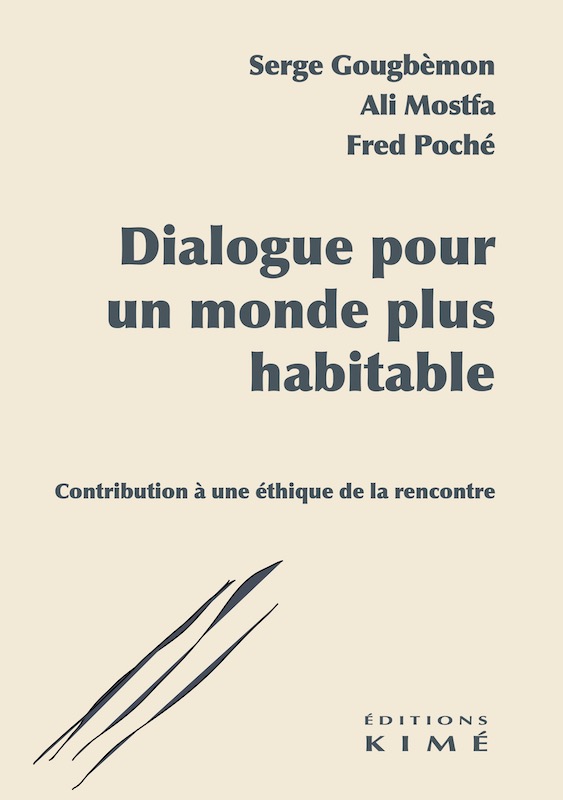 Dialogue for a More Livable World: Toward an Ethics of Encounter
Mohamed-Ali Mostfa How can we live in a climate of mistrust, trapped in identity-based withdrawal, and paralyzed by an uncertain future? On what basis can we…
 Muslim worship in France: is the State-led reorganization underway?
Mohamed-Ali Mostfa In this article published on February 26, 2025, on The Conversation, Ali Mostfa analyzes the evolution of the Forum of Islam in France (Forif),…
Redefining Qurʾānic Hermeneutics: Muḥammad ʿĀbid al-Jābrī and Nasr Ḥāmid Abū Zayd’s Humanistic Interpretations
Mohamed-Ali Mostfa This article presents the innovative endeavor by Muḥammad ʿĀbid al-Jābrī and Nasr Ḥāmid Abū Zayd in interpreting the Qurʾān through a humanistic lens. Their…
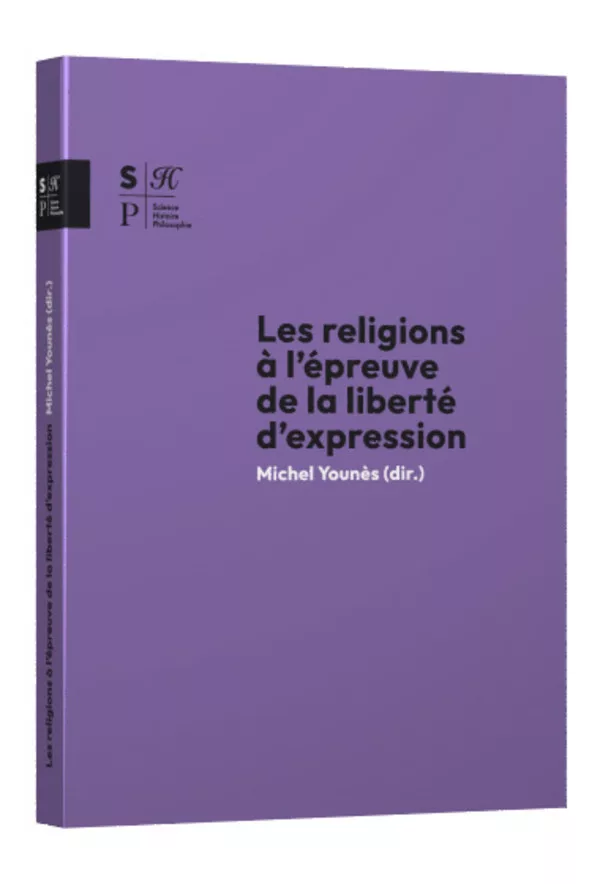 Religions put to the test by freedom of expression
Michel Younès · Mohamed-Ali Mostfa · Malek Chaïeb “In the republican context, freedom of expression involves all the players in society and mobilises a wide range of intellectual resources. What then are…
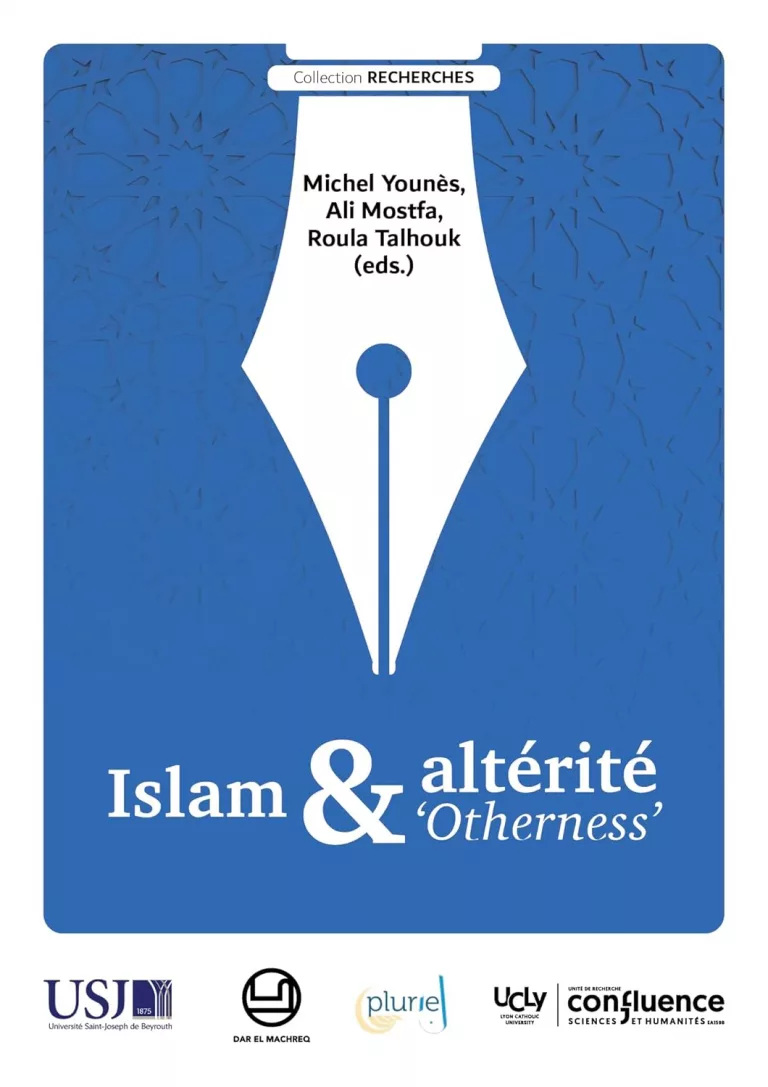 Islam & Otherness. Proceedings of the Pluriel congress in Beirut
Mohamed-Ali Mostfa · Michel Younès · Roula Talhouk · Asli Karaca Yanger Edited by Michel Younès, Ali Mostfa and Roula Talhouk “In a contemporary context marked by a growing tendency to lock oneself into oppositional logics,…
Related resources: « Discourse Analysis - Hermeneutics »
 From Islamic Reference to Conservative Pragmatism – The Sinuous Paths of the Moroccan JDP Discourse
Mohamed-Ali Mostfa "The relationship between the political and religious fields in Morocco is generally based on tactical choices and pragmatic issues, often far from simple ideological…
 Religious Radicalism. The Challenges of an Ill-Defined Concept in Europe
Mohamed-Ali Mostfa Ali Mostfa, professor of linguistics and discourse analysis at the Catholic University of Lyon, analyses the semantic shifts about the notion of religious radicalism,…
 Methodology for analysing radicalisation discourses and counter-discourses
Bénédicte Du Chaffaut Lecture given on 14 October 2021 at the Catholic University of Lyon during the conference « Radicalisation leading to violence in the name of…
 The radical discourse and civilisational stake
Mohamed-Ali Mostfa Lecture given on 14 October 2021 at the Catholic University of Lyon during the conference « Radicalisation leading to violence in the name of…
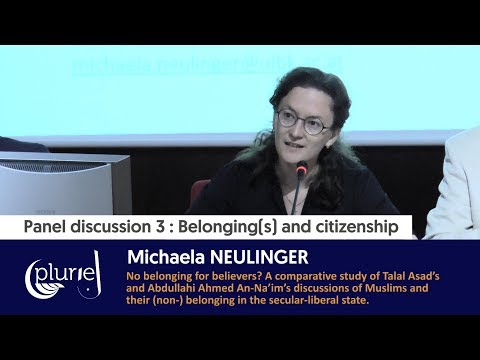 A comparative study of Talal Asad’s and Abdullahi Ahmed An-Na-im’s discussions of Muslims and their (non-)belonging in the secular-liberal state
Michaela Quast-Neulinger Conference of Michaela NEULINGER during the second international Congress of PLURIEL in Rome. In contemporary times, the principle “citizenship” is defended as an inclusive…
 What is commenting in Islam?
Emmanuel Pisani The articles gathered in the MIDEO 32 incorporate most of the contributions presented at the symposium organized by IDEO in Cairo on the 14th,…