

Religious minorities and spiritual assistance. Reflections on the project “Atlas of religious or belief minority rights” in the European Union
Abstract
Developed within the multilevel system of legal sources, the category of “religious minority” takes on particular significance within the European Union, where a shared system of protection is taking shape. Drawing on the results of the research project “Atlas of religious or belief minority rights” (sixteen EU countries, thirteen religious or belief minorities), Ilaria Valenzi focuses on spiritual assistance in so-called separated institutions: prisons, hospitals and the armed forces.
This field, she argues, is one of the clearest indicators of the state of religious freedom and of how minorities actually exercise it: the right to spiritual assistance varies with the legal status granted to each community. She calls for a reform of these rules, one attentive to the level of recognition afforded to old and new minorities, Muslim communities among them.
This study by Ilaria Valenzi appeared in the journal Stato, Chiese e pluralismo confessionale (no. 8, 2025, pp. 144-176) and is available in open access.
Résumé
Élaborée dans le cadre du système des sources à plusieurs niveaux, la catégorie de « minorité religieuse » prend un relief particulier dans l’espace de l’Union européenne, où s’esquisse un système commun de protection. À partir des résultats du projet de recherche « Atlas des droits des minorités religieuses ou de conviction » (seize pays de l’Union, treize minorités de religion ou de conviction), Ilaria Valenzi prend pour cas d’étude l’assistance spirituelle dans les structures dites séparées, prisons, hôpitaux et armée.
Ce terrain, écrit-elle, constitue l’un des meilleurs révélateurs de l’état de la liberté religieuse et de son exercice par les minorités : le droit à l’assistance spirituelle y varie selon le statut juridique reconnu à chaque communauté. L’autrice plaide pour une réforme de ce régime, attentive au niveau de reconnaissance des anciennes et des nouvelles minorités, parmi lesquelles les communautés musulmanes.
Cette étude d’Ilaria Valenzi est parue dans la revue Stato, Chiese e pluralismo confessionale (n° 8, 2025, p. 144-176) et est disponible en libre accès.
ملخّص
ضمن منظومة المصادر المتعدّدة المستويات، تكتسب فئة «الأقلّية الدينية» أهمّيةً خاصّة في فضاء الاتحاد الأوروبي، حيث يتبلور نظامٌ مشترك للحماية. وانطلاقاً من نتائج مشروع «أطلس حقوق الأقلّيات الدينية أو العقائدية» (ستّة عشر بلداً من الاتحاد، وثلاث عشرة أقلّية دينية أو عقائدية)، تتّخذ إيلاريا فالنزي من المرافقة الروحية في المؤسّسات المنفصلة، أي السجون والمستشفيات والجيش، حالةً للدراسة.
فهذا الميدان، كما تكتب، من أوضح ما يكشف حال الحرّية الدينية وممارسة الأقلّيات لها، إذ يتفاوت الحقّ في المرافقة الروحية بحسب الوضع القانوني المعترف به لكلّ جماعة. ومن ثمّ تدعو المؤلّفة إلى إصلاح هذا النظام على نحوٍ يراعي درجة الاعتراف بالأقلّيات القديمة والجديدة، ومنها الجماعات المسلمة.
نُشرت هذه الدراسة لـإيلاريا فالنزي في العدد الثامن (2025) من المجلّة التالية، وهي متاحة بالوصول الحرّ:
Stato, Chiese e pluralismo confessionale, pp. 144-176.


Resources related to Minorities
article
Religious minorities and spiritual assistance. Reflections on the project “Atlas of religious or belief minority rights” in the European Union
- Ilaria Valenzi
Abstract Developed within the multilevel system of legal sources, the category of "religious minority" takes on particular significance within the European Union, where a shared system of protectio...
publication
Religious minorities between the Mediterranean shores: a study of the status of religious minorities in the Mediterranean context (REMiMEsO) – Final Report
- Alessandro Ferrari
The REMiMESo project, led by Ilaria Valenzi and supported by the Italian Ministry of Foreign Affairs, explores the situation of religious minorities in five Mediterranean countries: Israel, Morocco...

videos
Cosmopolitanism and minority rights: going beyond the protection of ethnoreligious minorities in the Middle East
- Hélène Rey
This communication challenges traditional approaches to ethnoreligious diversity in the Middle East, arguing that the focus on "protecting minority rights" is inadequate. It demonstrates how these ...
videos
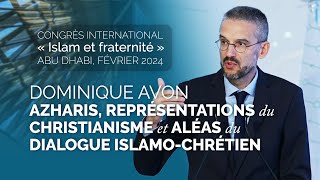
Azharis, Representations of Christianity, and the Vagaries of Islamic-Christian Dialogue (1930s-2020s)
- Dominique Avon
Dominique Avon, Director of Studies at the École pratique des hautes études, traces the evolution of the discourse of the ulama of al-Azhar on Christianity since the 1930s. Confronted with the colo...

videos
Radical evil and the Canadian multiculturalist otherness
- Mounia Ait Kabboura
The "radical evil" that tore Europe apart in the 20th century was totalitarianism (Hannah Arendt). Today, this evil has been reincarnated into a barbaric radicalisation that undermines societies. T...

videos
Muslim as ‘Other’ in former Yugoslavia
- Cédomir Nestorovic
Balkan Islam, and in particular that of the former Yugoslavia, is plural because of its ethnic diversity. However, the collective perception does not see it that way, due to a double homogenisation...
publication
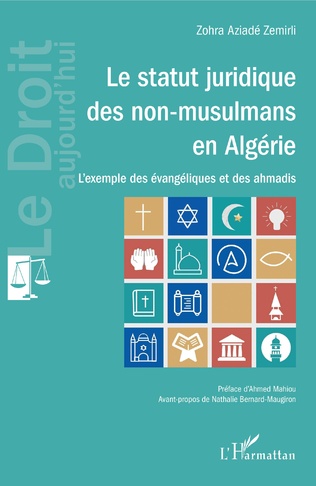
The legal status of non-Muslims in Algeria. The example of evangelicals and Ahmadis.
- Zohra Aziadé Zemirli
This book, which focuses on the situation before 2019, provides keys to explaining the origins of the popular protest movement, the hirak. It shows how the State controls the society, which is pred...

videos
Between Standardization And Otherness: Being A Muslim In The In The French Armed Forces
- Elyamine Settoul
Already present since the colonisation process, the question of Islam within the French army has reappeared strongly with the settling down of the populations resulting from the great waves of indu...