
Religious minorities between the Mediterranean shores: a study of the status of religious minorities in the Mediterranean context (REMiMEsO) – Final Report
The REMiMESo project, led by Ilaria Valenzi and supported by the Italian Ministry of Foreign Affairs, explores the situation of religious minorities in five Mediterranean countries: Israel, Morocco, Tunisia, Slovenia, and Malta. The report examines the rights of religious minorities in the areas of marriage and religious education, highlighting the legal and sociological differences between these countries.
The project identifies significant disparities in the legal frameworks related to marriage and family. For example, in Israel, civil marriages are not possible, and legislation depends on recognized religious communities, unlike Tunisia, where only civil marriage is recognized. Morocco and Israel also stand out for their direct influence of religious law in family matters, making the rights of religious minorities vulnerable to the dominant religion.
In education, the report highlights violations of rights in public school systems, where religious instruction is imposed without the possibility of exemption for students belonging to religious minorities, such as in Israel and Morocco. In contrast, Slovenia adopts a strict secular approach, excluding religious marriage and ensuring religious neutrality in public education.
The project also emphasizes the importance of intercultural and multi-religious dialogue to promote security and social cohesion. It establishes a correlation between the recognition of the rights of religious minorities and the level of democracy and stability of the societies studied. Legal and political strategies vary according to the systems of religious governance in each country, ranging from strict separation (Slovenia) to concordatarian models (Malta).
The policy recommendations of the report insist on the need for legislative reforms to guarantee the rights of religious minorities, in line with international norms of freedom of religion or belief (FoRB).
Le projet REMiMESo, dirigé par Ilaria Valenzi et soutenu par le ministère italien des Affaires étrangères, explore la situation des minorités religieuses dans cinq pays du bassin méditerranéen : Israël, Maroc, Tunisie, Slovénie et Malte. Le rapport examine les droits des minorités religieuses dans les domaines du mariage et de l’éducation religieuse, en mettant en évidence les différences légales et sociologiques entre ces pays.
Le projet identifie des disparités importantes dans les cadres juridiques relatifs au mariage et à la famille. Par exemple, en Israël, les mariages civils ne sont pas possibles et la législation dépend des communautés religieuses reconnues, contrairement à la Tunisie où seul le mariage civil est reconnu. Le Maroc et Israël se distinguent aussi par leur influence directe de la loi religieuse dans les affaires familiales, rendant les droits des minorités religieusesvulnérables face à la religion dominante.
En matière d’éducation, le rapport met en avant des violations des droits dans des systèmes scolaires publics, où l’enseignement religieux est imposé sans possibilité d’exemption pour les élèves appartenant à des minorités religieuses, comme en Israël et au Maroc. En revanche, la Slovénie adopte une approche laïque stricte, en excluant tout mariage religieux et en garantissant une neutralité religieuse dans l’éducation publique.
Le projet souligne également l’importance du dialogue interculturel et multireligieux pour promouvoir la sécurité et la cohésion sociale. Il établit une corrélation entre la reconnaissance des droits des minorités religieuses et le niveau de démocratie et de stabilité des sociétés étudiées. Les stratégies juridiques et politiques varient selon les systèmes de gouvernance religieuse de chaque pays, allant de la séparation stricte (Slovénie) à des modèles concordataires (Malte).
Les recommandations politiques du rapport insistent sur la nécessité de réformes législatives afin de garantir les droits des minorités religieuses, en s’alignant sur les normes internationales de liberté de religion ou de croyance (FoRB).
By the same author on Pluriel
 “The Right to Religious Freedom: A ‘Special’ Right?”, Revue du droit des religions No. 22
Alessandro Ferrari Issue 22 of the Revue du droit des religions, published by Presses universitaires de Strasbourg, comes out on 19 November 2026. Its thematic section,…
 Religious Freedom in Italy. An Unfinished Path (1848-2024)
Alessandro Ferrari Published under the original title La libertà religiosa in Italia. Un percorso incompiuto (1848-2024), this synthesis by Alessandro Ferrari, professor of ecclesiastical law and…
 Religious Freedom in Italy. An Impossible Paradigm
Alessandro Ferrari Italy, seat of the Pope and Vatican City, has a long and difficult relationship with religious freedom. Often identified as a quintessentially Catholic nation,…
 Contemporary Issues in Islamic Law, Economics and Finance
Alessandro Ferrari · Flavia Cortelezzi This book explores how Islam can impact the structures and performance of firms, financial institutions and capital markets across a range of countries and…
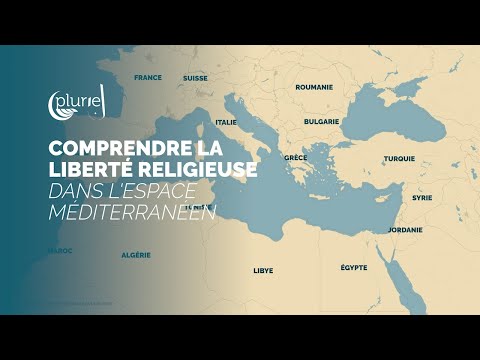 Understanding freedom of religion around the Mediterranean
Alessandro Ferrari · Amin Elias How to manage religious plurality? Three researchers from our network look back at the history of the northern, eastern and southern shores of the…
 The Question of Otherness in Classical Islam | Respondents
Michaela Quast-Neulinger · Tobias Specker · Alessandro Ferrari Following the lecture: "The question of Otherness in Classical Islam" given by Raja SAKRANI, three members of the scientific committee of the PLURIEL network…
Related resources: « Minorities »
 Religious minorities and spiritual assistance. Reflections on the project “Atlas of religious or belief minority rights” in the European Union
Ilaria Valenzi Abstract Developed within the multilevel system of legal sources, the category of "religious minority" takes on particular significance within the European Union, where a…
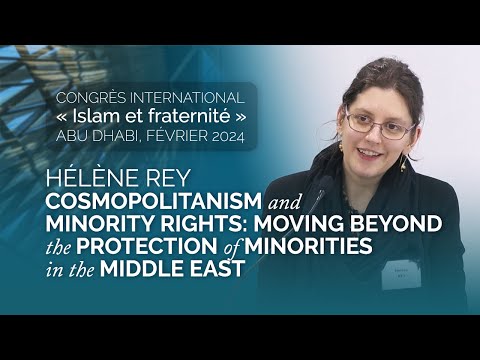 Cosmopolitanism and minority rights: going beyond the protection of ethnoreligious minorities in the Middle East
Hélène Rey This communication challenges traditional approaches to ethnoreligious diversity in the Middle East, arguing that the focus on "protecting minority rights" is inadequate. It demonstrates…
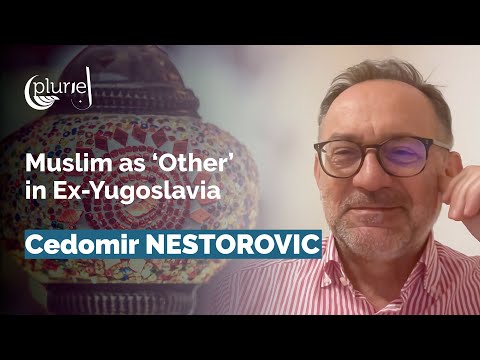 Muslim as ‘Other’ in former Yugoslavia
Cédomir Nestorovic Balkan Islam, and in particular that of the former Yugoslavia, is plural because of its ethnic diversity. However, the collective perception does not see…