
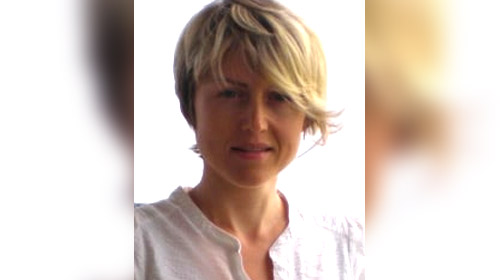
Mariana Rosca
A Moldovan national, Mariana Rosca is a social scientist specialising in migration, diasporas and religious minorities. She holds a doctorate in human rights from the University of Deusto (Bilbao, funded by the Marie Skłodowska-Curie COFUND programme) and a second doctorate in social philosophy (Institute of History, Moldova). She is a coordinating scientific researcher at Moldova State University (Chișinău) and a Senior Research Fellow at the Institute for National and International Security (Belgrade).
Her doctoral thesis at Deusto addressed religious minorities and European social integration, based on the case of Muslim minorities in Spain. Her work covers integration policies, diasporas and the prevention of radicalisation and, more recently, forced migration, digitalisation and security, with a focus on Ukrainian refugees.
She has worked as a consultant for the Moldovan government (Diaspora Relations Bureau) and for the European Commission, and received the Danubius Young Scientist Award in 2019.
Resources related to Minorities
article
Religious minorities and spiritual assistance. Reflections on the project “Atlas of religious or belief minority rights” in the European Union
- Ilaria Valenzi
Abstract Developed within the multilevel system of legal sources, the category of "religious minority" takes on particular significance within the European Union, where a shared system of protectio...
publication
Religious minorities between the Mediterranean shores: a study of the status of religious minorities in the Mediterranean context (REMiMEsO) – Final Report
- Alessandro Ferrari
The REMiMESo project, led by Ilaria Valenzi and supported by the Italian Ministry of Foreign Affairs, explores the situation of religious minorities in five Mediterranean countries: Israel, Morocco...

videos
Cosmopolitanism and minority rights: going beyond the protection of ethnoreligious minorities in the Middle East
- Hélène Rey
This communication challenges traditional approaches to ethnoreligious diversity in the Middle East, arguing that the focus on "protecting minority rights" is inadequate. It demonstrates how these ...
videos
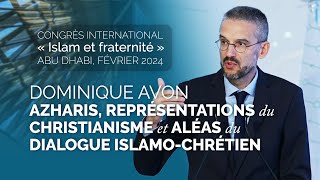
Azharis, Representations of Christianity, and the Vagaries of Islamic-Christian Dialogue (1930s-2020s)
- Dominique Avon
Dominique Avon, Director of Studies at the École pratique des hautes études, traces the evolution of the discourse of the ulama of al-Azhar on Christianity since the 1930s. Confronted with the colo...

videos
Radical evil and the Canadian multiculturalist otherness
- Mounia Ait Kabboura
The "radical evil" that tore Europe apart in the 20th century was totalitarianism (Hannah Arendt). Today, this evil has been reincarnated into a barbaric radicalisation that undermines societies. T...

videos
Muslim as ‘Other’ in former Yugoslavia
- Cédomir Nestorovic
Balkan Islam, and in particular that of the former Yugoslavia, is plural because of its ethnic diversity. However, the collective perception does not see it that way, due to a double homogenisation...
publication
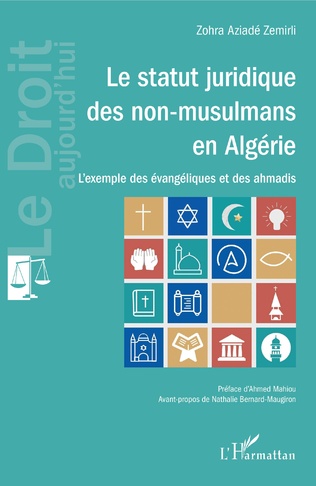
The legal status of non-Muslims in Algeria. The example of evangelicals and Ahmadis.
- Zohra Aziadé Zemirli
This book, which focuses on the situation before 2019, provides keys to explaining the origins of the popular protest movement, the hirak. It shows how the State controls the society, which is pred...

videos
Between Standardization And Otherness: Being A Muslim In The In The French Armed Forces
- Elyamine Settoul
Already present since the colonisation process, the question of Islam within the French army has reappeared strongly with the settling down of the populations resulting from the great waves of indu...