
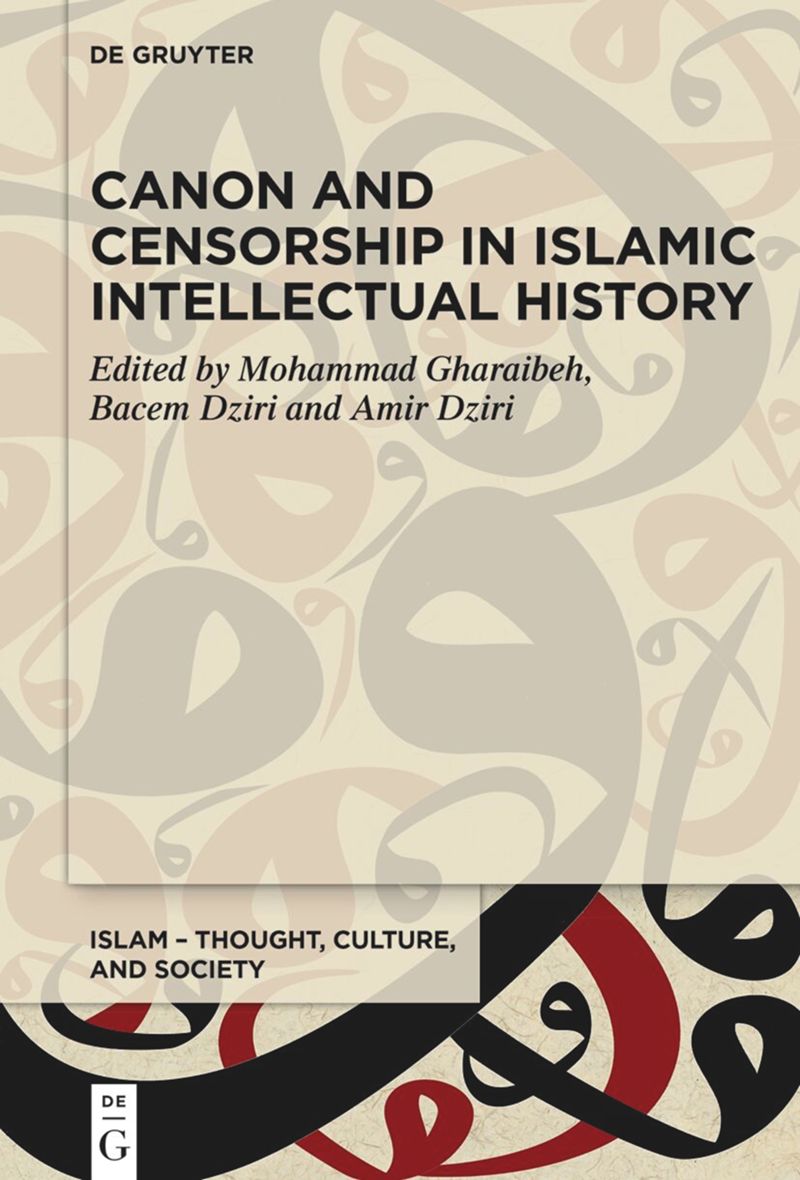
Publisher : De Gruyter - Berlin

English

Canon and Censorship in Islamic Intellectual History
Published in De Gruyter’s series “Islam: Thought, Culture, and Society” (vol. 16, 2026), this collective volume is edited by Mohammad Gharaibeh and Bacem Dziri (Humboldt University of Berlin) together with Amir Dziri, Professor of Islamic Studies and Director of the Swiss Centre for Islam and Society (SZIG) at the University of Fribourg.
Since no religious institution has emerged from Islamic religious history that is the sole and binding determinant of legitimate faith, Muslim scholars had to legitimise their religious positions in a different way. Canonisation and censorship processes, this volume argues, played a decisive role in the formation and deconstruction of religious authority. The volume therefore examines how texts, positions and the people behind them gain or lose their authority, and which structural, contextual and institutional factors contribute to the establishment or suppression, but also to the maintenance of this claim to authority.
Case studies from different historical periods and regions of the Islamic world show how certain religious beliefs gain legitimacy while others lose it in a specific historical context.
Paru sous le titre Canon and Censorship in Islamic Intellectual History (De Gruyter, collection « Islam : Thought, Culture, and Society », vol. 16, 2026), cet ouvrage collectif est dirigé par Mohammad Gharaibeh et Bacem Dziri (Université Humboldt de Berlin) ainsi que par Amir Dziri, professeur en islamologie et directeur du Centre Suisse Islam et Société (CSIS) de l’Université de Fribourg.
Aucune institution religieuse issue de l’histoire de l’islam ne détermine seule, de manière contraignante, ce qu’est la foi légitime : les savants musulmans ont donc dû légitimer leurs positions religieuses par d’autres voies. Les processus de canonisation et de censure, soutient ce volume, ont joué un rôle décisif dans la formation comme dans la déconstruction de l’autorité religieuse. L’ouvrage examine comment des textes, des positions et les personnes qui les portent gagnent ou perdent leur autorité, et quels facteurs structurels, contextuels et institutionnels contribuent à l’établissement, à la suppression ou au maintien de cette prétention à l’autorité.
Des études de cas couvrant différentes périodes historiques et régions du monde musulman montrent comment certaines croyances religieuses acquièrent une légitimité quand d’autres la perdent, dans un contexte historique donné.
صدر هذا الكتاب الجماعي بعنوان: Canon and Censorship in Islamic Intellectual History (De Gruyter، سلسلة «الإسلام: الفكر والثقافة والمجتمع»، المجلد 16، 2026)، بإشراف محمد غرايبة وباسم دزيري (جامعة هومبولت في برلين)، وأمير دزيري، أستاذ الدراسات الإسلامية ومدير المركز السويسري للإسلام والمجتمع في جامعة فريبورغ.
لم تنبثق من التاريخ الديني الإسلامي مؤسسة دينية واحدة تحدّد وحدها، وبصورة ملزمة، ما هو الإيمان الصحيح، ولذلك كان على العلماء المسلمين أن يضفوا الشرعية على مواقفهم الدينية بطرق أخرى. ويذهب هذا الكتاب إلى أن عمليات التقنين والرقابة أدّت دورًا حاسمًا في تشكيل السلطة الدينية وتفكيكها على حدّ سواء. ويبحث الكتاب في الكيفية التي تكتسب بها النصوص والمواقف والأشخاص الذين يحملونها سلطتهم أو يفقدونها، وفي العوامل البنيوية والسياقية والمؤسسية التي تسهم في ترسيخ هذه السلطة أو قمعها أو الحفاظ عليها.
وتُظهر دراسات حالة من حقب تاريخية ومناطق مختلفة من العالم الإسلامي كيف تكتسب بعض المعتقدات الدينية شرعيتها بينما تفقدها أخرى في سياق تاريخي محدّد.


 publisher's website
Author(s)
Resources related to Islam Studies
article
Kenneth Cragg and the Event of the Qur’an
- Timo Güzelmansur
Article by Timo Güzelmansur published under the title Kenneth Cragg und das Ereignis des Koran on the theological portal feinschwarz.net (12 June 2026, open access). Timo Güzelmansur presents the A...
publication
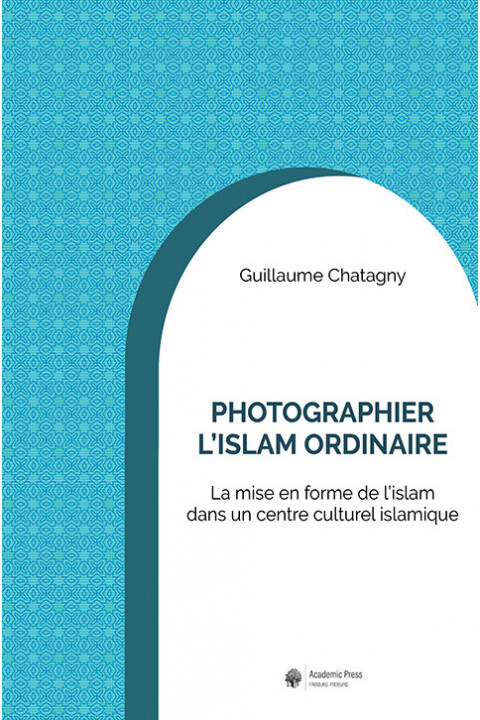
Photographing Ordinary Islam
- Guillaume Chatagny
What does Islam concretely look like within a Muslim association? This is the question addressed by sociologist Guillaume Chatagny in this book, based on fieldwork conducted between 2017 and 2021 w...

article
Leo XIV’s encyclical Magnifica Humanitas and the Pluriel working group on AI-assisted interreligious dialogue
- Wael Saleh
Text by Wael Saleh, researcher at the Université du Québec à Montréal (UQAM) and member of the Pluriel coordination committee. The simultaneous appearance of Leo XIV's encyclical Magnifica Human...
videos
From Lavigerie to PISAI: The Institutional History of the Missionaries of Africa’s Engagement with Islam
Delivered on 21 May 2026 at the Pontifical Institute for Arabic and Islamic Studies (PISAI) in Rome, this lecture opens the series of conferences marking the institute's centenary (1926-2026). Fr. ...
publication
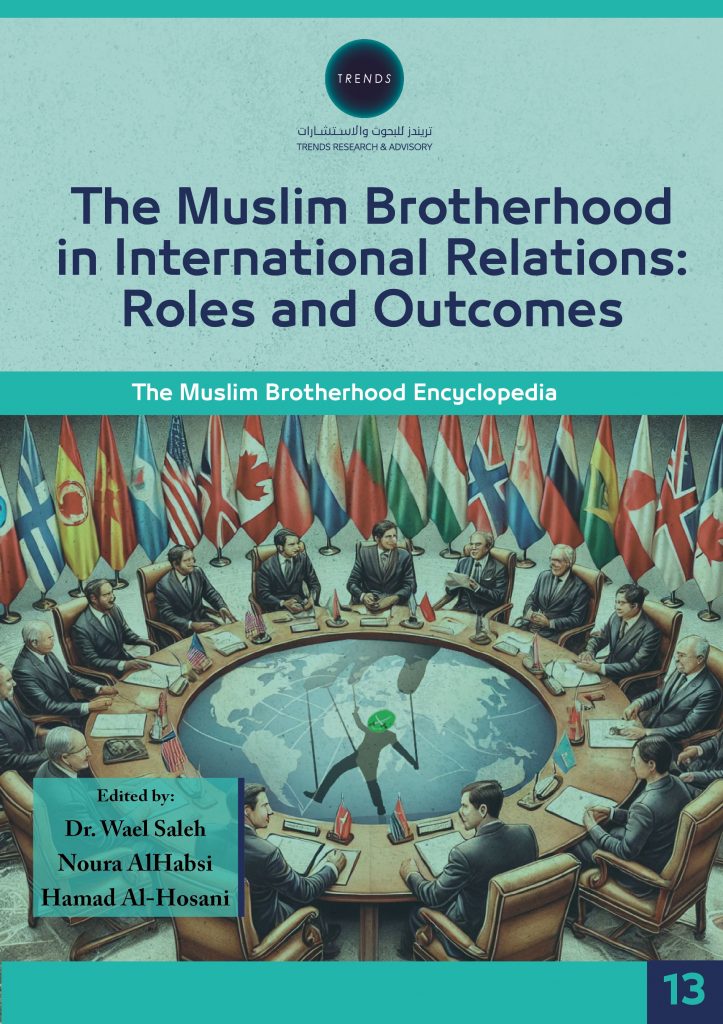
The Muslim Brotherhood in International Relations: Roles and Outcomes
- Wael Saleh
In this book published by TRENDS Research & Advisory (Abu Dhabi, May 2026), Wael Saleh, a member of Pluriel‘s coordination committee, examines the place and modes of action of the Muslim ...
videos
Opening address of the Cordoba congress
- Michel Younès
On Tuesday 10 February 2026 in Cordoba, Michel Younès, general coordinator of Pluriel and dean of the Faculty of Theology of the Catholic University of Lyon (UCLy), delivered the opening address of...
publication
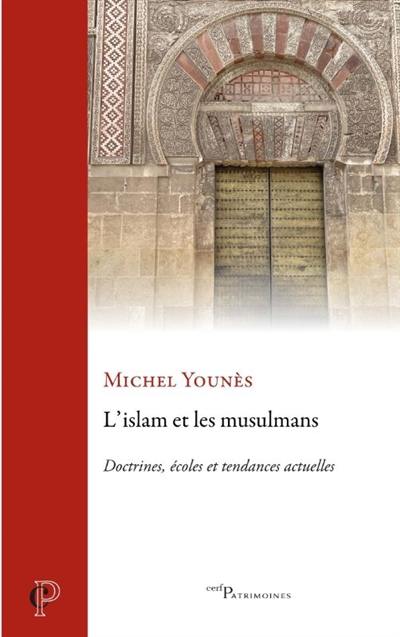
Islam and Muslims. Doctrines, Schools of Thought, and Current Trends
- Michel Younès
Publication date: April 16, 2026. Islam, as a historical, religious, and civilizational reality, is difficult to define. It can be perceived as a form of political governance, an expression of fait...
publication
Canon and Censorship in Islamic Intellectual History
- Amir Dziri
Published in De Gruyter’s series “Islam: Thought, Culture, and Society” (vol. 16, 2026), this collective volume is edited by Mohammad Gharaibeh and Bacem Dziri (Humboldt University of Berlin)...