
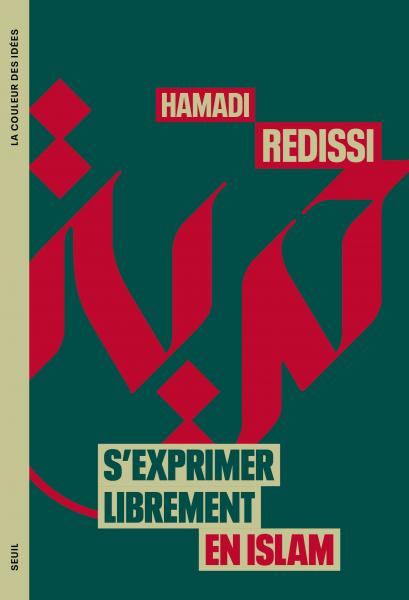
Publisher : Seuil -

French


Speaking freely in Islam
What is the Islamic doctrine of blasphemy, insult to God, religion and the Prophet? What about the prohibition of figurative representation of Muhammad? Can one openly believe or abjure in Islam? To declare oneself an atheist without being prosecuted in court, ostracized or handed over to mob violence? Can one think freely?
“Hamadi Redissi draws on little-known literature to restore the debates on these issues that have animated the Sunni and Shiite worlds from the Middle Ages to the present day. He identifies who has the right to express themselves in religion. He also identifies the three orders that govern the realm of expression: what can and cannot be said, what is allowed to be seen and what is withdrawn from view, what can be thought or cannot be thought.
Beyond the recurring debate between those who believe that Islam is inherently violent and those who attribute the murderous limits on freedom of expression solely to Islamism, this necessary and fascinating historical inquiry reveals that “two Islams” have been clashing almost continuously since the Middle Ages. One, iconophobic, fanatical and belligerent, has been transposed, and sometimes reinforced, by the modern state. The other, iconophilic, tolerant and peaceful, negotiates the right to express itself, but does not grant everything.”
Professor of Political Science at the University of Tunis, Hamadi Redissi has published at Seuil: L’Exception islamique (2004), Le Pacte de Nadjd. Comment l’islam sectaire est devenu l’islam (2007) and La Tragédie de l’islam moderne (2011).
Quelle est la doctrine islamique du blasphème, injure faite à Dieu, à la religion et au Prophète ? Qu’en est-il de l’interdiction de la représentation figurée de Muhammad ? Peut-on croire ou abjurer publiquement en islam ? Se déclarer athée sans être poursuivi en justice, ostracisé ou livré à la vindicte populaire ? Peut-on penser librement ?
“Hamadi Redissi s’appuie sur une littérature méconnue pour restituer les débats sur ces questions qui ont animé les mondes sunnites et chiites du Moyen Âge à nos jours. Il identifie qui a le droit de s’exprimer en religion. Il dégage également les trois ordres qui régissent le domaine de l’expression : ce qui se dit et ne se dit pas, ce qui se laisse voir et ce qu’on retire au regard, ce qui se pense ou ne peut se penser.
Au-delà du débat récurrent entre ceux qui estiment que l’islam est naturellement violent et ceux qui attribuent au seul islamisme les limites meurtrières à la liberté d’expression, cette nécessaire et passionnante enquête historique révèle que « deux islams » s’affrontent pratiquement sans discontinuité depuis l’âge médiéval. L’un, iconophobe, fanatique et belliqueux, a été transposé, et renforcé parfois, par l’État moderne. L’autre iconophile, tolérant et paisible, négocie le droit de s’exprimer, mais n’accorde pas tout.”
Professeur de sciences politiques à l’université de Tunis, Hamadi Redissi a publié au Seuil : L’Exception islamique (2004), Le Pacte de Nadjd. Comment l’islam sectaire est devenu l’islam (2007) et La Tragédie de l’islam moderne (2011).


 publisher's website

Resources related to Freedom of Religion
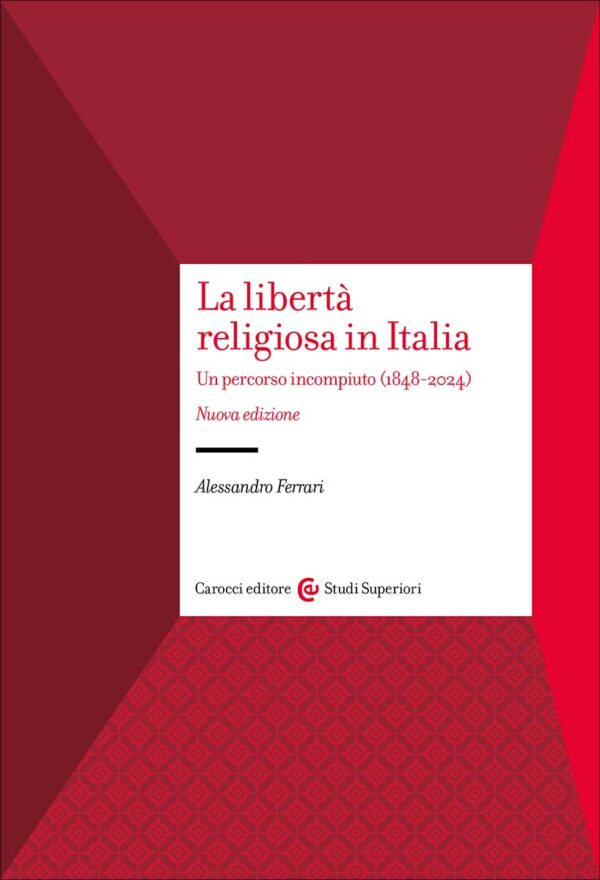
publication
Religious Freedom in Italy. An Unfinished Path (1848-2024)
- Alessandro Ferrari
Published under the original title La libertà religiosa in Italia. Un percorso incompiuto (1848-2024), this synthesis by Alessandro Ferrari, professor of ecclesiastical law and comparative religiou...

videos
From regulating religious sound to transforming it into light: public, legal and architectural debates on the adhān
Paper presented at the fifth international congress of the University Platform for Research on Islam (Pluriel), held in Cordoba from 10 to 14 February 2026 on the theme "Ethics and Aesthetics in Is...
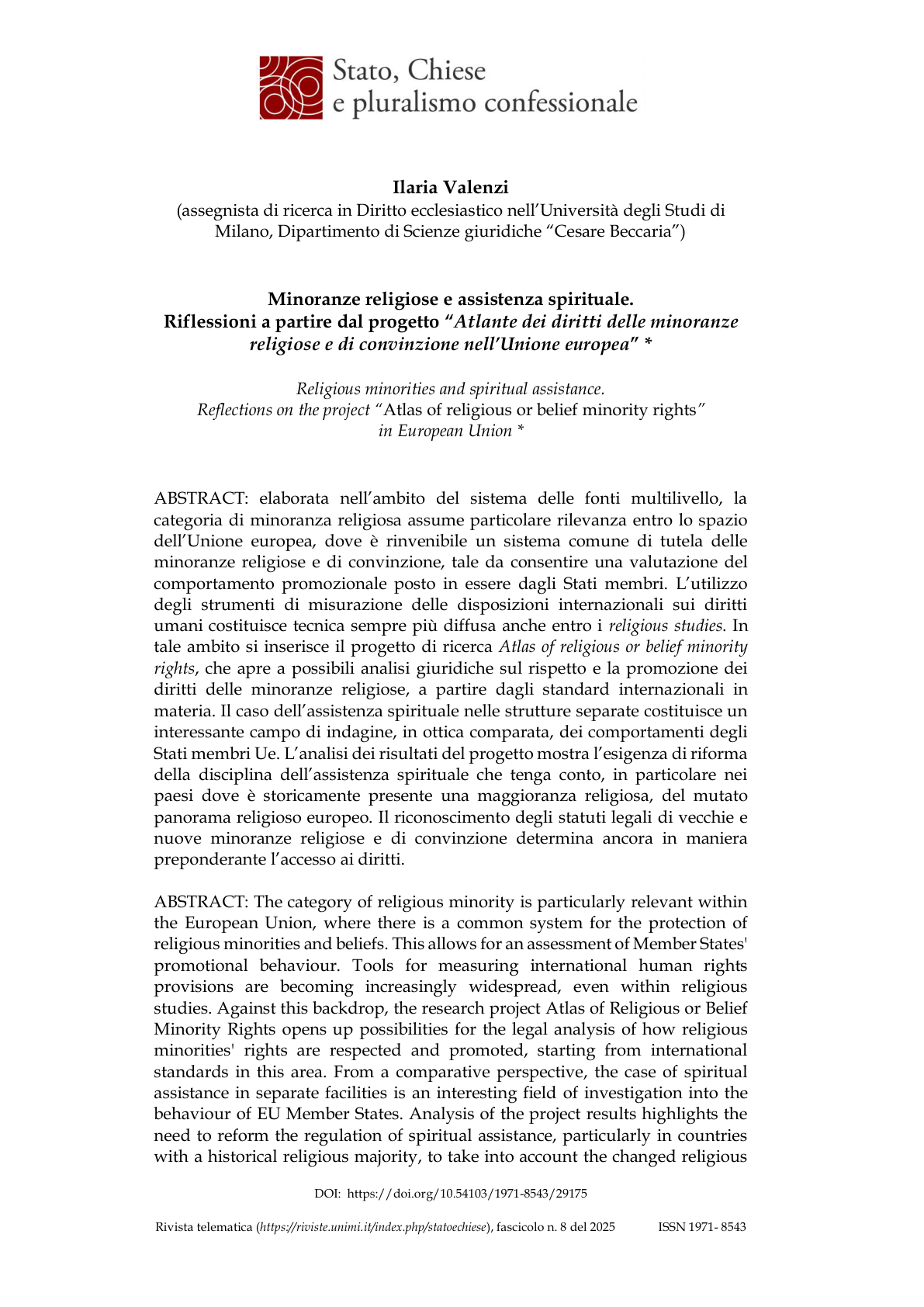
article
Religious minorities and spiritual assistance. Reflections on the project “Atlas of religious or belief minority rights” in the European Union
- Ilaria Valenzi
Abstract Developed within the multilevel system of legal sources, the category of "religious minority" takes on particular significance within the European Union, where a shared system of protectio...
article
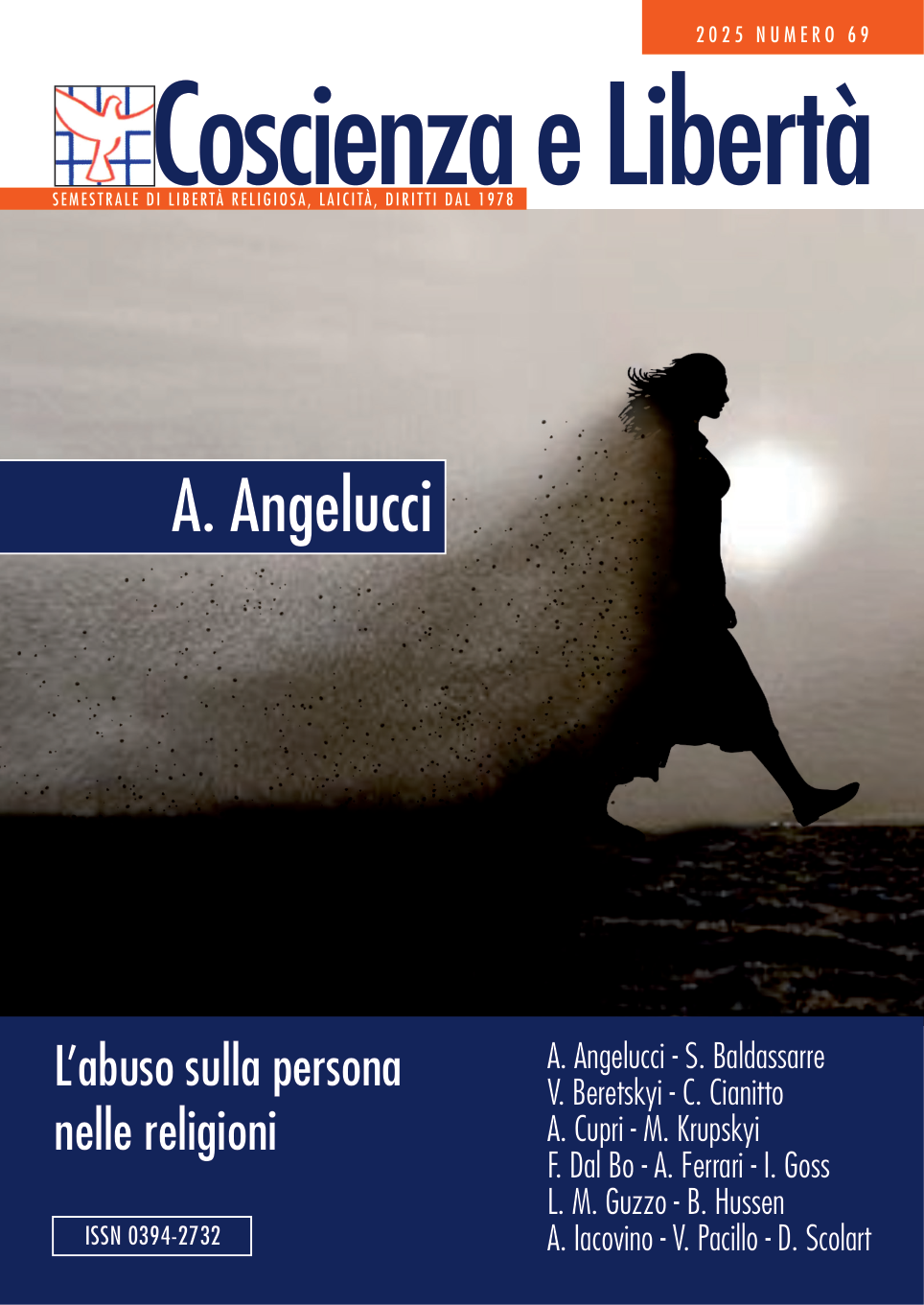
“Inclusive Citizenship, the Right to a Place of Worship and Everyday Peace”, by Antonio Angelucci
- Antonio Angelucci
In an article published in the Italian journal Coscienza e Libertà (no. 69, 2025), Antonio Angelucci, associate professor of law and religion at the University of Insubria, examines the connection ...
article
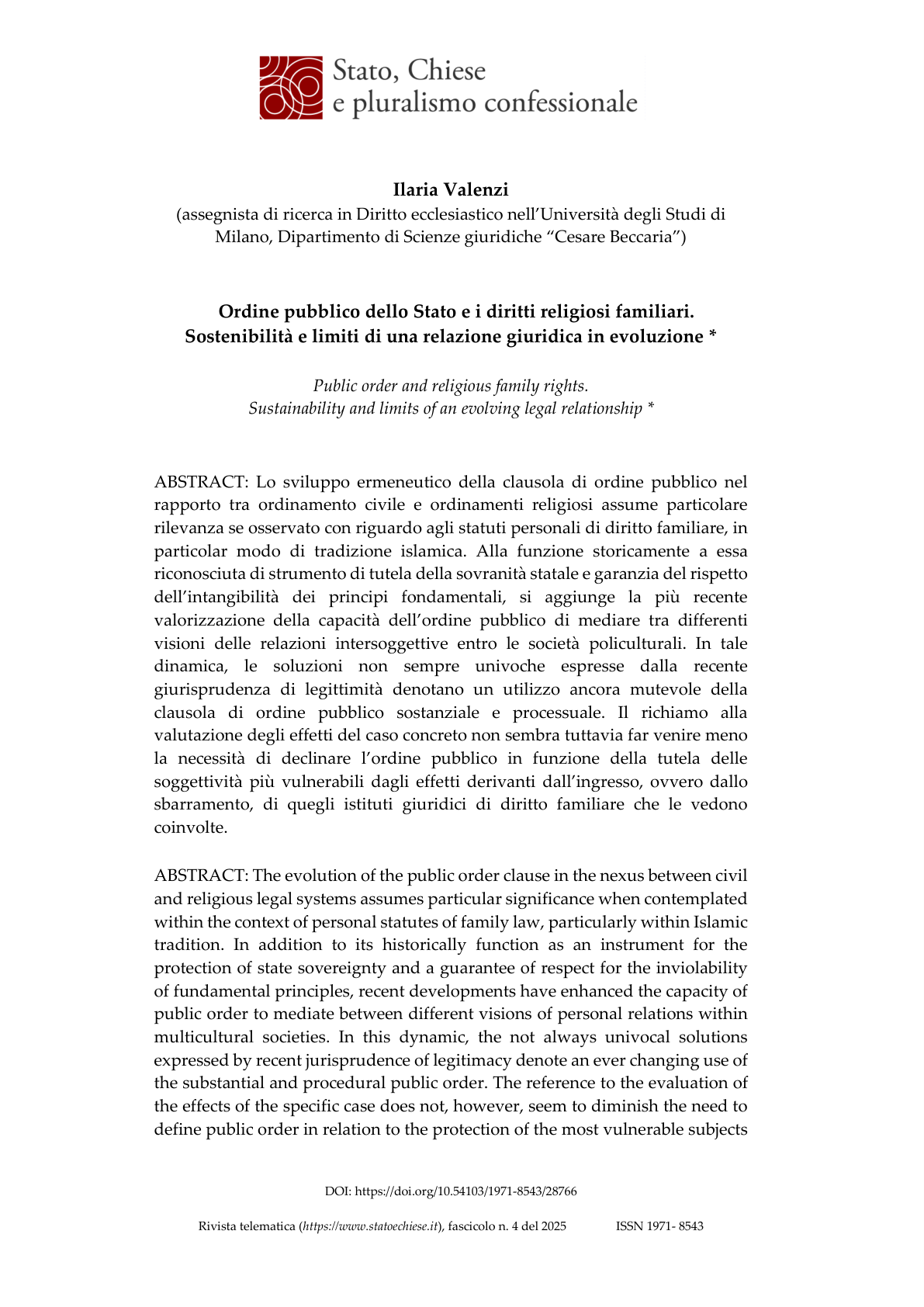
Public order and religious family rights. Sustainability and limits of an evolving legal relationship
- Ilaria Valenzi
Abstract The public-order clause, which safeguards the fundamental principles of the legal order, is today tested by the circulation of family models rooted in religious legal systems. Ilaria Valen...

videos
Freedom of conscience, a contested yet resilient right
- Dominique Avon
Rome. In a conference given on November 28, 2024, at the Pontifical Institute for Arabic and Islamic Studies, Professor Dominique Avon from the École Pratique des Hautes Études in Paris traced the ...
publication
Speaking freely in Islam
- Hamadi Redissi
What is the Islamic doctrine of blasphemy, insult to God, religion and the Prophet? What about the prohibition of figurative representation of Muhammad? Can one openly believe or abjure in Islam? T...
publication
Religious minorities between the Mediterranean shores: a study of the status of religious minorities in the Mediterranean context (REMiMEsO) – Final Report
- Alessandro Ferrari
The REMiMESo project, led by Ilaria Valenzi and supported by the Italian Ministry of Foreign Affairs, explores the situation of religious minorities in five Mediterranean countries: Israel, Morocco...