

English

Religious affiliation, belonging and apostasy : a case study of Christian and Moslem conceptions
Lecture of Dirk ANSORGE, at the PLURIEL second international Congress in Rome
Abstract
It is well known that in Christianity – particularly in the European mainline churches – religious affiliation primarily is not founded in belief, but in baptism. According to traditional Christian faith, baptism creates what theology calls a “character indelebilis”. This means that even in case of apostasy or faithlessness the unbeliever doesn’t cease being Christian. However, at least for Catholics the Second Vatican Council shed new light on the legitimacy of religious conversion by emphasizing the pivotal role of human conscience. The decision of a learned human conscience has to be respected even if it suggests leaving the church or if it leads to atheism. Therefore the paper will discuss the theological and juridical impact of renunciation from Christianity in order to compare it with Muslim conceptions of religious affiliation, renunciation, and apostasy. How can one conceive the relationship between juridical affiliation and the practice of belief, behaviour, and belonging?
Conférence de Dirk ANSORGE, au deuxième congrès international de PLURIEL à Rome
Résumé
Il est bien connu que dans le christianisme – en particulier dans les grandes églises européennes – l’appartenance religieuse n’est pas principalement fondée sur la croyance, mais sur le baptême. Selon la foi chrétienne traditionnelle, le baptême crée ce que la théologie appelle un character indelebilis. Cela signifie que même en cas d’apostasie ou d’infidélité, le non-croyant ne cesse pas d’être chrétien. Cependant, au moins pour les catholiques, le Concile Vatican II a apporté un éclairage nouveau sur la légitimité de la conversion religieuse en soulignant le rôle central de la conscience humaine. La décision d’une conscience humaine savante doit être respectée même si elle suggère de quitter l’église ou si elle conduit à l’athéisme.
Par conséquent, l’article traitera de l’impact théologique et juridique du renoncement au christianisme afin de le comparer aux conceptions musulmanes de l’appartenance religieuse, du renoncement et de l’apostasie. Comment concevoir le rapport entre l’affiliation juridique et la pratique de la croyance, du comportement et de l’appartenance ?
Titre original : “Religious affiliation, belonging and apostasy : a case study of Christian and Moslem conceptions”



Resources of this researcher

videos
Muhammad Tahir-ul-Qadri, Human Rights and Democracy
Title of the lecture : 'Embracing the Other: Muhammad Tahir-ul-Qadri‘s approach to Human Rights and Democracy' In the Western world, the Pakistani politician and Islamic scholar Muhammad Tahir-ul-...

videos
Religious affiliation, belonging and apostasy : a case study of Christian and Moslem conceptions
Lecture of Dirk ANSORGE, at the PLURIEL second international Congress in Rome Abstract It is well known that in Christianity – particularly in the European mainline churches – religious affiliati...
Resources related to Identities
article
Wael Saleh: “Recognising Without Confining, to Better ‘De-other’ the Public Debate”
- Wael Saleh
In an op-ed published on 20 July 2026 by Le Devoir, Wael Saleh, a member of the scientific committee of Pluriel, puts forward a new concept for contemporary democratic debate: "de-othering" (in Fre...
videos
Interreligious Dialogue and Ethnic Nationalisms in the Balkans
At the invitation of PISAI (Pontifical Institute for Arabic and Islamic Studies, Rome) and Georgetown University, Ahmet Alibašić, professor of Islamic civilization at the Faculty of Islamic Studies...

videos
Highlighting an Islamic heritage in constant evolution: literary ethics and aesthetics in Najib Redouane’s “Under the Sky of Oran”
Paper presented at the fifth international congress of the University Platform for Research on Islam (Pluriel), held in Cordoba from 10 to 14 February 2026 on the theme "Ethics and Aesthetics in Is...
article
Mind the Gap: Mimicry and Subjectivation in Racialised Discourses
- Noemi Trucco
Abstract Published in the collective volume Adaptive Subjekte. Linking Collaboration and Contradiction (eds. F. Brodersen, D. Pokitsch, S. Röhrer and N. Trucco, Wiesbaden, Springer VS, 2026), this ...
publication
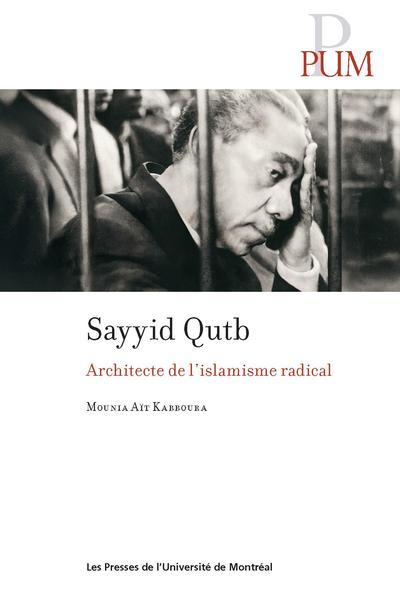
Sayyid Qutb. Architect of Radical Islamism
- Mounia Ait Kabboura
The thought of Sayyid Qutb (1906–1966) has profoundly shaped a wide range of religio-political movements, from the Muslim Brotherhood to Salafi-jihadists, radicalizing political Islam and inspiring...

publication
Dialogue for a More Livable World: Toward an Ethics of Encounter
- Mohamed-Ali Mostfa
How can we live in a climate of mistrust, trapped in identity-based withdrawal, and paralyzed by an uncertain future? On what basis can we open new paths to ease suffering—perhaps even reenchant ou...
videos
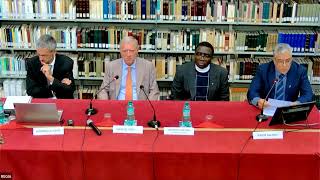
Inaugural Lecture for the Chair in Mediterranean Studies, Religions and Societies
- Dominique Avon
Lecture given by Professor Dominique Avon on October 13, 2025, at the Pontifical Institute for Arabic and Islamic Studies (PISAI).
publication
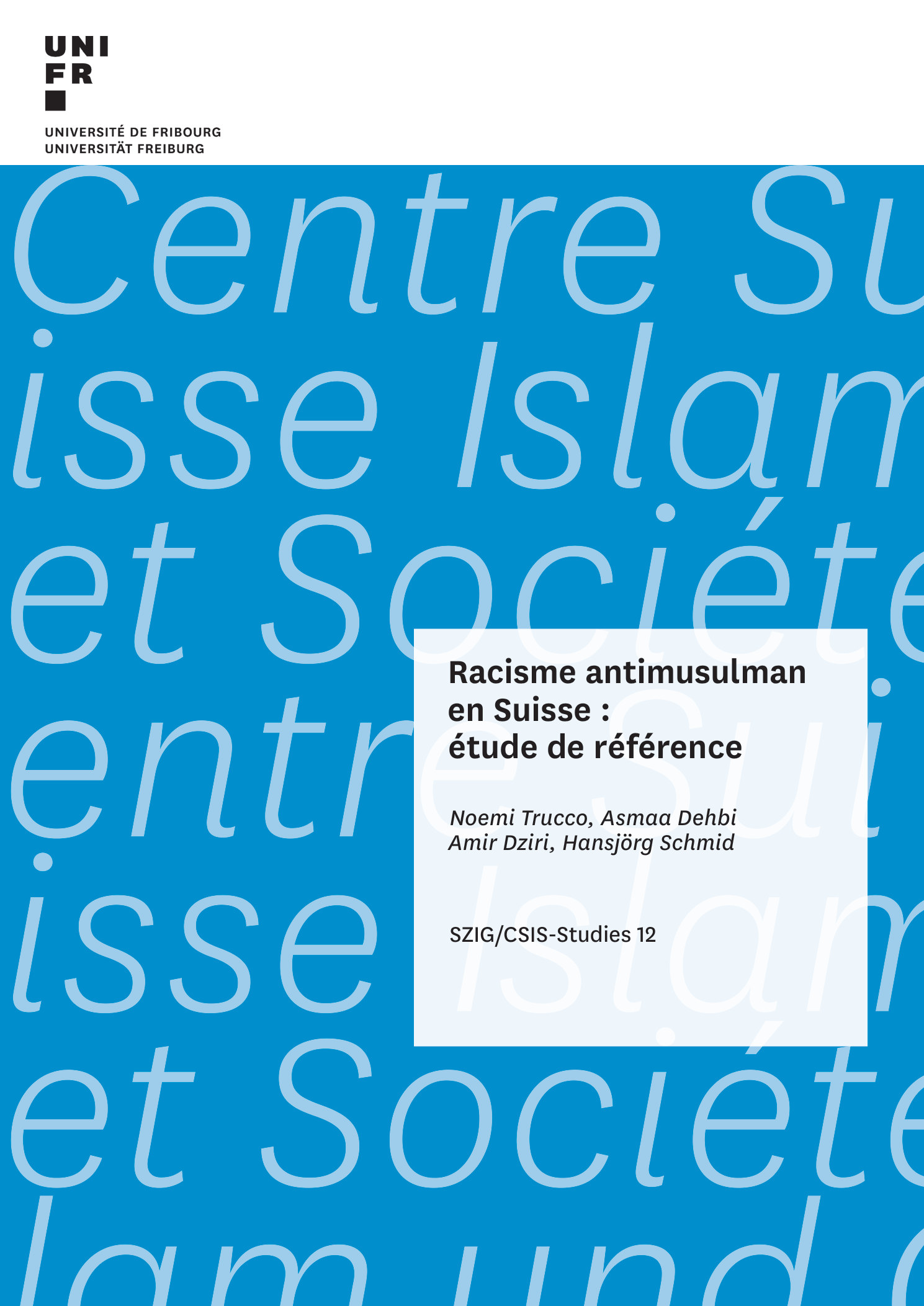
Anti-Muslim Racism in Switzerland: A Baseline Study
- Noemi Trucco
- Amir Dziri
- Hansjörg Schmid
Commissioned by the Swiss Confederation’s Service for Combating Racism (SLR), this study (SZIG/CSIS-Studies 12, 2025) is the first comprehensive baseline survey of anti-Muslim racism in Switz...