

English

Unity of God and unity in God – a possible perspective and way of dialogue between the believers?
A shῑ‘ῑ perspective of dialogue developed by D. Mohammad Ali Shomali.
Talking about unity between believers and calling them to act upon it is not new in Islam. The Qur’ān and the early history of Islam especially in Medina are the basic evidence of that. The notion of uniting the believers and even the concept of “believers” itself seem to have been altered with time and “believers” in general became “Muslims” after Islam has been well shaped and defined religiously and politically.
Nowadays, D. Mohammad Ali Shomali talks about unity as a necessity between peoples. He works for it and builds dialogues especially with Christians based on this idea or call.
On the theological side, he considers that the Qur’ān mentions two things that can raise someone’s position: one is piety and the second is knowledge.
Lecture given at the 3rd International Congress of the PLURIEL network, 23-27 May 2022 in Beirut.
In partnership with Saint Joseph University of Beirut and La Sagesse University.
Une perspective chiite du dialogue développée par D. Mohammad Ali Shomali.
Parler d’unité entre les croyants et les appeler à agir en conséquence n’est pas nouveau en Islam. Le Coran et les débuts de l’histoire de l’Islam, notamment à Médine, en sont les preuves fondamentales. La notion d’unité des croyants et même le concept de “croyants” lui-même semblent avoir été modifiés avec le temps, et les “croyants” en général sont devenus des “musulmans” après que l’Islam ait été bien façonné et défini religieusement et politiquement.
Aujourd’hui, D. Mohammad Ali Shomali parle de l’unité comme d’une nécessité entre les peuples. Il y travaille et établit des dialogues, notamment avec les chrétiens, sur la base de cette idée ou de cet appel.
Sur le plan théologique, il considère que le Coran mentionne deux choses qui peuvent élever la position de quelqu’un : l’une est la piété et la seconde la connaissance.
Conférence donnée lors du 3è congrès international du réseau PLURIEL, du 23 au 27 mai 2022 à Beyrouth.
En partenariat avec l’Université Saint Joseph de Beyrouth et l’Université La Sagesse.


Author(s)
Resources of this researcher
Resources related to Shia Islam

videos
Spiritual poetry, hermeneutics and theology in contemporary Shi’i Iran: Soroush, Shabestari, Malekian and Rūmī
Paper presented at the fifth international congress of the University Platform for Research on Islam (Pluriel), held in Cordoba from 10 to 14 February 2026 on the theme "Ethics and Aesthetics in Is...
article
“An Anthropology of Imamite Love among Iranian Believers”, by Sepideh Parsapajouh
- Sepideh Parsapajouh
In the volume honouring the Islamic-studies scholar Mohammad Ali Amir-Moezzi, De la lettre à l'esprit (eds. Orkhan Mir-Kasimov and Mathieu Terrier, Brepols, 2025), Sepideh Parsapajouh, an anthropol...
article
The Guide, Pivot of Creation: The Sources of Shi’i Gnosis
- Mohammad Ali Amir-Moezzi
The aim of the article is to explore the relationship between cosmo-anthropogony and Imamology in Shi'ism through its earliest sources in the corpus of pre-Buyid hadiths. It shows that the figure o...
videos
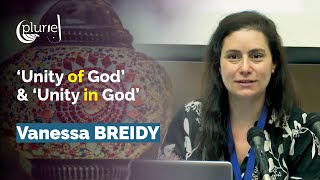
Unity of God and unity in God – a possible perspective and way of dialogue between the believers?
- Vanessa Breidy
A shῑ‘ῑ perspective of dialogue developed by D. Mohammad Ali Shomali. Talking about unity between believers and calling them to act upon it is not new in Islam. The Qur’ān and the early history o...
article
“A Religious Cosmopolitanism: The City of Qom in the Mirror of Transnational Circulations”, by Sepideh Parsapajouh
- Sepideh Parsapajouh
In the collective volume Un Moyen-Orient ordinaire (eds. Thierry Boissière and Yoann Morvan, Diacritiques Éditions, 2022), Sepideh Parsapajouh, an anthropologist at the CNRS (CéSor-EHESS), devotes ...

videos
The Hidden Imam and religious and spiritual authority in Shia Islam
- Mohammad Ali Amir-Moezzi
Conference « Religious Authority in Islam », organised by the Centre for the Study of Cultures and Religions and the Research Unit of the Catholic University of Lyon (UCLy), on 18 and 19 November 2...
publication
MIDEO 36 – Iǧtihād and taqlīd in Sunnī and Šīʿī Islam
- Emmanuel Pisani
The theme of iǧtihād and taqlīd, by pointing to the notional antagonism between independent reasoning on the one hand and submission to the argument of authority on the other, plunges us into the h...
article
“The Power of Place, the Mediation of the Text: Anthropological Remarks on the Pious Visit to Karbalā”, by Sepideh Parsapajouh
- Sepideh Parsapajouh
In the journal Studia Islamica (Brill, 2021), Sepideh Parsapajouh, an anthropologist at the CNRS (CéSor-EHESS), offers an anthropological analysis of the ziyāra, the pious visit to Shia holy places...