
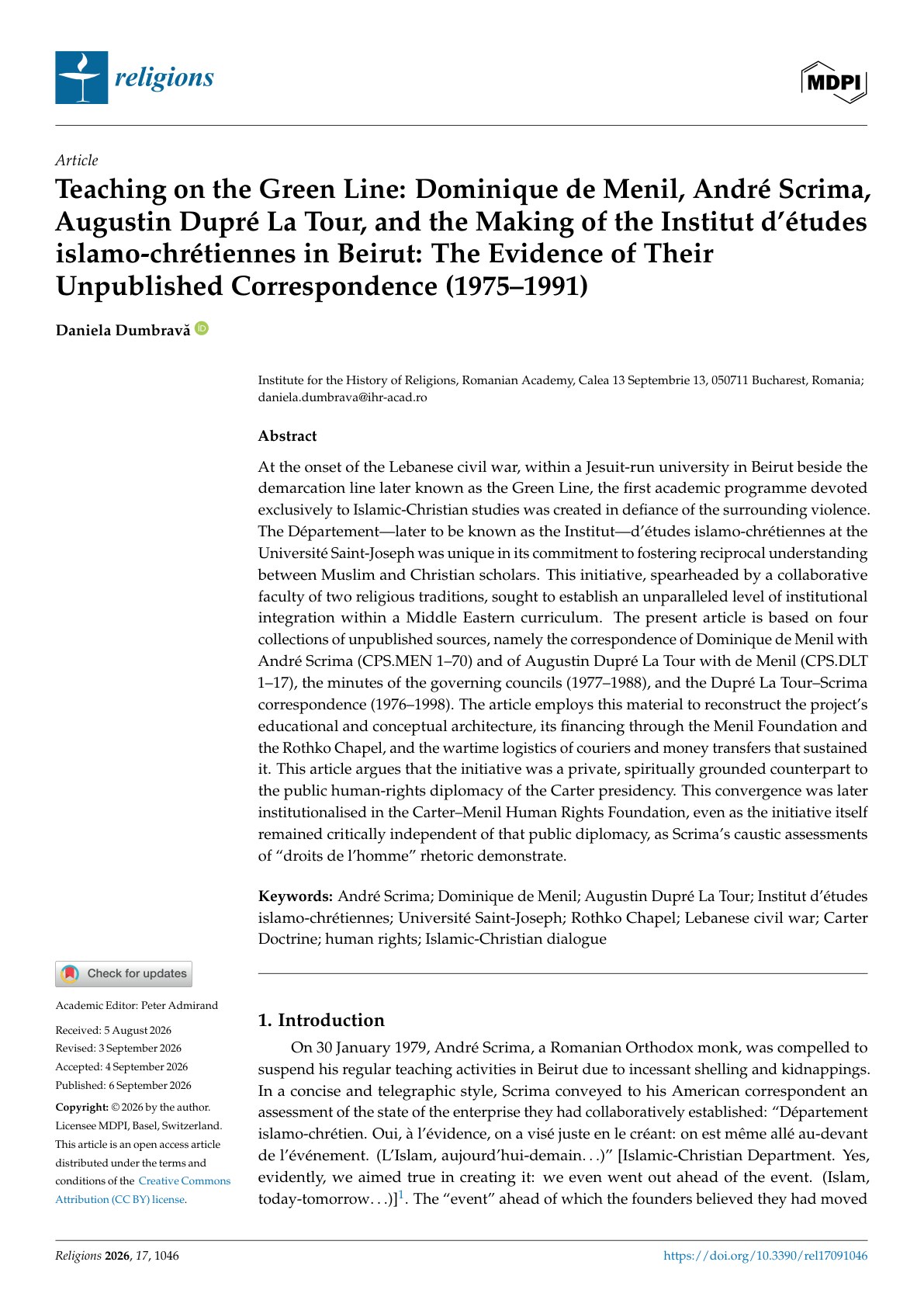
التعليم على خطّ التماس: تأسيس معهد الدراسات الإسلامية المسيحية في بيروت، بقلم دانييلا دومبرافا
في مقالةٍ نُشرت في 6 سبتمبر/أيلول 2026 في مجلة «Religions» العلمية، وهي متاحة للجميع مجّاناً، تتتبّع دانييلا دومبرافا، الباحثة في معهد تاريخ الأديان التابع للأكاديمية الرومانية في بوخارست، تأسيسَ معهد الدراسات الإسلامية المسيحية في جامعة القديس يوسف في بيروت، الذي تديره اليوم رولا تلحوق. وتستند المقالة إلى مصادر لم تُنشر من قبل: مراسلات دومينيك دو مينيل مع أندريه سكريما ومع أوغسطين دوبريه لاتور، والرسائل المتبادلة بين هذين الأخيرين، ومحاضر جلسات الهيئات الإدارية للمعهد (1977-1988).
ففي بدايات الحرب الأهلية اللبنانية، وعلى مقربة من خطّ التماس الذي عُرف لاحقاً بـ«الخطّ الأخضر»، افتتحت الجامعة في نوفمبر/تشرين الثاني 1977 قسماً للدراسات الإسلامية المسيحية، صار معهداً في العام الجامعي 1980-1981، فكان أوّلَ برنامج جامعي في الشرق الأوسط يُخصَّص حصراً للدراسات الإسلامية المسيحية. وكانت الدروس تُلقى على قاعدة تكافؤ صارم، يتولّاها أستاذان معاً، أحدهما مسلم والآخر مسيحي، أمام جمهور مختلط عن قصد. وضمّ الفريق المؤسِّس أستاذين جامعيين مسلمين سنّيين، هما يوسف إيبش (الجامعة الأميركية في بيروت) وهشام نشّابة (جمعية المقاصد الخيرية الإسلامية)، ومسيحيَّين، هما الأرشمندريت الأرثوذكسي الروماني أندريه سكريما والأب اليسوعي أوغسطين دوبريه لاتور، وكان يومها عميداً في الجامعة. أمّا التمويل فتكفّلت به دومينيك دو مينيل، جامعة الأعمال الفنية وراعية الفنون ومؤسِّسة «كنيسة روثكو» في هيوستن.
وتعيد المقالة بناء الهندسة التربوية للمشروع، ومصادر تمويله من مؤسسة مينيل ثم من «كنيسة روثكو» (ثلاثون ألف دولار سنوياً ابتداءً من عام 1977)، والترتيبات العملية التي مكّنته من عبور سنوات الحرب: تحويل الأموال، والرسائل التي حملها المسافرون، والمرور عبر رودس ولارنكا. وترى الباحثة في هذه المبادرة الوجهَ الخاصّ، الروحيَّ الإلهام، لدبلوماسية حقوق الإنسان التي انتهجتها إدارة الرئيس جيمي كارتر، وهو تلاقٍ تجسّد لاحقاً في «مؤسسة كارتر-مينيل لحقوق الإنسان» (1986)، مع حرصها على إبراز استقلال المبادرة وروحها النقدية، كما تشهد تعليقات سكريما اللاذعة على خطاب «حقوق الإنسان». أمّا لاهوت اللقاء الذي صاغته دومينيك دو مينيل فيُختصَر في عبارة واحدة: لا تبشيرَ ولا خلطَ بين الأديان، بل يزداد كلّ مؤمن عمقاً في ذاته بلقائه الآخر.
وتصف الباحثة عملها بأنّه «تاريخ جزئي توثيقي» يقوم على المقابلة بين أربع مجموعات من الأرشيف، وتقدّمه سبراً أوّلياً سيتيح النشرُ المنهجي لهذه الوثائق، الجاري إعداده، التحقّقَ منه وتعميقه.
المرجع:
Daniela Dumbravă, “Teaching on the Green Line: Dominique de Menil, André Scrima, Augustin Dupré La Tour, and the Making of the Institut d’études islamo-chrétiennes in Beirut: The Evidence of Their Unpublished Correspondence (1975–1991)”, Religions, vol. 17, no. 9, 2026, article 1046, DOI 10.3390/rel17091046
النصّ الكامل متاح مجّاناً بالإنجليزية على موقع المجلة.
Dans un article paru le 6 septembre 2026 dans la revue Religions (MDPI), en libre accès, Daniela Dumbravă, chercheuse à l’Institut d’histoire des religions de l’Académie roumaine (Bucarest), retrace la fondation de l’Institut d’études islamo-chrétiennes (IEIC) de l’Université Saint-Joseph de Beyrouth (USJ), aujourd’hui dirigé par Roula Talhouk. L’article s’appuie sur des sources inédites : la correspondance de Dominique de Menil avec André Scrima et avec Augustin Dupré La Tour, les lettres échangées entre ces deux derniers et les procès-verbaux des instances de direction de l’Institut (1977-1988).
Au début de la guerre civile libanaise, à proximité de la ligne de démarcation qui sera appelée la « ligne verte », l’USJ ouvre en novembre 1977 un Département d’études islamo-chrétiennes, érigé en Institut en 1980-1981 : le premier programme universitaire du Moyen-Orient exclusivement consacré aux études islamo-chrétiennes. Les cours y sont assurés selon une stricte parité, par des binômes de professeurs musulmans et chrétiens, devant un public délibérément mixte. L’équipe fondatrice réunit deux universitaires musulmans sunnites, Yusuf Ibish (Université américaine de Beyrouth) et Hisham Nashabé (Fondation Makassed), et deux chrétiens, l’archimandrite orthodoxe roumain André Scrima et le jésuite Augustin Dupré La Tour, alors doyen à l’USJ. La collectionneuse et mécène Dominique de Menil, fondatrice de la Rothko Chapel à Houston, en assure le financement.
L’article reconstitue l’architecture pédagogique du projet, son financement par la Fondation Menil puis par la Rothko Chapel (30 000 dollars par an à partir de 1977) et la logistique qui lui permit de traverser la guerre : transferts de fonds, lettres confiées à des voyageurs, relais par Rhodes et Larnaca. L’auteure y voit le pendant privé, d’inspiration spirituelle, de la diplomatie des droits de l’homme menée sous la présidence de Jimmy Carter, convergence institutionnalisée plus tard dans la Fondation Carter-Menil pour les droits de l’homme (1986), tout en soulignant l’indépendance critique de l’initiative, sensible dans les jugements caustiques de Scrima sur la rhétorique des « droits de l’homme ». La théologie de la rencontre formulée par Dominique de Menil se résume ainsi : ni prosélytisme ni syncrétisme, chaque croyant devenant plus profondément lui-même au contact de l’autre.
Fondée sur le recoupement de quatre séries d’archives, cette « microhistoire documentaire », selon l’expression de l’auteure, se présente comme un premier sondage, que l’édition systématique de ces documents, en préparation, permettra de vérifier et d’approfondir.
- Référence : Daniela Dumbravă, « Teaching on the Green Line: Dominique de Menil, André Scrima, Augustin Dupré La Tour, and the Making of the Institut d’études islamo-chrétiennes in Beirut: The Evidence of Their Unpublished Correspondence (1975–1991) », Religions, vol. 17, n° 9, 2026, article 1046 ;
- Texte intégral : en anglais et en libre accès sur le site de la revue (DOI 10.3390/rel17091046).
In an open-access article published on 6 September 2026 in the journal Religions (MDPI), Daniela Dumbravă, a researcher at the Institute for the History of Religions of the Romanian Academy (Bucharest), traces the founding of the Institute of Islamic-Christian Studies (IEIC) at Saint Joseph University of Beirut (USJ), now directed by Roula Talhouk. The article draws on previously unpublished sources: Dominique de Menil’s correspondence with André Scrima and with Augustin Dupré La Tour, the letters exchanged between the latter two, and the minutes of the Institute’s governing councils (1977–1988).
At the outset of the Lebanese civil war, close to the demarcation line that would come to be known as the Green Line, USJ opened a Department of Islamic-Christian Studies in November 1977, which became an Institute in 1980–1981: the first university programme in the Middle East devoted exclusively to Islamic-Christian studies. Courses were taught on a strictly equal footing by pairs of Muslim and Christian professors, before a deliberately mixed audience. The founding team brought together two Sunni Muslim scholars, Yusuf Ibish (American University of Beirut) and Hisham Nashabé (Makassed Foundation), and two Christians, the Romanian Orthodox archimandrite André Scrima and the Jesuit Augustin Dupré La Tour, then a dean at USJ. The collector and patron Dominique de Menil, founder of the Rothko Chapel in Houston, funded the project.
The article reconstructs the project’s educational architecture, its funding by the Menil Foundation and later by the Rothko Chapel (30,000 dollars a year from 1977), and the logistics that carried it through the war: money transfers, letters entrusted to travellers, relays through Rhodes and Larnaca. The author sees it as a private, spiritually grounded counterpart to the human-rights diplomacy of the Carter presidency, a convergence later institutionalised in the Carter–Menil Human Rights Foundation (1986), while stressing the initiative’s critical independence, evident in Scrima’s caustic remarks on “human rights” rhetoric. The theology of encounter formulated by Dominique de Menil can be summed up in one line: neither proselytism nor syncretism, with each believer becoming more fully themselves through contact with the other.
Built on the cross-checking of four series of archives, this “documentary microhistory”, as the author calls it, is offered as a first survey, which the systematic edition of these documents, now in preparation, will make it possible to verify and take further.
- Reference: Daniela Dumbravă, “Teaching on the Green Line: Dominique de Menil, André Scrima, Augustin Dupré La Tour, and the Making of the Institut d’études islamo-chrétiennes in Beirut: The Evidence of Their Unpublished Correspondence (1975–1991)”, Religions, vol. 17, no. 9, 2026, article 1046;
- Full text: open access on the journal website (DOI 10.3390/rel17091046).


المصادر المرتبطة بـ  الحوار الإسلامي-المسيحي
publication
الحوار الإسلامي المسيحي، فرصة لأفريقيا
- إيمانويل بيساني
في وقت تشهد فيه أفريقيا جنوب الصحراء تحوّلات اجتماعية وسياسية عميقة وتصاعداً للتطرّف الديني، يبدو الحوار الإسلامي المسيحي ضرورةً لا مفرّ منها وشرطاً للسلام. ويجمع هذا الكتاب، وهو ثمرةُ حلقة دراسية ...

article
رؤى إسلامية ليسوع: الوحي والنبوّة والآخريات
- أنطونيو كوتشينييلو
ملخّص يظهر هذا الفصل في المؤَلَّف الجماعيّ Jerusalem in Memory and Eschatology: Jewish, Christian, and Muslim Visions of the Past and Future of Jerusalem، بإشراف إيما أودونيل بولياكوف (Bloomsbur...

article
أسئلة في السوتيريولوجيا الإسلامية في الإسلام المبكّر
ملخّص يظهر هذا الفصل في المؤَلَّف الجماعيّ Riesgos y fidelidades. Miradas teológicas para un mundo plural، بإشراف إيانيري أنغولو أوردوريكا وسوسانا فيلاس بواس (منشورات هيردر، برشلونة، 2025، 424 ص...

article
القرآن المسلم غير المخلوق واللوغوس المسيحي المولود منذ الأزل
- خايمي فلاكير غارسيا
ملخّص يظهر هذا المقال في القسم الموضوعي «Logos, Agape, Sarx. Una dialógica cristiana» من العدد 79 (2025) لمجلّة Carthaginensia، تحت عنوانه الأصلي: El Corán musulmán increado y el Logos cristi...

article
المجمع النيقاويّ الأوّل (325) والحوارُ الإسلاميّ المسيحيّ حول وحدانية الله والتثليث
ملخّص يظهر هذا المقال في العدد 2/2025 من مجلّة CIBEDO-Beiträge، المجلّة المرجعية للحوار الإسلاميّ المسيحيّ باللغة الألمانية، تحت عنوانه الأصليّ: Das erste Konzil von Nizäa (325) und der chris...
article
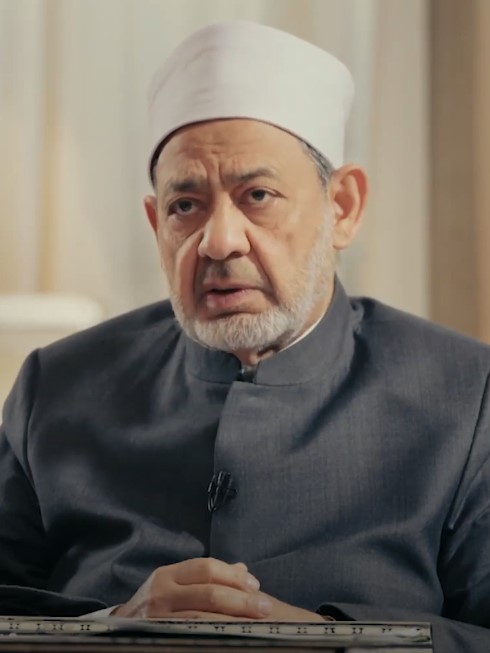
العلاقات الإسلامية المسيحية اليوم: تأمّلات
ملخّص ضمن عدد خاصّ من مجلّة The Muslim World بمناسبة مرور خمسين عامًا على تأسيس مركز دنكن بلاك ماكدونالد (هارتفورد)، تُقدّم هذه المساهمة لـديفيد مارشال، المنشورة في الأصل تحت عنوان: Christian...
article
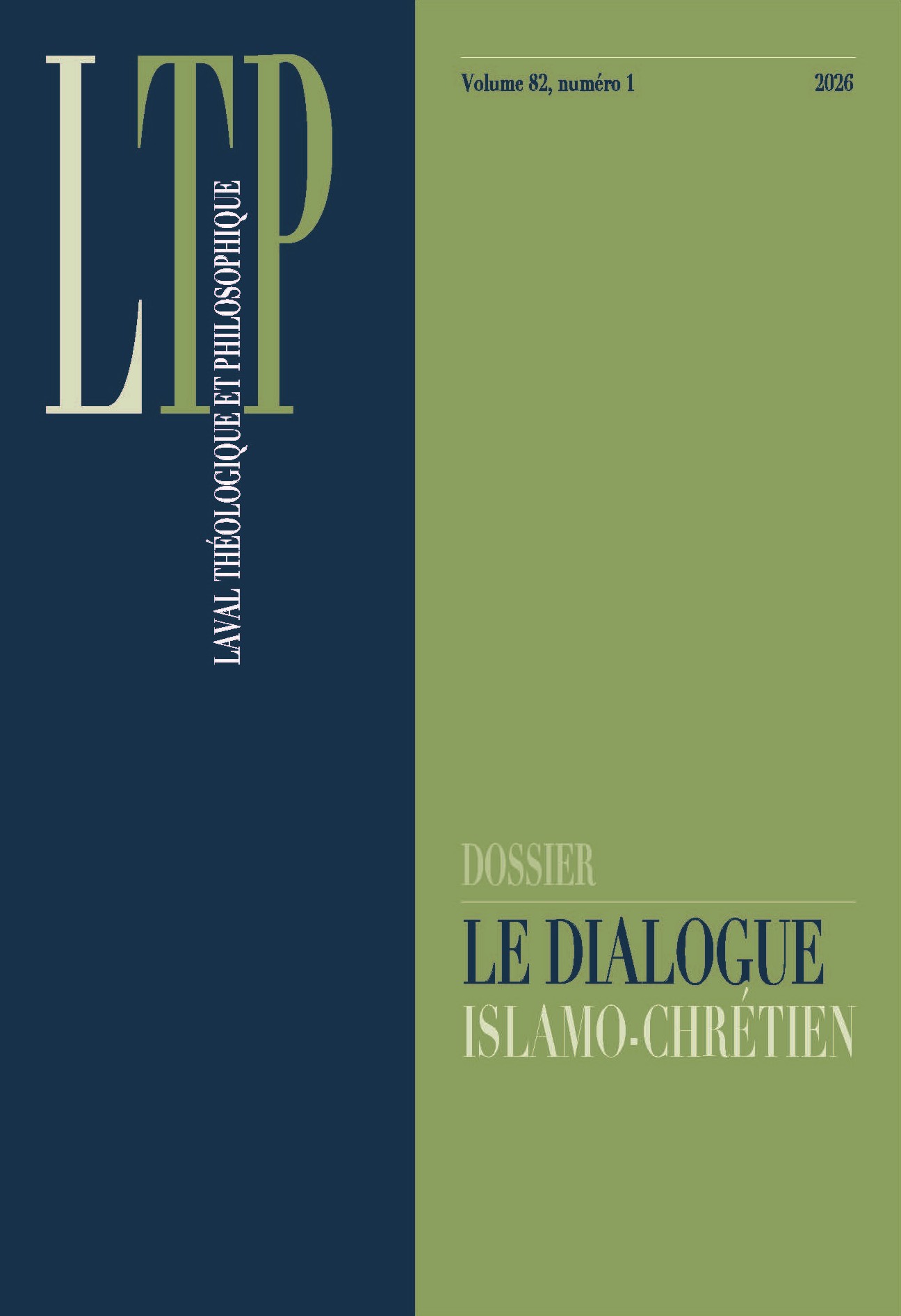
حيدر إبراهيم علي: مفكّرٌ على جبهات متعدّدة
ملخّص حيدر إبراهيم علي، عالم اجتماع سوداني للدين، مفكّرٌ مترحّلٌ وملتزم، تنبثق كتاباته من تحدّيات مجتمعه وتستجيب لها. فهو يدعو إلى لاهوتٍ إسلاميٍّ للتحرير يُلحم العبادة بالعدل الاجتماعي، وإلى دي...

article
المقاربات الأدبية والسيميائية والهرمنيوطيقية للقرآن في الحقبة الحديثة
- وسيم سلمان
ملخّص في مساهمته المنشورة بالإيطالية ضمن العدد 51 (منوّعات) من مجلة «الدراسات الإسلامية المسيحية»، تحت عنوان: Approcci letterari, semiotici ed ermeneutici al Corano nel periodo moderno يست...