
Violence in Early Islam. Religious Narratives, the Arab Conquests and the Canonization of Jihad
Presentation:
The concept of jihad holds a prominent place in Islamic thought and history. Beyond its spiritual meanings, the term has historically been associated with the sweeping Arab-Believers conquests of the 7-8th century BCE. But given advances in our understanding of the historicity and chronology of the Qur’an and early Islamic texts, is it correct to identify jihad and Islam with violent conquest?
In this book, Marco Demichelis explores the history of the concept of jihad in the early proto-Islamic centuries (7-8th). Deploying an interdisciplinary approach which combines the hermeneutical study of the famous ‘Verses of the Sword’ within the Qur’an itself, with historical writing by Islamic chroniclers as well as non-Islamic sources, numismatics, epigraphical and architectural evidence, the book questions the relationship between the religious concept of jihad and the conquests. The book argues that Christian Byzantine Foederati forices who previously fought against the Persians may have had a formative effect on the later emergence of more bellicose rhetoric. In so doing, it calls into question assumptions about warlike attitudes inherent within Islamic doctrine, and reveals a more nuanced and complicated history of religious violence in the pre, proto and early Islamic period.
Reviews :
Titre original : Violence in Early Islam. Religious Narratives, the Arab Conquests and the Canonization of Jihad
Présentation:
Le concept de jihad occupe une place de choix dans la pensée et l’histoire de l’Islam. Au-delà de sa signification spirituelle, le terme a été historiquement associé aux grandes conquêtes des Croyants arabes aux 7-8ème siècles avant Jésus-Christ. Mais compte tenu des progrès réalisés dans notre compréhension de l’historicité et de la chronologie du Coran et des premiers textes islamiques, est-il correct d’identifier le djihad et l’Islam à une conquête violente ?
Dans ce livre, Marco Demichelis explore l’histoire du concept de jihad au cours des premiers siècles proto-islamiques (7-8ème). Déployant une approche interdisciplinaire qui combine l’étude herméneutique des célèbres “Versets de l’épée” dans le Coran lui-même, avec des écrits historiques de chroniqueurs islamiques ainsi que des sources non islamiques, des preuves numismatiques, épigraphiques et architecturales, le livre s’interroge sur la relation entre le concept religieux du djihad et les conquêtes. Le livre soutient que les forices chrétiennes byzantines Foederati qui ont précédemment lutté contre les Perses ont peut-être eu un effet formateur sur l’émergence ultérieure d’une rhétorique plus belliqueuse. Ce faisant, il remet en question les hypothèses sur les attitudes belliqueuses inhérentes à la doctrine islamique et révèle une histoire plus nuancée et plus compliquée de la violence religieuse dans la période pré, proto et le début de l’Islam.
Traduit avec www.DeepL.com/Translator
Reviews :
Original title : Violence in Early Islam. Religious Narratives, the Arab Conquests and the Canonization of Jihad
Présentation:
Presentation:
The concept of jihad holds a prominent place in Islamic thought and history. Beyond its spiritual meanings, the term has historically been associated with the sweeping Arab-Believers conquests of the 7-8th century BCE. But given advances in our understanding of the historicity and chronology of the Qur’an and early Islamic texts, is it correct to identify jihad and Islam with violent conquest?
In this book, Marco Demichelis explores the history of the concept of jihad in the early proto-Islamic centuries (7-8th). Deploying an interdisciplinary approach which combines the hermeneutical study of the famous ‘Verses of the Sword’ within the Qur’an itself, with historical writing by Islamic chroniclers as well as non-Islamic sources, numismatics, epigraphical and architectural evidence, the book questions the relationship between the religious concept of jihad and the conquests. The book argues that Christian Byzantine Foederati forices who previously fought against the Persians may have had a formative effect on the later emergence of more bellicose rhetoric. In so doing, it calls into question assumptions about warlike attitudes inherent within Islamic doctrine, and reveals a more nuanced and complicated history of religious violence in the pre, proto and early Islamic period.
Reviews :
By the same author on Pluriel
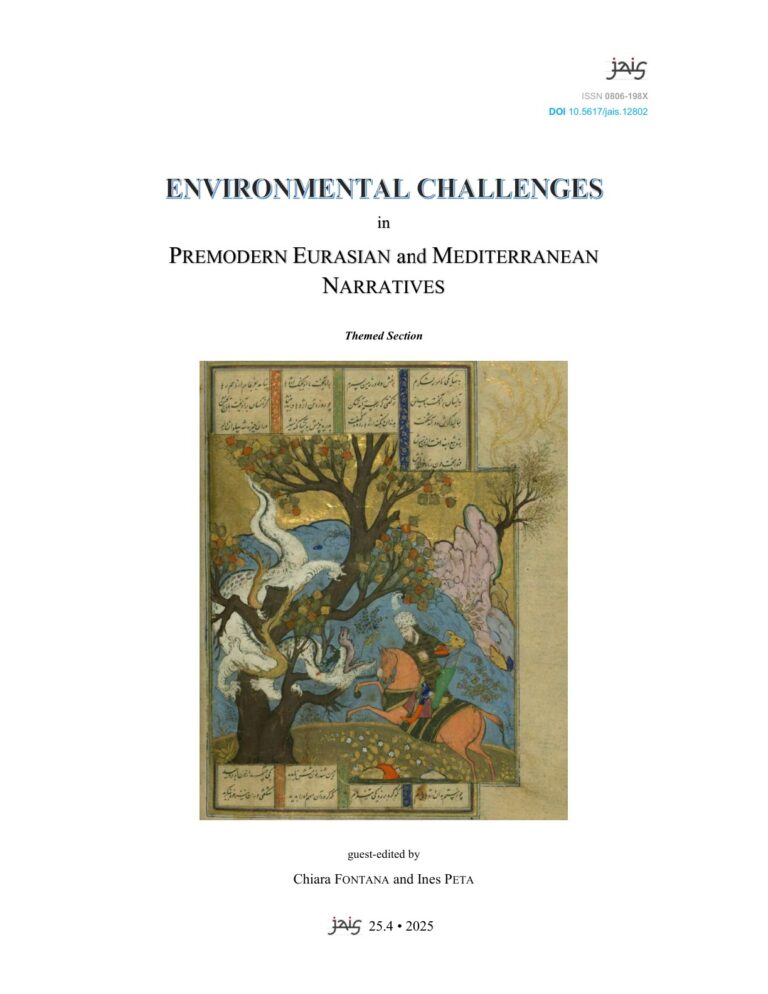 The Mythological Control of the River Nile: A Study on the Islamic Sources
Marco Demichelis Abstract Published in the Journal of Arabic and Islamic Studies (vol. 25, no. 4, 2025, pp. 69-87), in the themed section "Environmental Challenges in…
 The Conciliarist Idea of Islam in the Quattrocento: Prelude and Legacy
Marco Demichelis Abstract Published in the journal Religions (vol. 15, no. 9, 2024), this article by Marco Demichelis, Assistant Professor in History of the Islamic World…
 The Khatim an-Nabiyyin (The Seal of the Prophets) and Its Inclusive Abrahamic Perspective: Muhammad and ‘Isa ibn Maryam in Dialogue
Marco Demichelis Abstract “Muhammad is not the father of any one of your men; he is God’s messenger and the Seal of the Prophets: God knows…
 Salvation and Hell in Classical Islamic Thought.
Marco Demichelis Presentation : Salvation and Hell in Classical Islamic Thought uses classical Islamic sources to trace the development of Islamic eschatology during the formative centuries of…
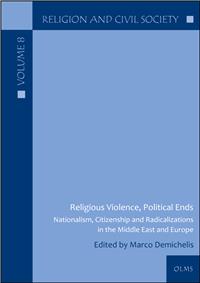 Religious Violence, Political Ends, Nationalism, Citizenship and Radicalizations in the Middle East and Europe
Marco Demichelis Since antiquity, religious violence based on political motives has been and remains a common practice: the atrocities committed by the Roman Empire against the…
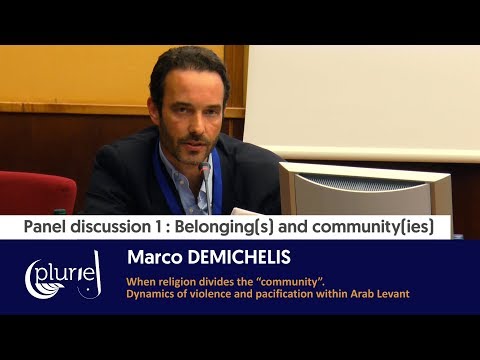 When religion divides the “community”. Dynamics of violence and pacification within Arab Levant
Marco Demichelis Conference of Marco DEMICHELIS, at the second international Congress of PLURIEL Abstract Since the nineteenth century, the dynamics of inter-religious conflict within the Arab…
Related resources: « Violence and religion »
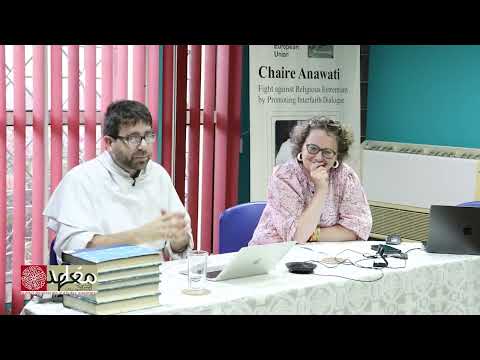 “War and peace”, by Adrien Candiard
On Wednesday 20 May 2026, the Dominican Institute for Oriental Studies (IDEO) hosted in Cairo a lecture by Brother Adrien Candiard, Dominican and Islamologist,…
 Expulsion of the ‘Turk’: Contextualising Islamophobia in the Balkans, the Case of Bosnia and Herzegovina
Anja Zalta An article by Anja Zalta published in Intellectual Discourse (vol. 33, special issue, 2025).The author analyses the rise of Islamophobia in the Balkans, particularly…
 Muhammad Tahir-ul-Qadri, Human Rights and Democracy
Dirk Ansorge Title of the lecture : 'Embracing the Other: Muhammad Tahir-ul-Qadri‘s approach to Human Rights and Democracy' In the Western world, the Pakistani politician and…
 Islamic Hermeneutics of Nonviolence: Key Concepts and Methodological Steps
Adnane Mokrani The article traces the key concepts and methodological steps that make an Islamic theology of nonviolence plausible. It offers the tools for a critical…
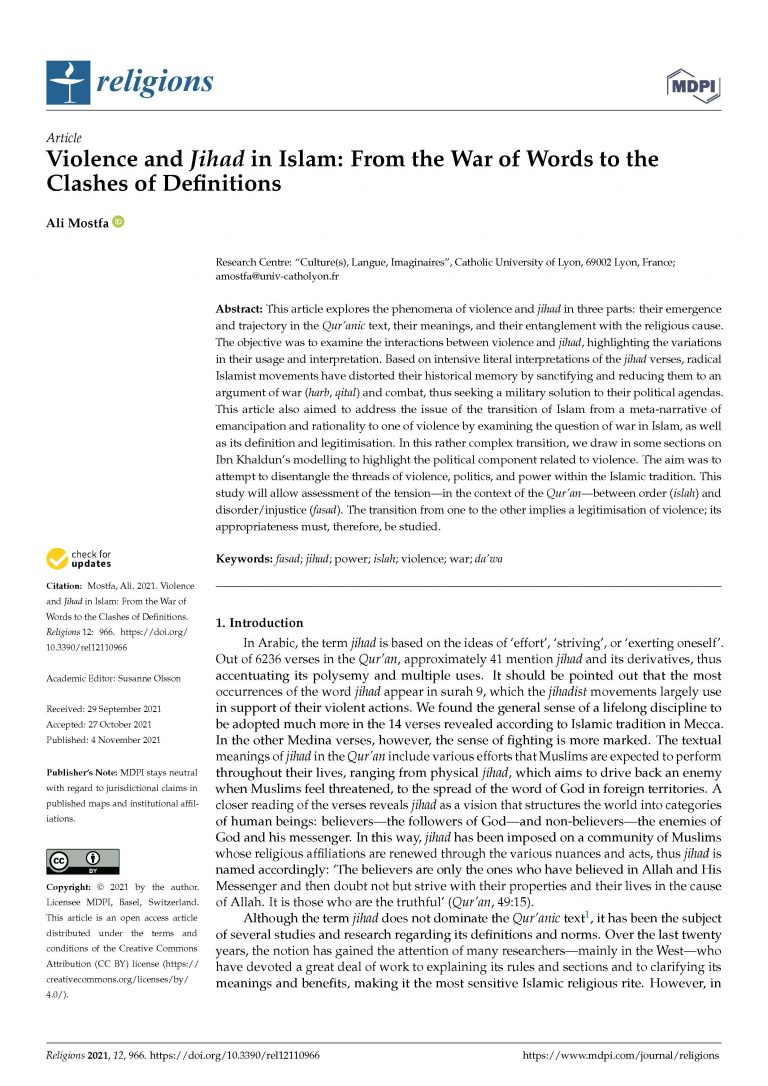 Violence and Jihad in Islam: From the War of Words to the Clashes of Definitions
Mohamed-Ali Mostfa This article explores the phenomena of violence and jihad in three parts: their emergence and trajectory in the Qur’anic text, their meanings, and their entanglement with the religious…
 Studies of radicalization leading to violence in the name of Islam: mapping theoretical actors to better understand epistemological and ethical issues
Wael Saleh Original title : "Les études de la radicalisation menant à la violence au nom de l’islam : cartographier les acteurs théoriques pour mieux comprendre…