
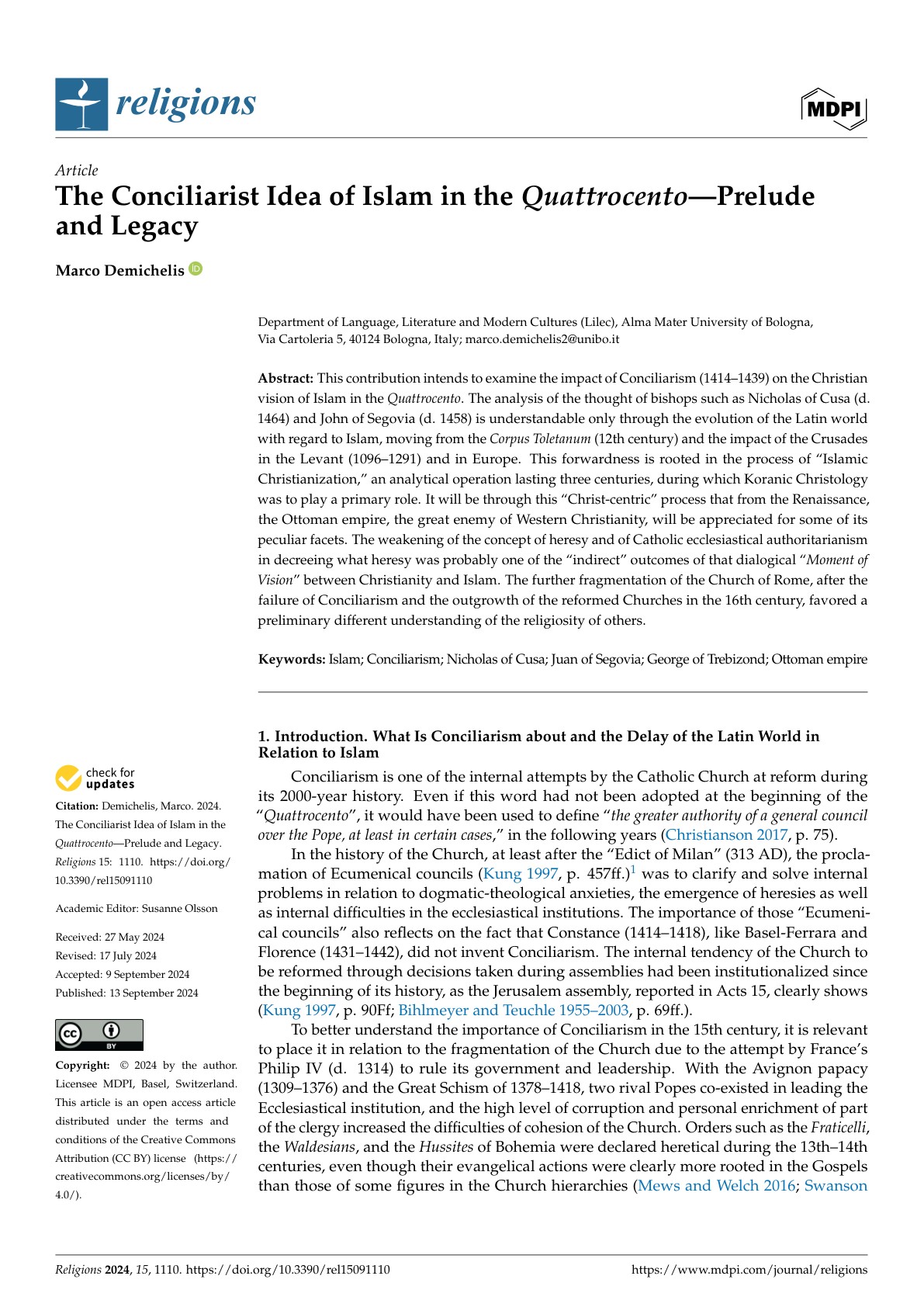

The Conciliarist Idea of Islam in the Quattrocento: Prelude and Legacy
Abstract
Published in the journal Religions (vol. 15, no. 9, 2024), this article by Marco Demichelis, Assistant Professor in History of the Islamic World and Islamic Thought at the University of Bologna, examines the impact of Conciliarism (1414-1439), the movement that asserted the authority of a general council over the Pope, on the Christian vision of Islam in the fifteenth century.
The author first retraces the evolution of the Latin view of Islam, shaped by the Corpus Toletanum, compiled in the twelfth century around Peter the Venerable and including the first Latin translation of the Qur’an, and by the impact of the Crusades. For three centuries, Islam was read through Christian categories, with Qur’anic Christology playing a central role in this reading. On the Greek side, Gregory Palamas, a captive of the Ottomans, then Patriarch Gennadios Scholarios and George of Trebizond engaged in dialogue with the Turks and with Sultan Mehmed II.
After the fall of Constantinople (1453), Nicholas of Cusa and John of Segovia proposed an alternative to the crusade advocated by Pius II. Cusanus’s De pace fidei put forward the idea of one religion in a variety of rites, before his Cribratio Alkorani returned to a refutation of the Qur’an, while John of Segovia defended a “way of peace and doctrine”.
Although Conciliarism failed, and the “Christological paradigm” did little to change the Church’s actual attitude, still shaped by the crusading mindset, the author shows that the peaceful approach of Cusanus and Segovia paved the way for a different view of the Ottoman world: that of Erasmus, then the Turcophilia of the Renaissance, attentive to the religious tolerance, diplomatic power and military discipline of the Ottomans. In his view, the weakening of the notion of heresy was one of the indirect outcomes of this “moment of vision” between Christianity and Islam.
The article is freely available on the journal website (DOI 10.3390/rel15091110).
Résumé
Paru en anglais sous le titre « The Conciliarist Idea of Islam in the Quattrocento: Prelude and Legacy » dans la revue Religions (vol. 15, n° 9, 2024), cet article de Marco Demichelis, maître de conférences en histoire du monde islamique et de la pensée islamique à l’Université de Bologne, examine l’effet du conciliarisme (1414-1439), courant qui affirmait l’autorité du concile général sur le pape, sur la vision chrétienne de l’islam au XVe siècle.
L’auteur retrace d’abord l’évolution du regard latin sur l’islam, marquée par le Corpus Toletanum, réuni au XIIe siècle autour de Pierre le Vénérable et qui comprenait la première traduction latine du Coran, et par l’impact des croisades. Pendant trois siècles, l’islam est lu à partir de catégories chrétiennes, et la christologie coranique joue un rôle central dans cette lecture. Du côté grec, Grégoire Palamas, captif des Ottomans, puis le patriarche Gennadios Scholarios et Georges de Trébizonde dialoguent avec les Turcs et avec le sultan Mehmed II.
Après la chute de Constantinople (1453), Nicolas de Cues et Jean de Ségovie proposent une autre voie que la croisade prônée par Pie II. Le De pace fidei de Nicolas de Cues avance l’idée d’une seule religion dans la diversité des rites, avant que sa Cribratio Alkorani ne revienne à une réfutation du Coran, tandis que Jean de Ségovie défend une « voie de la paix et de la doctrine ».
Si le conciliarisme a échoué, et si le « paradigme christologique » a peu changé l’attitude concrète de l’Église, toujours marquée par l’esprit de croisade, l’auteur montre que l’approche pacifique de Cues et de Ségovie a préparé un autre regard sur le monde ottoman : celui d’Érasme, puis la « turcophilie » de la Renaissance, attentive à la tolérance religieuse, à la puissance diplomatique et à la discipline de l’armée ottomane. L’affaiblissement de la notion d’hérésie compte, selon lui, parmi les effets indirects de ce « moment de vision » entre christianisme et islam.
L’article est en libre accès sur le site de la revue (DOI 10.3390/rel15091110).
ملخّص
نُشر هذا المقال بالإنكليزية في مجلة «Religions» (المجلد 15، العدد 9، 2024)، تحت العنوان الآتي:
The Conciliarist Idea of Islam in the Quattrocento: Prelude and Legacy
وفيه يدرس ماركو ديميشيليس، الأستاذ المساعد في تاريخ العالم الإسلامي والفكر الإسلامي في جامعة بولونيا، أثرَ الحركة المجمعية (1414-1439)، وهي التيار الذي أكّد سلطة المجمع العام على البابا، في النظرة المسيحية إلى الإسلام في القرن الخامس عشر.
يستعيد المؤلّف أولاً تطوّر النظرة اللاتينية إلى الإسلام، كما طبعتها «المجموعة الطليطلية» التي جُمعت في القرن الثاني عشر حول بطرس المبجّل وتضمّنت أول ترجمة لاتينية للقرآن، وأثرُ الحروب الصليبية. فعلى مدى ثلاثة قرون، قُرئ الإسلام بمقولات مسيحية، وأدّت صورة المسيح في القرآن دوراً محورياً في هذه القراءة. ومن الجانب اليوناني، حاور غريغوريوس بالاماس، أسير العثمانيين، ثم البطريرك جناديوس سكولاريوس وجورج الطرابزوني، الأتراكَ والسلطان محمد الثاني.
وبعد سقوط القسطنطينية (1453)، اقترح نيقولاوس الكوزاني وخوان دي سيغوفيا طريقاً غير الحملة الصليبية التي دعا إليها البابا بيوس الثاني. فقد طرح الكوزاني في كتابه «في سلام الإيمان» فكرة دين واحد في تنوّع الطقوس، قبل أن يعود في «غربلة القرآن» إلى الردّ على القرآن، في حين دافع خوان دي سيغوفيا عن «طريق السلام والتعليم».
ومع أنّ الحركة المجمعية أخفقت، وأنّ «المقاربة المتمحورة حول المسيح» لم تغيّر كثيراً موقف الكنيسة الفعلي الذي ظلّ أسير ذهنية الحروب الصليبية، يبيّن المؤلّف أنّ المقاربة السلمية لدى الكوزاني وسيغوفيا مهّدت لنظرة مختلفة إلى العالم العثماني: نظرة إيراسموس، ثم «الولع بالأتراك» في عصر النهضة، الذي التفت إلى التسامح الديني لدى العثمانيين وقوّتهم الدبلوماسية وانضباط جيشهم. ويرى أنّ إضعاف مفهوم الهرطقة كان من النتائج غير المباشرة لهذه «اللحظة الكاشفة» بين المسيحية والإسلام.
والمقال متاح مجّاناً على موقع المجلة.


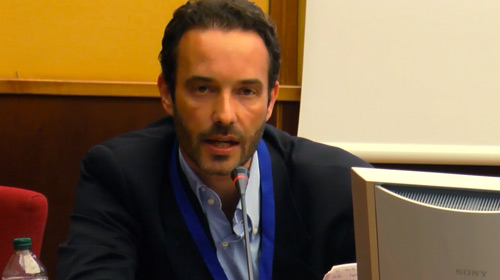
Resources of this researcher
article
The Conciliarist Idea of Islam in the Quattrocento: Prelude and Legacy
Abstract Published in the journal Religions (vol. 15, no. 9, 2024), this article by Marco Demichelis, Assistant Professor in History of the Islamic World and Islamic Thought at the University of...
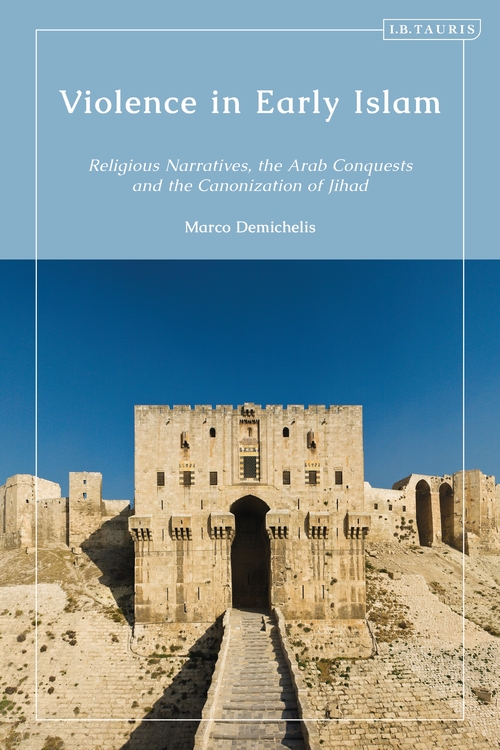
publication
Violence in Early Islam. Religious Narratives, the Arab Conquests and the Canonization of Jihad
Presentation: The concept of jihad holds a prominent place in Islamic thought and history. Beyond its spiritual meanings, the term has historically been associated with the sweeping Arab-Believers ...
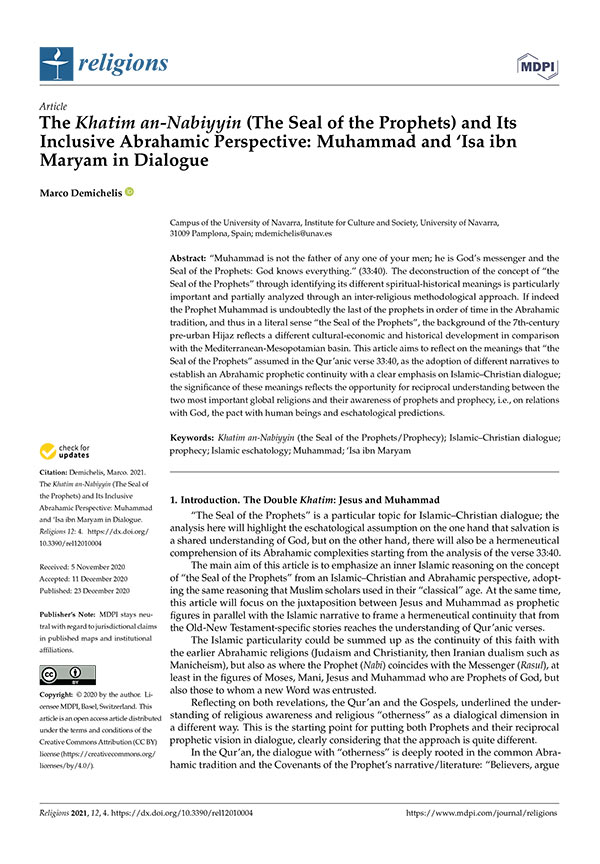
article
The Khatim an-Nabiyyin (The Seal of the Prophets) and Its Inclusive Abrahamic Perspective: Muhammad and ‘Isa ibn Maryam in Dialogue
Abstract “Muhammad is not the father of any one of your men; he is God’s messenger and the Seal of the Prophets: God knows everything.” (33:40). The deconstruction of the concept of “the Seal of...
publication
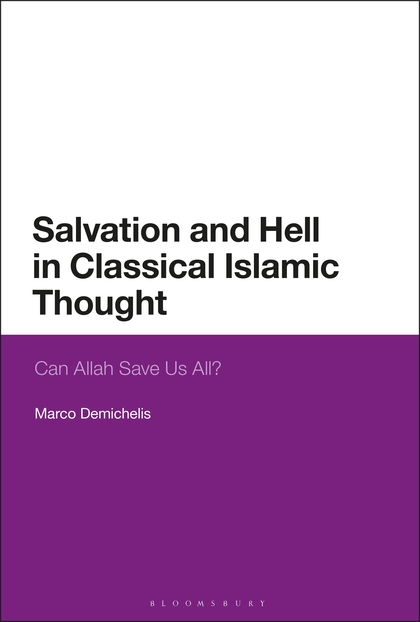
Salvation and Hell in Classical Islamic Thought.
Presentation : Salvation and Hell in Classical Islamic Thought uses classical Islamic sources to trace the development of Islamic eschatology during the formative centuries of Islamic intellectual ...
publication
Religious Violence, Political Ends, Nationalism, Citizenship and Radicalizations in the Middle East and Europe
Since antiquity, religious violence based on political motives has been and remains a common practice: the atrocities committed by the Roman Empire against the first Christian communities were quic...

videos
When religion divides the “community”. Dynamics of violence and pacification within Arab Levant
Conference of Marco DEMICHELIS, at the second international Congress of PLURIEL Abstract Since the nineteenth century, the dynamics of inter-religious conflict within the Arab world accentuated...
videos
Presentation of the congress “Islam and Belonging” of PLURIEL
With the voices of members of the Scientific Comittee

article
The Mihna. Deconstruction and reconsideration of the Mu’tazilite role in the “Inquisition
Abstract The Miḥna has usually been attributed to the Mu‘tazilite theological school as expression of something unusual, a bid‘ah (Islamic innovation) related to a rationalist group of theologia...
article
The Fate of Others in 14th century Hanbalism
Abstract In a recent publication entitled Ibn Taymiyya’s Theological Ethics, Sophia Vasalou tackles the moral objectivism that Ibn Taymiyya would reworked inspired to the unorthodox thought of M...
Resources related to History
publication
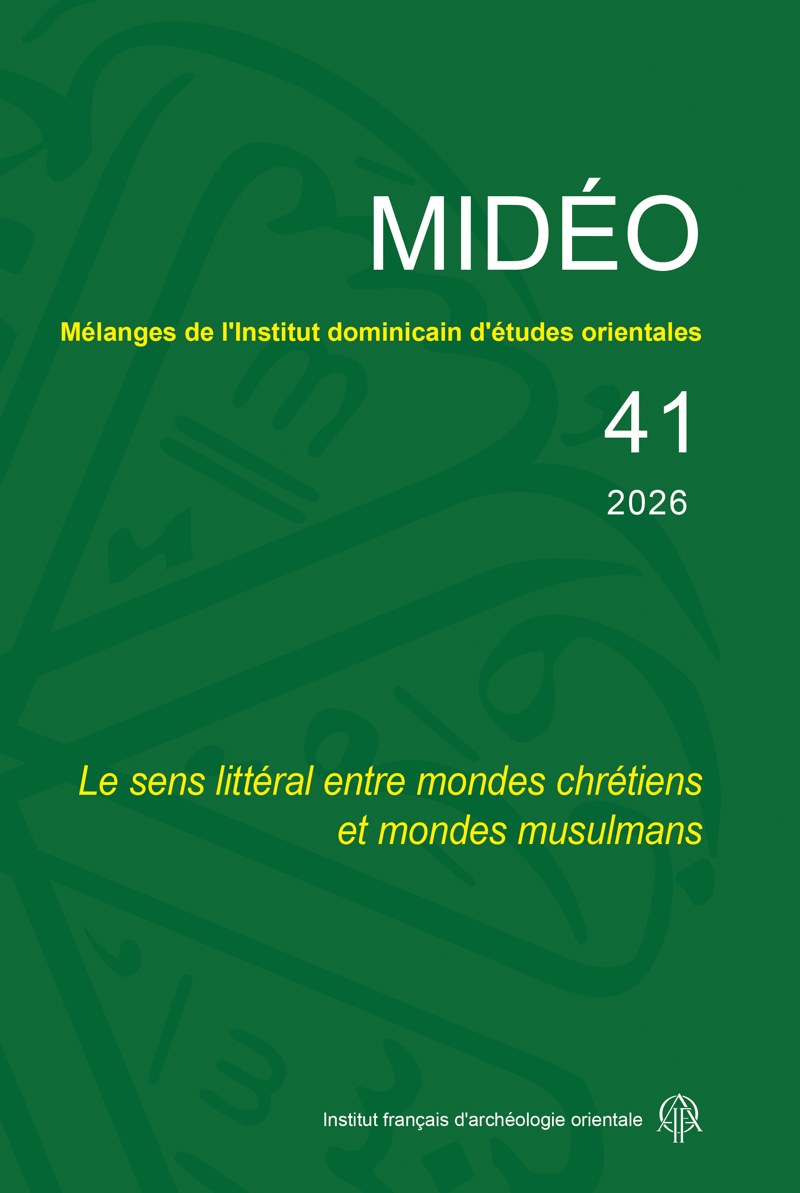
MIDÉO No. 41: The Literal Meaning between Christian Worlds and Muslim Worlds
- Jean Druel
- Emmanuel Pisani
Entitled after its thematic dossier The Literal Meaning between Christian Worlds and Muslim Worlds, issue 41 of the Mélanges de l’Institut dominicain d’études orientales (MIDÉO) address...

article
Experiencing a Mosque Through Photography: Islam As an Ordinary Religion
- Guillaume Chatagny
Abstract Published in 2021 in Visual Ethnography (vol. 10, no. 2) under the title "Experiencing a Mosque Through Photography: Islam As an Ordinary Religion", this article by Guillaume Chatagny, ...

article
Islam Seen through the Work of Aziz al-Azmeh
- Wasim Salman
Abstract Published in Arabic in issue 50 (2024) of Islamochristiana (PISAI, released in April 2025), this essay by Wasim Salman, president of PISAI and director of the journal, examines the rela...

article
Islamic Visions of Jesus: Revelation, Prophecy, and Eschatology
- Antonio Cuciniello
Abstract Published in the collective volume Jerusalem in Memory and Eschatology: Jewish, Christian, and Muslim Visions of the Past and Future of Jerusalem, edited by Emma O'Donnell Polyakov (Blo...

article
The First Council of Nicaea (325) and the Christian-Muslim Dialogue on God’s Unity and Trinity
- Dirk Ansorge
Abstract Published under the original title "Das erste Konzil von Nizäa (325) und der christlich-muslimische Dialog über Gottes Einheit und Dreifaltigkeit" in issue 2/2025 of CIBEDO-Beiträge, th...
publication
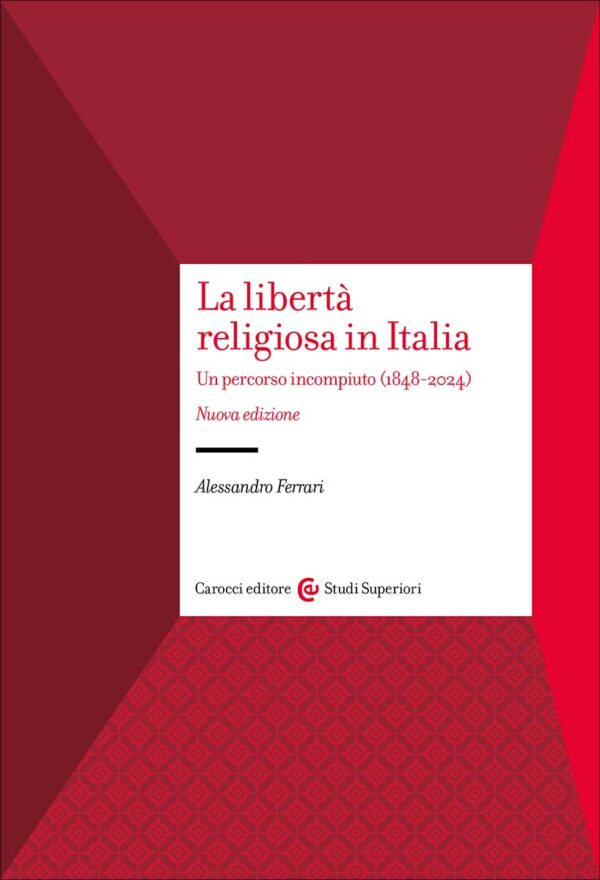
Religious Freedom in Italy. An Unfinished Path (1848-2024)
- Alessandro Ferrari
Published under the original title La libertà religiosa in Italia. Un percorso incompiuto (1848-2024), this synthesis by Alessandro Ferrari, professor of ecclesiastical law and comparative religiou...
article
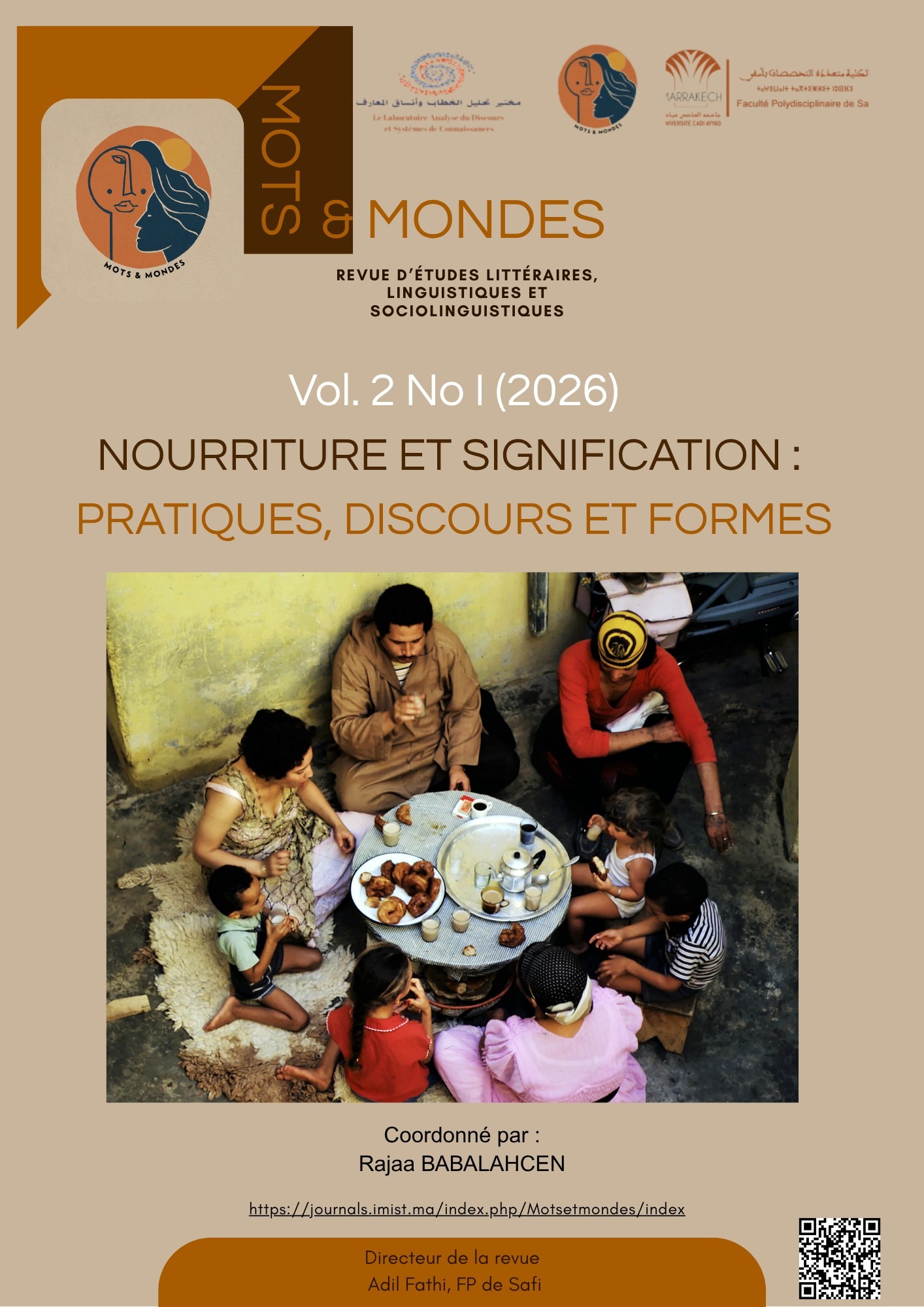
The Table as a Social Language: Food and Norms in al-Ǧāḥiẓ
- Faisal Kenanah
Abstract Published in French in the journal Mots et mondes. Revue d'études littéraires, linguistiques et sociolinguistiques (Cadi Ayyad University, Marrakesh), in the issue "Nourriture et signif...

publication
The Recognition of a Hummingbird. Essays on Interreligious Dialogue and Missionary Work (2007-2025)
- Rémi Caucanas
Published in May 2026 by PISAI (Pontifical Institute for Arabic and Islamic Studies, Rome), this collection brings together the essays of Rémi Caucanas on interreligious dialogue and missionary wor...