


European Islam and the Italian Case: Tendencies and Specificities
Abstract
Published under the original title “European Islam and the Italian case. Tendencies and specificities” in Contemporary Islam (Springer, November 2025, open access), this article by Stefano Allievi, sociologist at the University of Padua and one of the leading scholars of European Islam, sketches the transformation of the European religious landscape in the second half of the 20th century before turning to the Italian case.
Secularisation, privatisation and pluralisation of religious supply have completely reshaped the European religious field. These processes have accelerated with the arrival and progressive stabilisation of successive waves of immigrants. The presence of Muslim populations, statistically, culturally and geopolitically the most significant and most debated of these new religious presences, brought Islam to Europe and gave rise to a modern European Islam. Trajectories of integration nevertheless differ from country to country.
The Italian case exhibits its own peculiarities: a more recent Muslim presence than elsewhere in Western Europe, distinct legal and social paths, and the absence of a negotiated intesa between the State and Muslim organisations. Allievi maps these specificities by combining the sociology of religion, migration dynamics and the public governance of pluralism.
Open-access article on the Springer platform.
Résumé
Publié sous le titre original « European Islam and the Italian case. Tendencies and specificities » dans la revue Contemporary Islam (Springer, novembre 2025, accès libre), cet article de Stefano Allievi, sociologue à l’Université de Padoue et l’un des principaux spécialistes de l’islam européen, propose un panorama des transformations religieuses de l’Europe dans la seconde moitié du XXe siècle, avant de s’arrêter sur le cas italien.
Sécularisation, privatisation et pluralisation de l’offre religieuse ont profondément recomposé le paysage européen. Ces processus se sont accélérés avec l’arrivée et la stabilisation de vagues migratoires successives. La présence des populations musulmanes migrantes, statistiquement, culturellement et géopolitiquement la plus significative et la plus débattue, a fait apparaître un islam européen moderne. Les trajectoires d’intégration diffèrent toutefois d’un pays à l’autre.
Le cas italien présente à cet égard des particularités notables : présence musulmane plus récente qu’ailleurs en Europe de l’Ouest, chemins juridiques et sociaux différents, absence d’intesa négociée entre l’État et les organisations musulmanes. Allievi décrit ces spécificités en croisant sociologie de la religion, dynamiques migratoires et gouvernance publique du pluralisme.
Article en accès libre sur la plateforme Springer.
ملخّص
يظهر هذا المقال في مجلّة Contemporary Islam (شبرينغر، نوفمبر/تشرين الثاني 2025، مقالٌ متاح بالوصول الحرّ)، تحت عنوانه الأصلي:
European Islam and the Italian case. Tendencies and specificities
يُقدّم فيه ستيفانو أليفي، عالم الاجتماع في جامعة بادوفا وأحد أبرز المتخصّصين في الإسلام الأوروبي، لوحةً عامّةً للتحوّلات الدينية التي شهدتها أوروبا في النصف الثاني من القرن العشرين، قبل التوقّف عند الحالة الإيطالية.
لقد أعادت العَلْمنة والخصخصة الدينية وتعدّدية العرض الديني تشكيلَ المشهد الأوروبي تشكيلًا عميقًا. وقد تسارعت هذه المسارات مع وصول موجاتٍ متعاقبة من المهاجرين واستقرارها التدريجي. وحضورُ المسلمين المهاجرين، وهو الأبرزُ إحصائيًّا وثقافيًّا وسياسيًّا بين هذه الحضورات الدينية الجديدة، هو ما جلب الإسلامَ إلى أوروبا وأتاح ظهورَ «إسلامٍ أوروبيّ حديث». غير أنّ مسارات الاندماج تتباين من بلدٍ إلى آخر.
وتنطوي الحالة الإيطالية على خصوصيّاتٍ لافتة: حضورٌ مسلم أحدثُ عهدًا مقارنةً ببقيّة أوروبا الغربية، ومساراتٌ قانونية واجتماعية مختلفة، وغيابُ اتفاقيةٍ (intesa) تفاوضتْ عليها الدولةُ مع الهيئات المسلمة. يتعقّبُ أليفي هذه الخصوصيات بمُقاطعةٍ بين علم اجتماع الدين، وديناميات الهجرة، وحوكمة التعدّدية الدينية في السياسات العامة.
المقالُ متاحٌ بالوصول الحرّ على منصّة شبرينغر.



Resources of this researcher

videos
Is Islam in Europe becoming the Islam of Europe?
First International Congress of the University Platform for Research on Islam in Europe and Lebanon (PLURIEL), Lyon, 2016: societal axis Speaker: Stefano Allievi, Professor of Sociology, Directo...
publication
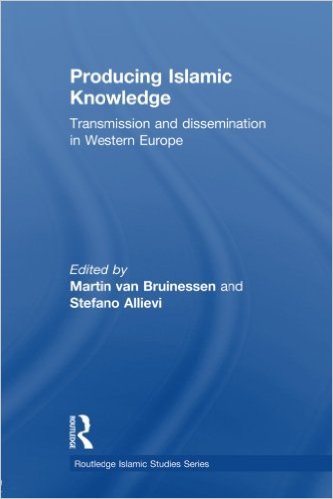
Producing Islamic Knowledge: Transmission and Dissemination in Western Europe
How do Muslims in Europe acquire discursive and practical knowledge of Islam? How are conceptions of Islamic beliefs, values and practices transmitted and how do they change? Who are the authoritie...
Resources related to Islam en Europe

article
Experiencing a Mosque Through Photography: Islam As an Ordinary Religion
- Guillaume Chatagny
Abstract Published in 2021 in Visual Ethnography (vol. 10, no. 2) under the title "Experiencing a Mosque Through Photography: Islam As an Ordinary Religion", this article by Guillaume Chatagny, ...
article
European Islam and the Italian Case: Tendencies and Specificities
- Stefano Allievi
Abstract Published under the original title "European Islam and the Italian case. Tendencies and specificities" in Contemporary Islam (Springer, November 2025, open access), this article by Stef...