
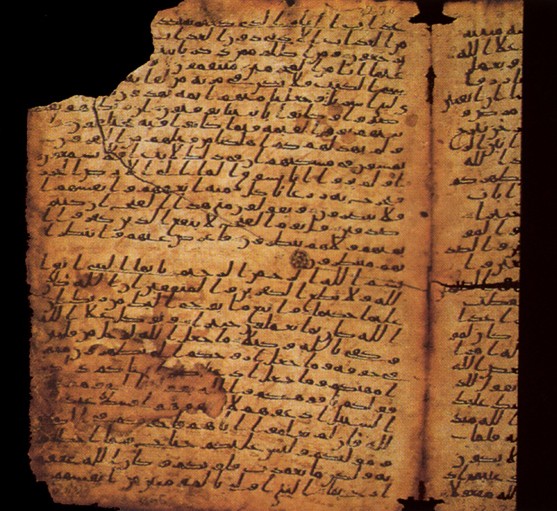
IDEO and Orient-Institut Beirut issue a call for papers on the composition of the Qur’an
The Dominican Institute for Oriental Studies (IDEO) in Cairo and the Orient-Institut Beirut (OIB) have issued a call for papers for the international conference “The Composition of the Qur’an: Structure, Style & Meaning,” to be held on 19 and 20 March 2027 at IDEO. The call is led by Emmanuel Pisani, director of IDEO and deputy general coordinator of Pluriel.
The conference examines the structure, rhetoric and style of the Qur’anic text, asking what its composition achieves in generating meaning, organising arguments and establishing authority. It brings the insights of the Islamic tradition (tafsīr, balāġa, ʿulūm al-Qurʾān) into dialogue with contemporary scholarly approaches, literary, philological, historical and codicological, around three themes: literary structure and rhetorical analysis; textual formation and historical context; and self-referentiality and interpretation.
Scholars wishing to present a paper are invited to send a title and an abstract of 300 to 500 words (PDF format), together with a short CV (one page maximum, indicating institutional affiliation and recent publications), to quran2027-ideo-oib@ideo-cairo.org by 30 September 2026.
- Submission deadline: 30 September 2026
- Notification of acceptance: 30 November 2026
- Conference: 19 and 20 March 2027, IDEO, Cairo
- Full papers due: 30 September 2027
Selected papers, following double-blind review, will be published in volume 45 of MIDEO (2029).
L’Institut dominicain d’études orientales (IDEO), au Caire, et l’Orient-Institut Beirut (OIB) lancent un appel à communications pour le colloque international « The Composition of the Qur’an: Structure, Style & Meaning », qui se tiendra les 19 et 20 mars 2027 à l’IDEO. L’appel est porté par Emmanuel Pisani, directeur de l’IDEO et coordinateur général adjoint de Pluriel.
Ce colloque examine la structure, la rhétorique et le style du texte coranique, en s’interrogeant sur ce que sa composition accomplit dans la génération de sens, l’organisation des arguments et l’établissement de l’autorité. Il fait dialoguer les apports de la tradition islamique (tafsīr, balāġa, ʿulūm al-Qurʾān) avec les approches académiques contemporaines : littéraire, philologique, historique et codicologique. Les contributions s’articulent autour de trois axes : structure littéraire et analyse rhétorique, formation textuelle et contexte historique, auto-référencialité et interprétation.
Pour présenter une communication, les candidats sont invités à envoyer un titre et un résumé de 300 à 500 mots (format PDF), accompagné d’un court CV (une page maximum, précisant affiliation institutionnelle et publications récentes), à l’adresse quran2027-ideo-oib@ideo-cairo.org avant le 30 septembre 2026.
- Date limite de soumission : 30 septembre 2026
- Notification d’acceptation : 30 novembre 2026
- Colloque : 19 et 20 mars 2027, IDEO, Le Caire
- Soumission des articles complets : 30 septembre 2027
Les articles sélectionnés, après évaluation en double aveugle, seront publiés dans le volume 45 du MIDÉO (2029).
أطلق المعهد الدومنيكي للدراسات الشرقية (IDEO) في القاهرة ومعهد الشرق في بيروت (OIB) نداءً لتقديم المداخلات في المؤتمر الدوليّ «نظم القرآن: البنية والأسلوب والمعنى»، المزمع عقدُه يومَي 19 و20 آذار/مارس 2027 في المعهد الدومنيكي. ويتولّى الإشرافَ على هذا النداء إيمانويل بيساني، مدير المعهد الدومنيكي والمنسّق العام المساعد للمنصة الجامعية للدراسات حول الإسلام.
يتناول المؤتمرُ بنيةَ النصّ القرآنيّ وبلاغتَه وأسلوبَه، مستجلياً ما يُحقّقه نظمُه في توليد المعنى وترتيب الحجج وإرساء المرجعيّة، في حوارٍ بين معطيات التراث الإسلاميّ (التفسير والبلاغة وعلوم القرآن) والمقاربات الأكاديميّة المعاصرة، الأدبيّة والفيلولوجيّة والتاريخيّة والكوديكولوجيّة، وذلك عبر ثلاثة محاور: البنية الأدبيّة والتحليل البلاغيّ؛ والتشكّل النصّيّ والسياق التاريخيّ؛ والإحالة الذاتيّة والتأويل.
وعلى الراغبين في تقديم مداخلةٍ أن يُرسلوا، قبل 30 أيلول/سبتمبر 2026، عنواناً وملخّصاً يتراوح بين 300 و500 كلمة (بصيغة PDF)، مرفقاً بسيرةٍ ذاتيّة موجزة (صفحة واحدة على الأكثر، تُبيّن الانتماء المؤسّسيّ والمنشورات الحديثة)، إلى العنوان الإلكترونيّ:
quran2027-ideo-oib@ideo-cairo.org
- آخر أجل لتقديم المقترحات: 30 أيلول/سبتمبر 2026
- إشعار القبول: 30 تشرين الثاني/نوفمبر 2026
- المؤتمر: 19 و20 آذار/مارس 2027، المعهد الدومنيكي، القاهرة
- تسليم المقالات الكاملة: 30 أيلول/سبتمبر 2027
أمّا الأبحاثُ المختارة، فتُنشَر بعد تحكيمٍ مزدوج التعمية في العدد الخامس والأربعين من مجلّة المعهد (MIDEO) عام 2029.

Resources related to Quranic Studies

article
Questions on Islamic Soteriology in Early Islam
- Jaume Flaquer Garcia
Abstract Published under the original title "Cuestiones sobre la soteriología islámica en el islam primitivo" in the collective volume Riesgos y fidelidades. Miradas teológicas para un mundo plu...

article
The Uncreated Muslim Qur’an and the Eternally Begotten Christian Logos
- Jaume Flaquer Garcia
Abstract Published under the original title "El Corán musulmán increado y el Logos cristiano eternamente engendrado" in the monographic section Logos, Agape, Sarx. Una dialógica cristiana of iss...
article
A Fragrant Spiritual Heritage. Some Considerations on Perfumes in Islam
- Ida Zilio-Grandi
Abstract Published in volume 20 (2025) of Quaderni di Studi Arabi, this article by Ida Zilio-Grandi (Ca' Foscari University of Venice) revisits a constant of Islamic history that has attracted r...
publication
The Virtues of the Good Muslim
- Ida Zilio-Grandi
Published in 2025 by Edizioni Ca’ Foscari in Venice, this monograph by Ida Zilio-Grandi (Ca’ Foscari University) is the augmented English translation of Le virtù del buon Musulmano, fir...
publication
Without Judaism, No Islam. The Denied Source
- Mouhanad Khorchide
Published under the original title Ohne Judentum kein Islam. Die verleugnete Quelle, with the subtitle Die Wurzeln des muslimischen Antisemitismus. Eine aktuelle Analyse (“The Roots of Muslim...

article
Literary, Semiotic and Hermeneutical Approaches to the Qur’an in the Modern Period
- Wasim Salman
Abstract In this contribution to issue 51 (Mélanges) of the journal Islamochristiana, published in Italian as Approcci letterari, semiotici ed ermeneutici al Corano nel periodo moderno, Wasim Sa...
publication
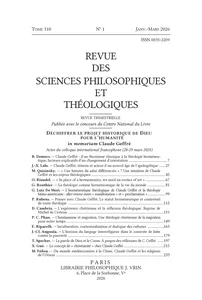
The Word of God and the Qur’an: On the Reflections of Claude Geffré
- Tobias Specker
Published in the Revue des sciences philosophiques et théologiques (vol. 110, 2026/1, pp. 197-213), this article by Tobias Specker examines the Christian theology of Islam developed by the Dominica...
publication
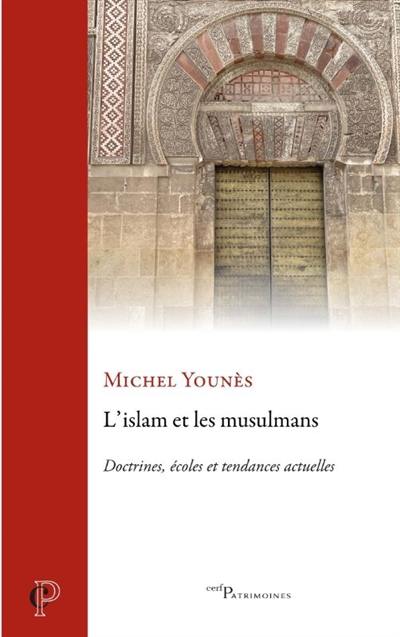
Islam and Muslims. Doctrines, Schools of Thought, and Current Trends
- Michel Younès
Publication date: April 16, 2026. Islam, as a historical, religious, and civilizational reality, is difficult to define. It can be perceived as a form of political governance, an expression of fait...