


Questions on Islamic Soteriology in Early Islam
Abstract
Published under the original title “Cuestiones sobre la soteriología islámica en el islam primitivo” in the collective volume Riesgos y fidelidades. Miradas teológicas para un mundo plural, edited by Ianire Angulo Ordorika and Susana Vilas Boas (Herder, Barcelona, 2025, 424 pp.), this chapter by Jaume Flaquer, Jesuit, professor at the Faculty of Theology of Universidad Loyola Andalucía (Granada) and director of the Cátedra Andaluza para el Diálogo de las Religiones (CANDIR), examines how early Islam conceived of salvation.
Often reduced, in comparative accounts, to a mere “Last Judgment”, early Muslim soteriology proves in fact considerably more complex: it holds together divine mercy, faith, obedience to the Law and eschatological hope in a tension that Flaquer restores in its own terms. Probing its earliest Qur’anic formulations and their development in the theology of the first centuries opens up an unexpected site of Christian-Muslim dialogue: what does “being saved” mean in each tradition, and from which representation of the God who saves?
The chapter belongs to the third part of the volume, “Teología al servicio del encuentro” (A Theology at the Service of Encounter), which responds to Pope Francis’s challenge to universities and ecclesiastical faculties: to think faith “by taking risks while remaining faithful” in a world marked by difference, crisis, fear, gender questions and artificial intelligence.
Further details on the Dialnet record of the article and on the volume.
Résumé
Publié sous le titre original « Cuestiones sobre la soteriología islámica en el islam primitivo » dans l’ouvrage collectif Riesgos y fidelidades. Miradas teológicas para un mundo plural, dirigé par Ianire Angulo Ordorika et Susana Vilas Boas (Herder, Barcelone, 2025, 424 p.), ce chapitre de Jaume Flaquer, jésuite, professeur à la Faculté de théologie de l’Universidad Loyola Andalucía (Grenade) et directeur de la Cátedra Andaluza para el Diálogo de las Religiones (CANDIR), s’interroge sur la manière dont l’islam primitif a pensé le salut.
Souvent réduite, dans les présentations comparées, à un simple « jugement dernier », la sotériologie musulmane primitive s’avère bien plus complexe : elle articule miséricorde divine, foi, obéissance à la Loi et espérance eschatologique dans un ensemble dont Flaquer restitue la tension propre. En sonder les premières formulations coraniques puis leur développement dans la théologie des premiers siècles permet à l’auteur d’ouvrir un lieu inattendu du dialogue islamo-chrétien : que signifie « être sauvé » aux yeux de chaque tradition, et à partir de quelle représentation du Dieu qui sauve ?
Le chapitre s’inscrit dans la troisième partie de l’ouvrage, « Teología al servicio del encuentro » (Une théologie au service de la rencontre), qui répond au défi lancé par le pape François aux universités et facultés ecclésiastiques : penser la foi « en risquant et en restant fidèle » dans un monde marqué par les différences, la crise, la peur, les questions de genre et l’intelligence artificielle.
Pour en savoir plus, voir la notice Dialnet de l’article et celle du volume collectif.
ملخّص
يظهر هذا الفصل في المؤَلَّف الجماعيّ Riesgos y fidelidades. Miradas teológicas para un mundo plural، بإشراف إيانيري أنغولو أوردوريكا وسوسانا فيلاس بواس (منشورات هيردر، برشلونة، 2025، 424 صفحة)، تحت عنوانه الأصليّ:
Cuestiones sobre la soteriología islámica en el islam primitivo
يتساءل فيه خاومي فلاكير، اليسوعيّ الأستاذ في كلّية اللاهوت بجامعة لويولا الأندلسية (غرناطة) ومدير الكرسي الأندلسي لحوار الأديان (CANDIR)، عن الطريقة التي فكّر بها الإسلامُ المبكّر في الخلاص.
كثيرًا ما تُختزَل السوتيريولوجيا (لاهوت الخلاص) الإسلاميةُ المبكّرة، في المقارنات الرائجة، إلى مجرّد «يومٍ آخِر»؛ غير أنّها في الحقيقة أعقدُ بكثير: فهي تجمع بين رحمة الله والإيمان والانصياع للشريعة والرجاء الأخرويّ في وحدةٍ ذاتِ توتّرٍ يستعيدُ فلاكير حقيقتَها. يفتحُ الكاتب، بسبر الصياغات القرآنية الأولى وامتداداتها في لاهوت القرون الأولى، بابًا غير متوقَّعٍ للحوار الإسلاميّ المسيحيّ: ما معنى «أن يخلُصَ الإنسان» في كلا التقليدَين، وانطلاقًا من أيّ صورةٍ للإله المُخلِّص؟
يندرج الفصل ضمن الجزء الثالث من الكتاب «Teología al servicio del encuentro» (لاهوتٌ في خدمة اللقاء)، الذي يستجيبُ للتحدّي الذي طرحه البابا فرنسيس على الجامعات والكلّيات اللاهوتية: التفكير في الإيمان «بمخاطرةٍ ووفاء» في عالمٍ تخترقه الفوارقُ والأزماتُ والمخاوفُ ومسائلُ النوع الاجتماعيّ والذكاءُ الاصطناعيّ.
لمزيد من المعلومات، انظر سجلّ Dialnet للمقال، وكذلك صفحة الكتاب الجماعيّ.


Resources of this researcher

article
The Uncreated Muslim Qur’an and the Eternally Begotten Christian Logos
Abstract Published under the original title "El Corán musulmán increado y el Logos cristiano eternamente engendrado" in the monographic section Logos, Agape, Sarx. Una dialógica cristiana of iss...
article
The Relationship between Islam and Science: from Medieval Harmony to Contemporary concordism
The relationship between "reason and faith" or "science and religion" is articulated in Islam in a particular way by the fact that the Koran is interpreted as a revelation addressed to the intellec...
article
A reading of Ibn Arabi in light of the theology of religions
Abstract: “A Reading of Ibn ‘Arabī in the Light of the Theology of Religions”. Ibn ‘Arabī proposes a universal religion which encompasses all religions but which is theophanised synthetically in th...

videos
Islamic religious education in public schools : a study on its implementation, curriculum and social impact on the spanish case
Conference of Jaume FLAQUER at the second international Congress of PLURIEL in Rome The actual implementation of the right to Islamic religious education, despite being formally recognised by the ...

videos
Europe challenged by the Middle East conflict
First International Congress of the University Platform on Islam in Europe and Lebanon (PLURIEL): geopolitical axis Speaker: Jaume Flaquer, professor of interreligious dialogue at the Faculty of...
Resources related to Islamic Theology

article
Islamic Visions of Jesus: Revelation, Prophecy, and Eschatology
- Antonio Cuciniello
Abstract Published in the collective volume Jerusalem in Memory and Eschatology: Jewish, Christian, and Muslim Visions of the Past and Future of Jerusalem, edited by Emma O'Donnell Polyakov (Blo...
article
Questions on Islamic Soteriology in Early Islam
- Jaume Flaquer Garcia
Abstract Published under the original title "Cuestiones sobre la soteriología islámica en el islam primitivo" in the collective volume Riesgos y fidelidades. Miradas teológicas para un mundo plu...
publication
The Virtues of the Good Muslim
- Ida Zilio-Grandi
Published in 2025 by Edizioni Ca’ Foscari in Venice, this monograph by Ida Zilio-Grandi (Ca’ Foscari University) is the augmented English translation of Le virtù del buon Musulmano, fir...
publication
ʿAbd al-Mutaʿāl al-Ṣaʿīdī (1894-1971): A Defence of Religious Freedom
- Youssouf Sangare
Published in 2024 in the collective volume Théologies musulmanes du pluralisme religieux (ed. Emmanuel Pisani, Éditions du Cerf, proceedings of the ISTR symposium of 20-21 November 2021, pp. 65-88)...
videos
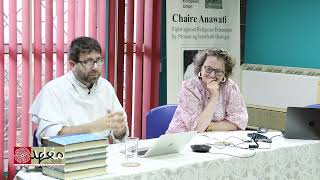
“War and peace”, by Adrien Candiard
On Wednesday 20 May 2026, the Dominican Institute for Oriental Studies (IDEO) hosted in Cairo a lecture by Brother Adrien Candiard, Dominican and Islamologist, on the theme "War and peace". Faced w...

videos
Defining the beautiful in Islam: between submission to and transgression of ethical norms
Paper presented at the 5th international congress of the University Platform for Research on Islam (Pluriel), held in Cordoba from 10 to 14 February 2026 on the theme "Ethics and Aesthetics in Isla...

videos
The contemplation of God’s signs according to Ibn Barrajān of Seville: towards an ethics respectful of the natural world
Paper presented at the 5th international congress of the University Platform for Research on Islam (Pluriel), held in Cordoba from 10 to 14 February 2026 on the theme "Ethics and Aesthetics in Isla...

videos
Annihilation in beauty, subsistence in ethics: the unity of unveiling and ethics in Ibn ʿArabī
Paper presented at the fifth international congress of the University Platform for Research on Islam (Pluriel), held in Cordoba from 10 to 14 February 2026 on the theme "Ethics and Aesthetics in Is...