


The Uncreated Muslim Qur’an and the Eternally Begotten Christian Logos
Abstract
Published under the original title “El Corán musulmán increado y el Logos cristiano eternamente engendrado” in the monographic section Logos, Agape, Sarx. Una dialógica cristiana of issue 79 (2025) of the journal Carthaginensia, this article by Jaume Flaquer, Jesuit, professor at the Faculty of Theology of Universidad Loyola Andalucía (Granada) and director of the Cátedra Andaluza para el Diálogo de las Religiones (CANDIR), unsettles a familiar assumption of the Christian-Muslim dialogue.
It is often argued that Arianism, which denied the Son full co-eternity with the Father, stands closer to Islam than the Nicene orthodoxy. Flaquer shows that the majority outcome of Muslim theological debates during the 2nd and 3rd centuries of the Hegira actually brings Sunni Islam closer to Nicene Christianity: when Muslim theology was compelled to rule on the status of the Word of God, it reached the same conclusion as Christianity did on the Logos, namely, the uncreated character of the Qur’an.
Combining theological and historical methodology, the author retraces the Muslim debates (Muʿtazilites, Ashʿarites, Ḥanbalites, etc.) and draws a conclusion of real importance for the interreligious theological dialogue: far from being a mere divergence, the double affirmation of the uncreated Logos and the uncreated Qur’an can become a shared point of engagement.
The article belongs to the monographic section “Logos, Agape, Sarx. Una dialógica cristiana” coordinated by Manuel Porcel Moreno. Further details on the Dialnet record and on the issue page of the journal.
Résumé
Publié sous le titre original « El Corán musulmán increado y el Logos cristiano eternamente engendrado » dans le monographique Logos, Agape, Sarx. Una dialógica cristiana du numéro 79 (2025) de la revue Carthaginensia, cet article de Jaume Flaquer, jésuite, professeur à la Faculté de théologie de l’Universidad Loyola Andalucía (Grenade) et directeur de la Cátedra Andaluza para el Diálogo de las Religiones (CANDIR), déplace un lieu commun du dialogue islamo-chrétien.
On lit souvent que l’arianisme, qui refusait au Fils la pleine coéternité avec le Père, serait plus proche de l’islam que l’orthodoxie issue du concile de Nicée. Flaquer montre que la résolution majoritaire des débats théologiques musulmans au cours des IIe et IIIe siècles de l’hégire rapproche en réalité l’islam sunnite du christianisme niçéen : lorsque la théologie musulmane a été contrainte de statuer sur le statut de la Parole de Dieu, elle a adopté la même résolution que celle du christianisme sur le Logos, à savoir le caractère incréé du Coran.
L’auteur croise méthodologie théologique et histoire des doctrines pour retracer les débats musulmans (muʿtazilites, ashʿarites, hanbalites…) et en tirer une conclusion importante pour le dialogue théologique interreligieux : loin d’être une simple divergence, la double affirmation du Logos incréé et du Coran incréé peut devenir un point d’accroche partagé.
Article intégré au monographique II « Logos, Agape, Sarx. Una dialógica cristiana » coordonné par Manuel Porcel Moreno. Pour en savoir plus, voir la notice Dialnet et la page du numéro sur le site de la revue.
ملخّص
يظهر هذا المقال في القسم الموضوعي «Logos, Agape, Sarx. Una dialógica cristiana» من العدد 79 (2025) لمجلّة Carthaginensia، تحت عنوانه الأصلي:
El Corán musulmán increado y el Logos cristiano eternamente engendrado
يزحزح فيه خاومي فلاكير، اليسوعيّ الأستاذ في كلّية اللاهوت بجامعة لويولا الأندلسية (غرناطة) ومدير الكرسي الأندلسي لحوار الأديان (CANDIR)، فكرةً مألوفةً في الحوار الإسلاميّ المسيحيّ.
كثيرًا ما يُقال إنّ الآريوسية، التي رفضت المساواةَ الأزليّة للابن مع الآب، أقربُ إلى الإسلام من الأرثوذكسيّة النيقاويّة. غير أنّ فلاكير يُبيّن أنّ الحلّ الذي رجّحته المناقشات اللاهوتيّة الإسلامية في القرنَين الثاني والثالث الهجريَّين قرّب الإسلامَ السنيّ من المسيحيّة النيقاويّة لا من الآريوسيّة: فحين اضطُرّ اللاهوتُ الإسلاميّ إلى الفصل في مسألة كلام الله، انتهى إلى الحلّ نفسه الذي انتهت إليه المسيحيّةُ في مسألة اللوغوس، أي القول بأنّ القرآن غيرُ مخلوق.
يجمع الكاتب المنهجَين اللاهوتيّ والتاريخيّ لعرض السجالات الإسلاميّة (المعتزلة والأشاعرة والحنابلة…)، ويستخرج من ذلك خلاصةً بالغة الأهميّة للحوار اللاهوتيّ بين الأديان: فالتأكيدُ المزدوج على «اللوغوس غير المخلوق» و«القرآن غير المخلوق» ليس مجرّدَ اختلاف؛ بل يُمكن أن يصير نقطةَ التقاءٍ مشتركة.
لمزيد من المعلومات، انظر سجلّ Dialnet، وكذلك صفحة العدد على موقع المجلّة.


Resources of this researcher
article
The Uncreated Muslim Qur’an and the Eternally Begotten Christian Logos
Abstract Published under the original title "El Corán musulmán increado y el Logos cristiano eternamente engendrado" in the monographic section Logos, Agape, Sarx. Una dialógica cristiana of iss...
article
The Relationship between Islam and Science: from Medieval Harmony to Contemporary concordism
The relationship between "reason and faith" or "science and religion" is articulated in Islam in a particular way by the fact that the Koran is interpreted as a revelation addressed to the intellec...
article
A reading of Ibn Arabi in light of the theology of religions
Abstract: “A Reading of Ibn ‘Arabī in the Light of the Theology of Religions”. Ibn ‘Arabī proposes a universal religion which encompasses all religions but which is theophanised synthetically in th...

videos
Islamic religious education in public schools : a study on its implementation, curriculum and social impact on the spanish case
Conference of Jaume FLAQUER at the second international Congress of PLURIEL in Rome The actual implementation of the right to Islamic religious education, despite being formally recognised by the ...

videos
Europe challenged by the Middle East conflict
First International Congress of the University Platform on Islam in Europe and Lebanon (PLURIEL): geopolitical axis Speaker: Jaume Flaquer, professor of interreligious dialogue at the Faculty of...
Resources related to Theology of Religions

article
Islamic Visions of Jesus: Revelation, Prophecy, and Eschatology
- Antonio Cuciniello
Abstract Published in the collective volume Jerusalem in Memory and Eschatology: Jewish, Christian, and Muslim Visions of the Past and Future of Jerusalem, edited by Emma O'Donnell Polyakov (Blo...

article
Questions on Islamic Soteriology in Early Islam
- Jaume Flaquer Garcia
Abstract Published under the original title "Cuestiones sobre la soteriología islámica en el islam primitivo" in the collective volume Riesgos y fidelidades. Miradas teológicas para un mundo plu...
article
The Uncreated Muslim Qur’an and the Eternally Begotten Christian Logos
- Jaume Flaquer Garcia
Abstract Published under the original title "El Corán musulmán increado y el Logos cristiano eternamente engendrado" in the monographic section Logos, Agape, Sarx. Una dialógica cristiana of iss...

article
The First Council of Nicaea (325) and the Christian-Muslim Dialogue on God’s Unity and Trinity
- Dirk Ansorge
Abstract Published under the original title "Das erste Konzil von Nizäa (325) und der christlich-muslimische Dialog über Gottes Einheit und Dreifaltigkeit" in issue 2/2025 of CIBEDO-Beiträge, th...
article
Christian-Muslim Relations Today: Some Reflections
- David Marshall
Abstract Published as "Christian-Muslim Relations Today: Some Reflections" in a special issue of The Muslim World marking the 50th anniversary of the Duncan Black Macdonald Center (Hartford), th...
publication
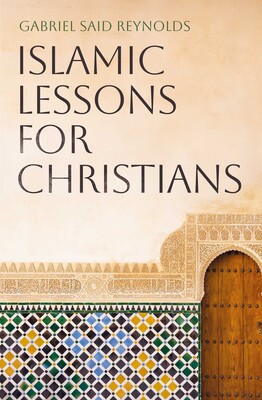
Islamic Lessons for Christians
- Gabriel Said Reynolds
Islamic Lessons for Christians (Oneworld Publications, 2026) is the latest book by Gabriel Said Reynolds, Crowley Professor of Islamic Studies and Theology at the University of Notre Dame. What, if...

article
Leo XIV’s encyclical Magnifica Humanitas and the Pluriel working group on AI-assisted interreligious dialogue
- Wael Saleh
Text by Wael Saleh, researcher at the Université du Québec à Montréal (UQAM) and member of the Pluriel coordination committee. The simultaneous appearance of Leo XIV's encyclical Magnifica Human...

publication
The Recognition of a Hummingbird. Essays on Interreligious Dialogue and Missionary Work (2007-2025)
- Rémi Caucanas
Published in May 2026 by PISAI (Pontifical Institute for Arabic and Islamic Studies, Rome), this collection brings together the essays of Rémi Caucanas on interreligious dialogue and missionary wor...