
Éditeur : Mohr Siebeck - Tübingen

Allemand


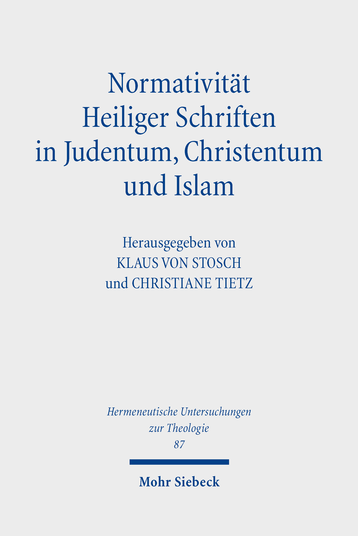
Normativité des Écritures sacrées dans le judaïsme, le christianisme et l’islam
Dans le judaïsme, le christianisme et l’islam, l’orientation par les « textes sacrés » est centrale. S’il était autrefois incontestable que ces textes pouvaient être considérés comme directement donnés par Dieu et compris comme « parole de Dieu » en raison d’une « révélation », la normativité de ces textes est devenue discutable depuis le siècle des Lumières et les méthodes historico-critiques.
Dans quelle mesure les croyants peuvent-ils comprendre ces textes comme la « parole de Dieu » sans tomber dans un « positivisme de la révélation » ? Comment les religions peuvent-elles se référer à ces textes du passé pour aborder des thèmes éthiques ou se positionner dans la société ? La distance historique peut-elle être comblée ou ces textes n’ont-ils plus d’intérêt que pour des raisons « purement historiques » ?
L’ouvrage discute de ces questions à la lumière des nouvelles herméneutiques scripturaires des trois grandes religions monothéistes dans la perspective d’une normativité éclairée.
Aperçu du contenu
Partie 1 : L’Écriture Sainte comme Parole de Dieu
Ulrich H.J. Körtner : Dieu dans la Parole. Écriture et révélation dans le christianisme – Juliane Hammer : « Le Coran ne parle pas ». L’Écriture Sainte et son interprétation dans la pratique féministe – Daniel Krochmalnik/Klaus von Stosch : L’Écriture Sainte comme Parole de Dieu. Sur le potentiel d’apprentissage des perspectives juives pour le christianisme et l’islam.
Partie 2 : Méthodes herméneutiques
Zishan Ghaffar : Un canon dans le canon ? Les défis d’une théologie coranique – Mohammad Kazem Shaker : Philosophy of Polysemy in Qur’anic Exegesis – Friederike Kunath : Koranexegese zwischen Historie und Gegenwart. Une réponse à Ghaffar et Shaker
Partie 3 : Déduction de normes éthiques à partir des Écritures
Elisa Klapheck : Des issues éthiques entre les lignes. La re-canonisation des écrits rabbiniques pour les discours juifs contemporains – Seyed Hassan Eslami Ardakani : The Quran as an Ethical Guide with Special Reference to Abraham’s Trial – Christiane Tietz : Lettre ou esprit ? – Klaus von Stosch : Die Ableitung ethischer Normen aus Heiligen Texten im christlich-muslimischen Gespräch (La dérivation de normes éthiques à partir de textes sacrés dans le dialogue islamo-chrétien)
In Judaism, Christianity and Islam, the orientation towards « holy texts » is central. While in the past it was undisputed that these texts could be understood as directly given by God and as the « Word of God » on the basis of « revelation », the normativity of these texts has become questionable since the Enlightenment and historical-critical methods.
To what extent can believers understand these texts as the « Word of God » without falling into a « revelation positivism »? How can religions refer to these texts from the past in ethical issues or social positioning? Can the historical distance be bridged at all, or are these texts only of interest for « purely historical » reasons?
This volume discusses these questions in the light of recent scriptural hermeneutics of the three great monotheistic religions in the perspective of enlightened normativity.
Table of contents
Part 1: Holy Scripture as the Word of God
Ulrich H.J. Körtner: God in the Word. Scripture and Revelation in Christianity – Juliane Hammer: « The Koran does not speak ». Holy Scripture and its Interpretation in Feminist Practice – Daniel Krochmalnik/Klaus von Stosch: Holy Scripture as the Word of God. On the Learning Potential of Jewish Perspectives for Christianity and Islam
Part 2: Hermeneutical Methods
Zishan Ghaffar: Canon within the Canon? Challenges of a Qur’anic Theology – Mohammad Kazem Shaker: Philosophy of Polysemy in Qur’anic Exegesis – Friederike Kunath: Qur’anic Exegesis between History and Present. A Response to Ghaffar and Shaker
Part 3: On the Derivation of Ethical Norms from the Holy Scriptures
Elisa Klapheck: Ethical ways out between the lines. The Re-Canonisation of Rabbinic Scripture for Contemporary Jewish Discourses – Seyed Hassan Eslami Ardakani: The Quran as an Ethical Guide with Special Reference to Abraham’s Trial – Christiane Tietz: Letter or Spirit? – On Obtaining Ethical Orientation from the Bible in a Christian Perspective – Klaus von Stosch: Deriving Ethical Norms from Sacred Texts in Christian-Muslim Dialogue
In Judentum, Christentum und Islam ist die Orientierung an »Heiligen Texten« zentral. War früher unstrittig, dass diese Texte aufgrund einer »Offenbarung« als direkt von Gott gegeben und als »Wort Gottes« verstanden werden können, ist seit der Aufklärung und historisch-kritischer Methoden die Normativität dieser Texte fraglich geworden.
Inwiefern können Glaubende diese Texte als »Wort Gottes« verstehen, ohne in einen »Offenbarungspositivismus« zu verfallen? Wie können sich Religionen bei ethischen Themen oder gesellschaftlichen Positionierungen auf diese Texte aus der Vergangenheit beziehen? Kann der historische Abstand überhaupt überbrückt werden, oder sind diese Texte nur noch aus »rein historischen« Gründen von Interesse?
Der Band diskutiert diese Fragen angesichts neuerer Schrifthermeneutik der drei großen monotheistischen Religionen in der Perspektive aufgeklärter Normativität.
Teil 1: Die Heilige Schrift als Wort Gottes
Ulrich H.J. Körtner: Gott im Wort. Schrift und Offenbarung im Christentum – Juliane Hammer: »Der Koran spricht nicht«. Die Heilige Schrift und ihre Interpretation in feministischer Praxis – Daniel Krochmalnik/Klaus von Stosch: Die Heilige Schrift als Wort Gottes. Zum Lernpotenzial jüdischer Perspektiven für Christentum und Islam
Teil 2: Hermeneutische Methoden
Zishan Ghaffar: Kanon im Kanon? Herausforderungen einer koranischen Theologie – Mohammad Kazem Shaker: Philosophy of Polysemy in Qur’anic Exegesis – Friederike Kunath: Koranexegese zwischen Historie und Gegenwart. Eine Response zu Ghaffar und Shaker
Teil 3: Zur Ableitung ethischer Normen aus den Heiligen Schriften
Elisa Klapheck: Ethische Auswege zwischen den Zeilen. Die Re-Kanonisierung des rabbinischen Schrifttums für jüdische Gegenwartsdiskurse – Seyed Hassan Eslami Ardakani: The Quran as an Ethical Guide with Special Reference to Abraham’s Trial – Christiane Tietz: Buchstabe oder Geist? – Zur Gewinnung ethischer Orientierung aus der Bibel in christlicher Perspektive – Klaus von Stosch: Die Ableitung ethischer Normen aus Heiligen Texten im christlich-muslimischen Gespräch


 site de l'editeur
Auteur

Klaus von Stosch
Professeur de théologie catholique, titulaire de la chaire "Schlegel" dédiée à la théologie systématique avec une attention particulière aux défis de société- Université de Bonn
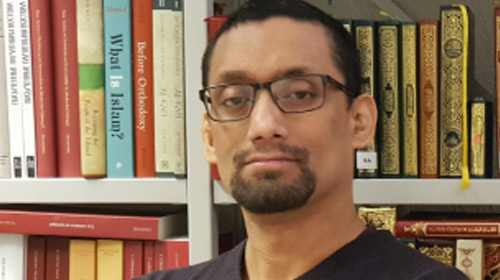
Zishan Ahmad Ghaffar
Professeur d'exégèse coranique, directeur du Centre de théologie comparée de l'université de Paderborn.
Ressource de l'auteur sur ce site
publication
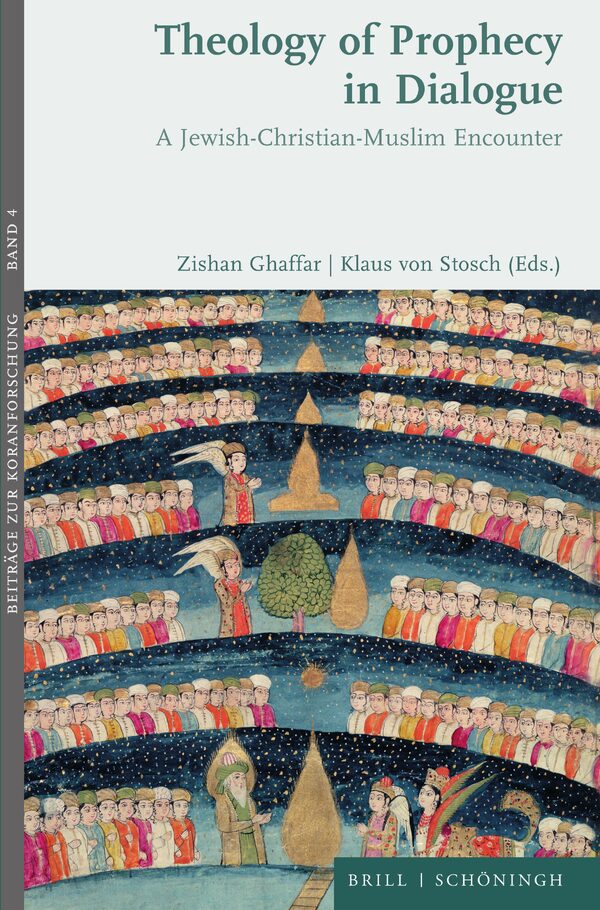
Théologie de la prophétie en dialogue : une rencontre judéo-chrétienne-musulmane
Paru sous le titre Theology of Prophecy in Dialogue: A Jewish-Christian-Muslim Encounter, ce volume collectif, dirigé par Zishan Ghaffar (Université de Paderborn) et Klaus von Stosch, professeur de...
publication
Normativité des Écritures sacrées dans le judaïsme, le christianisme et l’islam
Dans le judaïsme, le christianisme et l’islam, l’orientation par les « textes sacrés » est centrale. S’il était autrefois incontestable que ces textes pouvaient être considérés co...
Ressources liées à Théologie des religions

article
Visions islamiques de Jésus : révélation, prophétie et eschatologie
- Antonio Cuciniello
Résumé Publié sous le titre original « Islamic Visions of Jesus: Revelation, Prophecy, and Eschatology » dans l'ouvrage collectif Jerusalem in Memory and Eschatology: Jewish, Christian, and Musl...

article
Questions sur la sotériologie islamique dans l’islam primitif
- Jaume Flaquer
Résumé Publié sous le titre original « Cuestiones sobre la soteriología islámica en el islam primitivo » dans l'ouvrage collectif Riesgos y fidelidades. Miradas teológicas para un mundo plural, ...

article
Le Coran musulman incréé et le Logos chrétien éternellement engendré
- Jaume Flaquer
Résumé Publié sous le titre original « El Corán musulmán increado y el Logos cristiano eternamente engendrado » dans le monographique Logos, Agape, Sarx. Una dialógica cristiana du numéro 79 (20...

article
Le premier concile de Nicée (325) et le dialogue islamo-chrétien sur l’unité et la trinité de Dieu
- Dirk Ansorge
Résumé Publié sous le titre original « Das erste Konzil von Nizäa (325) und der christlich-muslimische Dialog über Gottes Einheit und Dreifaltigkeit » dans le numéro 2/2025 des CIBEDO-Beiträge, ...
article
Les relations islamo-chrétiennes aujourd’hui : quelques réflexions
- David Marshall
Résumé Publiée sous le titre original « Christian-Muslim Relations Today: Some Reflections » dans un numéro spécial de The Muslim World consacré aux 50 ans du Duncan Black Macdonald Center (Hart...
publication
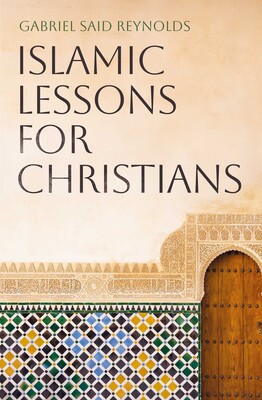
Leçons islamiques pour les chrétiens
- Gabriel Said Reynolds
Paru sous le titre Islamic Lessons for Christians (Oneworld Publications, 2026), ce livre de Gabriel Said Reynolds, professeur d’études islamiques et de théologie à l’Université de Notr...

article
L’encyclique « Magnifica humanitas » de Léon XIV et le groupe de travail Pluriel sur le dialogue interreligieux assisté par l’IA
- Wael Saleh
Texte de Wael Saleh, chercheur à l’Université du Québec à Montréal (UQAM) et membre du comité de coordination de Pluriel. La concomitance entre la publication de l’encyclique Magnifica humanitas...

publication
La reconnaissance d’un colibri. Essais sur le dialogue interreligieux et l’œuvre missionnaire (2007-2025)
- Rémi Caucanas
Publié en mai 2026 au PISAI (Rome), ce recueil rassemble les essais de Rémi Caucanas sur le dialogue interreligieux et l’œuvre missionnaire, écrits entre 2007 et 2025. Le titre La reconnaissa...