

Français

Discours d’ouverture du congrès à Cordoue
Le mardi 10 février 2026 à Cordoue, Michel Younès, coordinateur général de Pluriel et doyen de la Faculté de théologie de l’Université catholique de Lyon (UCLy), a prononcé le discours d’ouverture du quatrième congrès international de la plateforme, consacré au thème « Éthique et esthétique en islam ».
Excellences, Monsieur le Maire, cher Père Paulin, représentant du Dicastère pour le dialogue interreligieux, Madame la vice-rectrice de l’Université Loyola, chers collègues, chers étudiants, chers amis.
Il y a dix ans, en 2016, la plateforme internationale de recherche sur l’islam Pluriel a tenu son premier congrès à Lyon, avec comme titre « L’islam au pluriel, pensée, foi et société ». Née par l’initiative de la Fédération des universités catholiques en Europe et au Liban, Pluriel répondait à un besoin de valoriser les travaux sur l’islam dans l’esprit des universités catholiques et de mettre en relation des chercheurs de langues et de zones géographiques différentes, animés par la volonté d’aborder la question de l’islam dans sa profondeur historique et dans ses interactions avec la société et les autres religions. C’est ce que l’islamologue franco-algérien Mohammed Arkoun appelait l’islamologie appliquée.
La réflexion s’est poursuivie avec de nouveaux outils : un site qui recense les travaux, avec une valorisation des groupes de recherche pour les mettre en réseau, et pour mettre en réseau les publications, les vidéos et les actes des congrès. En 2018, le réseau s’est retrouvé à Rome, à la Grégorienne, autour d’un sujet d’une grande importance sur la question de l’appartenance à l’islam. Les actes du congrès se sont affinés avec une dimension géopolitique, une dimension sociétale et une dimension religieuse, voire interreligieuse.
Deux ans plus tard, en raison du Covid, le congrès de 2020 a été repoussé à 2022, à Beyrouth, sur une question délicate et cruciale : islam et altérité. Ici, la méthodologie s’est précisée. Désormais, le comité scientifique lance un appel à contributions, sélectionne des auteurs qui viennent désormais du monde entier — sélectionne à l’aveugle, devrais-je dire. Pluriel n’est plus limité à la zone de l’Europe et du Liban. Il est devenu un groupe international de recherche lié à la Fédération internationale des universités catholiques et dont les membres viennent d’universités publiques et privées d’un peu partout. D’une année sur l’autre, le réseau de Pluriel croît, grandit. Il favorise les projets entre les membres qui se rencontrent à l’occasion des congrès. Il permet des collaborations entre les différents groupes et les interactions pour proposer de nouvelles formations, des journées d’études ou des colloques. Cela fait partie de la vocation de cette plateforme. Pluriel devient un réseau qui met en réseau.
En 2024, nous avions choisi d’analyser la Déclaration sur la fraternité humaine, signée le 4 février 2019 par le pape François et le grand imam d’Al-Azhar, Ahmad al-Tayyeb, sur ce thème de la fraternité humaine, pour vérifier son impact sur le plan social, interreligieux ainsi que dans les relations internationales. Cela nous a valu un message du pape François lu par le cardinal Ayuso. Le pape François, qui remerciait les congressistes, soulignait les racines des trois maux qui sont une défaite pour l’humanité : la méconnaissance de l’autre, l’absence de l’écoute et le manque de flexibilité intellectuelle. Trois failles de l’esprit humain, disait-il, qui détruisent la fraternité et qu’il convient de bien identifier pour retrouver la sagesse et la paix.
Je suis particulièrement heureux de vous présenter ce soir les actes du congrès d’Abu Dhabi sous une forme électronique, puisque notre collègue qui doit les amener du Caire est malheureusement empêchée d’arriver à temps. Ces actes sont téléchargeables gratuitement et les textes accessibles dans leur langue d’origine : le français, l’anglais et l’arabe.
Après la pluralité interne à l’islam, la question de l’appartenance, l’altérité et la fraternité, le choix a été fait pour porter un regard d’élévation et de responsabilité. La recherche du vrai, du beau et du bon font partie des transcendantaux, des besoins fondamentaux de tout être humain. J’ai envie de dire que ces trois transcendantaux seraient presque une réponse aux trois maux que le pape François signalait. L’éthique et l’esthétique se sont imposées à nous comme un sujet d’élévation de la réflexion par la sublimation — la sublimation de la beauté qui est fondamentalement liée à la responsabilité éthique. Une articulation qui dit des trajectoires historiques sur le plan architectural, culturel, intellectuel, philosophique et mystique.
La ville de Cordoue et sa Mosquée-Cathédrale étaient le lieu par excellence qui traduit en profondeur ce que nous voulions penser. Quel beau symbole ! Mais la tenue de ce congrès à Cordoue n’aurait pu être possible sans l’accueil chaleureux et le soutien du Chapitre de la Cathédrale, que je remercie — grâce notamment au Père Joaquín Alberto Nieva García, qu’il reçoive au nom de Pluriel toute ma gratitude.
Je remercie également l’évêque de Cordoue, Monseigneur Jesús Fernández González, l’Université Loyola et sa vice-rectrice Madame Mercedes Torres Jiménez, le Magisterio Sagrado Corazón, la chaire Anawati, basée au Caire, et son titulaire Emmanuel Pisani, lui-même empêché d’être avec nous à cause des perturbations. L’Institut romand de systématique et d’éthique à Genève, avec le soutien de Beate Bengard. Casa Árabe de Cordoue et son directeur, Monsieur Rafael Rosón.
Permettez-moi de saluer la présence de Paolo Fritzi et de remercier à travers lui le soutien indéfectible de la Fondation qui a vu dès son émergence l’importance d’un tel réseau pour le monde actuel — un réseau qui a atteint plus de 200 membres répartis dans 25 pays.
En effet, dans un monde où la question du religieux en général, et celle de l’islam en particulier, est abordée sous l’angle de la tension et de la guerre, du fondamentalisme et du terrorisme, prendre de la hauteur par l’exigence éthique et l’élévation esthétique est comme un ballon d’oxygène salutaire. Et ce n’était pas étonnant de voir l’afflux des contributions à notre appel, qui a circulé dans les quatre langues : anglais, français, espagnol et arabe. Plus de 120 demandes que le comité scientifique a examinées pour n’en retenir qu’un tiers — environ une quarantaine d’interventions académiques.
Un comité scientifique que je tiens à remercier pour son travail, sa disponibilité, sa mobilisation et sa contribution. Plusieurs, malheureusement, sont empêchés d’être avec nous. D’autres sont présents dans la salle. Je voudrais saluer l’ensemble des intervenants, les étudiants boursiers, tous ceux qui ont fait le déplacement dans les circonstances complexes, parfois tragiques — l’accident de train, les inondations, les grèves.
Nous avons tenu, et grâce à la grande qualité et à l’investissement du reste du bureau de Pluriel — formé par Emmanuel Pisani, Jaime Flaquer, Ali Mostfa, Raphaël Georgy, Lorraine Guitton, secondée durant son stage par Xuyen Parsy — nous avons tenu à ce que l’organisation se passe au mieux. Qu’ils reçoivent, avec le comité scientifique, toute ma gratitude.
Et je ne saurais conclure ces remerciements sans nommer une personne qui, même si elle n’a pas fait partie du comité scientifique, a été d’une grande et précieuse efficacité. Je voudrais particulièrement remercier le Père Antonio Navarro qui, il y a deux ans, avec le Père Joaquín, a proposé que Cordoue soit le lieu d’accueil de notre congrès. Nous avons bien fait de les écouter.
Je voudrais insérer dans ma liste de remerciements toutes les équipes techniques, qui généralement travaillent dans les coulisses, de restauration, qui vont s’occuper de nous, et de traduction.
Pour conclure, je dirais que si le bon et le beau sont indissociables, la manière de tenir ensemble l’éthique et l’esthétique dit quelque chose dans la recherche du vrai qui anime tout être humain, toute recherche scientifique. Et toute cette recherche qui anime particulièrement l’esprit de notre plateforme traduit ce souci d’une contribution vraie à une société que l’on souhaite plus apaisée et plus exigeante dans la construction de ce qui aide, jour après jour, l’accroissement d’une fraternité humaine belle et responsable.
On Tuesday 10 February 2026 in Cordoba, Michel Younès, general coordinator of Pluriel and dean of the Faculty of Theology of the Catholic University of Lyon (UCLy), delivered the opening address of the platform’s fourth international congress, devoted to the theme « Ethics and aesthetics in Islam ».
Your Excellencies, Mr Mayor, dear Father Paulin, representative of the Dicastery for Interreligious Dialogue, Madam Vice-Rector of Loyola University, dear colleagues, dear students, dear friends.
Ten years ago, in 2016, the international platform for research on Islam, Pluriel, held its first congress in Lyon, under the title « Islam in the plural: thought, faith and society ». Born of the initiative of the Federation of Catholic Universities in Europe and Lebanon, Pluriel responded to a need to give value to work on Islam in the spirit of Catholic universities, and to connect researchers from different languages and geographical areas, driven by the will to address the question of Islam in its historical depth and in its interactions with society and the other religions. This is what the Franco-Algerian Islamologist Mohammed Arkoun called applied Islamic studies.
The reflection continued with new tools: a website that lists research, giving value to research groups and connecting them, along with publications, videos and congress proceedings. In 2018 the network gathered in Rome, at the Gregorian University, around a question of great importance: belonging to Islam. The congress proceedings gained in refinement, with a geopolitical, a societal and a religious, even interreligious, dimension.
Two years later, because of Covid, the 2020 congress was postponed to 2022, in Beirut, on a delicate and crucial question: Islam and otherness. Here the methodology became more precise. From then on, the scientific committee issues a call for papers and selects authors who now come from all over the world, blind selection, I should say. Pluriel is no longer limited to Europe and Lebanon. It has become an international research group linked to the International Federation of Catholic Universities, whose members come from public and private universities almost everywhere. From one year to the next, the Pluriel network grows. It fosters projects among members who meet at the congresses, and enables collaborations between the various groups. Pluriel becomes a network that connects.
In 2024, we chose to analyse the Declaration on Human Fraternity, signed on 4 February 2019 by Pope Francis and the Grand Imam of al-Azhar, Ahmad al-Tayyeb, to assess its impact on the social, interreligious and international levels. This earned us a message from Pope Francis, read by Cardinal Ayuso. Thanking the participants, the Pope underlined the roots of the three evils that are a defeat for humanity: ignorance of the other, the absence of listening and the lack of intellectual flexibility, three flaws of the human spirit that destroy fraternity and that must be identified in order to recover wisdom and peace.
I am particularly happy to present to you this evening the proceedings of the Abu Dhabi congress in electronic form, since our colleague who was to bring them from Cairo is unfortunately prevented from arriving in time. These proceedings are freely downloadable and the texts accessible in their original language: French, English and Arabic.
After the internal plurality of Islam, the question of belonging, otherness and fraternity, the choice was made to cast a gaze of elevation and responsibility. The search for the true, the beautiful and the good is one of the transcendentals, the fundamental needs of every human being. I would even say that these three transcendentals could almost be an answer to the three evils that Pope Francis pointed out. Ethics and aesthetics imposed themselves on us as a subject of elevation of thought through sublimation, the sublimation of beauty which is fundamentally linked to ethical responsibility.
The city of Cordoba and its Mosque-Cathedral were the place par excellence that translates in depth what we wished to think. What a beautiful symbol! But holding this congress in Cordoba would not have been possible without the warm welcome and support of the Cathedral Chapter, which I thank, thanks in particular to Father Joaquín Alberto Nieva García, to whom, in the name of Pluriel, I express all my gratitude.
I also thank the Bishop of Cordoba, Monsignor Jesús Fernández González, Loyola University and its Vice-Rector Mrs Mercedes Torres Jiménez, the Magisterio Sagrado Corazón, the Anawati Chair based in Cairo and its holder Emmanuel Pisani, himself prevented from being with us because of the disruptions, the Romand Institute of Systematic Theology and Ethics in Geneva, with the support of Beate Bengard, and Casa Árabe of Cordoba and its director, Mr Rafael Rosón.
Allow me to welcome the presence of Paolo Fritzi and to thank, through him, the unfailing support of the Foundation which saw, from its emergence, the importance of such a network for today’s world, a network that has reached more than 200 members spread across 25 countries.
Indeed, in a world where the question of religion in general, and of Islam in particular, is addressed through the lens of tension and war, of fundamentalism and terrorism, to rise higher through ethical demand and aesthetic elevation is like a salutary breath of oxygen. It was no surprise to see the influx of contributions to our call, which circulated in four languages: English, French, Spanish and Arabic. More than 120 proposals, which the scientific committee examined to retain only a third, around forty academic papers.
I wish to thank the scientific committee for its work, availability and commitment. Several members are unfortunately prevented from being with us; others are present in the room. I would like to greet all the speakers, the scholarship students, and all those who travelled in complex, sometimes tragic circumstances, the train accident, the floods, the strikes.
We held firm, and thanks to the great quality and investment of the rest of the Pluriel bureau, formed by Emmanuel Pisani, Jaime Flaquer, Ali Mostfa, Raphaël Georgy and Lorraine Guitton, assisted during her internship by Xuyen Parsy, we made sure the organisation went as well as possible. May they, together with the scientific committee, receive all my gratitude. I could not conclude without naming Father Antonio Navarro who, two years ago, together with Father Joaquín, proposed that Cordoba host our congress. We did well to listen to them. I also wish to include in my thanks all the technical, catering and translation teams who generally work behind the scenes.
To conclude, if the good and the beautiful are inseparable, the way of holding ethics and aesthetics together says something about the search for the true that animates every human being and every scientific endeavour. And all this research, which particularly animates the spirit of our platform, expresses this concern for a true contribution to a society that we hope will be more peaceful and more demanding in building what helps, day after day, the growth of a beautiful and responsible human fraternity.
في الثلاثاء 10 شباط/فبراير 2026 بقرطبة، ألقى ميشيل يونس، المنسّق العام لـ«المنصة» وعميد كلية اللاهوت في الجامعة الكاثوليكية بليون (UCLy)، الكلمةَ الافتتاحية للمؤتمر الدولي الرابع للمنصة، المخصّص لموضوع «الأخلاق والجماليات في الإسلام».
أصحاب السعادة، سيّدي العمدة، أبانا العزيز بولان ممثّل دائرة الحوار بين الأديان، سيّدتي نائبة رئيس جامعة لويولا، أيّها الزملاء الأعزّاء، أيّها الطلبة الأعزّاء، أيّها الأصدقاء الأعزّاء.
قبل عشر سنوات، في 2016، عقدت المنصةُ الدولية للدراسات حول الإسلام «المنصة» مؤتمرها الأوّل في ليون تحت عنوان «الإسلام بصيغة الجمع: فكرٌ وإيمانٌ ومجتمع». ولدت «المنصة» بمبادرةٍ من اتحاد الجامعات الكاثوليكية في أوروبا ولبنان، استجابةً للحاجة إلى تثمين الأعمال المتعلّقة بالإسلام في روح الجامعات الكاثوليكية، وإلى الربط بين باحثين من لغاتٍ ومناطق جغرافية مختلفة، تحدوهم إرادةُ تناول مسألة الإسلام في عمقها التاريخي وفي تفاعلاتها مع المجتمع وسائر الأديان. وهذا ما كان يسمّيه المفكّر الفرنسي الجزائري محمد أركون «الإسلامولوجيا التطبيقية».
وتواصل التفكير بأدواتٍ جديدة: موقعٌ يحصي الأعمال، مع تثمين مجموعات البحث وربطها شبكيًا، وربط المنشورات والفيديوهات وأعمال المؤتمرات. وفي 2018 التقت الشبكة في روما، بالجامعة الغريغورية، حول مسألةٍ بالغة الأهمّية هي الانتماء إلى الإسلام. وتطوّرت أعمال المؤتمر باكتساب بُعدٍ جيوسياسي وآخر مجتمعي وثالثٍ ديني، بل بين الأديان.
وبعد عامين، وبسبب كوفيد، أُرجئ مؤتمر 2020 إلى 2022 في بيروت، حول مسألةٍ دقيقة وحاسمة هي الإسلام والغيرية. وهنا تحدّدت المنهجية أكثر: فمنذ ذلك الحين تُطلق اللجنة العلمية دعوةً لتقديم المساهمات وتنتقي مؤلّفين باتوا يأتون من العالم أجمع، انتقاءً «أعمى» ينبغي القول. ولم تعد «المنصة» مقتصرةً على أوروبا ولبنان، بل غدت مجموعةً بحثية دولية مرتبطة بالاتحاد الدولي للجامعات الكاثوليكية، ويأتي أعضاؤها من جامعاتٍ عامّة وخاصّة في كلّ مكان تقريبًا. وعامًا بعد عام تنمو شبكةُ «المنصة» وتكبر؛ فهي تشجّع المشاريع بين الأعضاء الذين يلتقون في المؤتمرات، وتتيح التعاون بين المجموعات المختلفة. وهكذا تغدو «المنصة» شبكةً تربط شبكيًا.
وفي 2024 اخترنا تحليل «وثيقة الأخوّة الإنسانية»، الموقّعة في 4 شباط/فبراير 2019 بين البابا فرنسيس وشيخ الأزهر أحمد الطيّب، للتحقّق من أثرها على المستوى الاجتماعي وبين الأديان وفي العلاقات الدولية. وقد نالنا على ذلك رسالةٌ من البابا فرنسيس قرأها الكاردينال أيوزو. وإذ شكر البابا المشاركين، أبرز جذور الشرور الثلاثة التي تمثّل هزيمةً للإنسانية: جهل الآخر، وغياب الإصغاء، ونقص المرونة الفكرية؛ وهي ثلاثُ آفاتٍ في الروح الإنساني تدمّر الأخوّة، وينبغي تحديدها جيّدًا لاستعادة الحكمة والسلام.
ويسعدني بخاصّةٍ أن أقدّم إليكم هذا المساء أعمال مؤتمر أبو ظبي في صيغةٍ إلكترونية، إذ إنّ زميلتنا التي كان عليها إحضارها من القاهرة قد تعذّر عليها للأسف الوصول في الوقت المناسب. وهذه الأعمال متاحةٌ للتنزيل مجّانًا، ونصوصها متوافرة بلغاتها الأصلية: الفرنسية والإنجليزية والعربية.
وبعد التعدّدية الداخلية للإسلام، ومسألة الانتماء، والغيرية، والأخوّة، وقع الاختيار على أن نُلقي نظرةً من الارتفاع والمسؤولية. فالبحث عن الحقّ والجميل والخيّر من المتعاليات، من الحاجات الأساسية لكلّ إنسان. بل أكاد أقول إنّ هذه المتعاليات الثلاثة قد تكون جوابًا عن الشرور الثلاثة التي أشار إليها البابا فرنسيس. لقد فرضت الأخلاقُ والجمالياتُ نفسَها علينا موضوعًا لرفع مستوى التفكير بالتساتي، بتسامي الجمال المرتبط جوهريًا بالمسؤولية الأخلاقية.
وكانت مدينة قرطبة وجامع-كاتدرائيتها المكانَ الأمثل الذي يترجم بعمقٍ ما أردنا التفكير فيه. فيا له من رمزٍ جميل! لكنّ انعقاد هذا المؤتمر في قرطبة ما كان ممكنًا لولا الاستقبال الحارّ ودعم مجمع الكاتدرائية الذي أشكره، بفضلٍ خاصّ من الأب خواكين ألبرتو نييفا غارثيا، الذي أعرب له باسم «المنصة» عن كامل امتناني.
كما أشكر أسقف قرطبة المونسنيور خيسوس فرنانديز غونثالث، وجامعة لويولا ونائبة رئيسها السيّدة مرسيدس توريس خيمينيث، ومدرسة القلب الأقدس، وكرسي أنَواتي القائم في القاهرة وصاحبه إيمانويل بيزاني، الذي تعذّر عليه هو أيضًا أن يكون بيننا بسبب الاضطرابات، والمعهد الرومندي للاهوت النَّسَقي والأخلاق بجنيف بدعمٍ من بياته بنغارد، و«البيت العربي» بقرطبة ومديره السيّد رافائيل روسون.
واسمحوا لي أن أرحّب بحضور باولو فريتزي، وأن أشكر من خلاله الدعمَ الثابت للمؤسّسة التي أدركت منذ نشأة هذه الشبكة أهمّيتها لعالم اليوم، وهي شبكةٌ بلغت أكثر من 200 عضو موزّعين على 25 بلدًا.
ففي عالمٍ تُتناول فيه مسألةُ الدين عمومًا، ومسألة الإسلام خصوصًا، من زاوية التوتّر والحرب والأصولية والإرهاب، يكون الارتقاءُ بالمطلب الأخلاقي والسموّ الجمالي بمثابة نَفَسٍ منقذ. ولم يكن مستغرَبًا أن نرى هذا التدفّق في المساهمات استجابةً لدعوتنا التي عمّمناها بأربع لغات: الإنجليزية والفرنسية والإسبانية والعربية. أكثر من 120 طلبًا نظرت فيها اللجنة العلمية فلم تُبقِ إلّا على الثلث، أي نحو أربعين مداخلةً أكاديمية.
وأودّ أن أشكر اللجنة العلمية على عملها وتفرّغها والتزامها. وقد تعذّر للأسف على عددٍ منهم أن يكونوا معنا، فيما حضر آخرون في القاعة. وأودّ أن أحيّي جميع المتدخّلين، والطلبة أصحاب المنح، وكلّ من تكبّد عناء السفر في ظروفٍ معقّدة بل مأساوية أحيانًا: حادث القطار، والفيضانات، والإضرابات.
لقد صمدنا، وبفضل الجودة العالية وتفاني بقية مكتب «المنصة» المؤلَّف من إيمانويل بيزاني وخايمي فلاكِر وعلي مصطفى ورافائيل جورجي ولورين غيتون، تساعدها خلال تدريبها شويان بارسي، حرصنا على أن يجري التنظيم على أحسن وجه. فليتقبّلوا، مع اللجنة العلمية، كامل امتناني. ولا يسعني أن أختم من دون أن أذكر الأب أنطونيو نافارو الذي اقترح قبل عامين، مع الأب خواكين، أن تكون قرطبة مقرَّ استضافة مؤتمرنا. وقد أحسنّا الإصغاء إليهما. وأودّ أن أُدرج في شكري جميع الفرق التقنية وفرق الضيافة والترجمة التي تعمل عادةً في الكواليس.
وفي الختام أقول: إذا كان الخيّر والجميل لا ينفصلان، فإنّ طريقة الجمع بين الأخلاق والجماليات تقول شيئًا في البحث عن الحقّ الذي يحرّك كلّ إنسانٍ وكلّ بحثٍ علمي. وكلّ هذا البحث الذي يحرّك روح منصّتنا بخاصّةٍ يترجم هذا الحرص على إسهامٍ حقيقي في مجتمعٍ نرجوه أكثر هدوءًا وأكثر تطلّبًا في بناء ما يعين، يومًا بعد يوم، على نموّ أخوّةٍ إنسانية جميلة ومسؤولة.


Ressource de l'auteur sur ce site
publication
La théologie comparative, vecteur d’une nouvelle approche de la diversité religieuse ?
Paru dans le dossier « Islam et dialogue interreligieux » de la revue Laval théologique et philosophique (vol. 82, n° 1, 2026, p. 7-25), cet article de Michel Younès, coordinateur général de Plurie...
videos
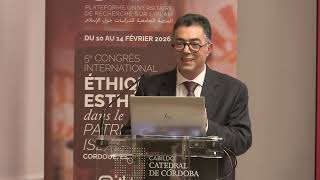
Discours d’ouverture du congrès à Cordoue
Le mardi 10 février 2026 à Cordoue, Michel Younès, coordinateur général de Pluriel et doyen de la Faculté de théologie de l'Université catholique de Lyon (UCLy), a prononcé le discours d'ouverture ...
publication
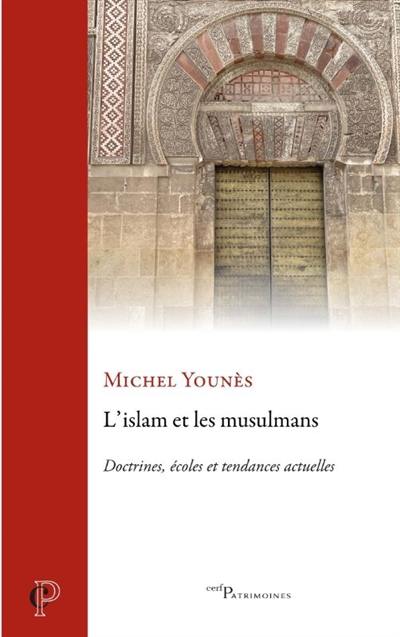
L’islam et les musulmans. Doctrines, écoles et tendances actuelles
Paru le 16 avril 2026. L’islam, comme réalité historique, religieuse et civilisationnelle, est difficilement définissable. Il peut être perçu comme une forme de gouvernance politique, une expressio...
publication
L’enseignement universitaire religieux au Liban : étude comparée des cursus
Dans cet article paru dans la revue Proche-Orient Chrétien 75/1 (2025), Michel Younès et Roula Talhouk, tous deux membres du comité de coordination de Pluriel, proposent une étude comparée des curs...

videos
Pensée chrétienne, pensée musulmane et enjeux de société : lancement de la chaire « Théologies en dialogue »
Le mercredi 25 septembre 2024, cette conférence inaugurale présente une nouvelle chaire intitulée "Théologies en dialogue" à la Faculté de théologie de l'Université catholique de Lyon. Les interven...
publication
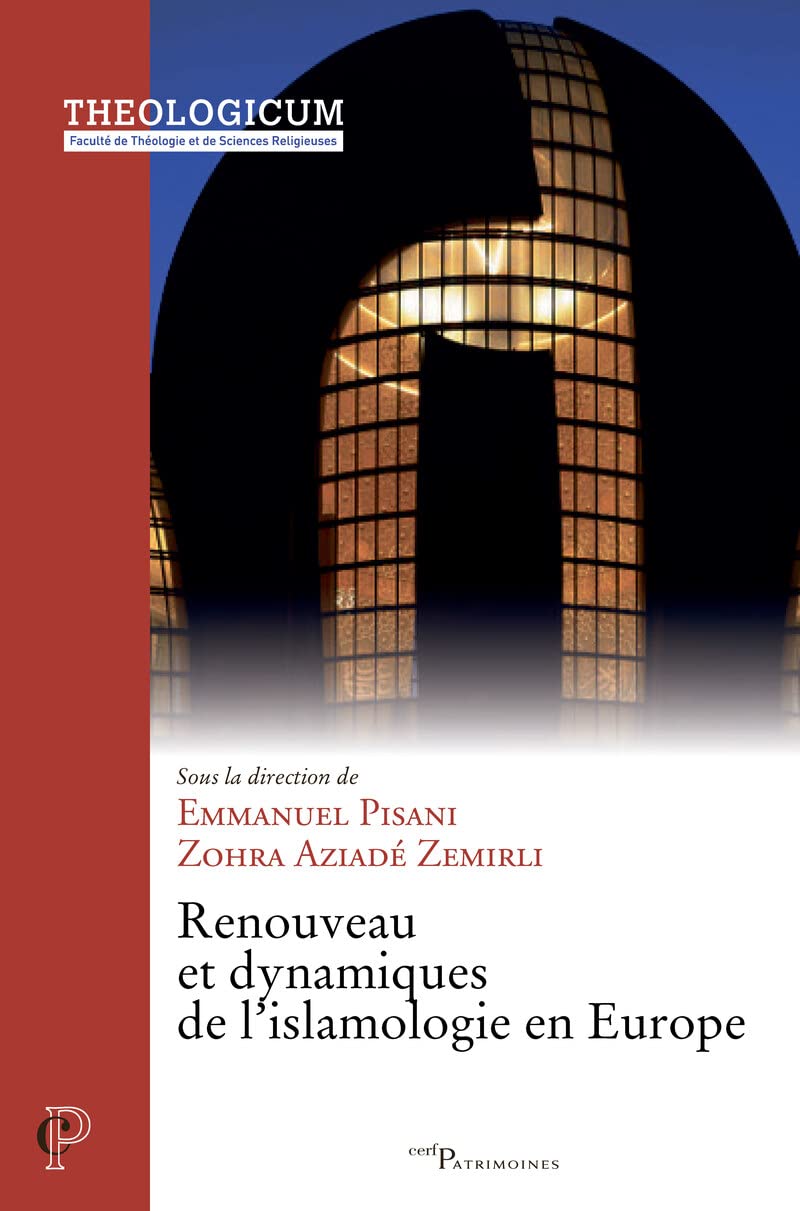
Renouveau et dynamiques de l’islamologie en Europe
« Dans un contexte international troublé où l’islam est parfois défini comme marqueur idéologique de nombreux conflits, des recherches académiques mobilisant l’histoire, la sociologie, la science p...
publication
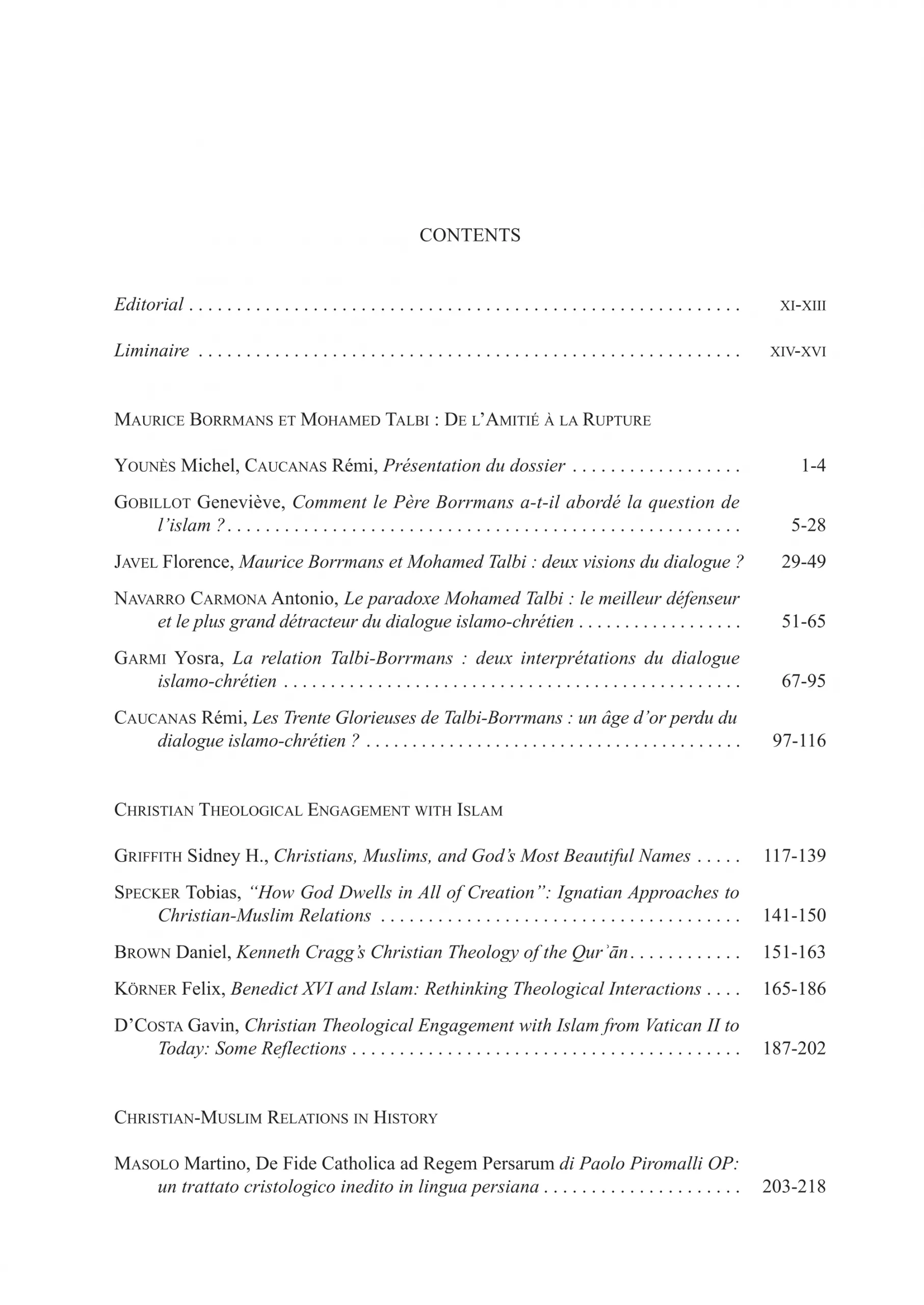
Revue Islamochristiana 49 (2024) : « Maurice Borrmans et Mohamed Talbi : de l’amitié à la rupture »
Le titre de ce numéro, « Maurice Borrmans et Mohamed Talbi : de l’amitié à la rupture », nous a été suggéré par une collection d’articles qui mettent en évidence différents aspects de la relation e...
videos
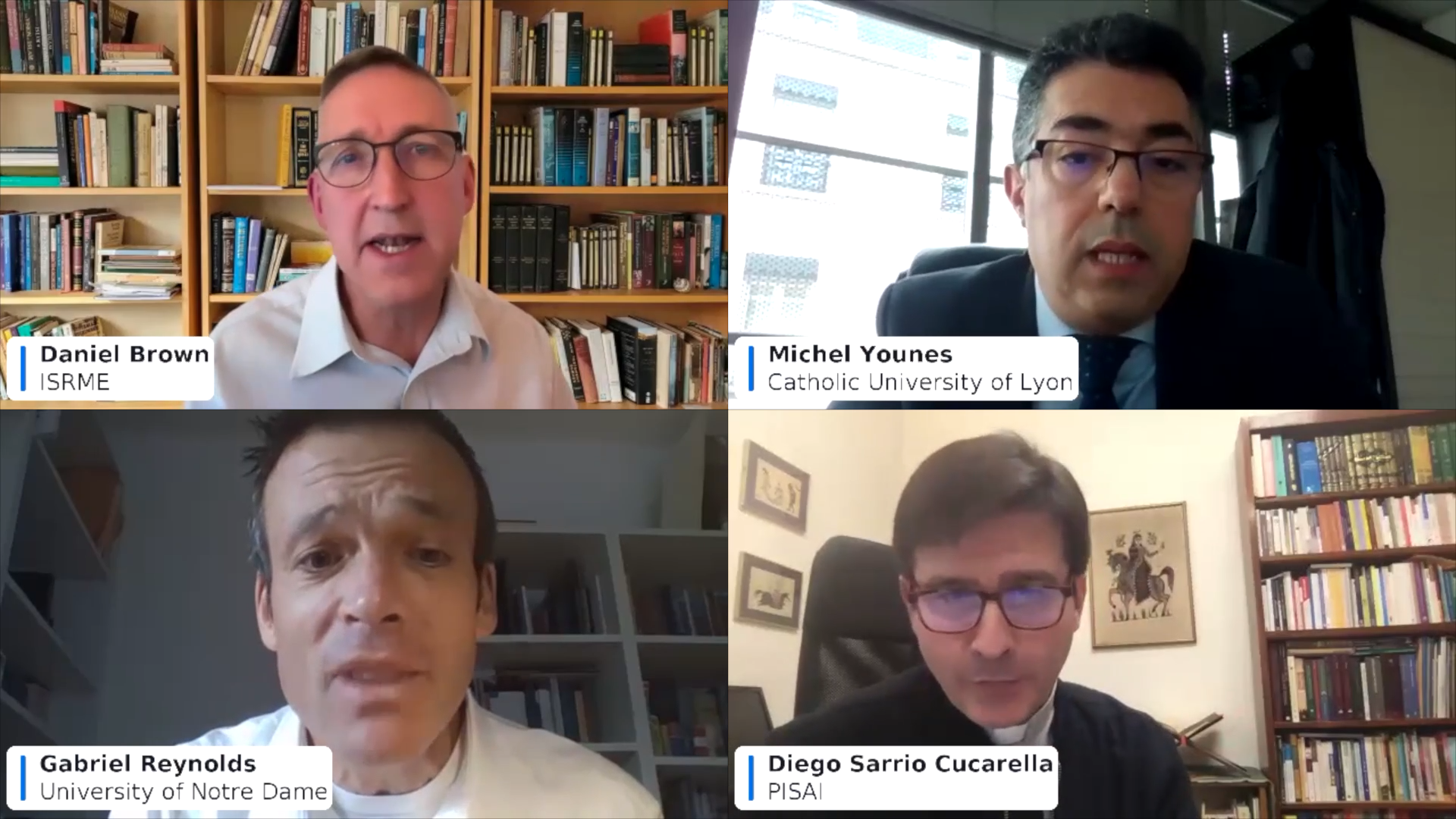
Symposium en ligne : « Les origines de l’islam et l’engagement théologique chrétien avec l’islam »
Intervenants David Marshall, Université de Berne (Modérateur), rédacteur invité d'Islamochristiana Martin Accad, Séminaire théologique baptiste arabe Daniel Brown, ISRME Diego Sarrio Cucarella,...

videos
Discours d’ouverture du quatrième congrès à Abu Dhabi, Michel Younès
À l'ouverture du quatrième congrès de la Plateforme universitaire de recherche sur l'islam Pluriel, qui célèbre son dixième anniversaire, Michel Younès a exprimé sa fierté pour les avancées en mati...
Ressources liées à Théologie des religions

article
Visions islamiques de Jésus : révélation, prophétie et eschatologie
- Antonio Cuciniello
Résumé Publié sous le titre original « Islamic Visions of Jesus: Revelation, Prophecy, and Eschatology » dans l'ouvrage collectif Jerusalem in Memory and Eschatology: Jewish, Christian, and Musl...

article
Questions sur la sotériologie islamique dans l’islam primitif
- Jaume Flaquer
Résumé Publié sous le titre original « Cuestiones sobre la soteriología islámica en el islam primitivo » dans l'ouvrage collectif Riesgos y fidelidades. Miradas teológicas para un mundo plural, ...

article
Le Coran musulman incréé et le Logos chrétien éternellement engendré
- Jaume Flaquer
Résumé Publié sous le titre original « El Corán musulmán increado y el Logos cristiano eternamente engendrado » dans le monographique Logos, Agape, Sarx. Una dialógica cristiana du numéro 79 (20...

article
Le premier concile de Nicée (325) et le dialogue islamo-chrétien sur l’unité et la trinité de Dieu
- Dirk Ansorge
Résumé Publié sous le titre original « Das erste Konzil von Nizäa (325) und der christlich-muslimische Dialog über Gottes Einheit und Dreifaltigkeit » dans le numéro 2/2025 des CIBEDO-Beiträge, ...
article
Les relations islamo-chrétiennes aujourd’hui : quelques réflexions
- David Marshall
Résumé Publiée sous le titre original « Christian-Muslim Relations Today: Some Reflections » dans un numéro spécial de The Muslim World consacré aux 50 ans du Duncan Black Macdonald Center (Hart...
publication
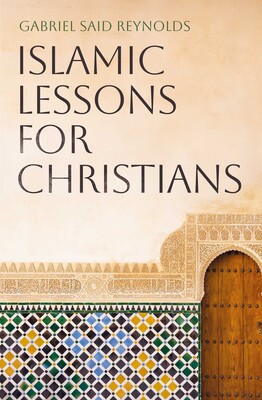
Leçons islamiques pour les chrétiens
- Gabriel Said Reynolds
Paru sous le titre Islamic Lessons for Christians (Oneworld Publications, 2026), ce livre de Gabriel Said Reynolds, professeur d’études islamiques et de théologie à l’Université de Notr...

article
L’encyclique « Magnifica humanitas » de Léon XIV et le groupe de travail Pluriel sur le dialogue interreligieux assisté par l’IA
- Wael Saleh
Texte de Wael Saleh, chercheur à l’Université du Québec à Montréal (UQAM) et membre du comité de coordination de Pluriel. La concomitance entre la publication de l’encyclique Magnifica humanitas...
publication
La reconnaissance d’un colibri. Essais sur le dialogue interreligieux et l’œuvre missionnaire (2007-2025)
- Rémi Caucanas
Publié en mai 2026 au PISAI (Rome), ce recueil rassemble les essais de Rémi Caucanas sur le dialogue interreligieux et l’œuvre missionnaire, écrits entre 2007 et 2025. Le titre La reconnaissa...