

English

Ḥilm or “Judiciousness”: A Contribution to the Study of Islamic Ethics
First lines of the introduction
“Among the ninety-nine Beautiful Names of God listed in Islamic religious literature, there appears al-ḥalīm, deriving directly from the text of the Koran. As is the case with other Names, the Koran also applies ḥalīm to human beings; in particular, the virtue is recognised in Abraham (Cor 9, 114 and 11, 75), in his son (Cor 37, 101), as well as in the prophet Shuʿayb (Cor 11, 87). This essay will examine the ingredients of the virtue called ḥilm and define the qualities of the man who possesses it with reference to the canonical sources and other traditionally based works, and aims thereby to offer a contribution to the study of the Islamic ethics of virtue.”
Titre original : “Ḥilm or “Judiciousness”: A Contribution to the Study of Islamic Ethics”
Premières lignes de l’introduction
“Parmi les 99 beaux noms de Dieu énumérés dans la littérature islamique figure “al-ḥalīm”, dérivant directement du texte du Coran. Comme c’est le cas avec d’autres noms, le Coran applique également ḥalīm aux êtres humains ; en particulier, cette vertu est reconnue à Abraham (Cor 9, 114 et 11, 75), à son fils (Cor 37, 101), ainsi qu’au prophète Shuʿayb (Cor 11, 87). Cet essai examinera les ingrédients de la vertu appelée ḥilm et tâchera de définir les qualités de l’homme qui la possède en référence aux sources canoniques et autres œuvres traditionnelles, et vise ainsi à offrir une contribution à l’étude de l’éthique islamique de la vertu.”
 Download PDF

Author(s)
Resources of this researcher
article
The Gratitude of Man and the Gratitude of God. Notes on šukr in Traditional Islamic Thoughts
Original title : "The Gratitude of Man and the Gratitude of God. Notes on šukr in Traditional Islamic Thoughts" SUMMARY: The present essay is intended as a contribution to the study of gratitude o...
article
Return, Repentance, Amendment, Reform, Reconversion. A contribution to the study of Tawba in the Context of Islamic Ethics
Abstract The present essay aims to explore, within the general framework of Islamic ethics, the complex notion of tawba, whose immediate peculiarity lies in its double meaning, being akin to “repe...
article
Thoughts on raḥma in Islamic religious tradition
Abstract : This essay deals with ‘mercy’ or rahma, not as a divine characteristic, but rather as the basic ele-ment in the relations the good Muslim must maintain with his neighbour. Looking at the...
article
Ḥilm or “Judiciousness”: A Contribution to the Study of Islamic Ethics
First lines of the introduction "Among the ninety-nine Beautiful Names of God listed in Islamic religious literature, there appears al-ḥalīm, deriving directly from the text of the Koran. As is ...
article
Silence and Speech Etiquette, A Contribution to the Study of Islamic Ethics
Abstract: When speaking of silence, the Koran employs three different verbal roots (ṣ-m-t, s-k-t, n-ṣ-t); on the basis of this linguistic profusion, Arabic Islamic culture has elaborated a complex ...
Resources related to Ethics
videos
“War and peace”, by Adrien Candiard
On Wednesday 20 May 2026, the Dominican Institute for Oriental Studies (IDEO) hosted in Cairo a lecture by Brother Adrien Candiard, Dominican and Islamologist, on the theme "War and peace". Faced w...

article
Leo XIV’s encyclical Magnifica Humanitas and the Pluriel working group on AI-assisted interreligious dialogue
- Wael Saleh
Text by Wael Saleh, researcher at the Université du Québec à Montréal (UQAM) and member of the Pluriel coordination committee. The simultaneous appearance of Leo XIV's encyclical Magnifica Human...
videos
Opening address of the Cordoba congress
- Michel Younès
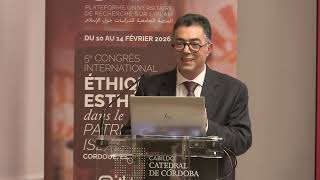
On Tuesday 10 February 2026 in Cordoba, Michel Younès, general coordinator of Pluriel and dean of the Faculty of Theology of the Catholic University of Lyon (UCLy), delivered the opening address of...
publication
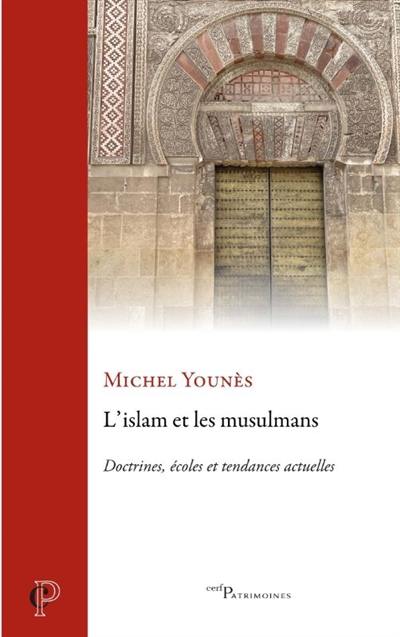
Islam and Muslims. Doctrines, Schools of Thought, and Current Trends
- Michel Younès
Publication date: April 16, 2026. Islam, as a historical, religious, and civilizational reality, is difficult to define. It can be perceived as a form of political governance, an expression of fait...

videos
Hospitality, power and interreligious dialogue in Naguib Mahfouz’s “Children of the Alley”
- Gabriel Khairallah
Paper presented at the fifth international congress of the University Platform for Research on Islam (Pluriel), held in Cordoba from 10 to 14 February 2026 on the theme "Ethics and Aesthetics in Is...

videos
Landscape and architecture as occasions of contemplation and of interreligious dialogue in the travel narratives of the Sufi ʿAbd al-Ghanī al-Nābulusī
Paper presented at the fifth international congress of the University Platform for Research on Islam (Pluriel), held in Cordoba from 10 to 14 February 2026 on the theme "Ethics and Aesthetics in Is...

videos
“Welcome to Hell”: eschatology in the literary work of Dževad Karahasan
Paper presented at the fifth international congress of the University Platform for Research on Islam (Pluriel), held in Cordoba from 10 to 14 February 2026 on the theme "Ethics and Aesthetics in Is...

videos
Spiritual eroticism and erotic spirituality in Sufi mystical thought
Paper presented at the 5th international congress of the University Platform for Research on Islam (Pluriel), held in Cordoba from 10 to 14 February 2026 on the theme "Ethics and Aesthetics in Isla...