
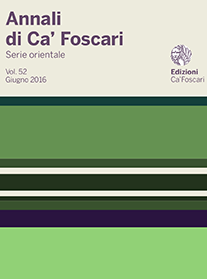

English

Silence and Speech Etiquette, A Contribution to the Study of Islamic Ethics
Abstract: When speaking of silence, the Koran employs three different verbal roots (ṣ-m-t, s-k-t, n-ṣ-t); on the basis of this linguistic profusion, Arabic Islamic culture has elaborated a complex conception of silence, which embraces an element of abstention, linking it to passivity and stillness, and a cognitive element, linking it to listening and learning. The exegetical corpus and above all the moral literature, represented here chiefly by the learned Sunnite Ibn Abī al-Dunyā of Baghdad (d. 281/894)’s Kitāb al-ṣamt wa ādāb al-lisān, equate silence with verbal discipline and award it the status of an Islamic value, to the extent that it is posited as an optimal attitude in the believer’s relation with God and with other members of the Islamic community.
Summary: 1 Premise. – 2 Silence in the Koran and the Exegetical Literature. – 3 Silence in the Ethical-religious Literature of the Classical Period. – 4 Silence and Good Manners in Speech by Ibn Abī Al-dunyā. – 5 The Government of the Tongue and the Excellence of Silence. – 6 Conclusions.
Titre original : “Silence and Speech Etiquette. A Contribution to the Study of Islamic Ethics”
Résumé
Lorsqu’il s’agit du silence, le Coran emploie trois racines verbales différentes (ṣ-m-t, s-k-t, n-ṣ-t). Sur la base de cette profusion linguistique, la culture islamique arabe a élaboré une conception complexe du silence, qui embrasse un élément d’abstention, lié à la passivité et à l’immobilité, et à un élément cognitif, lié à l’écoute et à l’apprentissage. Le corpus exégétique et surtout la pensée morale — représentée ici principalement par le savant sunnite Ibn Abī al-Dunyā de Bagdad (m. 281/894), Kitāb al-ṣamt wa ādāb al-lisān — associent le silence à une discipline de la parole et lui attribuent une valeur selon l’islam, dans la mesure où il constitue la meilleure attitude dans la relation du croyant avec Dieu et avec les autres membres de la communauté musulmane.
 Download PDF

Author(s)
Resources of this researcher
publication
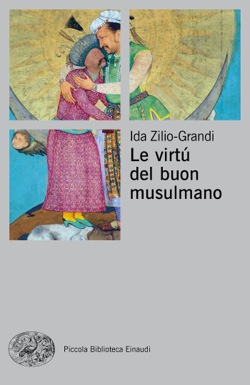
The Virtues of the Good Muslim
Published in 2025 by Edizioni Ca’ Foscari in Venice, this monograph by Ida Zilio-Grandi (Ca’ Foscari University) is the augmented English translation of Le virtù del buon Musulmano, fir...
article
Environmentalism and sustainability as an expression of Islamic moral orientation
Abstract : The essay emphasizes cultural specificities, starting with the terminology currently used to describe sustainability, and investigates the lack of homogeneity of the semantic fields bel...
article
The Gratitude of Man and the Gratitude of God. Notes on šukr in Traditional Islamic Thoughts
Original title : "The Gratitude of Man and the Gratitude of God. Notes on šukr in Traditional Islamic Thoughts" SUMMARY: The present essay is intended as a contribution to the study of gratitude o...
article
Return, Repentance, Amendment, Reform, Reconversion. A contribution to the study of Tawba in the Context of Islamic Ethics
Abstract The present essay aims to explore, within the general framework of Islamic ethics, the complex notion of tawba, whose immediate peculiarity lies in its double meaning, being akin to “repe...
article
Thoughts on raḥma in Islamic religious tradition
Abstract : This essay deals with ‘mercy’ or rahma, not as a divine characteristic, but rather as the basic ele-ment in the relations the good Muslim must maintain with his neighbour. Looking at the...
article
Ḥilm or “Judiciousness”: A Contribution to the Study of Islamic Ethics
First lines of the introduction "Among the ninety-nine Beautiful Names of God listed in Islamic religious literature, there appears al-ḥalīm, deriving directly from the text of the Koran. As is ...
article
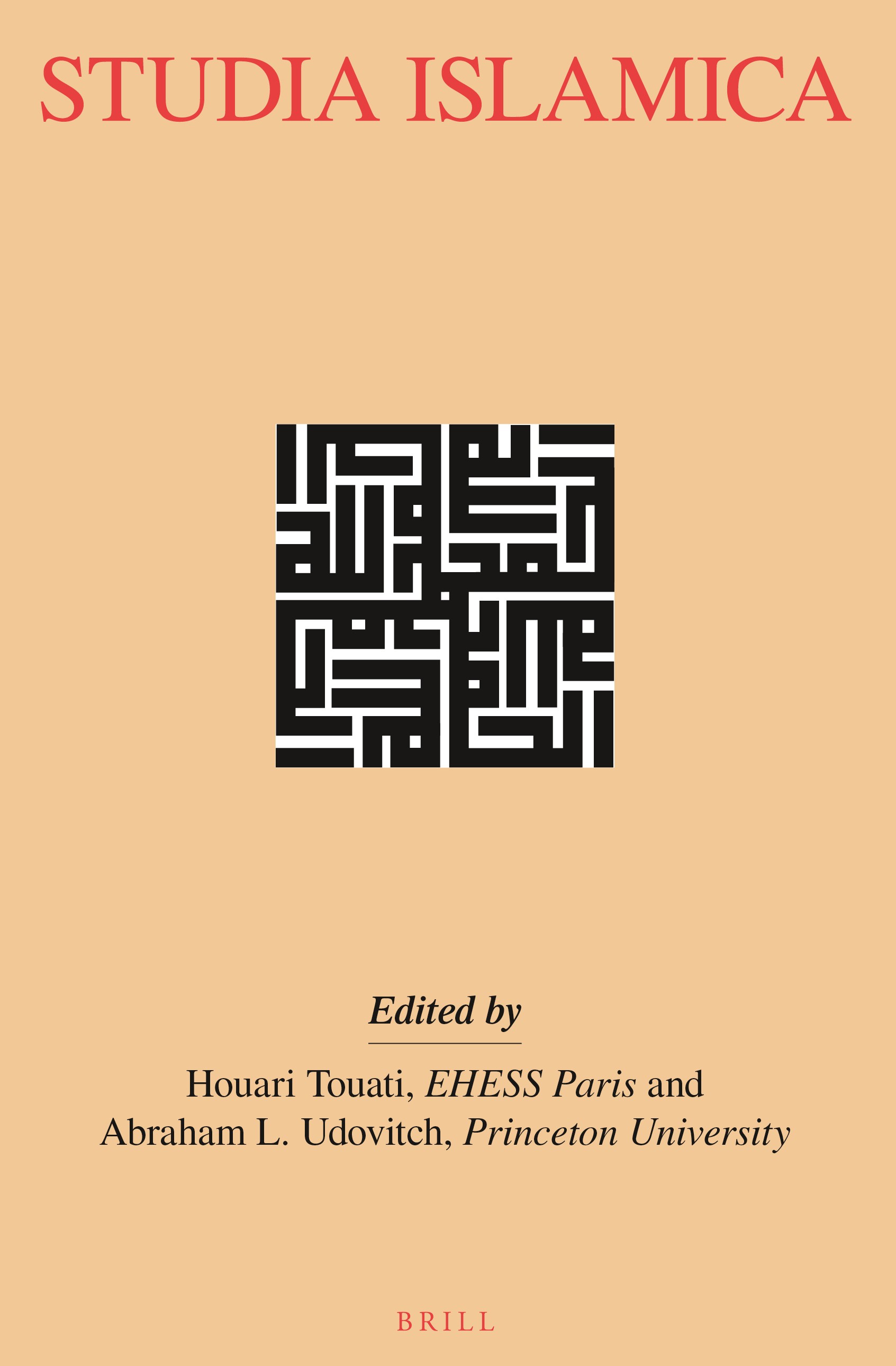
Silence and Speech Etiquette, A Contribution to the Study of Islamic Ethics
Abstract: When speaking of silence, the Koran employs three different verbal roots (ṣ-m-t, s-k-t, n-ṣ-t); on the basis of this linguistic profusion, Arabic Islamic culture has elaborated a complex ...
Resources related to Ethics
publication
The Virtues of the Good Muslim
- Ida Zilio-Grandi
Published in 2025 by Edizioni Ca’ Foscari in Venice, this monograph by Ida Zilio-Grandi (Ca’ Foscari University) is the augmented English translation of Le virtù del buon Musulmano, fir...
videos
“War and peace”, by Adrien Candiard
On Wednesday 20 May 2026, the Dominican Institute for Oriental Studies (IDEO) hosted in Cairo a lecture by Brother Adrien Candiard, Dominican and Islamologist, on the theme "War and peace". Faced w...

article
Leo XIV’s encyclical Magnifica Humanitas and the Pluriel working group on AI-assisted interreligious dialogue
- Wael Saleh
Text by Wael Saleh, researcher at the Université du Québec à Montréal (UQAM) and member of the Pluriel coordination committee. The simultaneous appearance of Leo XIV's encyclical Magnifica Human...
videos
Opening address of the Cordoba congress
- Michel Younès
On Tuesday 10 February 2026 in Cordoba, Michel Younès, general coordinator of Pluriel and dean of the Faculty of Theology of the Catholic University of Lyon (UCLy), delivered the opening address of...
publication
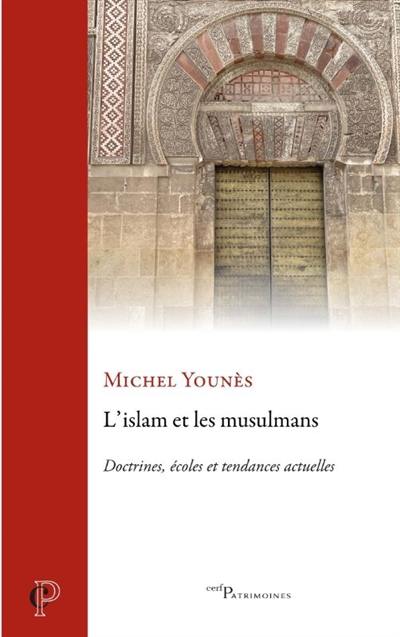
Islam and Muslims. Doctrines, Schools of Thought, and Current Trends
- Michel Younès
Publication date: April 16, 2026. Islam, as a historical, religious, and civilizational reality, is difficult to define. It can be perceived as a form of political governance, an expression of fait...

videos
“Welcome to Hell”: eschatology in the literary work of Dževad Karahasan
Paper presented at the fifth international congress of the University Platform for Research on Islam (Pluriel), held in Cordoba from 10 to 14 February 2026 on the theme "Ethics and Aesthetics in Is...

videos
Hospitality, power and interreligious dialogue in Naguib Mahfouz’s “Children of the Alley”
- Gabriel Khairallah
Paper presented at the fifth international congress of the University Platform for Research on Islam (Pluriel), held in Cordoba from 10 to 14 February 2026 on the theme "Ethics and Aesthetics in Is...

videos
Landscape and architecture as occasions of contemplation and of interreligious dialogue in the travel narratives of the Sufi ʿAbd al-Ghanī al-Nābulusī
Paper presented at the fifth international congress of the University Platform for Research on Islam (Pluriel), held in Cordoba from 10 to 14 February 2026 on the theme "Ethics and Aesthetics in Is...