

English

The Gratitude of Man and the Gratitude of God. Notes on šukr in Traditional Islamic Thoughts
Original title : “The Gratitude of Man and the Gratitude of God. Notes on šukr in Traditional Islamic Thoughts”
SUMMARY: The present essay is intended as a contribution to the study of gratitude or šukr within the Islamic tradition, beginning with the Koranic use of the root škr (and more particularly its derivative šakūr), examining its explicit implications for early lexicography (IbnManẓūr), noting the presence of these implications in traditional thought (Ibn Abī al–Dunyā and al–Ḫarā’iṭī) and proposing some comparisons with theological speculation (Abū Ḥāmid al–Ġazālī and Ibn Qayyim al–Ǧawziyya). In the light of the sources consulted, gratitude emerges as a crucial ingredient of faith, a cornerstone of a conscientious Islamic ethic, and not least an important linking element between the divine practice and the duties of man, both in terms of the harmony between man’s thankfulness to God and God’s satisfaction with the believer, and in terms of the close connection between the gratitude owed to God and that owed to a brother benefactor. Finally, man is seen as a creature endowed with an awareness whose highest vocation is, precisely, gratitude.
Titre original : “The Gratitude of Man and the Gratitude of God. Notes on šukr in Traditional Islamic Thoughts”
Résumé
Le présent essai est une contribution à l’étude de la gratitude dans la tradition islamique, en commençant par l’usage coranique de la racine škr (et plus particulièrement du mot šakūr), en examinant ses implications explicites dans la lexicographie primitive (Ibn Manẓūr), en notant la présence de ses implications dans la pensée traditionnelle (Ibn Abīal – Dunyā and al-Ḫarā’iṭī) et en proposant quelques comparaisons avec la spéculation théologique (Abū Ḥāmid al–Ġazālī and Ibn Qayyim al–Ǧawziyya). A la lumière des sources consultées, la gratitude émerge comme un ingrédient essentiel de la foi, la pierre angulaire d’une éthique islamique consciente, et surtout un lien important reliant la pratique divine et les devoirs de l’homme, à la fois en termes d’harmonie entre la gratitude de l’homme envers Dieu et la satisfaction de Dieu à l’égard du croyant, et en termes de relation étroite entre la gratitude due à Dieu et celle qui est due à un bienfaiteur humain. Enfin, l’homme est vu comme une créature douée d’une conscience dont la plus haute vocation est précisément la gratitude.
 Download PDF

Author(s)
Resources of this researcher
publication
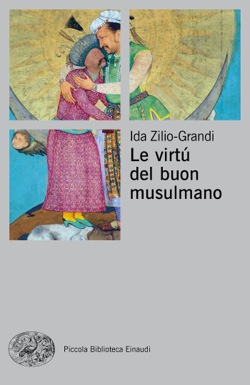
The Virtues of the Good Muslim
Published in 2025 by Edizioni Ca’ Foscari in Venice, this monograph by Ida Zilio-Grandi (Ca’ Foscari University) is the augmented English translation of Le virtù del buon Musulmano, fir...
article
Environmentalism and sustainability as an expression of Islamic moral orientation
Abstract : The essay emphasizes cultural specificities, starting with the terminology currently used to describe sustainability, and investigates the lack of homogeneity of the semantic fields bel...
article
The Gratitude of Man and the Gratitude of God. Notes on šukr in Traditional Islamic Thoughts
Original title : "The Gratitude of Man and the Gratitude of God. Notes on šukr in Traditional Islamic Thoughts" SUMMARY: The present essay is intended as a contribution to the study of gratitude o...
article
Return, Repentance, Amendment, Reform, Reconversion. A contribution to the study of Tawba in the Context of Islamic Ethics
Abstract The present essay aims to explore, within the general framework of Islamic ethics, the complex notion of tawba, whose immediate peculiarity lies in its double meaning, being akin to “repe...
article
Thoughts on raḥma in Islamic religious tradition
Abstract : This essay deals with ‘mercy’ or rahma, not as a divine characteristic, but rather as the basic ele-ment in the relations the good Muslim must maintain with his neighbour. Looking at the...
article
Ḥilm or “Judiciousness”: A Contribution to the Study of Islamic Ethics
First lines of the introduction "Among the ninety-nine Beautiful Names of God listed in Islamic religious literature, there appears al-ḥalīm, deriving directly from the text of the Koran. As is ...
article
Silence and Speech Etiquette, A Contribution to the Study of Islamic Ethics
Abstract: When speaking of silence, the Koran employs three different verbal roots (ṣ-m-t, s-k-t, n-ṣ-t); on the basis of this linguistic profusion, Arabic Islamic culture has elaborated a complex ...
Resources related to Discourse Analysis - Hermeneutics
article
The grammar of sacred violence: A critical discourse analysis of radical Islamist writings
- Mohamed-Ali Mostfa
This article offers a discursive analysis of two contemporary Islamist texts that present violence not as a deviation from religious normativity, but as its necessary, even redemptive expression. I...
article
Beyond Representation: Systemic Epistemic Alterity and the Architecture of Knowledge in the Contemporary Academy
- Wael Saleh
In this article, published in two parts by Social Epistemology Review and Reply Collective (SERRC), Wael Saleh, a researcher at the University of Quebec in Montreal (UQAM) and a member of Pluriel's...

videos
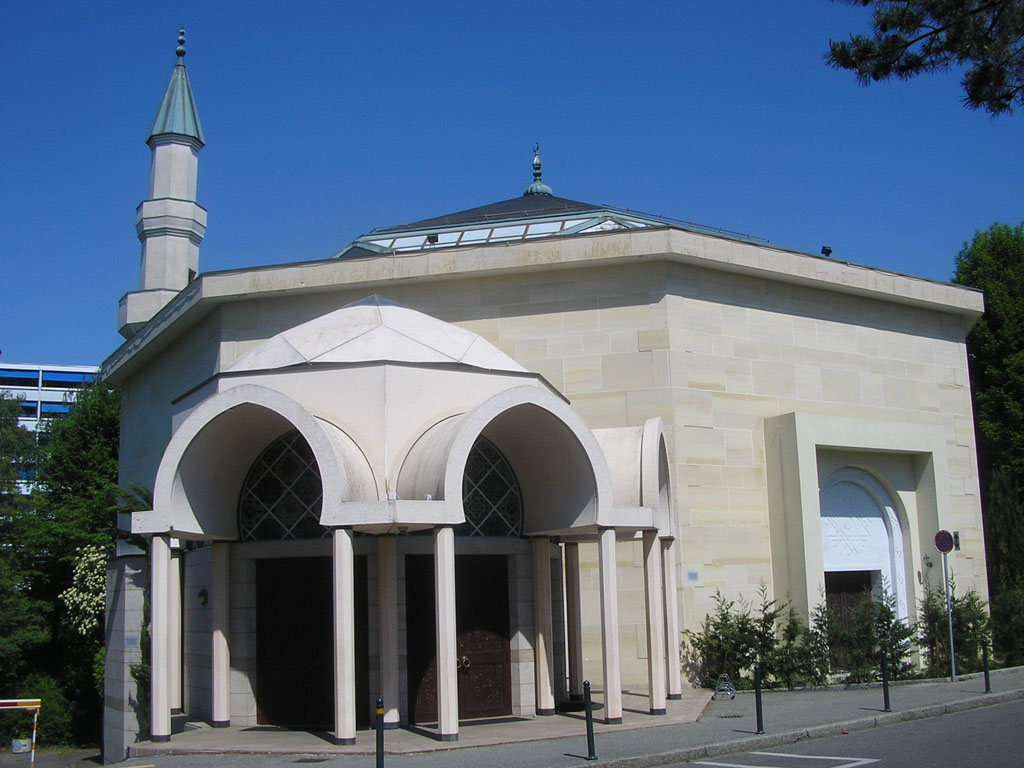
From word to virtue: Ibn Ḥazm and the aesthetics of discourse
Paper presented at the 5th international congress of the University Platform for Research on Islam (Pluriel), held in Cordoba from 10 to 14 February 2026 on the theme "Ethics and Aesthetics in Isla...
article
Mind the Gap: Mimicry and Subjectivation in Racialised Discourses
- Noemi Trucco
Abstract Published in the collective volume Adaptive Subjekte. Linking Collaboration and Contradiction (eds. F. Brodersen, D. Pokitsch, S. Röhrer and N. Trucco, Wiesbaden, Springer VS, 2026), this ...
publication
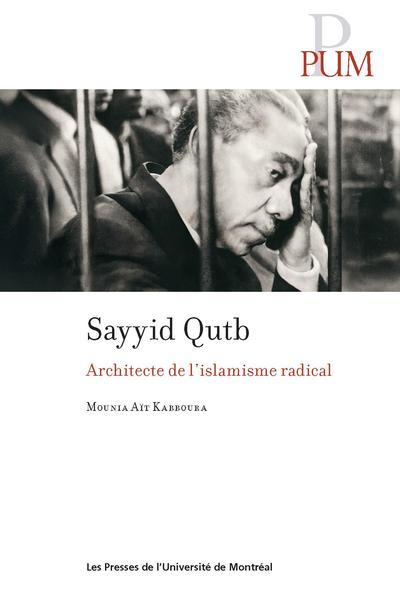
Sayyid Qutb. Architect of Radical Islamism
- Mounia Ait Kabboura
The thought of Sayyid Qutb (1906–1966) has profoundly shaped a wide range of religio-political movements, from the Muslim Brotherhood to Salafi-jihadists, radicalizing political Islam and inspiring...
videos
The Foundations of Arabic Grammatical Theory
Cairo. In a lecture delivered in Arabic on Saturday, January 25, 2025, at the Dominican Institute for Oriental Studies (IDEO) in Cairo, Professor Ramzi Baalbaki, holder of the Chair of Arabic...
publication
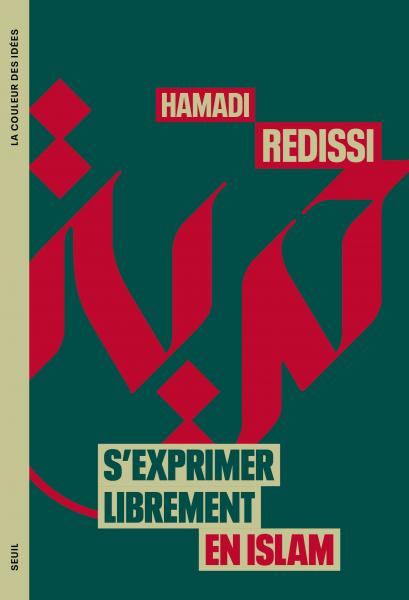
Speaking freely in Islam
- Hamadi Redissi
What is the Islamic doctrine of blasphemy, insult to God, religion and the Prophet? What about the prohibition of figurative representation of Muhammad? Can one openly believe or abjure in Islam? T...

article
The Genre of the Mawlid Narrative in the mid-12th h./18th Century as Exemplified by al-Barzanjī
- Antonio Cuciniello
Among the works of Arabic literature concerning the genre of Mawlid, certainly al-Barzanjī’s Mawlid is a text that has achieved great popularity and spread to large parts of the Islamic world. Inde...