
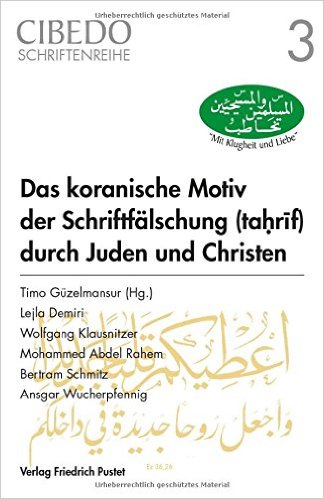
Publisher : Cibedo - Regensburg

German


The Qur’anic motif of the falsification of the Scriptures by the Jews and Christians
Publisher’s Introduction
Recognition of the writings of divine revelation to Jews and Christians is one of the six principles of the Islamic faith. Before the revelation of the Qur’an, God had sent the Torah to Moses, the Psalter to David and the Gospel to Jesus. But at the same time, the reader is confronted with the Qur’an’s claim that the Jews and Christians were not faithful to the original revelation in their own scriptures. This accusation of falsification has been repeated repeatedly over the centuries in commentaries, apologetic literature and other literary genres, and interpreted in various ways.
In this volume the accusation of textual falsification is examined from the perspective of Islamic theology, religious studies and Christian theology. What exactly are Jews and Christians accused of and what positions are taken within the Muslim tradition? How do modern Muslim exegetes treat the statements of the Qur’an on this issue? What can be said from a Christian point of view against the accusation of falsification?
Présentation de l’éditeur
La reconnaissance des écrits de la révélation divine faite aux juifs et aux chrétiens est l’un des six principes de la foi islamique. Avant la révélation du Coran, Dieu avait envoyé la Torah à Moïse, le Psautier à David et l’Évangile à Jésus. Mais en même temps, le lecteur se heurte à l’affirmation du Coran selon laquelle les juifs et les chrétiens n’ont pas été fidèles à la révélation originale dans leurs propres écritures. Cette accusation de falsification a été reproduite à maintes reprises au cours des siècles dans les commentaires, la littérature apologétique et d’autres genres littéraires, et interprétée de diverses manières.
Dans ce volume, l’accusation de falsification textuelle est examinée du point de vue de la théologie islamique, des études religieuses et de la théologie chrétienne. De quoi sont accusés exactement les juifs et les chrétiens et quelles sont les positions prises au sein de la tradition musulmane ? Comment les exégètes musulmans modernes traitent-ils les déclarations du Coran sur cette question ? Que peut-on dire d’un point de vue chrétien contre l’accusation de falsification ?
Präsentation des Herausgebers
Die Akzeptanz der göttlichen Offenbarungsschriften an Juden und Christen gehört zu den sechs islamischen Glaubensprinzipien: Gott habe vor der Offenbarung des Koran die Tora an Mose, den Psalter an David und das Evangelium an Jesus gesandt. Doch zugleich wird der Leser im Koran mit der Behauptung konfrontiert, Juden und Christen seien der ursprünglichen Offenbarung in ihren eigenen Schriften nicht treu geblieben. Dieser Vorwurf der Verfälschung wurde über die Jahrhunderte hinweg immer wieder in Kommentaren, apologetischer Literatur und anderen Gattungen reproduziert und auf verschiedene Weise interpretiert.
In diesem Band wird der Vorwurf der Textverfälschung aus der Perspektive der islamischen Theologie, der Religionswissenschaft und der christlichen Theologie erörtert. Was genau wird den Juden und Christen vorgeworfen und welche Positionen wurden innerhalb der muslimischen Tradition bezogen? Wie gehen moderne muslimische Exegeten mit den Aussagen des Koran zu dieser Frage um? Was lässt sich aus christlicher Perspektive gegen den Vorwurf der Verfälschung sagen?


 publisher's website
Resources of this researcher

article
Bells and Muezzin in Harmony: Dialogue with Islam as a Spiritual Responsibility
Article by Timo Güzelmansur published under the title Glocken und Muezzin im Einklang. Der Dialog mit dem Islam als geistliche Verantwortung in Herder Korrespondenz (special issue devoted to Pope L...

publication
The Event of the Qur’an: Islam in its Scripture
Published as Das Ereignis des Koran. Der Islam in seiner Schrift (Regensburg: Verlag Friedrich Pustet, 2026), this volume is the first German translation of the classic work by the Anglican Islamic...
publication
Is God a Lawgiver? Christian and Muslim Perspectives on Ius divinum
Law that invokes divine appointment or other religious justifications is repeatedly the focus of general attention in Germany. Beyond the concrete religious legal provisions, there is a reflection ...
publication
Is God a lawgiver? Christian and Muslim perspectives on Ius divinum
publication
The Qur’anic motif of the falsification of the Scriptures by the Jews and Christians
Publisher’s Introduction Recognition of the writings of divine revelation to Jews and Christians is one of the six principles of the Islamic faith. Before the revelation of the Qur’an, ...
publication
God and man in the teachings of the anatolian alevis
Volume 2 of the CIBEDO publication series With a preface by Karl Cardinal Lehmann The Alevis of Anatolia are considered another important group in Islam, alongside the Sunnis and Shiites. Neverthel...
publication
Did Jesus announce the coming of Muhammad?
Publisher’s Introduction In their dialogue with Muslims, Christians are repeatedly confronted with the claim that Jesus announced the coming of Muhammad as the last prophet. This is evidenced...
Resources related to Muslim-Christian Dialogue

article
Islamic Visions of Jesus: Revelation, Prophecy, and Eschatology
- Antonio Cuciniello
Abstract Published in the collective volume Jerusalem in Memory and Eschatology: Jewish, Christian, and Muslim Visions of the Past and Future of Jerusalem, edited by Emma O'Donnell Polyakov (Blo...

article
Questions on Islamic Soteriology in Early Islam
- Jaume Flaquer Garcia
Abstract Published under the original title "Cuestiones sobre la soteriología islámica en el islam primitivo" in the collective volume Riesgos y fidelidades. Miradas teológicas para un mundo plu...

article
The Uncreated Muslim Qur’an and the Eternally Begotten Christian Logos
- Jaume Flaquer Garcia
Abstract Published under the original title "El Corán musulmán increado y el Logos cristiano eternamente engendrado" in the monographic section Logos, Agape, Sarx. Una dialógica cristiana of iss...
publication
Les Affranchis. Des dérives religieuses dans le judaïsme, le christianisme et l’islam
- Roberta Collu Moran
Les Affranchis. Des dérives religieuses dans le judaïsme, le christianisme et l’islam (Le Passeur, 2020) offers an anthropological reading of religious excesses and radicalisation within the ...

article
The First Council of Nicaea (325) and the Christian-Muslim Dialogue on God’s Unity and Trinity
- Dirk Ansorge
Abstract Published under the original title "Das erste Konzil von Nizäa (325) und der christlich-muslimische Dialog über Gottes Einheit und Dreifaltigkeit" in issue 2/2025 of CIBEDO-Beiträge, th...

article
Christian-Muslim Relations Today: Some Reflections
- David Marshall
Abstract Published as "Christian-Muslim Relations Today: Some Reflections" in a special issue of The Muslim World marking the 50th anniversary of the Duncan Black Macdonald Center (Hartford), th...
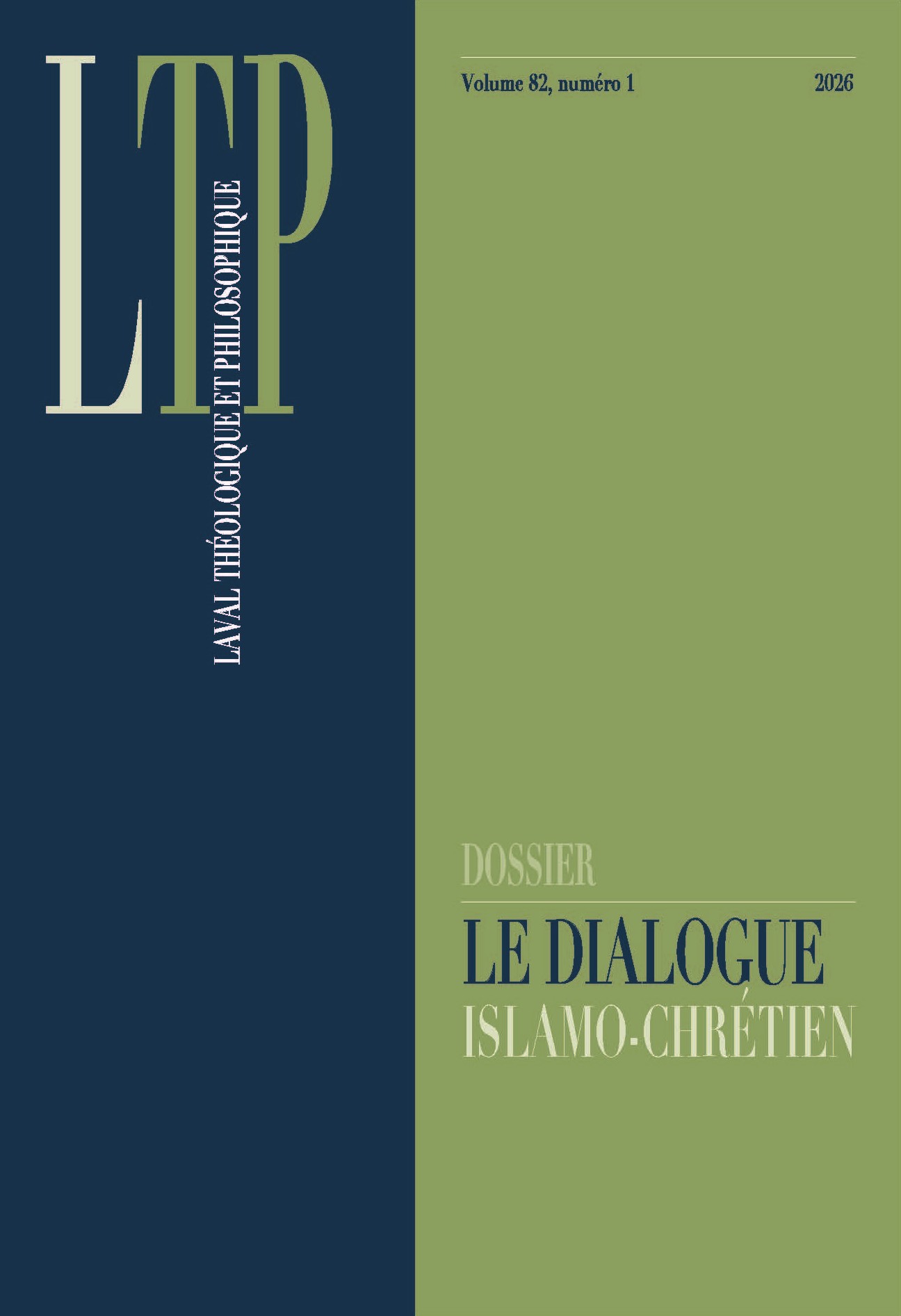
article
Ḥaydar Ibrāhīm ʿAlī, a Thinker on Multiple Fronts
- Guy-Raymond Sarkis
Abstract Ḥaydar Ibrāhīm ʿAlī, a Sudanese sociologist of religion, is a committed intellectual whose writings both arise from and respond to the challenges of his society. He calls for a liberati...

article
Literary, Semiotic and Hermeneutical Approaches to the Qur’an in the Modern Period
- Wasim Salman
Abstract In this contribution to issue 51 (Mélanges) of the journal Islamochristiana, published in Italian as Approcci letterari, semiotici ed ermeneutici al Corano nel periodo moderno, Wasim Sa...