
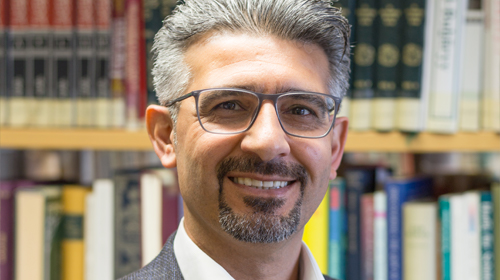

Kenneth Cragg and the Event of the Qur’an
Article by Timo Güzelmansur published under the title Kenneth Cragg und das Ereignis des Koran on the theological portal feinschwarz.net (12 June 2026, open access).
Timo Güzelmansur presents the Anglican theologian Kenneth Cragg (born in Nottingham in 1913, educated at Oxford) as a major British pioneer of Christian-Muslim dialogue, still too little received in the German-speaking world. From the late 1930s, Cragg went to the Middle East: he taught at the Near East School of Theology in Beirut, engaged for years with Muslim scholars in Lebanon and Egypt, spent time in Sudan, and became Anglican Bishop of Jerusalem (1970-1973). His thought arises not from European distance but from long experience of majority-Muslim societies, where Islam is a lived reality.
His central idea: reading the Qur’an as an “event”. This is not merely its proclamation by the prophet Muhammad in the 7th century, but an ongoing happening, a word spoken and heard that calls for a response. This phenomenological approach shifts attention from textual analysis to a “theology of address and responsibility”: God addresses the human being and draws him into a relationship. Cragg sees here a bridge to Christian thought, without blurring the differences.
The author also highlights the tension between divine transcendence and human response, and Cragg’s sensitivity to language: the Qur’an is inseparable from its Arabic form, every translation remaining an approximation. His theology is not neutral: he remains a Christian thinker arguing from his own tradition, showing that dialogue does not require abandoning one’s identity but rethinking it before the other. The Qur’an becomes a counterpart that also questions Christianity.
Read the full article: feinschwarz.net
Article de Timo Güzelmansur paru sous le titre Kenneth Cragg und das Ereignis des Koran sur le portail théologique feinschwarz.net (12 juin 2026, en libre accès).
Timo Güzelmansur présente le théologien anglican Kenneth Cragg (Nottingham, 1913 ; formé à Oxford) comme un pionnier britannique majeur du dialogue islamo-chrétien, encore trop peu reçu dans l’espace germanophone. Dès la fin des années 1930, Cragg part au Proche-Orient : il enseigne à la Near East School of Theology de Beyrouth, échange durant des années avec des savants musulmans au Liban et en Égypte, séjourne au Soudan, puis devient évêque anglican de Jérusalem (1970-1973). Sa pensée ne naît pas d’une distance européenne, mais d’une longue expérience de sociétés à majorité musulmane, où l’islam est une réalité vécue.
Son idée centrale : lire le Coran comme un « événement ». Il ne s’agit pas seulement de sa proclamation par le prophète Muhammad au VIIe siècle, mais d’un événement continu, une parole prononcée et entendue qui appelle une réponse. Cette approche phénoménologique déplace l’attention de l’analyse du texte vers une « théologie de l’interpellation et de la responsabilité » : Dieu s’adresse à l’homme et l’engage dans une relation. Cragg y voit un pont vers la pensée chrétienne, sans effacer les différences.
L’auteur souligne aussi la tension entre transcendance divine et réponse humaine, et la sensibilité de Cragg à la langue : le Coran est indissociable de sa forme arabe, toute traduction restant une approximation. Sa théologie n’est pas neutre : il demeure un penseur chrétien qui argumente depuis sa tradition et montre que le dialogue n’exige pas d’abandonner son identité, mais de la repenser face à l’autre. Le Coran devient un vis-à-vis qui interroge aussi le christianisme.
Lire l’article intégral : feinschwarz.net
مقال بقلم تيمو غوزيلمانسور، نُشر بعنوان:
Kenneth Cragg und das Ereignis des Koran (feinschwarz.net، 12 June 2026)
يُقدّم تيمو غوزيلمانسور اللاهوتيَّ الأنغليكانيَّ كِنيث كراغ (المولود في نوتنغهام سنة 1913، والمتخرّج من أكسفورد) بوصفه رائداً بريطانيّاً كبيراً في الحوار المسيحيّ-الإسلاميّ، لا يزال حضوره ضعيفاً في الفضاء الناطق بالألمانيّة. لقد توجّه كراغ منذ أواخر الثلاثينيّات إلى الشرق الأوسط: فدرّس في مدرسة الشرق الأدنى للاهوت ببيروت، وحاور سنواتٍ طويلةً المتخصّصين المسلمين في لبنان ومصر، ثمّ أقام في السودان، فصار أسقفاً أنغليكانيّاً للقدس (1970-1973). ومن هنا لم ينبثق فكرُه من مسافةٍ أوروبيّة، بل من خبرةٍ طويلةٍ في مجتمعاتٍ ذاتِ أغلبيّةٍ مسلمة، حيث الإسلامُ واقعٌ معيش.
إنّ فكرتَه المحوريّة هي قراءةُ القرآن بوصفه «حدثاً». وليس المقصود مجرّدَ تبليغه على لسان النبيّ محمّد في القرن السابع، بل حدثاً متّصلاً: كلمةٌ تُقال وتُسمع وتستدعي جواباً. فهذا المنهج الظاهراتيّ ينقل الاهتمامَ من تحليل النصّ إلى «لاهوت المخاطبة والمسؤوليّة»، إذ يخاطب اللهُ الإنسانَ ويُدخله في علاقة. ويرى كراغ في ذلك جسراً نحو الفكر المسيحيّ، من دون طمس الفوارق.
كما يُبرز المؤلّفُ التوتّرَ بين التعالي الإلهيّ والجواب الإنسانيّ، فضلاً عن حساسيّة كراغ تجاه اللغة: فالقرآن لا ينفصل عن صورته العربيّة، وتبقى كلّ ترجمةٍ مجرّد تقريب. أمّا لاهوته فليس محايداً: إنّه مفكّرٌ مسيحيّ يُحاجّ انطلاقاً من تقليده الخاصّ، ويُبيّن أنّ الحوار لا يقتضي التخلّي عن الهويّة، بل إعادةَ التفكير فيها في حضرة الآخر. ومن هنا يصير القرآنُ نظيراً يطرح أسئلته على المسيحيّة أيضاً.
قراءة المقال كاملاً: feinschwarz.net


Resources of this researcher
article
Bells and Muezzin in Harmony: Dialogue with Islam as a Spiritual Responsibility
Article by Timo Güzelmansur published under the title Glocken und Muezzin im Einklang. Der Dialog mit dem Islam als geistliche Verantwortung in Herder Korrespondenz (special issue devoted to Pope L...

publication
The Event of the Qur’an: Islam in its Scripture
Published as Das Ereignis des Koran. Der Islam in seiner Schrift (Regensburg: Verlag Friedrich Pustet, 2026), this volume is the first German translation of the classic work by the Anglican Islamic...
publication
Is God a Lawgiver? Christian and Muslim Perspectives on Ius divinum
Law that invokes divine appointment or other religious justifications is repeatedly the focus of general attention in Germany. Beyond the concrete religious legal provisions, there is a reflection ...
publication
Is God a lawgiver? Christian and Muslim perspectives on Ius divinum
publication
The Qur’anic motif of the falsification of the Scriptures by the Jews and Christians
Publisher’s Introduction Recognition of the writings of divine revelation to Jews and Christians is one of the six principles of the Islamic faith. Before the revelation of the Qur’an, ...
publication
God and man in the teachings of the anatolian alevis
Volume 2 of the CIBEDO publication series With a preface by Karl Cardinal Lehmann The Alevis of Anatolia are considered another important group in Islam, alongside the Sunnis and Shiites. Neverthel...
publication
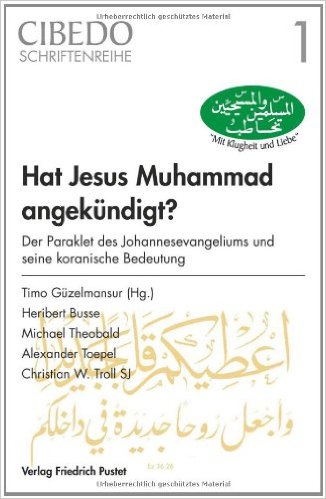
Did Jesus announce the coming of Muhammad?
Publisher’s Introduction In their dialogue with Muslims, Christians are repeatedly confronted with the claim that Jesus announced the coming of Muhammad as the last prophet. This is evidenced...
Resources related to keywords

publication
Understanding Salafism
- Mohamed-Ali Adraoui
Published in 2022 by Palgrave Macmillan (Springer) in the series The Sciences Po Series in International Relations and Political Economy, this book by Mohamed-Ali Adraoui, professor at Sorbonne Par...

article
Experiencing a Mosque Through Photography: Islam As an Ordinary Religion
- Guillaume Chatagny
Abstract Published in 2021 in Visual Ethnography (vol. 10, no. 2) under the title "Experiencing a Mosque Through Photography: Islam As an Ordinary Religion", this article by Guillaume Chatagny, ...

article
Islam Seen through the Work of Aziz al-Azmeh
- Wasim Salman
Abstract Published in Arabic in issue 50 (2024) of Islamochristiana (PISAI, released in April 2025), this essay by Wasim Salman, president of PISAI and director of the journal, examines the rela...

article
Islamic Visions of Jesus: Revelation, Prophecy, and Eschatology
- Antonio Cuciniello
Abstract Published in the collective volume Jerusalem in Memory and Eschatology: Jewish, Christian, and Muslim Visions of the Past and Future of Jerusalem, edited by Emma O'Donnell Polyakov (Blo...

article
Questions on Islamic Soteriology in Early Islam
- Jaume Flaquer Garcia
Abstract Published under the original title "Cuestiones sobre la soteriología islámica en el islam primitivo" in the collective volume Riesgos y fidelidades. Miradas teológicas para un mundo plu...

article
The Uncreated Muslim Qur’an and the Eternally Begotten Christian Logos
- Jaume Flaquer Garcia
Abstract Published under the original title "El Corán musulmán increado y el Logos cristiano eternamente engendrado" in the monographic section Logos, Agape, Sarx. Una dialógica cristiana of iss...
publication
Les Affranchis. Des dérives religieuses dans le judaïsme, le christianisme et l’islam
- Roberta Collu Moran
Les Affranchis. Des dérives religieuses dans le judaïsme, le christianisme et l’islam (Le Passeur, 2020) offers an anthropological reading of religious excesses and radicalisation within the ...

article
The First Council of Nicaea (325) and the Christian-Muslim Dialogue on God’s Unity and Trinity
- Dirk Ansorge
Abstract Published under the original title "Das erste Konzil von Nizäa (325) und der christlich-muslimische Dialog über Gottes Einheit und Dreifaltigkeit" in issue 2/2025 of CIBEDO-Beiträge, th...