

English

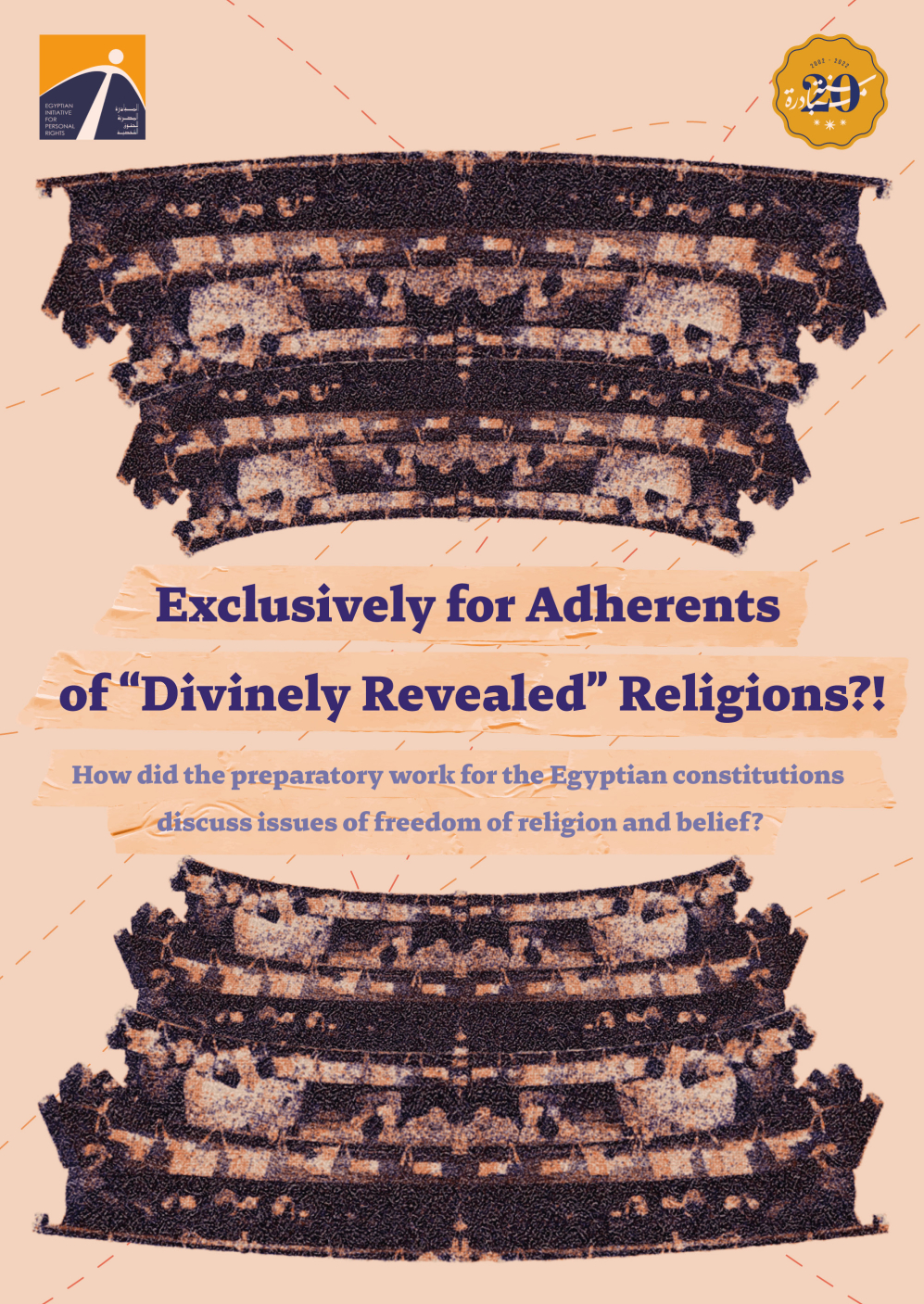
Exclusively for Adherents of ‘Divinely Revealed’ Religions?
How did the preparatory work for the Egyptian constitutions discuss issues of freedom of religion and belief?
« The term “divinely revealed religions” is used in the constitution, laws, and some judicial rulings to restrict the religious freedoms of Egyptian citizens; specifically, those who do not adhere to Islam, Christianity, or Judaism, which are the only “divinely revealed religions” recognized in Egypt, according to the interpretations of the executive and judicial branches of government. Followers of these three religions enjoy certain religious rights and freedoms which are not afforded to adherents of any other belief. […]
This paper seeks to reconsider the preparatory work for the Egyptian constitutions of 1923, 2012, and 2014, which witnessed important debates about the limits of religious freedom in Egypt. The aim is to discuss the most prominent arguments used in judicial rulings in the context of lawsuits that demand raising the ceiling of religious freedoms in Egypt and guaranteeing some religious freedoms to those who do not follow the three “divinely revealed religions”. The paper also aims to identify the different orientations in discussions among elites, the different positions of these elites across the Egyptian political spectrum in relation to freedom of religion and belief, and how these positions were reflected during the preliminary deliberations of drafting constitutions. »
Comment le travail préparatoire des constitutions égyptiennes s’est confronté aux débats sur la liberté de religion et de conviction ?
“Le terme de « religions divinement révélées » est employé dans la constitution, les lois et la jurisprudence pour restreindre les libertés religieuses des citoyens égyptiens, et plus précisément ceux qui n’adhèrent pas à l’islam, au christianisme ou au judaïsme, qui sont les seules reconnues comme “divinement révélées” en Égypte. Les membres de ces trois religions jouissent de certains droits et libertés religieuses qui ne sont pas accordés aux autres convictions. En dépit de cela, les constitutions égyptiennes n’utilisaient pas cette notion de “religions divinement révélées” avant 2012, pas plus que le concept constitutionnel n’était associé à une limitation des libertés religieuses. […]
Cet article vise à reconsidérer les travaux préparatoires des constitutions égyptiennes de 1923, 2012 et 2014, qui ont suscité d’importants débats sur les limites de la liberté religieuse en Égypte. L’objectif est de discuter des principaux arguments utilisés dans les décisions judiciaires dans le cadre des procès qui demandent de relever le plafond des libertés religieuses en Égypte et de garantir certaines libertés religieuses à ceux qui n’appartiennent pas aux trois “religions divinement révélées”. L’article vise également à identifier les différentes orientations dans les discussions entre les élites, les différentes positions de ces élites à travers le spectre politique égyptien concernant la liberté de religion et de croyance, et comment ces positions ont été reflétées lors des délibérations préliminaires de la rédaction des constitutions.”
 Download PDF


Resources of this researcher
article
The Politics of Family Laws in Egypt and Tunisia: A Comparative Study of State-Religion Relations
Abstract Egypt and Tunisia share many historical, cultural and political commonalities, yet their state-religion arrangements differ markedly, particularly regarding the scope of religious referenc...
publication
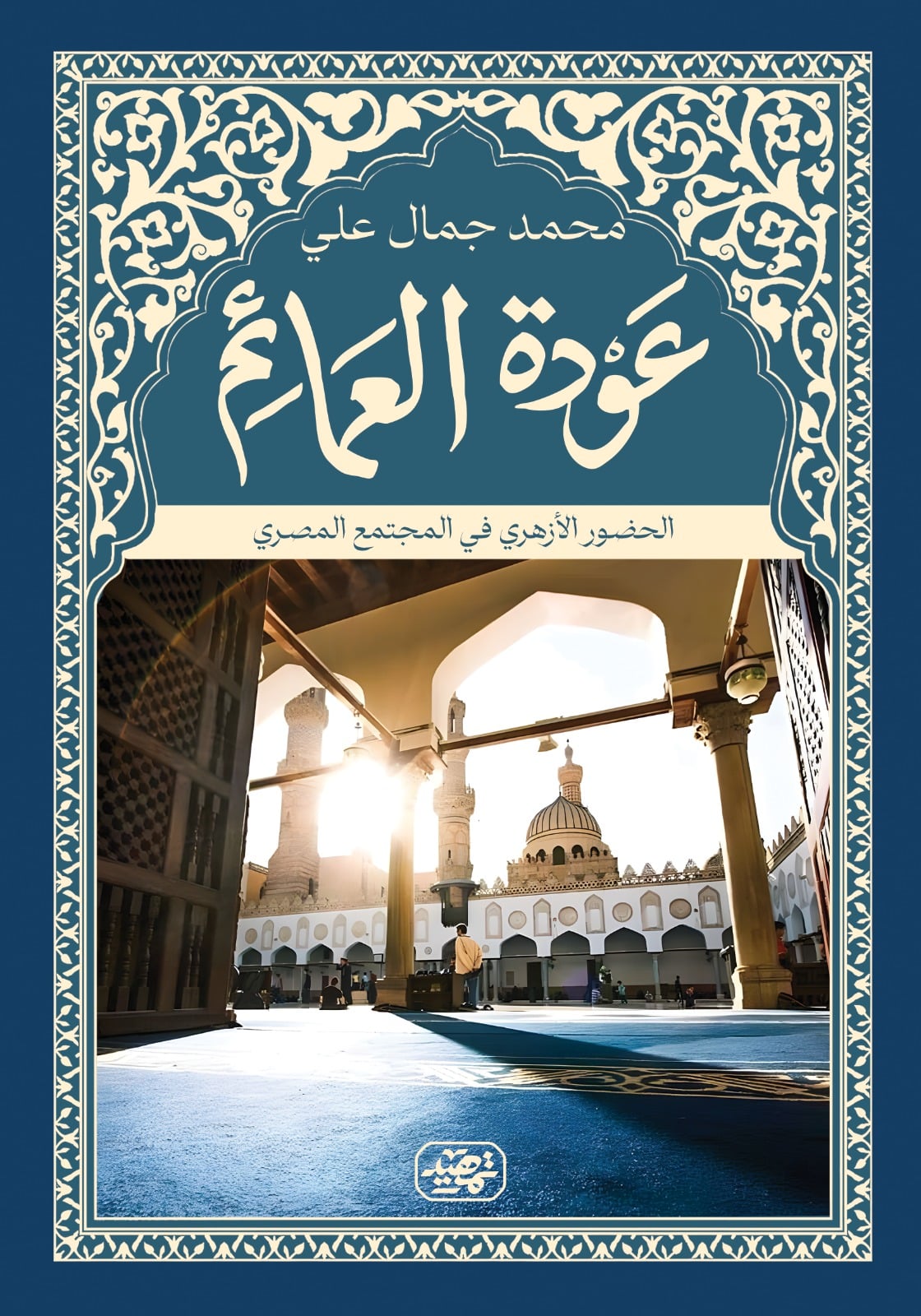
The Return of Turbans. Al-Azhar’s Presence in Egyptian Society
Published in late 2024, “The Return of the Turbans: Al-Azhar’s Presence in Egyptian Society” is the culmination of Mohamad Gamal Ali’s master’s thesis in political sci...
article
Exclusively for Adherents of ‘Divinely Revealed’ Religions?
How did the preparatory work for the Egyptian constitutions discuss issues of freedom of religion and belief? « The term “divinely revealed religions” is used in the constitution, laws, and some...

videos
The concept of “citizenship” in the Azhari discourse. Problems and contradictions
The concept of "citizenship" in the Al-Azhar discourse, problems and contradictions Al-Azhar Foundation announces on various occasions its full adoption of the concept of “citizenship,” and the ...
Resources related to Freedom of Religion

videos
From regulating religious sound to transforming it into light: public, legal and architectural debates on the adhān
Paper presented at the fifth international congress of the University Platform for Research on Islam (Pluriel), held in Cordoba from 10 to 14 February 2026 on the theme "Ethics and Aesthetics in Is...
article
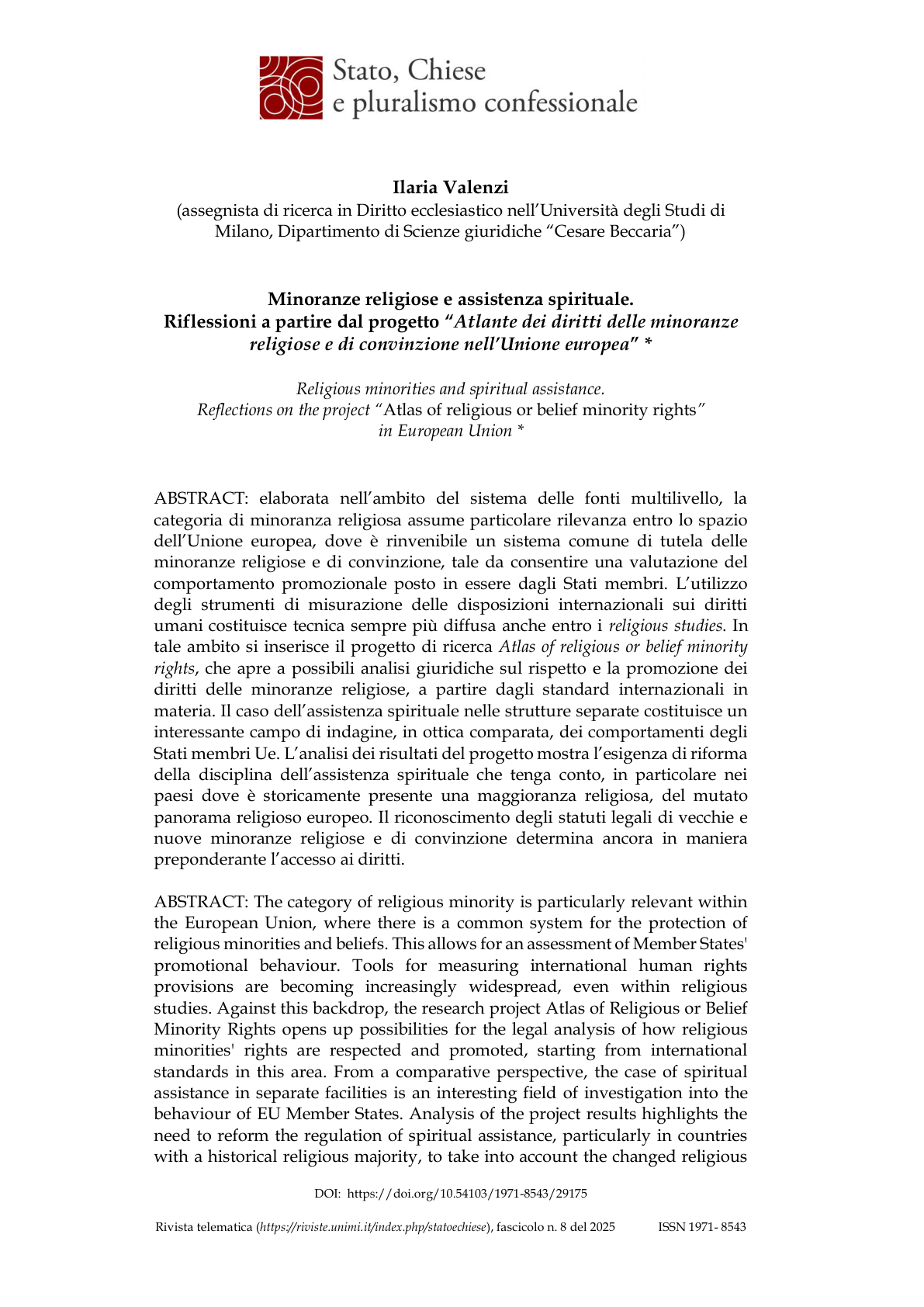
Religious minorities and spiritual assistance. Reflections on the project “Atlas of religious or belief minority rights” in the European Union
- Ilaria Valenzi
Abstract Developed within the multilevel system of legal sources, the category of "religious minority" takes on particular significance within the European Union, where a shared system of protectio...
article
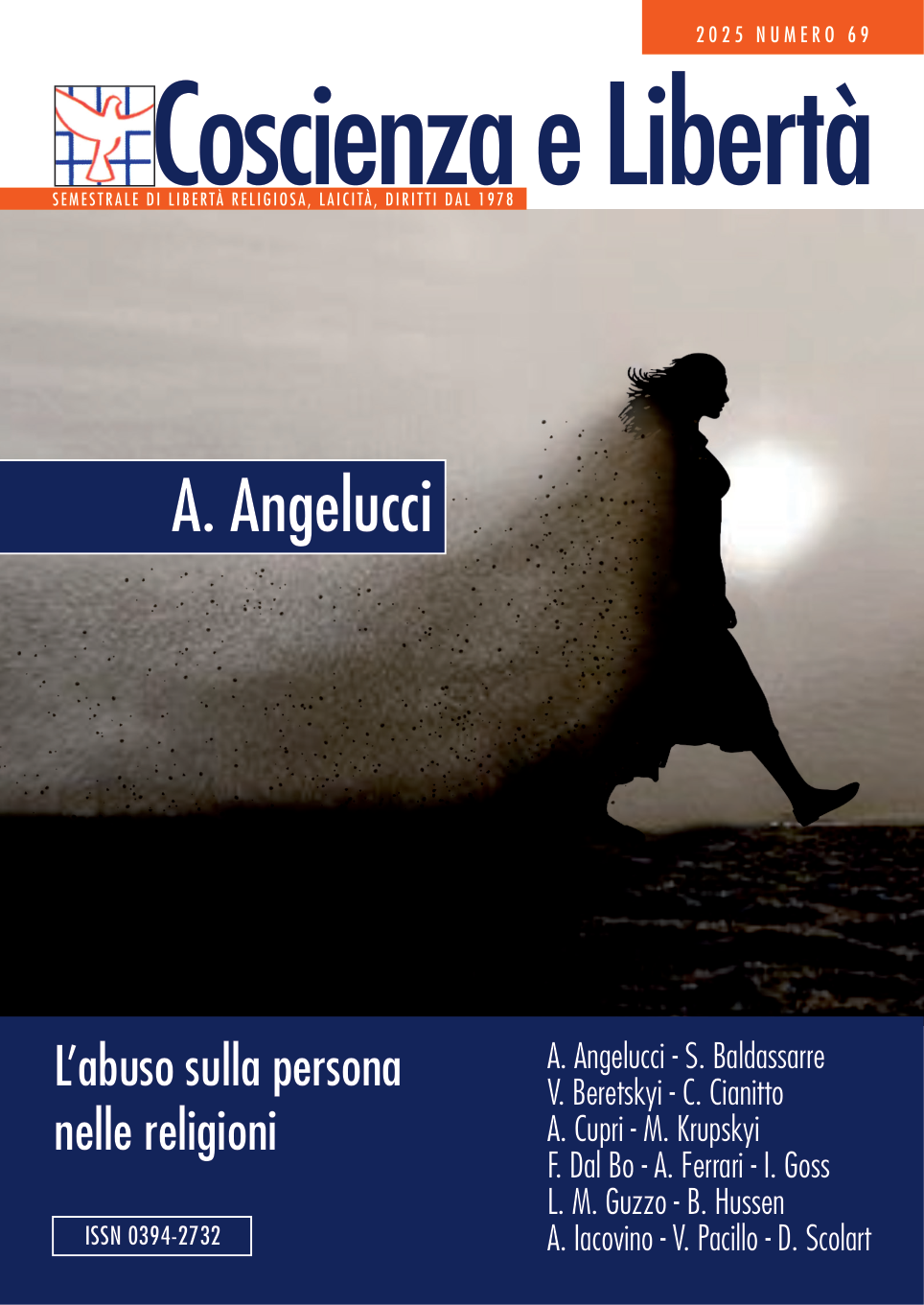
“Inclusive Citizenship, the Right to a Place of Worship and Everyday Peace”, by Antonio Angelucci
- Antonio Angelucci
In an article published in the Italian journal Coscienza e Libertà (no. 69, 2025), Antonio Angelucci, associate professor of law and religion at the University of Insubria, examines the connection ...
article
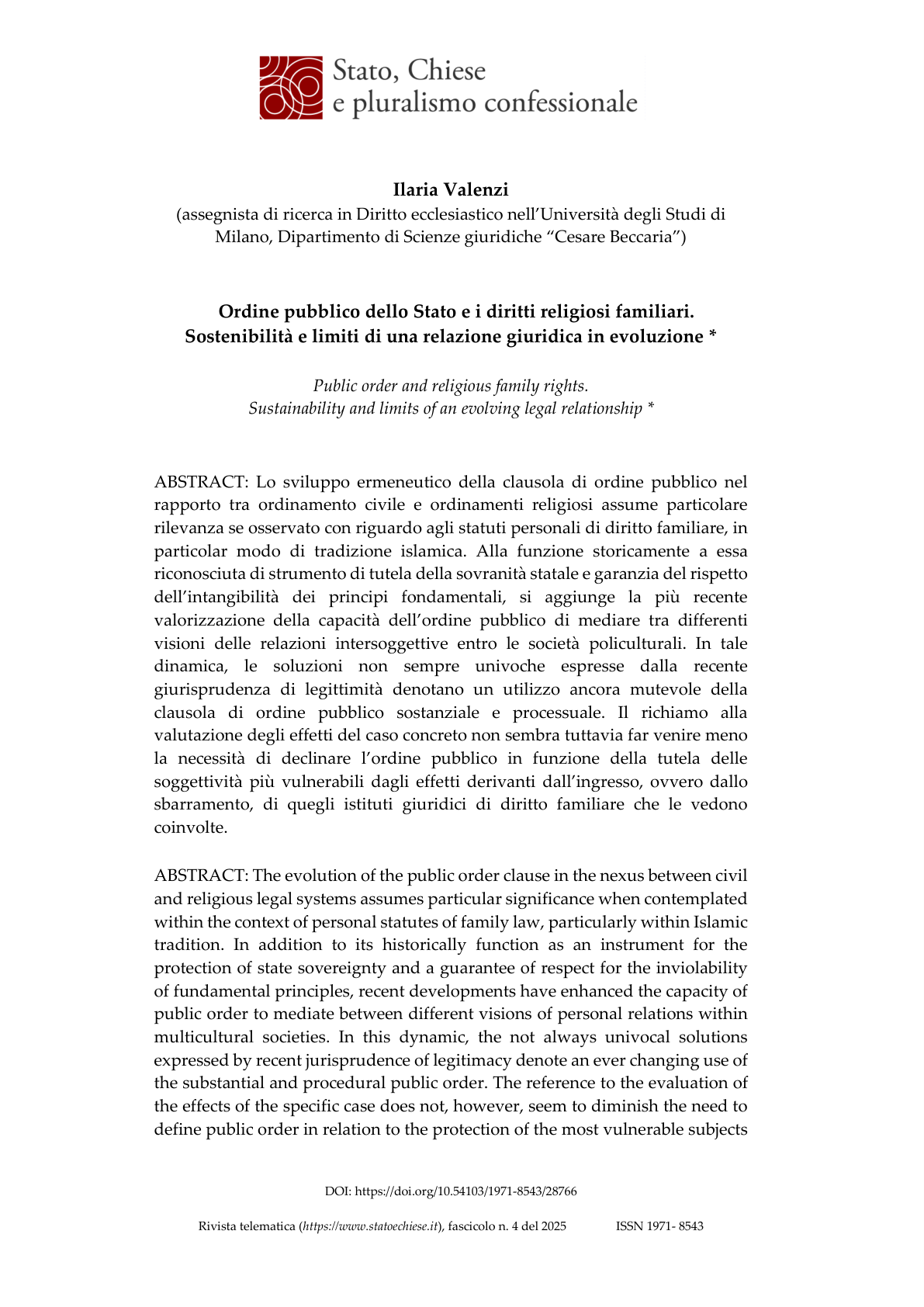
Public order and religious family rights. Sustainability and limits of an evolving legal relationship
- Ilaria Valenzi
Abstract The public-order clause, which safeguards the fundamental principles of the legal order, is today tested by the circulation of family models rooted in religious legal systems. Ilaria Valen...

videos
Freedom of conscience, a contested yet resilient right
- Dominique Avon
Rome. In a conference given on November 28, 2024, at the Pontifical Institute for Arabic and Islamic Studies, Professor Dominique Avon from the École Pratique des Hautes Études in Paris traced the ...
publication
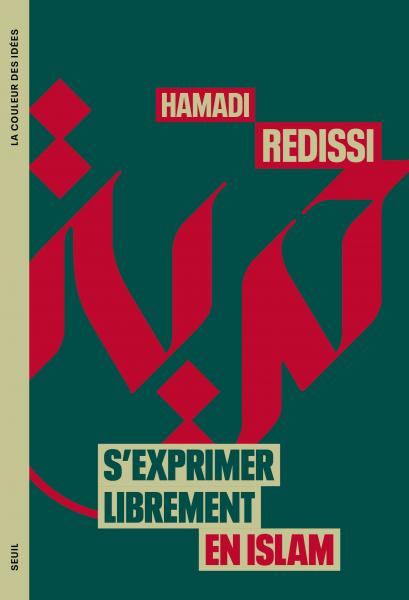
Speaking freely in Islam
- Hamadi Redissi
What is the Islamic doctrine of blasphemy, insult to God, religion and the Prophet? What about the prohibition of figurative representation of Muhammad? Can one openly believe or abjure in Islam? T...
publication
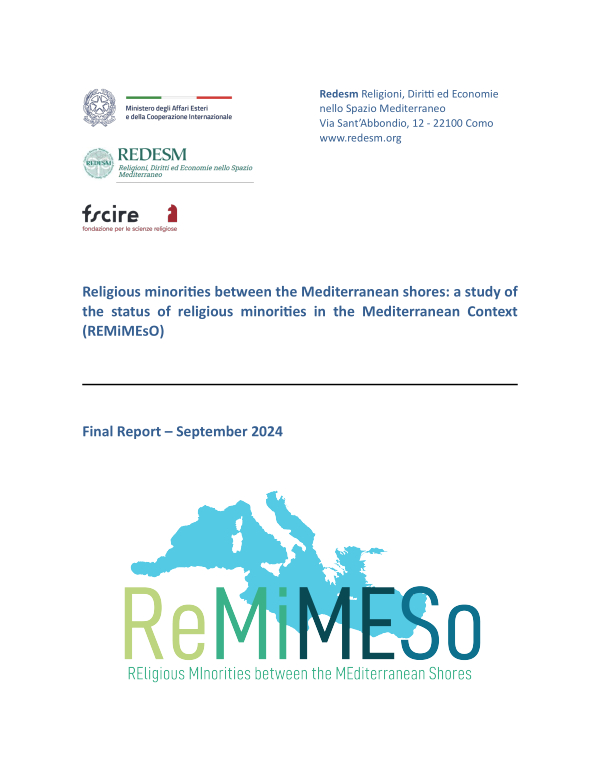
Religious minorities between the Mediterranean shores: a study of the status of religious minorities in the Mediterranean context (REMiMEsO) – Final Report
- Alessandro Ferrari
The REMiMESo project, led by Ilaria Valenzi and supported by the Italian Ministry of Foreign Affairs, explores the situation of religious minorities in five Mediterranean countries: Israel, Morocco...
publication
Religious Freedom in Italy. An Impossible Paradigm
- Alessandro Ferrari
Italy, seat of the Pope and Vatican City, has a long and difficult relationship with religious freedom. Often identified as a quintessentially Catholic nation, Italy owes its unification to a polit...