
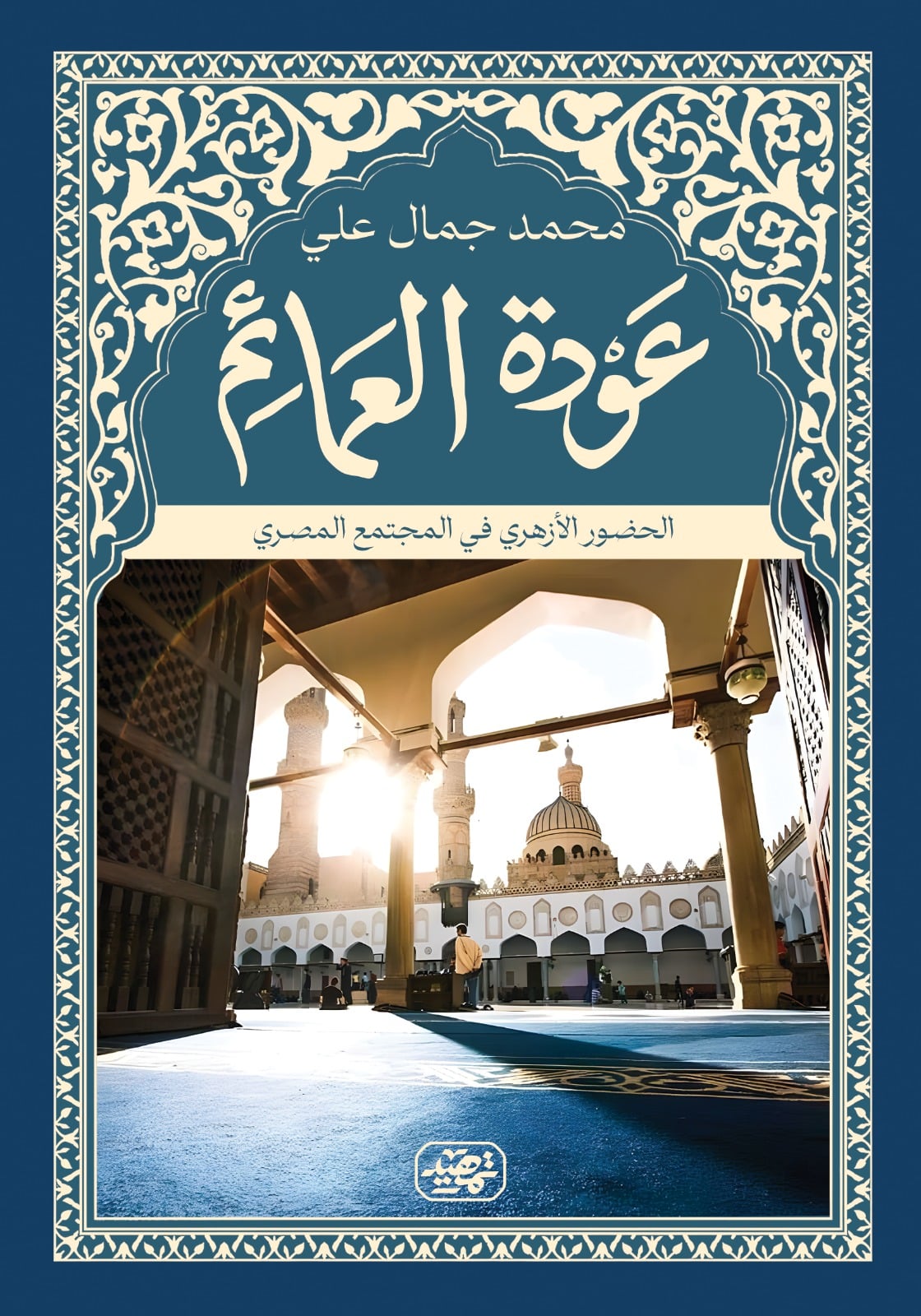
Publisher : Dar Tamheed - Cairo

Arabic

The Return of Turbans. Al-Azhar’s Presence in Egyptian Society
Published in late 2024, “The Return of the Turbans: Al-Azhar’s Presence in Egyptian Society” is the culmination of Mohamad Gamal Ali’s master’s thesis in political science, defended in 2019 at the Institute of Arab Studies in Cairo. A political scientist by training, the author focuses on the interactions between religion and politics in Egypt, particularly examining the societal role of Al-Azhar institution, a pillar of Sunni Islam. This centuries-old institution holds a central place in the country’s religious, educational, and political life.
The book explores Al-Azhar’s re-emergence in Egyptian public space, symbolized by the visible return of scholars wearing the traditional turban, a distinctive sign of the institution’s ulama. This renewed presence occurs in the context of political upheavals that Egypt experienced after the January 2011 revolution. The author analyzes how Al-Azhar seized this transition period to strengthen its legitimacy against competing Islamist currents (notably Salafists and Muslim Brotherhood) and respond to societal expectations regarding moral and social regulation.
The book relies on a methodology combining field research (interviews with ulama, students, institutional actors), direct observations, and analysis of official documents. The author highlights Al-Azhar’s various initiatives to expand its influence: creation of reconciliation committees to resolve tribal conflicts in the country’s south, development of educational programs to counter extremist discourse, and deployment of preachers in public spaces. These efforts are part of the desire to promote moderate Islam and restore the connection between the institution and citizens.
Mohamad Gamal Ali also questions the ambiguities of Al-Azhar’s political positioning: while claiming independence, the institution navigates between tacit support for the state and the desire to preserve its autonomy against power pressures. The author highlights the tensions inherent in this dual role as both religious authority and political actor.
“The Return of the Turbans” thus offers a nuanced and well-documented analysis of the transformations in Al-Azhar’s role in contemporary Egyptian society. Far from being limited to a mere institutional study, the book addresses issues of legitimacy, religious authority, and governance in a country where religion and politics remain closely intertwined.
Publié fin 2024, Le Retour des turbans : la présence d’Al-Azhar dans la société égyptienne est l’aboutissement de la thèse de master en sciences politiques de Mohamad Gamal Ali, soutenue en 2019 à l’Institut des études arabes au Caire. Politiste de formation, l’auteur s’intéresse aux interactions entre religion et politique en Égypte, en se concentrant particulièrement sur le rôle sociétal de l’institution d’Al-Azhar, pilier de l’islam sunnite. Cette institution séculaire occupe une place centrale dans la vie religieuse, éducative et politique du pays.
L’ouvrage explore la réémergence d’Al-Azhar dans l’espace public égyptien, symbolisée par le retour visible des érudits portant le turban traditionnel, signe distinctif des oulémas de l’institution. Ce regain de présence survient dans le contexte des bouleversements politiques qu’a connus l’Égypte après la révolution de janvier 2011. L’auteur analyse la manière dont Al-Azhar a saisi cette période de transition pour renforcer sa légitimité face aux courants islamistes concurrents (notamment les salafistes et les Frères musulmans) et répondre aux attentes sociétales en matière de régulation morale et sociale.
Le livre s’appuie sur une méthodologie mêlant recherche de terrain (entretiens avec des oulémas, des étudiants, des acteurs institutionnels), observations directes et analyse de documents officiels. L’auteur met en lumière les différentes initiatives d’Al-Azhar pour élargir son influence : création de comités de réconciliation pour résoudre les conflits tribaux dans le sud du pays, développement de programmes éducatifs pour contrer les discours extrémistes et déploiement de prêcheurs dans les espaces publics. Ces efforts s’inscrivent dans la volonté de promouvoir un islam modéré et de rétablir le lien entre l’institution et les citoyens.
Mohamad Gamal Ali interroge également les ambiguïtés du positionnement politique d’Al-Azhar : bien que revendiquant son indépendance, l’institution navigue entre soutien tacite à l’État et volonté de préserver son autonomie face aux pressions du pouvoir. L’auteur met en évidence les tensions inhérentes à ce double rôle d’autorité religieuse et d’acteur politique.
Le Retour des turbans offre ainsi une analyse nuancée et documentée des transformations du rôle d’Al-Azhar dans la société égyptienne contemporaine. Loin de se limiter à une simple étude institutionnelle, le livre aborde les enjeux de légitimité, d’autorité religieuse et de gouvernance dans un pays où religion et politique demeurent intimement liés.
صدر في نهاية عام 2024 كتاب عودة العمائم: الحضور الأزهري في المجتمع المصري كثمرة لرسالة الماجستير في العلوم السياسية التي قدمها محمد جمال علي عام 2019 في معهد الدراسات العربية بالقاهرة. والمؤلف، وهو باحث في العلوم السياسية، يهتم بالتفاعلات بين الدين والسياسة في مصر، مع التركيز بشكل خاص على الدور المجتمعي لمؤسسة الأزهر، ركيزة الإسلام السني. وتحتل هذه المؤسسة العريقة مكانة محورية في الحياة الدينية والتعليمية والسياسية للبلاد.
يستكشف الكتاب عودة ظهور الأزهر في المجال العام المصري، والتي يرمز إليها العودة الملحوظة للعلماء الذين يرتدون العمامة التقليدية، العلامة المميزة لعلماء المؤسسة. وتأتي هذه العودة في سياق التحولات السياسية التي شهدتها مصر بعد ثورة يناير 2011. ويحلل المؤلف كيف استغل الأزهر هذه الفترة الانتقالية لتعزيز شرعيته في مواجهة التيارات الإسلامية المنافسة (خاصة السلفيين والإخوان المسلمين) والاستجابة للتوقعات المجتمعية في مجال الضبط الأخلاقي والاجتماعي.
يعتمد الكتاب على منهجية تجمع بين البحث الميداني (مقابلات مع علماء وطلاب وفاعلين مؤسسيين)، والملاحظات المباشرة، وتحليل الوثائق الرسمية. ويسلط المؤلف الضوء على مبادرات الأزهر المختلفة لتوسيع نفوذه: إنشاء لجان للمصالحة لحل النزاعات القبلية في جنوب البلاد، وتطوير برامج تعليمية لمواجهة الخطاب المتطرف، ونشر الدعاة في الأماكن العامة. وتندرج هذه الجهود ضمن الرغبة في تعزيز الإسلام المعتدل وإعادة بناء الصلة بين المؤسسة والمواطنين.
كما يستكشف محمد جمال علي غموض الموقف السياسي للأزهر: فرغم مطالبته بالاستقلالية، تتأرجح المؤسسة بين الدعم الضمني للدولة والرغبة في الحفاظ على استقلاليتها في مواجهة ضغوط السلطة. ويبرز المؤلف التوترات المتأصلة في هذا الدور المزدوج كسلطة دينية وفاعل سياسي.
يقدم عودة العمائم تحليلاً متوازناً وموثقاً للتحولات في دور الأزهر في المجتمع المصري المعاصر. ولا يقتصر الكتاب على مجرد دراسة مؤسسية، بل يتناول قضايا الشرعية والسلطة الدينية والحوكمة في بلد لا يزال فيه الدين والسياسة مترابطين بشكل وثيق.


 publisher's website
Resources of this researcher
article
The Politics of Family Laws in Egypt and Tunisia: A Comparative Study of State-Religion Relations
Abstract Egypt and Tunisia share many historical, cultural and political commonalities, yet their state-religion arrangements differ markedly, particularly regarding the scope of religious referenc...
publication
The Return of Turbans. Al-Azhar’s Presence in Egyptian Society
Published in late 2024, “The Return of the Turbans: Al-Azhar’s Presence in Egyptian Society” is the culmination of Mohamad Gamal Ali’s master’s thesis in political sci...
article
Exclusively for Adherents of ‘Divinely Revealed’ Religions?
How did the preparatory work for the Egyptian constitutions discuss issues of freedom of religion and belief? « The term “divinely revealed religions” is used in the constitution, laws, and some...

videos
The concept of “citizenship” in the Azhari discourse. Problems and contradictions
The concept of "citizenship" in the Al-Azhar discourse, problems and contradictions Al-Azhar Foundation announces on various occasions its full adoption of the concept of “citizenship,” and the ...
Resources related to Contemporary Islam

publication
Understanding Salafism
- Mohamed-Ali Adraoui
Published in 2022 by Palgrave Macmillan (Springer) in the series The Sciences Po Series in International Relations and Political Economy, this book by Mohamed-Ali Adraoui, professor at Sorbonne Par...

article
Experiencing a Mosque Through Photography: Islam As an Ordinary Religion
- Guillaume Chatagny
Abstract Published in 2021 in Visual Ethnography (vol. 10, no. 2) under the title "Experiencing a Mosque Through Photography: Islam As an Ordinary Religion", this article by Guillaume Chatagny, ...

article
Islam Seen through the Work of Aziz al-Azmeh
- Wasim Salman
Abstract Published in Arabic in issue 50 (2024) of Islamochristiana (PISAI, released in April 2025), this essay by Wasim Salman, president of PISAI and director of the journal, examines the rela...

article
European Islam and the Italian Case: Tendencies and Specificities
- Stefano Allievi
Abstract Published under the original title "European Islam and the Italian case. Tendencies and specificities" in Contemporary Islam (Springer, November 2025, open access), this article by Stef...
article
A Fragrant Spiritual Heritage. Some Considerations on Perfumes in Islam
- Ida Zilio-Grandi
Abstract Published in volume 20 (2025) of Quaderni di Studi Arabi, this article by Ida Zilio-Grandi (Ca' Foscari University of Venice) revisits a constant of Islamic history that has attracted r...
article
Christian-Muslim Relations Today: Some Reflections
- David Marshall
Abstract Published as "Christian-Muslim Relations Today: Some Reflections" in a special issue of The Muslim World marking the 50th anniversary of the Duncan Black Macdonald Center (Hartford), th...
article
Ḥaydar Ibrāhīm ʿAlī, a Thinker on Multiple Fronts
- Guy-Raymond Sarkis
Abstract Ḥaydar Ibrāhīm ʿAlī, a Sudanese sociologist of religion, is a committed intellectual whose writings both arise from and respond to the challenges of his society. He calls for a liberati...
publication
ʿAbd al-Mutaʿāl al-Ṣaʿīdī (1894-1971): A Defence of Religious Freedom
- Youssouf Sangare
Published in 2024 in the collective volume Théologies musulmanes du pluralisme religieux (ed. Emmanuel Pisani, Éditions du Cerf, proceedings of the ISTR symposium of 20-21 November 2021, pp. 65-88)...