

French

Morocco, a fundamentalist state?
The fundamentalist attitude has several variations. In the Moroccan context, the mechanisms of state fundamentalism are linked in particular to the genealogical referent of the Alaouite dynasty in power. The latter claims the fundamentalist identity in the sense of its unfailing connection to the Prophet of Islam, through his daughter Fatima. From this point of view, the case of Morocco is interesting because the monarchical power, as the embodiment of the Moroccan state and supreme political actor, puts forward a definition of fundamentalism based on a combination of both religious resources, genealogical and political.
“L’attitude fondamentaliste compte plusieurs déclinaisons. Dans le contexte marocain, les mécanismes du fondamentalisme étatique sont liés notamment au référent généalogique de la dynastie alaouite au pouvoir. Cette dernière revendique l’identité fondamentaliste dans le sens de son lien indéfectible au Prophète de l’islam, par sa fille Fatima. De ce point de vue, le cas du Maroc est intéressant car le pouvoir monarchique, en tant qu’incarnation de l’État marocain et acteur politique suprême, met en avant une définition du fondamentalisme qui s’appuie sur une combinaison des ressources à la fois religieuses, généalogiques et politiques.”
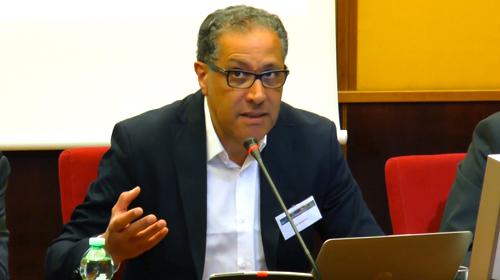
Ali Mostfa
 Download PDF

Resources of this researcher
publication
Dialogue for a More Livable World: Toward an Ethics of Encounter
How can we live in a climate of mistrust, trapped in identity-based withdrawal, and paralyzed by an uncertain future? On what basis can we open new paths to ease suffering—perhaps even reenchant ou...
article
Muslim worship in France: is the State-led reorganization underway?
In this article published on February 26, 2025, on The Conversation, Ali Mostfa analyzes the evolution of the Forum of Islam in France (Forif), created in 2022 to replace the French Council of Musl...
article
Redefining Qurʾānic Hermeneutics: Muḥammad ʿĀbid al-Jābrī and Nasr Ḥāmid Abū Zayd’s Humanistic Interpretations
This article presents the innovative endeavor by Muḥammad ʿĀbid al-Jābrī and Nasr Ḥāmid Abū Zayd in interpreting the Qurʾān through a humanistic lens. Their approach marks a pivotal shift, viewing ...
publication
Religions put to the test by freedom of expression
“In the republican context, freedom of expression involves all the players in society and mobilises a wide range of intellectual resources. What then are the conditions that foster it while r...
publication
Islam & Otherness. Proceedings of the Pluriel congress in Beirut
Edited by Michel Younès, Ali Mostfa and Roula Talhouk “In a contemporary context marked by a growing tendency to lock oneself into oppositional logics, reflection on otherness in Islam opens ...
article
Making religion online: the case of Islam
Islam in the digital age is becoming an inescapable reality in the lives of believers, thus introducing a new modality in the understanding of Islamic faith. From now on, the sacred text, rituals, ...
article
From Islamic Reference to Conservative Pragmatism – The Sinuous Paths of the Moroccan JDP Discourse
"The relationship between the political and religious fields in Morocco is generally based on tactical choices and pragmatic issues, often far from simple ideological orientations. In this context,...
publication
Authority in Islam. What regulation? Proceedings of the symposium.
“It is often said: “”no clergy in Islam””. In the absence of a hierarchical and universal magisterial authority, what are the instances and figures that serve as regul...
article
Religious Radicalism. The Challenges of an Ill-Defined Concept in Europe
Ali Mostfa, professor of linguistics and discourse analysis at the Catholic University of Lyon, analyses the semantic shifts about the notion of religious radicalism, particularly since the Septemb...
Resources related to Fundamentalism
article
The grammar of sacred violence: A critical discourse analysis of radical Islamist writings
- Mohamed-Ali Mostfa
This article offers a discursive analysis of two contemporary Islamist texts that present violence not as a deviation from religious normativity, but as its necessary, even redemptive expression. I...
publication
Islam and Muslims. Doctrines, Schools of Thought, and Current Trends
- Michel Younès
Publication date: April 16, 2026. Islam, as a historical, religious, and civilizational reality, is difficult to define. It can be perceived as a form of political governance, an expression of fait...
publication
Sayyid Qutb. Architect of Radical Islamism
- Mounia Ait Kabboura
The thought of Sayyid Qutb (1906–1966) has profoundly shaped a wide range of religio-political movements, from the Muslim Brotherhood to Salafi-jihadists, radicalizing political Islam and inspiring...
publication
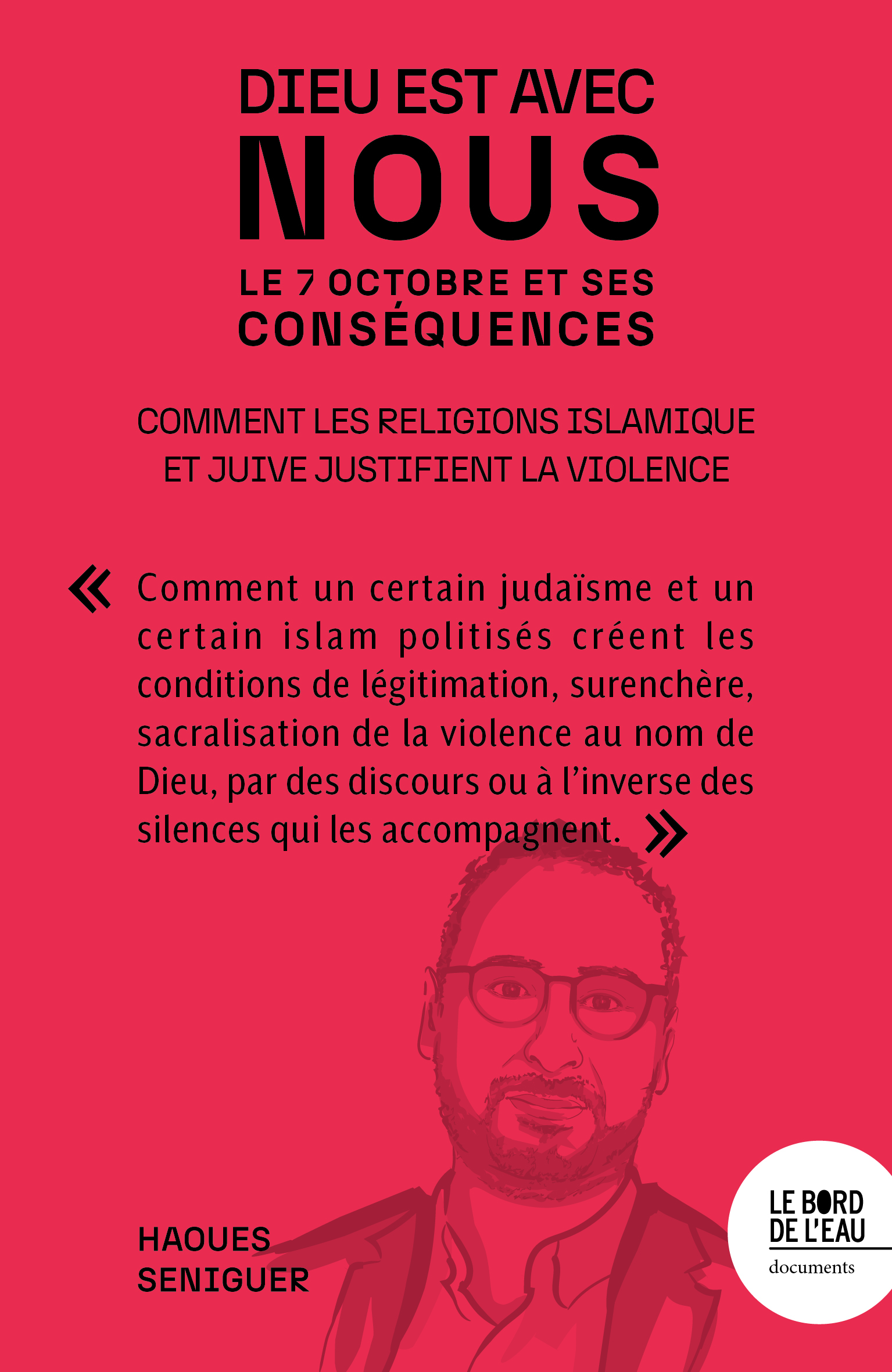
God Is with Us: How Islam and Judaism Justify Violence
- Haoues Seniguer
Long before October 7, 2023—and even more so since—certain politicized strands of Judaism and Islam have been creating conditions that legitimize, escalate, and sacralize violence in God’s na...
article
Online Salafism: the Tension to (Co)Exist in Religious and Ideological Plurality
- Anja Zalta
An article by Anja Zalta published in the journal Poligrafi (vol. 30, no. 119/120, 2025, open access).The author examines how digital platforms and social-media literacy, especially among Generatio...
publication
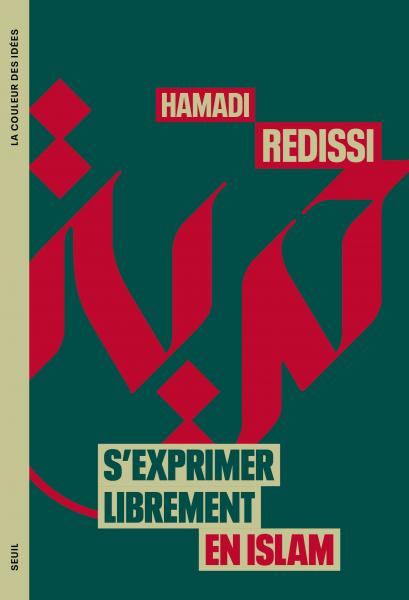
Speaking freely in Islam
- Hamadi Redissi
What is the Islamic doctrine of blasphemy, insult to God, religion and the Prophet? What about the prohibition of figurative representation of Muhammad? Can one openly believe or abjure in Islam? T...
publication
Salafist Movements in Europe: Between Local and Transnational Mobilizations
- Mohamed-Ali Adraoui
In this chapter, the author sheds light on the main sociological features and academic debates on the issue of Salafism in Europe. Through a comparative analysis of different countries, he shows th...
videos
What does the reformation of religion mean?
Lecture given by Mohamed El Haddad as part of the Anawati Chair at the Dominican Institute of Oriental Studies in Cairo. Summary Plural Mohamed El Haddad presents his conception of religious re...