


English

The apocatastasis will save us all. The transition towards a shared ethical approach from christian patristic to early islamic theology and philosophy
Abstract
I intend to deepen through this paper a comparative analysis between Greek cosmology, Christian Patristic and Early Islamic theology. Origen, Gregory of Nyssa, Clement of Alexandria and others, elaborated, for the first time, the apocatastasis as an eschatological theory which concerns the eternity of fire, the purification of souls and the grace of God. The same is deep rooted in Islamic theology and philosophy as religiously anchored within the Koran (3; 28, 102, 155, 176) and Islamic Tradition (Sunna and Hadit): Those who have merited Paradise will enter it; the damned will go to hell. God says also: Let those leave Hell whose hearts contain even the weight of a mustard seed of faith I Then they will be released, although they have already been burned to ashes and plunged into the river of rain-water or into the river of life; and immediately they will be revived.” It could be possible that the main sources for the apocatastasis, inside early Christian and Islamic theology, adapted terminology and common ideas to both religions (When he has done this, then the Son himself will be made subject to him who put everything under him, so that God may be all in all, 1 Corinthians 15; 28). Ambrose of Milan and Gregory of Nazianzus discussed this concept without reaching a common pronouncement, while Basil the Great, who opposed this doctrine, supported that the view of apocatastasis is in contrast with the Justice of God (theodicy). On the other side some Mu’tazilite theologians, as Abu al-Hudhayl al- ‘Allaf (d. 849) is considered as a supporter of Paradise and Hell’s lethargical life (probably inspired by Qirar Ibn ‘Amr, d. 815), and al-Maturidi, in Radd wald al-fussaq, “The Refutation of the Doctrine of Eternal Damnation of Grave Sinners’ (this essay’s content is in contrast with the views of the majority of Mu’tazilite theologians), argued that there are different ahadli of the Prophet in which God’s justice is expressed as fundamental within Islam, but still relegated to the infinite mercy of Allah: ” ‘Umar ibn al-Khattab asks him (Ali ibn Abi Talib) what the Prophet said, and when ‘AIi discloses the Prophet’s words, ‘Umar says that no one must know this because then no one would strive for Paradise”. The metaphysical perception of apocatastasis resolves the issue, because in its light, creation is eternal whether manifest or not: The absoluteness of God as creator is preserved because there is, in a manner of speaking, a moment, a time when the possibility of creation is only inherent and not manifest. There is nothing beside the Absolute and when creation begins anew, it begins ex nihilo, out of nothing.
Titre original : “The apocatastasis will save us all. The transition towards a shared ethical approach from christian patristic to early islamic theology and philosophy”
Résumé
J’ai l’intention d’approfondir à travers ce document une analyse comparative entre la cosmologie grecque, le patristique chrétienne et la théologie islamique primitive. Origène, Grégoire de Nysse, Clément d’Alexandrie et d’autres, ont élaboré pour la première fois l’apocatastase comme une théorie eschatologique qui comprend l’éternité du feu, la purification des âmes et la grâce de Dieu. La même idée est profondément enracinée dans la théologie et la philosophie islamiques et religieusement ancrée dans le Coran (3; 28, 102, 155, 176) et la tradition islamique (sunna et hadit) : “Ceux qui ont mérité le Paradis y entreront ; les damnés iront en enfer. Dieu dit aussi : Que ceux-là quittent l’Enfer dont les cœurs contiennent même le poids d’une graine de moutarde de la foi I Alors ils seront relâchés, bien qu’ils aient déjà été réduits en cendres et plongés dans le fleuve de l’eau de pluie ou dans le fleuve de la vie ; et immédiatement ils seront ressuscités.”
Il est possible que les principales sources de l’apocatastase, à l’intérieur de la théologie chrétienne et islamique primitive, terminologie adaptée et idées communes aux deux religions (“Quand il aura fait cela, alors le Fils lui-même sera soumis à celui qui a tout mis sous lui, afin que Dieu soit tout en tous”, 1 Corinthiens 15; 28). Ambroise de Milan et Grégoire de Nazianze ont discuté de ce concept sans parvenir à une formulation commune, tandis que Basile le Grand, qui s’est opposé à cette doctrine, soutenu que la vue de l’apocatastase est en contraste avec la justice de Dieu (théodicée). D’autre part, certains théologiens Mu’tazilite, comme Abu al-Hudhayl al-‘Allaf (d. 849) est considéré comme un partisan du Paradis et de la vie léthargique de l’Enfer (probablement inspiré par Qirar Ibn ‘Amr, d. 815), et al-Maturidi, dans Radd wald al-fussaq, “La réfutation de la doctrine de la damnation éternelle des pécheurs graves’ (contenu de cet essai est en contraste avec les vues de la majorité des théologiens mutazilite), a fait valoir qu’il y a différents ahadli du Prophète dans lequel la justice de Dieu est exprimée comme fondamentale Islam, mais toujours relégué à l’infinie miséricorde d’Allah : “‘Omar ibn al-Khattab lui demande (Ali ibn Abi Talib) ce que le Prophète a dit, et quand ‘Allah révèle les paroles du Prophète, ‘Omar dit que personne ne doit savoir cela parce qu’alors personne ne lutterait pour gagner le Paradis”. La perception métaphysique de l’apocatastase résout le problème, parce que dans sa lumière, la création est éternelle, manifeste ou non : l’absoluité de Dieu en tant que créateur est préservée parce qu’il y a, pour ainsi dire, un moment, un temps où la possibilité de la Création est seulement inhérente et non manifeste. Il n’y a rien à côté de l’Absolu et quand la création recommence, elle commence ex nihilo, à partir de rien.
 Download PDF

Resources of this researcher
article
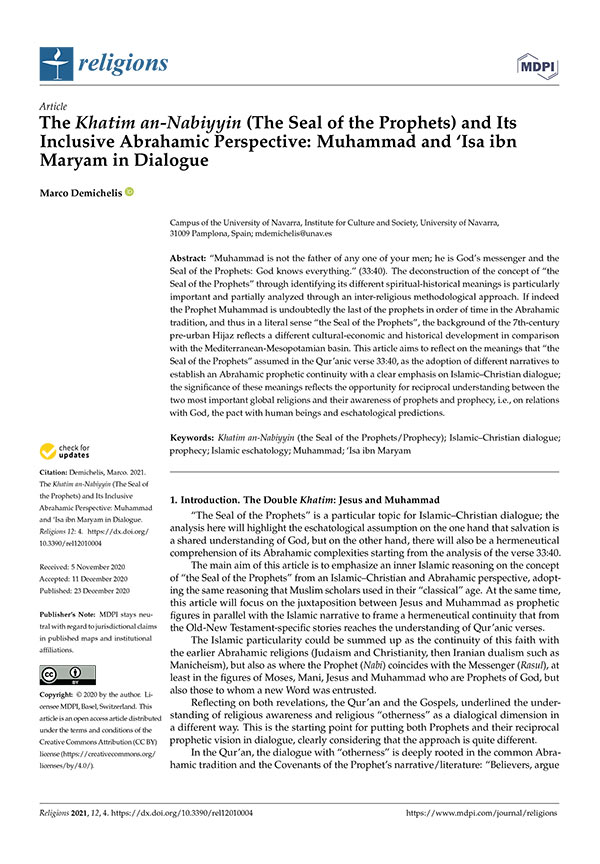
The Khatim an-Nabiyyin (The Seal of the Prophets) and Its Inclusive Abrahamic Perspective: Muhammad and ‘Isa ibn Maryam in Dialogue
Abstract “Muhammad is not the father of any one of your men; he is God’s messenger and the Seal of the Prophets: God knows everything.” (33:40). The deconstruction of the concept of “the Seal of...
publication
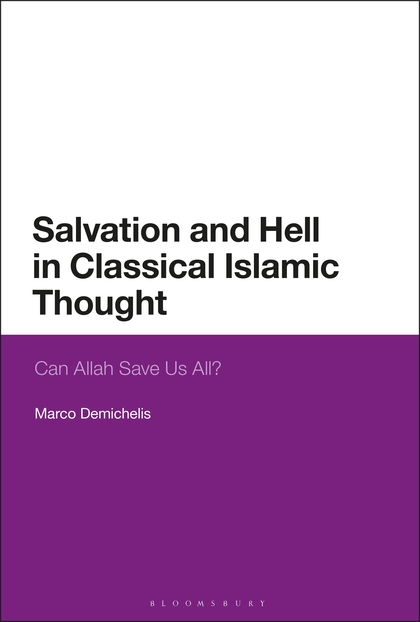
Salvation and Hell in Classical Islamic Thought.
Presentation : Salvation and Hell in Classical Islamic Thought uses classical Islamic sources to trace the development of Islamic eschatology during the formative centuries of Islamic intellectual ...
publication
Religious Violence, Political Ends, Nationalism, Citizenship and Radicalizations in the Middle East and Europe
Since antiquity, religious violence based on political motives has been and remains a common practice: the atrocities committed by the Roman Empire against the first Christian communities were quic...

videos
When religion divides the “community”. Dynamics of violence and pacification within Arab Levant
Conference of Marco DEMICHELIS, at the second international Congress of PLURIEL Abstract Since the nineteenth century, the dynamics of inter-religious conflict within the Arab world accentuated...
videos
Presentation of the congress “Islam and Belonging” of PLURIEL
With the voices of members of the Scientific Comittee
article
The Mihna. Deconstruction and reconsideration of the Mu’tazilite role in the “Inquisition
Abstract The Miḥna has usually been attributed to the Mu‘tazilite theological school as expression of something unusual, a bid‘ah (Islamic innovation) related to a rationalist group of theologia...
article
The Fate of Others in 14th century Hanbalism
Abstract In a recent publication entitled Ibn Taymiyya’s Theological Ethics, Sophia Vasalou tackles the moral objectivism that Ibn Taymiyya would reworked inspired to the unorthodox thought of M...
article
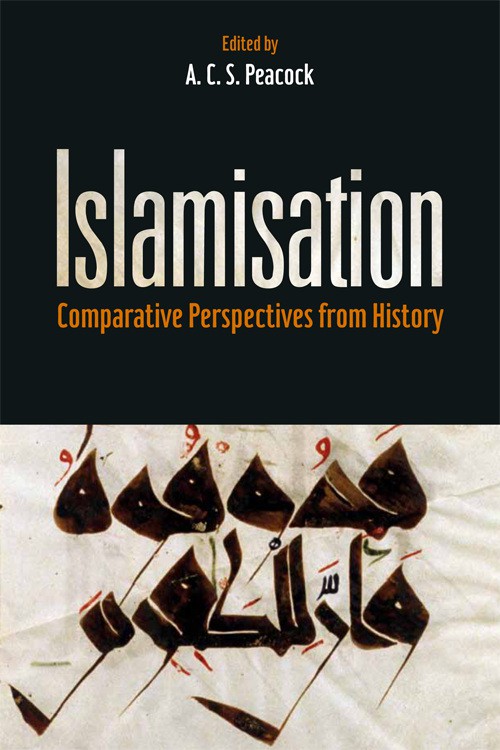
The Oromo and the historical process of Islamisation in Ethiopia
Abstract The historical interaction between Islam and Christianity in the Horn of Africa is profoundly connected with the region’s specifi c historical, linguistic and cultural characteristics. ...
article
The historical debate on secularisation between F. Antun and M. Abduh.
Full title : 'The historical debate on secularisation between F. Antun and M. Abduh. God's absolutism and Islam's irrationality as cornerstones of orientalist islamic-christian dispute during the N...
Resources related to Discourse Analysis - Hermeneutics
article
The grammar of sacred violence: A critical discourse analysis of radical Islamist writings
- Mohamed-Ali Mostfa
This article offers a discursive analysis of two contemporary Islamist texts that present violence not as a deviation from religious normativity, but as its necessary, even redemptive expression. I...

videos
From word to virtue: Ibn Ḥazm and the aesthetics of discourse
Paper presented at the 5th international congress of the University Platform for Research on Islam (Pluriel), held in Cordoba from 10 to 14 February 2026 on the theme "Ethics and Aesthetics in Isla...
publication
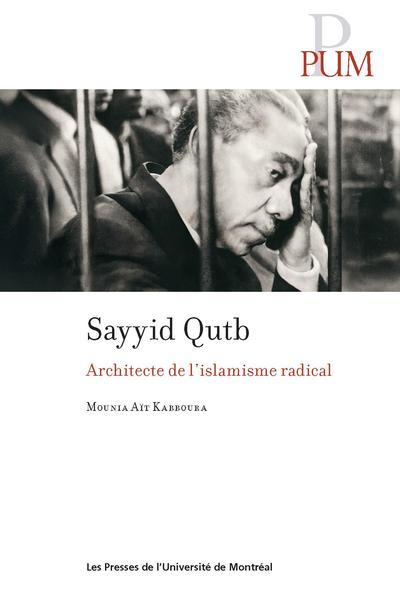
Sayyid Qutb. Architect of Radical Islamism
- Mounia Ait Kabboura
The thought of Sayyid Qutb (1906–1966) has profoundly shaped a wide range of religio-political movements, from the Muslim Brotherhood to Salafi-jihadists, radicalizing political Islam and inspiring...
videos
The Foundations of Arabic Grammatical Theory
Cairo. In a lecture delivered in Arabic on Saturday, January 25, 2025, at the Dominican Institute for Oriental Studies (IDEO) in Cairo, Professor Ramzi Baalbaki, holder of the Chair of Arabic...
publication
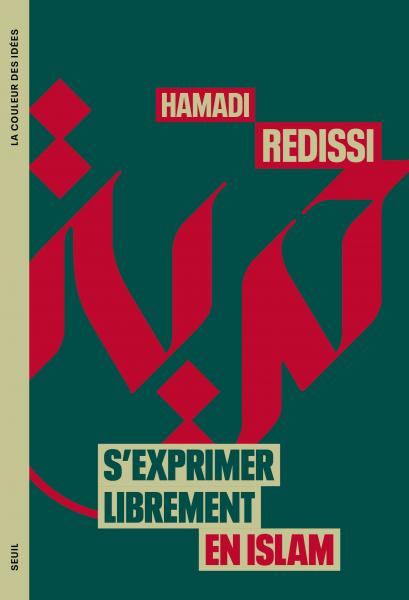
Speaking freely in Islam
- Hamadi Redissi
What is the Islamic doctrine of blasphemy, insult to God, religion and the Prophet? What about the prohibition of figurative representation of Muhammad? Can one openly believe or abjure in Islam? T...

article
The Genre of the Mawlid Narrative in the mid-12th h./18th Century as Exemplified by al-Barzanjī
- Antonio Cuciniello
Among the works of Arabic literature concerning the genre of Mawlid, certainly al-Barzanjī’s Mawlid is a text that has achieved great popularity and spread to large parts of the Islamic world. Inde...

videos
The History of the Quran according to Muslim Sources
- Gabriel Said Reynolds
Professors Shady Nasser from Harvard and Gabriel Reynolds from the University of Notre Dame explore the history of the revelation and compilation of the Quran according to traditional Muslim source...
publication
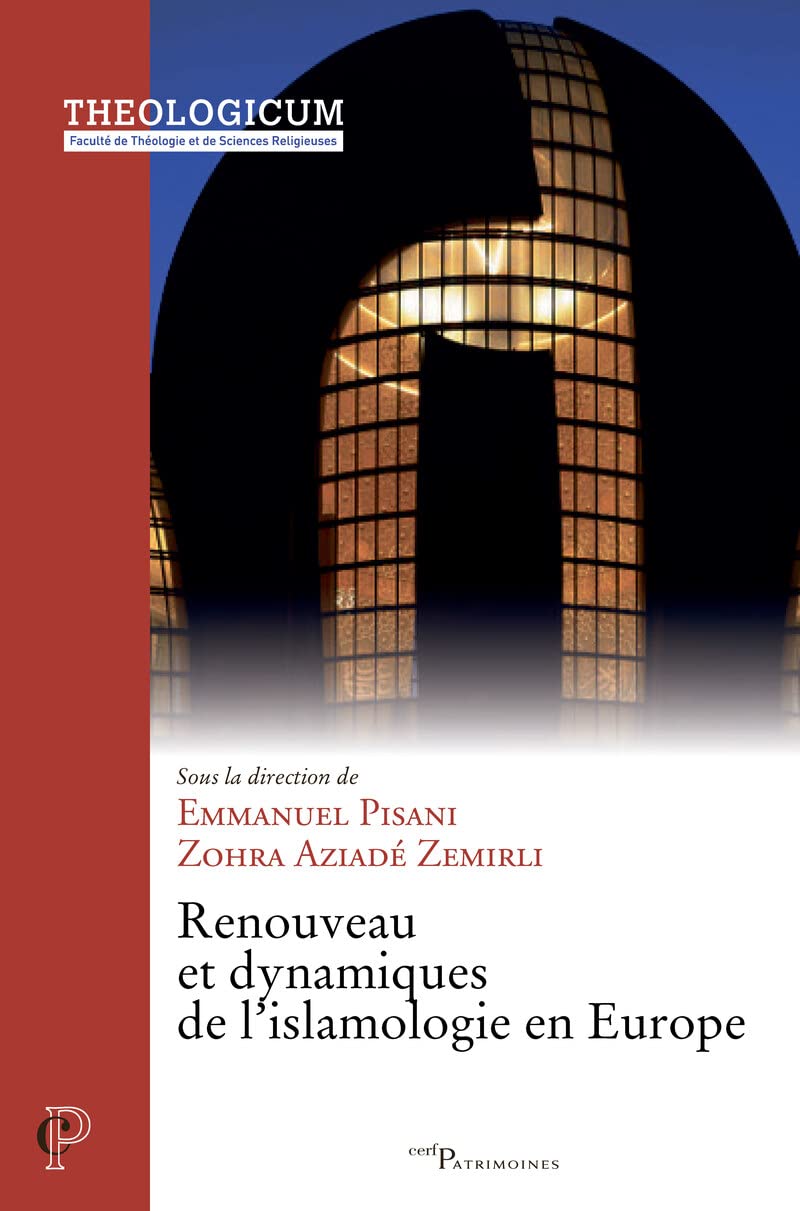
Revival and Dynamics of Islamic Studies in Europe
- Michel Younès
- Emmanuel Pisani
- Cédric Baylocq
- Zohra Aziadé Zemirli
- Michele Brignone
- Haoues Seniguer
“In a troubled international context where Islam is sometimes defined as an ideological marker of many conflicts, academic research drawing on history, sociology, and political science has mu...