

Beyond Representation: Systemic Epistemic Alterity and the Architecture of Knowledge in the Contemporary Academy
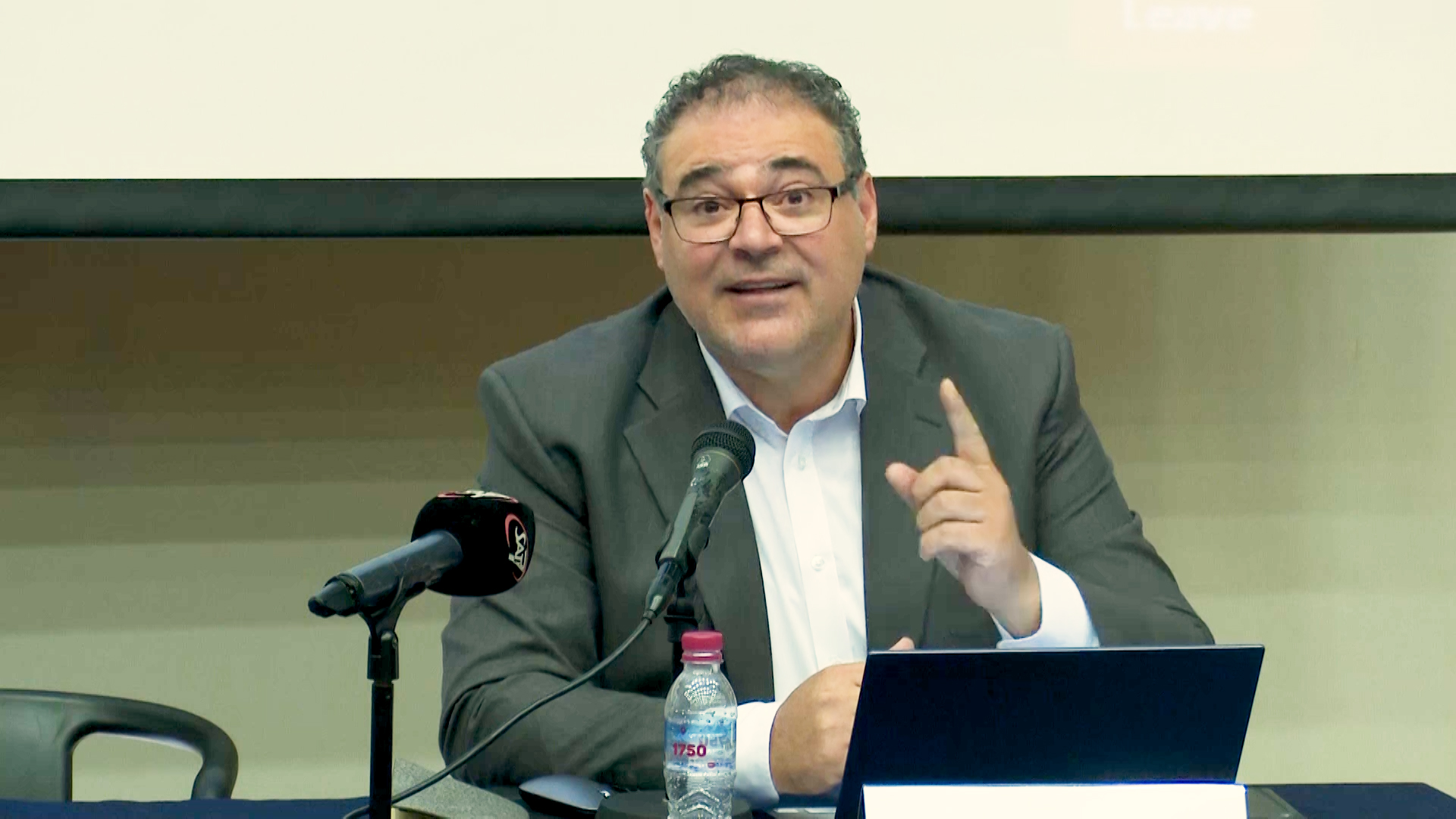
In this article, published in two parts by Social Epistemology Review and Reply Collective (SERRC), Wael Saleh, a researcher at the University of Quebec in Montreal (UQAM) and a member of Pluriel’s coordination committee, proposes the analytical framework of “systemic epistemic alterity” to make visible a specific configuration of epistemic power. It emerges from the interaction between institutional arrangements, evaluation regimes and algorithmic infrastructures within contemporary academic systems.
Taking as its starting point the events commonly known as the “Arab Springs”, the author argues that these sequences revealed not a mere failure of representation or interpretation, but a deeper crisis of the epistemic architecture that governs the production, validation and intelligibility of knowledge. Drawing a parallel with Edward Said’s reflection on the October 1973 war as the matrix of his critique of Orientalism, he reactivates a foundational question: how is Western academic knowledge about Arab societies produced, and through which institutional filters?
The article then brings together three planes usually kept separate: the institutional and editorial apparatus of the contemporary university; evaluative regimes (metrics, indices, rankings); and digital infrastructures (platforms, algorithms, open archives). Wael Saleh shows that at the intersection of these three logics a systematic production of epistemic alterity takes shape: a structural marginalisation of certain voices, fields and methods, which is no longer the residue of an old colonial domination but an operational effect of the contemporary tools that legitimise knowledge.
The proposed framework is diagnostic and heuristic rather than predictive: it identifies structural conditions that shape epistemic legitimacy and visibility, without reducing them to deterministic mechanisms. It engages with theories of epistemic injustice (Fricker, Medina), postcolonial critique and Science and Technology Studies, while distinguishing itself through its attention to the digital infrastructures of evaluation. The author invites future empirical research to refine, contest or contextualise these dynamics across disciplines, regions and institutional settings.
Reference: Wael Saleh, “Beyond Representation: Systemic Epistemic Alterity and the Architecture of Knowledge in the Contemporary Academy”, Social Epistemology Review and Reply Collective, vol. 15, no. 3, 2026, pp. 22-44. Published in two parts: Part I (11 March 2026) and Part II (13 March 2026).
Dans cet article publié en deux parties par Social Epistemology Review and Reply Collective (SERRC), Wael Saleh, chercheur à l’Université du Québec à Montréal (UQAM) et membre du comité de coordination de Pluriel, propose le cadre analytique de l’« altérité épistémique systémique » pour rendre visible une configuration spécifique du pouvoir épistémique. Celle-ci émerge de l’interaction entre arrangements institutionnels, régimes d’évaluation et infrastructures algorithmiques au sein des systèmes académiques contemporains.
Prenant pour point de départ les événements communément désignés sous le nom de « printemps arabes », l’auteur soutient que ces séquences ont mis en lumière non pas un simple défaut de représentation ou d’interprétation, mais une crise plus profonde de l’architecture épistémique : celle qui gouverne la production, la validation et l’intelligibilité du savoir. Le rapprochement avec la réflexion d’Edward Said sur la guerre d’octobre 1973 comme matrice de sa critique de l’orientalisme permet de réactiver une question fondatrice : comment le savoir académique occidental sur les sociétés arabes est-il produit, et selon quels filtres institutionnels ?
L’article articule alors trois plans habituellement disjoints : les dispositifs institutionnels et éditoriaux de l’université contemporaine ; les régimes évaluatifs (métriques, indices, classements) ; et les infrastructures numériques (plateformes, algorithmes, archives ouvertes). Wael Saleh montre qu’au croisement de ces trois logiques se construit une production systématique d’altérité épistémique : une marginalisation structurelle de certaines voix, certains terrains et certaines méthodes, qui n’est plus le résidu d’une domination coloniale ancienne mais un effet opérationnel des outils contemporains de légitimation du savoir.
Le cadre proposé se veut diagnostique et heuristique, non prédictif : il identifie des conditions structurelles qui façonnent la légitimité et la visibilité épistémiques, sans les réduire à des mécanismes déterministes. Il dialogue avec les théories de l’injustice épistémique (Fricker, Medina), la critique postcoloniale et les Science and Technology Studies, tout en s’en distinguant par l’attention portée aux infrastructures numériques d’évaluation. L’auteur invite les recherches empiriques futures à affiner, contester ou contextualiser ces dynamiques selon les disciplines, les régions et les cadres institutionnels.
Référence : Wael Saleh, « Beyond Representation : Systemic Epistemic Alterity and the Architecture of Knowledge in the Contemporary Academy », Social Epistemology Review and Reply Collective, vol. 15, n° 3, 2026, p. 22-44. Article publié en deux parties : Partie I (11 mars 2026) et Partie II (13 mars 2026).
في هذه المقالة المنشورة في جزأين ضمن «Social Epistemology Review and Reply Collective» (SERRC)، يقترح وائل صالح، الباحث في جامعة كيبك في مونتريال (UQAM) وعضو لجنة تنسيق المنصة الجامعية للدراسات حول الإسلام، الإطارَ التحليليَ «الغيرية المعرفية النَّسقية» لإظهار تشكيلٍ محدَّدٍ لسلطة المعرفة، ينشأ من تفاعل الترتيبات المؤسَّسية وأنظمة التقييم والبنى الخوارزمية داخل الأنظمة الأكاديمية المعاصرة.
وانطلاقاً مما يُعرَف عادةً بـ«الربيع العربي»، يذهب المؤلّف إلى أنّ هذه الأحداث لم تكشف مجرّد قصورٍ في التمثيل أو التأويل، بل أزمةً أعمق في البنية المعرفية التي تحكم إنتاج المعرفة والتصديق عليها وجعلها مفهومة. ومن خلال مقاربته بتأمّل إدوارد سعيد في حرب أكتوبر 1973 بوصفها مَنشأ نقده للاستشراق، يُعيد طرح سؤالٍ تأسيسيّ: كيف تُنتَج المعرفة الأكاديمية الغربية عن المجتمعات العربية، وعبر أيّ مصفاةٍ مؤسَّسية؟
ثمّ تجمع المقالة بين ثلاثة مستوياتٍ كثيراً ما تُعالَج منفصلة: الأجهزة المؤسَّسية والتحريرية للجامعة المعاصرة؛ وأنظمة التقييم (المقاييس والمؤشّرات والتصنيفات)؛ والبنى الرقمية (المنصّات والخوارزميات والأرشيفات المفتوحة). ويبيّن وائل صالح أنّه عند تقاطع هذه المنطقيّات الثلاث يتشكّل إنتاجٌ منهجيٌّ للغيرية المعرفية: تهميشٌ بنيويٌّ لأصواتٍ وميادينَ ومناهجَ بعينها، لم يَعُد بقيّةَ هيمنةٍ استعماريةٍ قديمة، بل أثراً إجرائياً لأدوات إضفاء الشرعية على المعرفة اليوم.
والإطار المقترَح تشخيصيٌّ واستكشافيٌّ لا تنبّئيّ: فهو يحدّد شروطاً بنيوية تصوغ الشرعية والظهور المعرفيَّين من دون ردّها إلى آلياتٍ حتميّة. وهو يُحاور نظريات الظلم المعرفيّ (فريكر، مِدينا) والنقد ما بعد الكولونيالي ودراسات العلم والتقنية (STS)، وإن تميّز عنها بعنايته بالبنى الرقمية للتقييم. ويدعو المؤلّف الأبحاثَ التجريبية المقبلة إلى تدقيق هذه الديناميات أو مساءلتها أو وضعها في سياقها بحسب التخصّصات والمناطق والأطر المؤسَّسية.
المرجع: وائل صالح، مقالة في Social Epistemology Review and Reply Collective (المجلّد 15، العدد 3، 2026، ص 22-44)، عنوانها:
Beyond Representation: Systemic Epistemic Alterity and the Architecture of Knowledge in the Contemporary Academy
نُشرت في جزأين: الجزء الأول (11 مارس 2026) والجزء الثاني (13 مارس 2026).


Resources of this researcher

article
Leo XIV’s encyclical Magnifica Humanitas and the Pluriel working group on AI-assisted interreligious dialogue
Text by Wael Saleh, researcher at the Université du Québec à Montréal (UQAM) and member of the Pluriel coordination committee. The simultaneous appearance of Leo XIV's encyclical Magnifica Human...
article
Beyond Representation: Systemic Epistemic Alterity and the Architecture of Knowledge in the Contemporary Academy
In this article, published in two parts by Social Epistemology Review and Reply Collective (SERRC), Wael Saleh, a researcher at the University of Quebec in Montreal (UQAM) and a member of Pluriel's...
publication
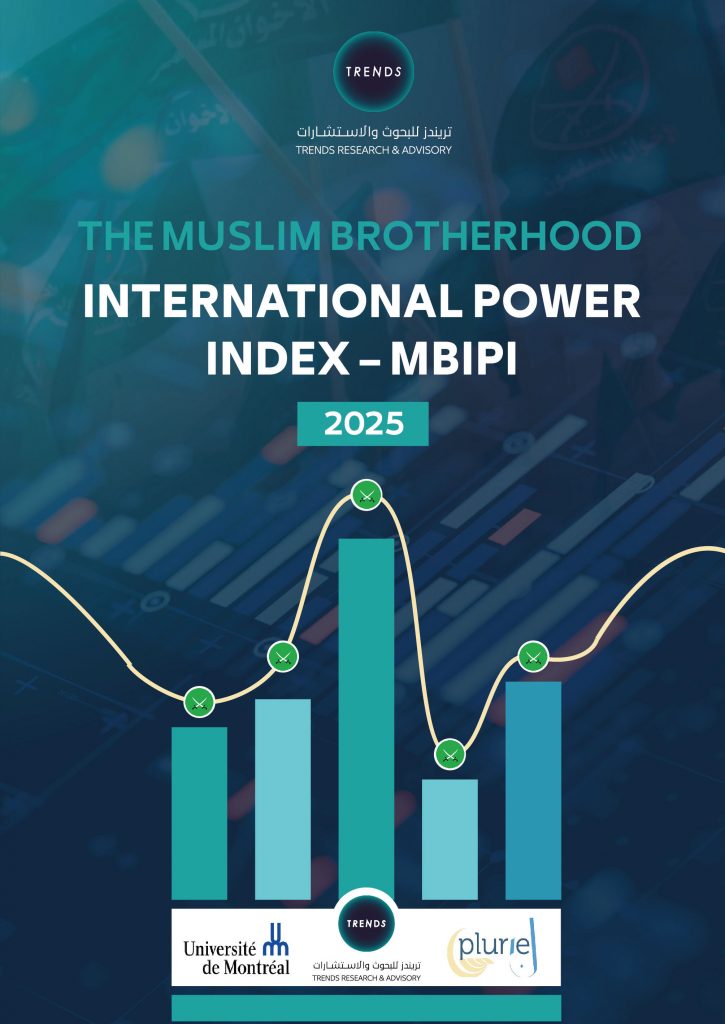
The Muslim Brotherhood International Power Index (MBIPI) 2025
Published in February 2026 by TRENDS Research & Advisory (Abu Dhabi), The Muslim Brotherhood International Power Index (MBIPI) 2025 offers the first systematic, global measurement of the Brothe...

videos
The representation of non-Islamist Muslims in Sunni Islamist discourse
Full lecture title : 'The representation of non-Islamist Muslims in Sunni Islamist discourse: an intra-religious otherness?' In what ways do non-Brother Muslims (especially secular, liberal and ...

videos
From Applied Islamology to Applied Islamismology
Lecture given on 14 October 2021 at the Catholic University of Lyon during the conference "Radicalisation leading to violence in the name of Islam, Epistemological, methodological and ethical appro...
article
Studies of radicalization leading to violence in the name of Islam: mapping theoretical actors to better understand epistemological and ethical issues
Original title : "Les études de la radicalisation menant à la violence au nom de l’islam : cartographier les acteurs théoriques pour mieux comprendre les enjeux épistémologiques et éthiques" Abs...

videos
Belonging(s) and territory(s) to the prism of religiosity (al-tadayyun) in current Arab-Muslim thought
Lecture by Wael SALEH, at the second International Congress of PLURIEL in Rome. As Syrian thinker Burhan Ghalioun [1] French historian Dominique Avon [2], Moroccan philosopher Abd al-Ila h Balqazi...
publication
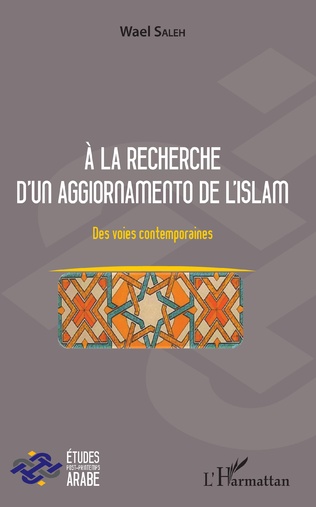
In search of an aggiornamento of Islam. Contemporary approaches
Can the upheavals in the Arab-Muslim world lead to an aggiornamento regulating the link between religion and politics and making it possible to live better together in peace? To answer this questio...
Resources related to Epistemology
article
Beyond Representation: Systemic Epistemic Alterity and the Architecture of Knowledge in the Contemporary Academy
- Wael Saleh
In this article, published in two parts by Social Epistemology Review and Reply Collective (SERRC), Wael Saleh, a researcher at the University of Quebec in Montreal (UQAM) and a member of Pluriel's...
publication
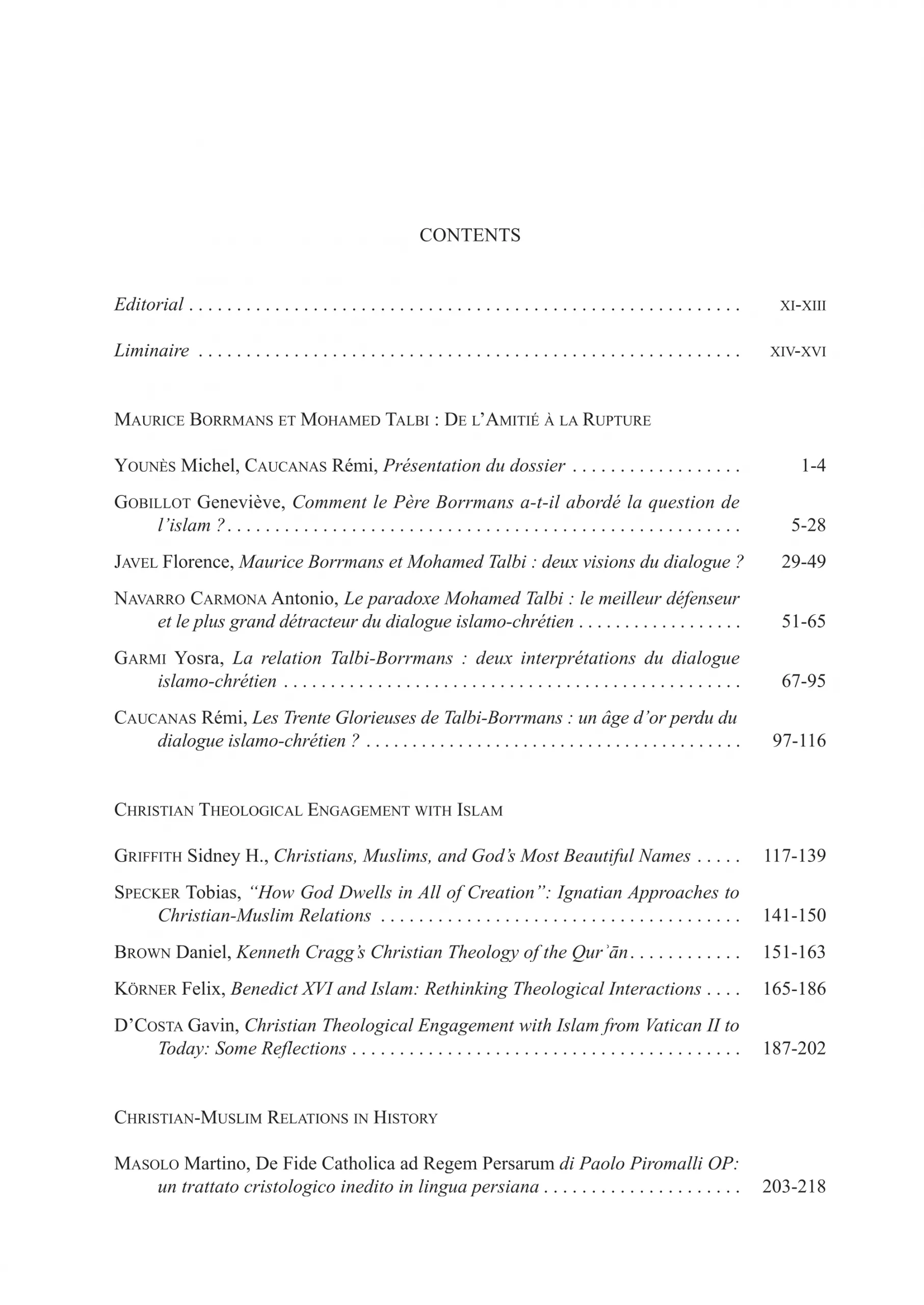
Islamochristiana Journal 49 (2024): “Maurice Borrmans and Mohamed Talbi: From Friendship to Rupture”
- David Marshall
- Diego Sarrió Cucarella
- Rémi Caucanas
- Michel Younès
- Geneviève Gobillot
- Florence Javel
- Yosra Garmi
- Tobias Specker
The title of this issue, “Maurice Borrmans and Mohamed Talbi: From Friendship to Rupture,” was suggested to us by a collection of articles that highlight different aspects of the relati...

videos
The 19th century as a new ‘axial era’. Some epistemological aspects of the authority crisis
- Michaela Quast-Neulinger
Conference « Religious Authority in Islam », organised by the Centre for the Study of Cultures and Religions and the Research Unit of the Catholic University of Lyon (UCLy), on 18 and 19 November 2...
videos
Fundamental and applied Islamology
- Michel Younès
Lecture given on 14 October 2021 at the Catholic University of Lyon during the conference « Radicalisation leading to violence in the name of Islam, Epistemological, methodological and ethical appr...

videos
From Applied Islamology to Applied Islamismology
- Patrice Brodeur
- Wael Saleh
Lecture given on 14 October 2021 at the Catholic University of Lyon during the conference "Radicalisation leading to violence in the name of Islam, Epistemological, methodological and ethical appro...
publication
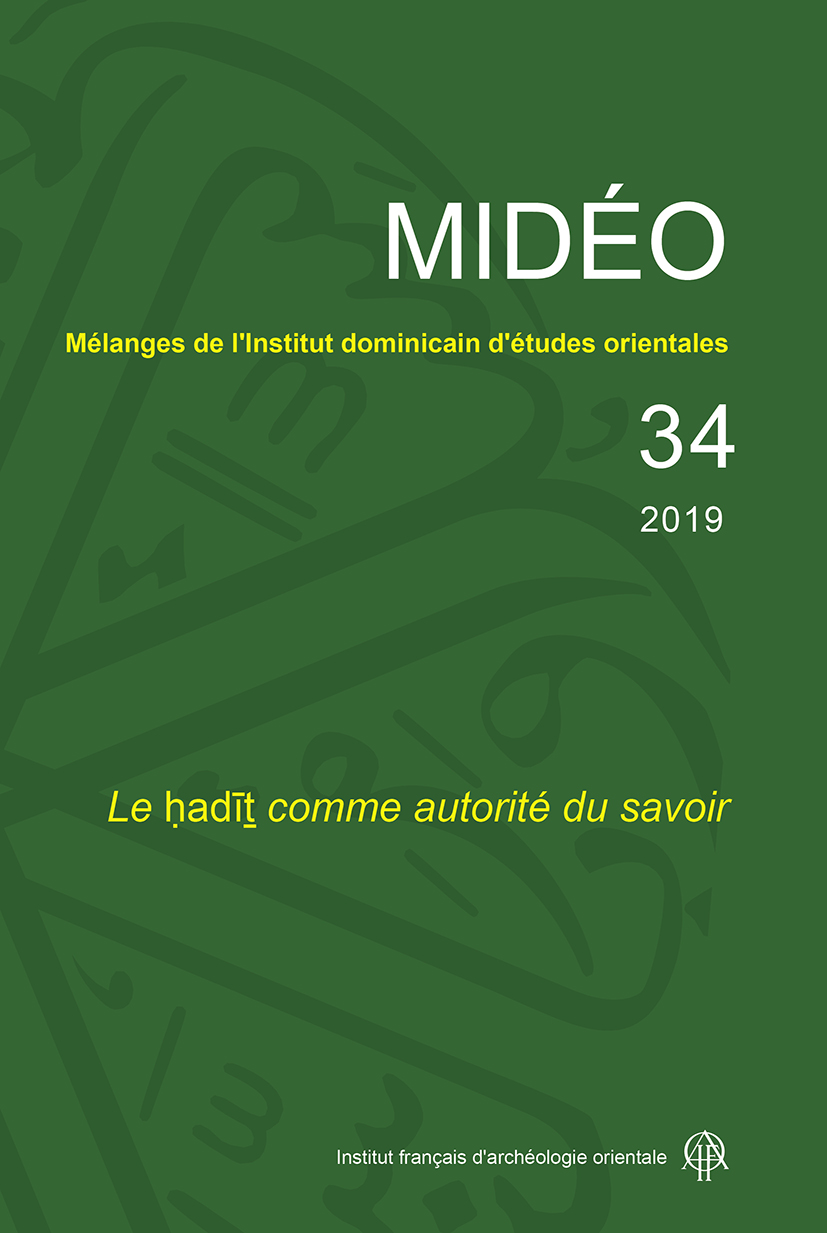
MIDEO 34 – The authority of Ḥadīṯ
- Emmanuel Pisani
The canonization of Ḥadīṯ has not been without theological conflicts: between the Qurʾānic scholars, the traditionalists, and the rationalists, the question raised is always that of the authority o...