
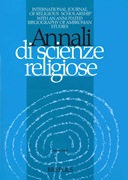
Référence :
in Annali di scienze religiosi, Turnhout, (ASR,9), pp 271-294

English

The Fate of Others in 14th century Hanbalism
Abstract
In a recent publication entitled Ibn Taymiyya’s Theological Ethics, Sophia Vasalou tackles the moral objectivism that Ibn Taymiyya would reworked inspired to the unorthodox thought of Mu‘tazilite school. The importance of this comparison not only clarifies the relationship between these two actors of the Islamic Kalām, but points out that the neo-Hanbali reformist had to recognize a via media between Mu‘tazilite logical rationalism and Ash‘arite orthodoxy. In the last fifty years Ibn Taymiyya was perhaps one of the most analyzed Muslim theologians, but also one of the least understood because crushed by the ideological embrace of those who identified him as the main inspiration behind current Neo-Wahhabi ideology. This article delves into the eschatological vision of Ibn Taymiyyah and of his main student, Ibn Qayyim Al-Jawziyya (d. 1350/750), emphasizing the attention, despite of what it might imagine, on the heterodox theory of Fanā’ an -Nār, the annihilation of Hell: there will be a time known only by God, where the hell will no longer exist because no longer inhabited. A survey that emphasizes not only the difficulty in exploiting the thought of Ibn Taymiyya, but also in making it conform to contemporary ideological interests.
Titre original : “The Fate of Others in 14th century Hanbalism”
Résumé
Dans une publication récente intitulée L’éthique théologique d’Ibn Taymiyya, Sophia Vasalou aborde l’objectivisme moral qu’Ibn Taymiyya allait repenser en s’inspirant de la pensée peu orthodoxe de l’école Mu’tazilite. L’importance de cette comparaison non seulement clarifie la relation entre ces deux acteurs du Kalām islamique, mais souligne que le réformateur néo-Hanbali a dû reconnaître une via media entre le rationalisme logique mu’tazilite et l’orthodoxie ash’arite. Au cours des cinquante dernières années, Ibn Taymiyya était peut-être l’un des théologiens musulmans les plus étudiés, mais aussi l’un des moins compris, écrasé par l’étreinte idéologique de ceux qui l’ont identifié comme la principale source d’inspiration de l’idéologie néo-wahhabite actuelle. Cet article explore la vision eschatologique d’Ibn Taymiyyah et de son principal disciple, Ibn Qayyim Al-Jawziyya (m. 1350/750), qui prêta attention, malgré ce que l’on pourrait imaginer, à la théorie hétérodoxe de Fanā an-Nār, l’anéantissement de l’Enfer : “Il y aura un temps connu seulement par Dieu, où l’enfer n’existera plus parce qu’il n’est plus habité”. Une étude qui souligne non seulement la difficulté à exploiter la pensée d’Ibn Taymiyya, mais aussi à la rendre conforme aux intérêts idéologiques contemporains.
Titolo originale : “The Fate of Others in 14th century Hanbalism”
In una recente pubblicazione dal titolo Ibn Taymiyya’s Theological Ethics, Sophia Vasalou affronta l’obbiettivismo morale che il teologo neo-Hanbalita avrebbe rielaborato ispirandosi al pensiero eterodosso della scuola Mu‘tazilita. L’importanza di questo confronto non solo chiarisce il legame esistente tra questi due protagonisti, ma sottolinea come il riformista in questione abbia dovuto riconoscere una via media tra il razionalismo Mu‘tazilita e l’ortodossia Ash‘arita. Negli ultimi cinquat’anni Ibn Taymiyya è stato forse uno dei teologi musulmani più analizzato, ma anche uno di quelli meno compresi, perché schiacciato dall’abbraccio ideologico di chi lo ha identificato come il principale ispiratore dell’odierna corrente Neo-Wahhabita. Questo articolo approfondisce la visione escatologica di Ibn Taymiyya e del suo principale allievo, Ibn Qayyim al-Jawziyya (d. 1350/750), enfatizzando l’attenzione, a dispetto di quello che si potrebbe immaginare, all’eterodossa teoria del Fanā’ an-Nār, l’annientamento dell’inferno: ci sarà un tempo, conosciuto a Dio soltanto, nel quale l’inferno non esisterà più perché disabitato. Studio che enfatizza non soltanto la difficoltà nello strumentalizzare il pensiero di Ibn Taymiyya, ma anche nel renderlo conforme agli interessi ideologici contemporanei.
 Download PDF

Resources of this researcher
article
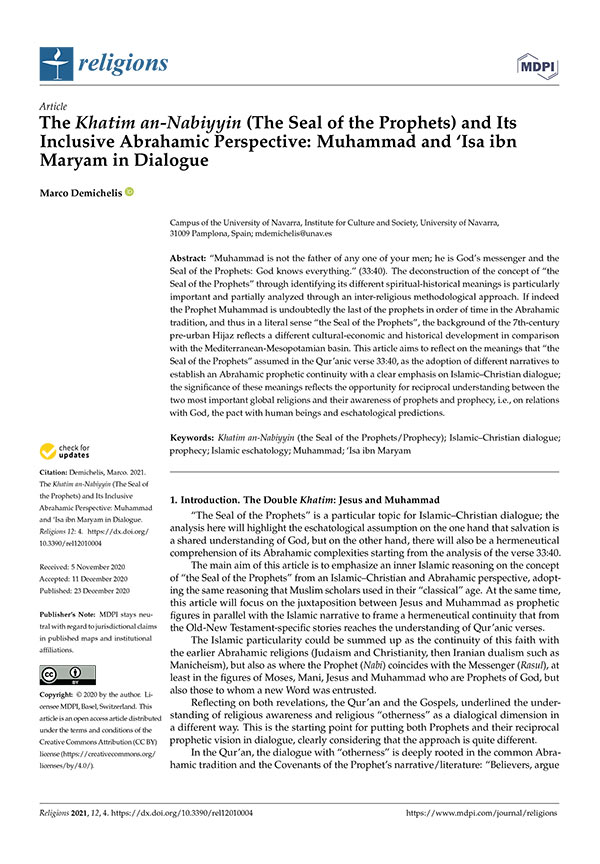
The Khatim an-Nabiyyin (The Seal of the Prophets) and Its Inclusive Abrahamic Perspective: Muhammad and ‘Isa ibn Maryam in Dialogue
Abstract “Muhammad is not the father of any one of your men; he is God’s messenger and the Seal of the Prophets: God knows everything.” (33:40). The deconstruction of the concept of “the Seal of...
publication
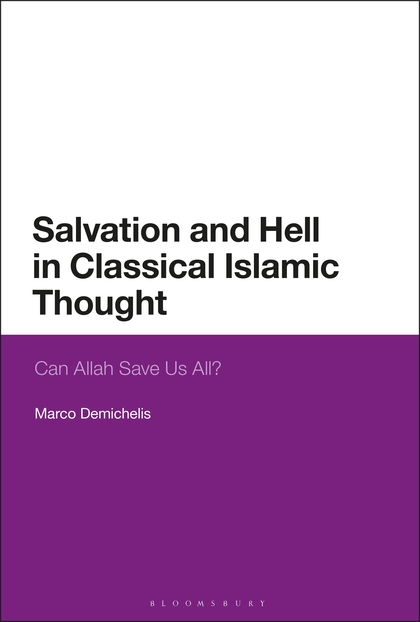
Salvation and Hell in Classical Islamic Thought.
Presentation : Salvation and Hell in Classical Islamic Thought uses classical Islamic sources to trace the development of Islamic eschatology during the formative centuries of Islamic intellectual ...
publication
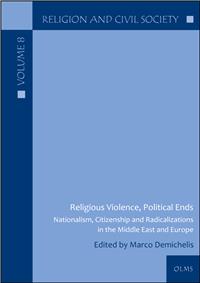
Religious Violence, Political Ends, Nationalism, Citizenship and Radicalizations in the Middle East and Europe
Since antiquity, religious violence based on political motives has been and remains a common practice: the atrocities committed by the Roman Empire against the first Christian communities were quic...

videos
When religion divides the “community”. Dynamics of violence and pacification within Arab Levant
Conference of Marco DEMICHELIS, at the second international Congress of PLURIEL Abstract Since the nineteenth century, the dynamics of inter-religious conflict within the Arab world accentuated...
videos
Presentation of the congress “Islam and Belonging” of PLURIEL
With the voices of members of the Scientific Comittee
article
The Mihna. Deconstruction and reconsideration of the Mu’tazilite role in the “Inquisition
Abstract The Miḥna has usually been attributed to the Mu‘tazilite theological school as expression of something unusual, a bid‘ah (Islamic innovation) related to a rationalist group of theologia...
article
The Fate of Others in 14th century Hanbalism
Abstract In a recent publication entitled Ibn Taymiyya’s Theological Ethics, Sophia Vasalou tackles the moral objectivism that Ibn Taymiyya would reworked inspired to the unorthodox thought of M...
article
The Oromo and the historical process of Islamisation in Ethiopia
Abstract The historical interaction between Islam and Christianity in the Horn of Africa is profoundly connected with the region’s specifi c historical, linguistic and cultural characteristics. ...
article
The historical debate on secularisation between F. Antun and M. Abduh.
Full title : 'The historical debate on secularisation between F. Antun and M. Abduh. God's absolutism and Islam's irrationality as cornerstones of orientalist islamic-christian dispute during the N...
Resources related to Islamic Theology
videos
“War and peace”, by Adrien Candiard
On Wednesday 20 May 2026, the Dominican Institute for Oriental Studies (IDEO) hosted in Cairo a lecture by Brother Adrien Candiard, Dominican and Islamologist, on the theme "War and peace". Faced w...

videos
Defining the beautiful in Islam: between submission to and transgression of ethical norms
Paper presented at the 5th international congress of the University Platform for Research on Islam (Pluriel), held in Cordoba from 10 to 14 February 2026 on the theme "Ethics and Aesthetics in Isla...

videos
Ethics and aesthetics in the thought of Abū Ḥayyān al-Tawḥīdī (d. 414/1023)
Paper presented at the 5th international congress of the University Platform for Research on Islam (Pluriel), held in Cordoba from 10 to 14 February 2026 on the theme "Ethics and Aesthetics in Isla...

videos
The contemplation of God’s signs according to Ibn Barrajān of Seville: towards an ethics respectful of the natural world
Paper presented at the 5th international congress of the University Platform for Research on Islam (Pluriel), held in Cordoba from 10 to 14 February 2026 on the theme "Ethics and Aesthetics in Isla...

videos
Annihilation in beauty, subsistence in ethics: the unity of unveiling and ethics in Ibn ʿArabī
Paper presented at the fifth international congress of the University Platform for Research on Islam (Pluriel), held in Cordoba from 10 to 14 February 2026 on the theme "Ethics and Aesthetics in Is...

videos
Fakhr al-Dīn al-Rāzī: from bodily healing to the aesthetics of the soul — a study of the “Risālat Dhamm Ladhdhāt al-Dunyā”
Paper presented at the fifth international congress of the University Platform for Research on Islam (Pluriel), held in Cordoba from 10 to 14 February 2026 on the theme "Ethics and Aesthetics in Is...

videos
Spiritual poetry, hermeneutics and theology in contemporary Shi’i Iran: Soroush, Shabestari, Malekian and Rūmī
Paper presented at the fifth international congress of the University Platform for Research on Islam (Pluriel), held in Cordoba from 10 to 14 February 2026 on the theme "Ethics and Aesthetics in Is...
article
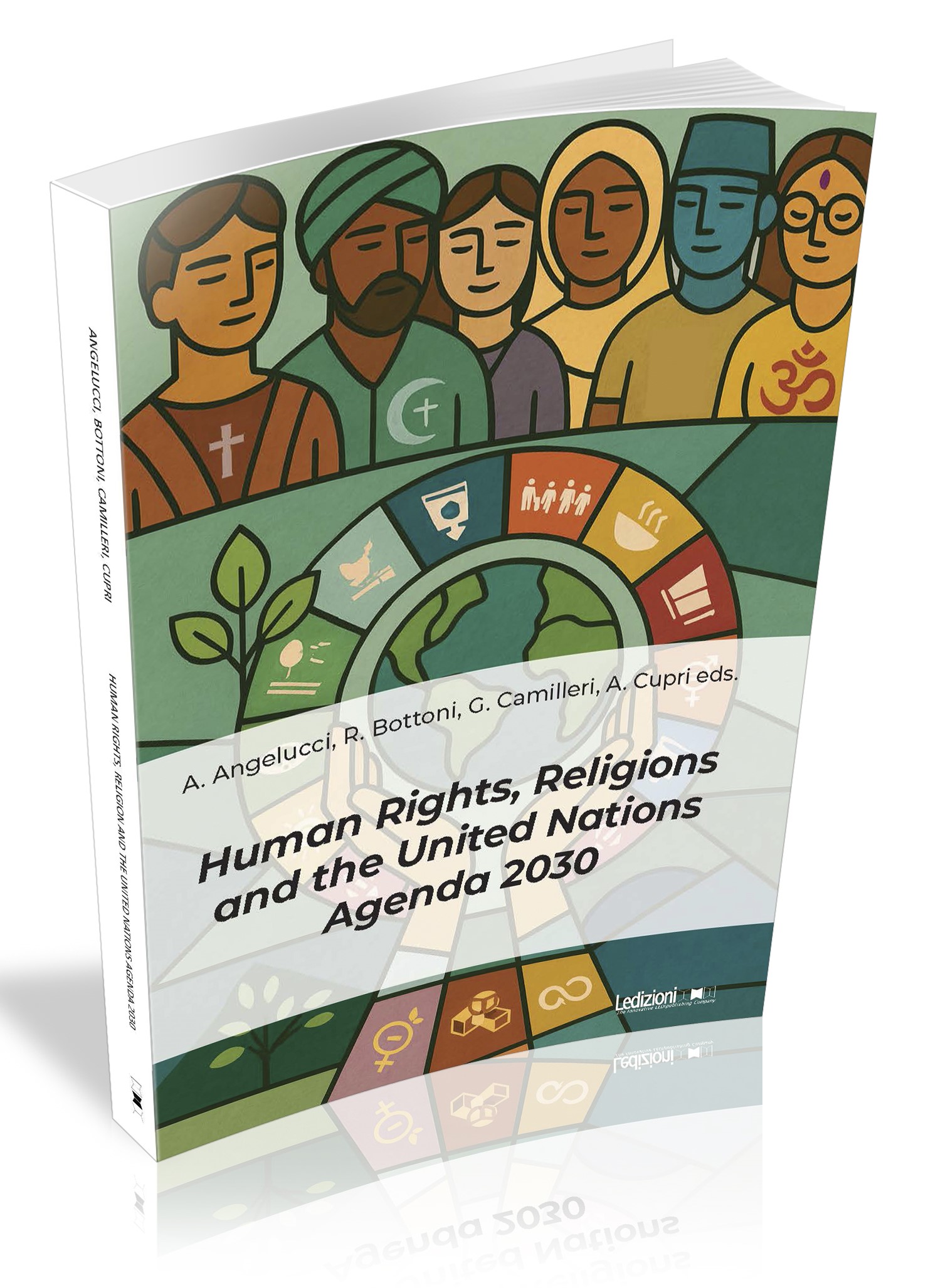
The Role of Islam and its Organizations in Cooperating on the Goals of the Agenda 2030
- Antonio Angelucci
A chapter by Antonio Angelucci in Human Rights, Religions and the United Nations Agenda 2030 (A. Angelucci, R. Bottoni, G. Camilleri, A. Cupri eds., Ledizioni, 2025).The author presents Islamic eco...