
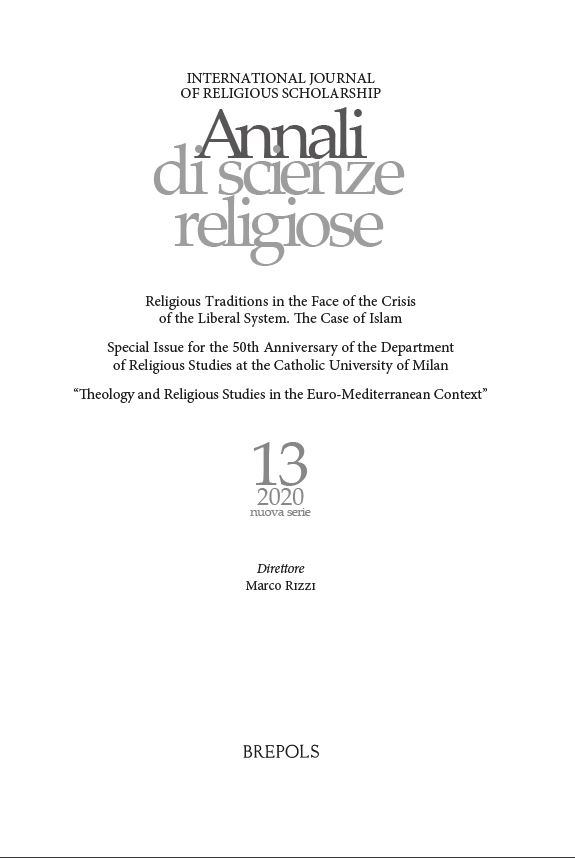
Référence :
Annali di Scienze Religiose Volume 13, pp. 35-57, https://doi.org/10.1484/J.ASR.5.121721

English

The challenges of religious visibility in the liberal public space
Western modernity has engaged the religious question, over the past thirty years in processes that show an increased interaction between religiosity, visibility and urban public space. At a time when expressions, behaviours and forms of religiosity are a source of concern for politicians, jurists or security experts, the question of the visibility of Islām deserves to be debated.
This research aims to articulate the community dimension and the urban public space in the context of liberal societies. Public space leads to the question of community and vice-versa, as both of them are intimately linked. This perspective provides the opportunity to analyse the nature of religious manifestations, their expressions and their reception as ‘counter-discourses’. The liberal public space being the place of individualities, the community dimension, especially the religious one, therefore can be interpreted as a position, an action and a form of counter-power.
In connection with these questions, we will also be led to examine the issue of religiosity as being shaped by processes inherent to the constitution of public space in the liberal context. A space that enshrines the individual dimension of conformity while rejecting the communitarian reality.
Starting from this conceptual framework, how does the public space contribute to the emergence of forms of religiosity and “domestication of the sacred”? What does it mean to be visible today? Would visibility be a means of expressing a sense of belonging to a group or an instrument of self-construction, which could be exclusively personal?
La modernité occidentale a engagé la question religieuse, au cours des trente dernières années, dans des processus qui montrent une interaction accrue entre religiosité, visibilité et espace public urbain. A l’heure où les expressions, les comportements et les formes de religiosité sont une source de préoccupation pour les politiciens, les juristes ou les experts en sécurité, la question de la visibilité de l’Islām mérite d’être débattue.
Cette recherche vise à articuler la dimension communautaire et l’espace public urbain dans le contexte des sociétés libérales. L’espace public conduit à la question de la communauté et vice-versa, car les deux sont intimement liés. Cette perspective permet d’analyser la nature des manifestations religieuses, leurs expressions et leur réception en tant que ” contre-discours “. L’espace public libéral étant le lieu des individualités, la dimension communautaire, notamment religieuse, peut donc être interprétée comme une position, une action et une forme de contre-pouvoir.
En lien avec ces questions, nous serons également amenés à examiner la question de la religiosité comme étant façonnée par des processus inhérents à la constitution de l’espace public en contexte libéral. Un espace qui consacre la dimension individuelle de la conformité tout en rejetant la réalité communautaire.
A partir de ce cadre conceptuel, comment l’espace public contribue-t-il à l’émergence de formes de religiosité et de “domestication du sacré” ? Que signifie être visible aujourd’hui ? La visibilité serait-elle un moyen d’exprimer un sentiment d’appartenance à un groupe ou un instrument de construction de soi, qui pourrait être exclusivement personnel ?
 Download PDF

Resources of this researcher
publication
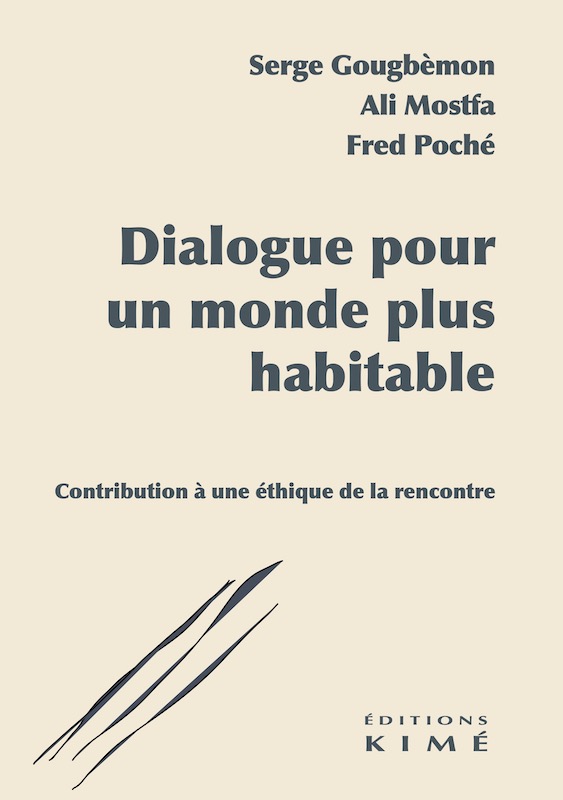
Dialogue for a More Livable World: Toward an Ethics of Encounter
How can we live in a climate of mistrust, trapped in identity-based withdrawal, and paralyzed by an uncertain future? On what basis can we open new paths to ease suffering—perhaps even reenchant ou...
article
Muslim worship in France: is the State-led reorganization underway?
In this article published on February 26, 2025, on The Conversation, Ali Mostfa analyzes the evolution of the Forum of Islam in France (Forif), created in 2022 to replace the French Council of Musl...
article
Redefining Qurʾānic Hermeneutics: Muḥammad ʿĀbid al-Jābrī and Nasr Ḥāmid Abū Zayd’s Humanistic Interpretations
This article presents the innovative endeavor by Muḥammad ʿĀbid al-Jābrī and Nasr Ḥāmid Abū Zayd in interpreting the Qurʾān through a humanistic lens. Their approach marks a pivotal shift, viewing ...
publication
Religions put to the test by freedom of expression
“In the republican context, freedom of expression involves all the players in society and mobilises a wide range of intellectual resources. What then are the conditions that foster it while r...
publication
Islam & Otherness. Proceedings of the Pluriel congress in Beirut
Edited by Michel Younès, Ali Mostfa and Roula Talhouk “In a contemporary context marked by a growing tendency to lock oneself into oppositional logics, reflection on otherness in Islam opens ...
article
Making religion online: the case of Islam
Islam in the digital age is becoming an inescapable reality in the lives of believers, thus introducing a new modality in the understanding of Islamic faith. From now on, the sacred text, rituals, ...
article
From Islamic Reference to Conservative Pragmatism – The Sinuous Paths of the Moroccan JDP Discourse
"The relationship between the political and religious fields in Morocco is generally based on tactical choices and pragmatic issues, often far from simple ideological orientations. In this context,...
publication
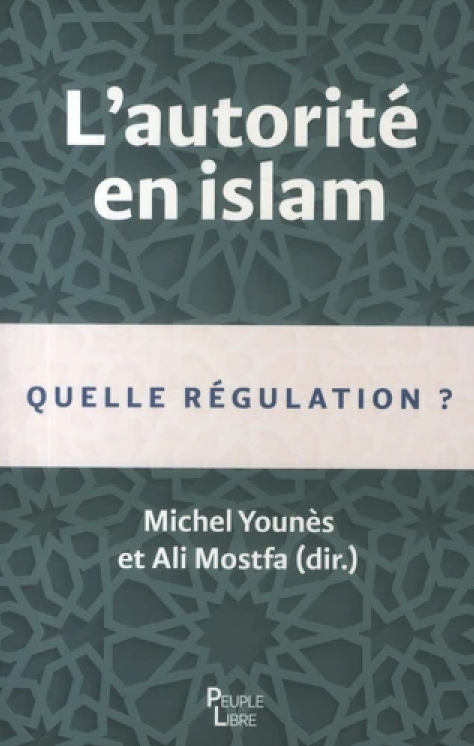
Authority in Islam. What regulation? Proceedings of the symposium.
“It is often said: “”no clergy in Islam””. In the absence of a hierarchical and universal magisterial authority, what are the instances and figures that serve as regul...
article
Religious Radicalism. The Challenges of an Ill-Defined Concept in Europe
Ali Mostfa, professor of linguistics and discourse analysis at the Catholic University of Lyon, analyses the semantic shifts about the notion of religious radicalism, particularly since the Septemb...
Resources related to Identities
article
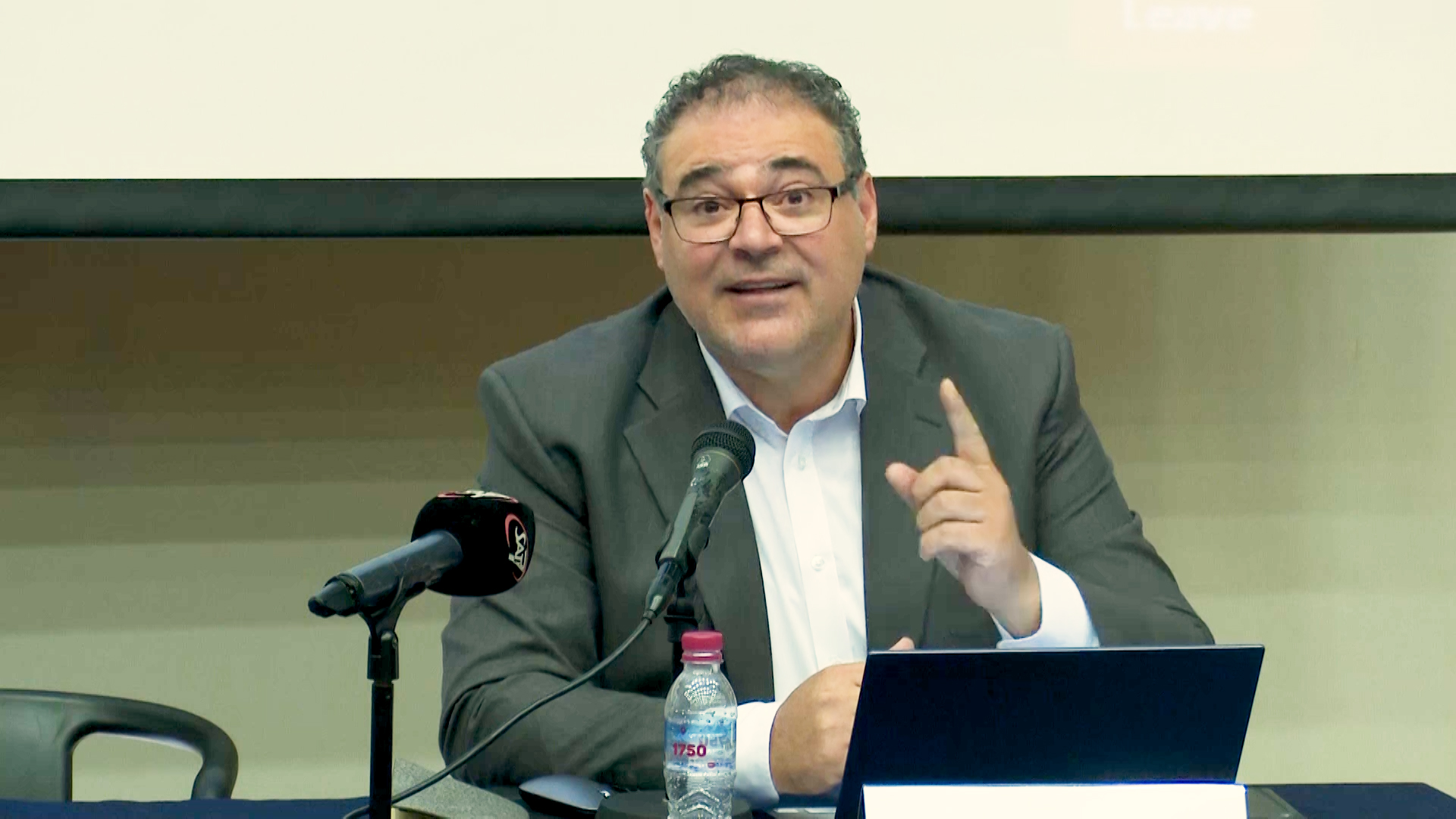
Wael Saleh: “Recognising Without Confining, to Better ‘De-other’ the Public Debate”
- Wael Saleh
In an op-ed published on 20 July 2026 by Le Devoir, Wael Saleh, a member of the scientific committee of Pluriel, puts forward a new concept for contemporary democratic debate: "de-othering" (in Fre...
videos
Interreligious Dialogue and Ethnic Nationalisms in the Balkans
At the invitation of PISAI (Pontifical Institute for Arabic and Islamic Studies, Rome) and Georgetown University, Ahmet Alibašić, professor of Islamic civilization at the Faculty of Islamic Studies...

videos
Highlighting an Islamic heritage in constant evolution: literary ethics and aesthetics in Najib Redouane’s “Under the Sky of Oran”
Paper presented at the fifth international congress of the University Platform for Research on Islam (Pluriel), held in Cordoba from 10 to 14 February 2026 on the theme "Ethics and Aesthetics in Is...
publication
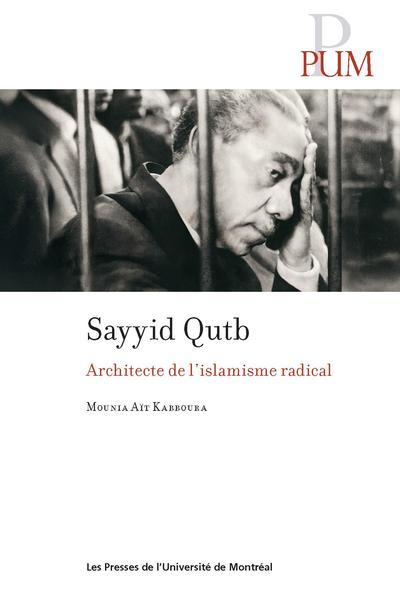
Sayyid Qutb. Architect of Radical Islamism
- Mounia Ait Kabboura
The thought of Sayyid Qutb (1906–1966) has profoundly shaped a wide range of religio-political movements, from the Muslim Brotherhood to Salafi-jihadists, radicalizing political Islam and inspiring...
publication
Dialogue for a More Livable World: Toward an Ethics of Encounter
- Mohamed-Ali Mostfa
How can we live in a climate of mistrust, trapped in identity-based withdrawal, and paralyzed by an uncertain future? On what basis can we open new paths to ease suffering—perhaps even reenchant ou...
videos
Inaugural Lecture for the Chair in Mediterranean Studies, Religions and Societies
- Dominique Avon
Lecture given by Professor Dominique Avon on October 13, 2025, at the Pontifical Institute for Arabic and Islamic Studies (PISAI).
publication
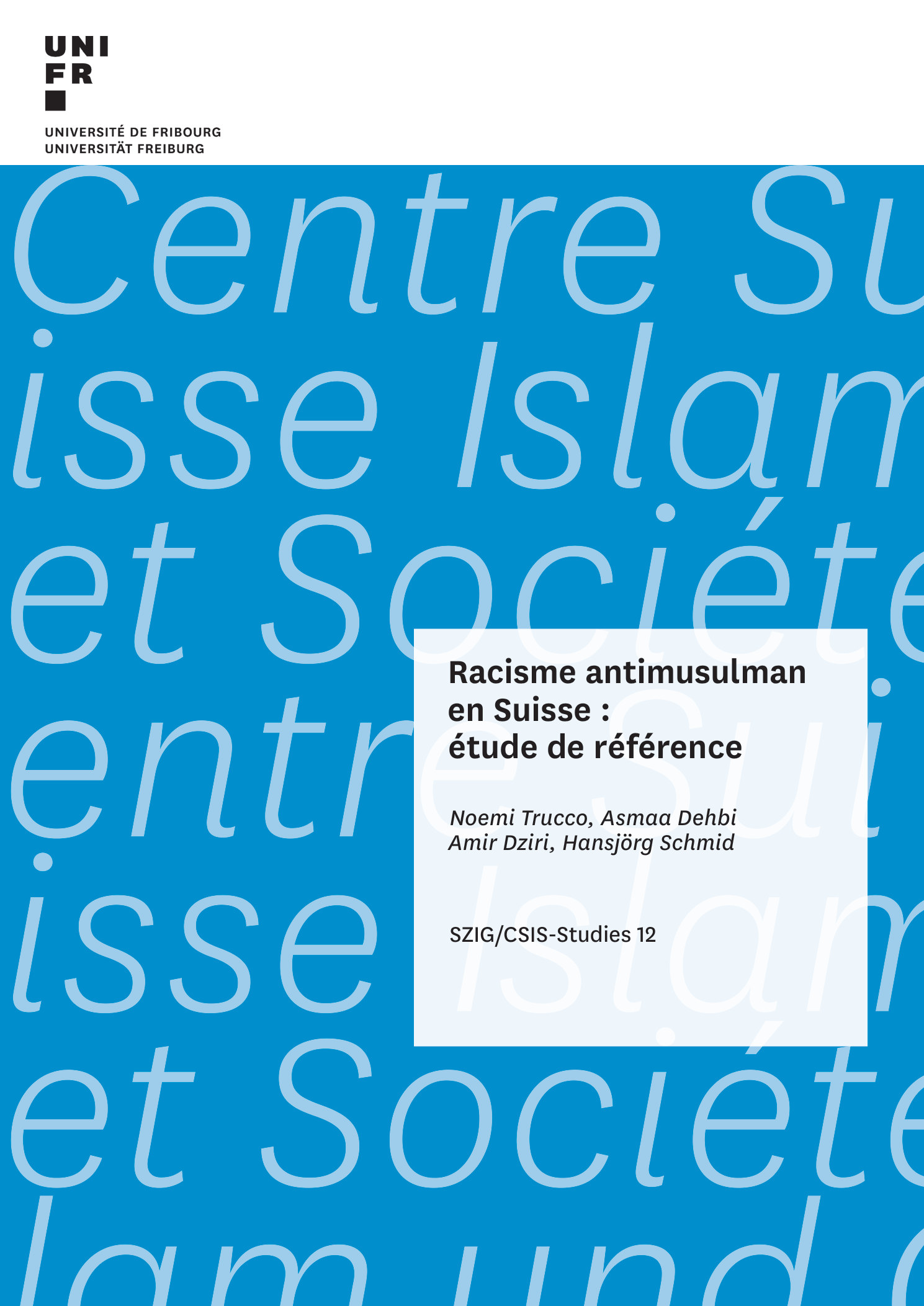
Anti-Muslim Racism in Switzerland: A Baseline Study
- Noemi Trucco
- Amir Dziri
- Hansjörg Schmid
Commissioned by the Swiss Confederation’s Service for Combating Racism (SLR), this study (SZIG/CSIS-Studies 12, 2025) is the first comprehensive baseline survey of anti-Muslim racism in Switz...

videos
Islam in Europe or European Islam?
In this conference given on January 30, 2025, at PISAI (Pontifical Institute for Arabic and Islamic Studies) in Rome, political scientist Olivier Roy offers an in-depth analysis of the Muslim prese...