
11 April 2017
Indonesian Project by Leimena and Fieldstead
The Middle East is being torn apart by wars and apart from their heartlands in the Middle East, ISIS and other terrorist groups have affiliates in Afghanistan, Algeria, Bangladesh, Egypt, Indonesia, Libya, Mali, Niger, Nigeria, Pakistan, the Philippines, Somalia, and Yemen. And we now have terrorist cells at home, and increased radicalization among many younger European Muslims.
Extremist interpretations of Islam motivate radical movements and terrorists throughout the world. By exploiting ignorance and prejudice in the West and the Muslim-majority worlds, radicals are gaining an upper hand in an asymmetric war. Unless these interpretations are challenged and undercut, then these conflicts will grow. The people most equipped to undercut radicals are Muslims. Senior Indonesian Muslims can be and want to be allies in this struggle and they can have strategic importance. As leading Muslim scholar and former Indonesian Foreign Minister Alwi Shihab told visiting members of our project: “Fifteen years ago you were fighting Al Qaeda. Now you, and we, are fighting ISIS. Fifteen years from now, you will be fighting someone else. But it is the same war, it is the same ideology. You need us, and we need you. We can be friends fighting a common enemy.”
With Muslims accounting for roughly 88% of its 250 million people, Indonesia is both the world’s largest Muslim-majority country and the world’s third largest democracy. It has the largest economy in Southeast Asia and in the Organization of Islamic Cooperation. Indonesia has a rich history of peaceful coexistence and cooperation between people with different religions. It is also home to longstanding organizations and understandings of Islam that reject an Islamic state and favor democracy, religious freedom and peaceful religious co-existence and cooperation.
A Muslim from Europe or America may be about 100 times more likely to join ISIS than is a Muslim from Indonesia. Indeed, in January this year the Atlantic magazine ran a story headlined “ISIS in the World’s Largest Muslim Country: Why are so few Indonesians joining the Islamic State?”
Indonesian Muslims believe that true Islam is a peaceful Islam, and the radical Islam fueled largely in the Middle East is damaging the world and Islam itself. They desperately want to change this narrative. This urgency has led to a partnership between Indonesian Christian and Muslim leaders, but they know that support in the West is a key in turning this into a global movement.
This joint project by Leimena Institute (Indonesia) and Fieldstead and Company (USA) will work with Christian and Muslim leaders and at the grassroots both to strengthen religious freedom in Indonesia and to assist in promoting this model in the Muslim-majority world. This is a unique opportunity to work hand-in-hand with a major growing and moderating force in the Muslim world to bring about fundamental reform. It will have an impact not only theologically but also politically.
The catalyst of this initiative is Ambassador Jakob Tobing, President of the Leimena Institute, a Christian think tank. Considered as the country’s second founding father, he helped lay down democratic foundations by leading the rewriting of Indonesia’s Constitution. Afterwards, during his tenure as Ambassador to South Korea in 2004-2008, he brokered a summit between North Korea’s No. 2 official, Kim Yong-nam, and South Korea’s Prime Minister Lee Haechan. Now he and Indonesian Muslim leaders are collaborating to develop a global alliance to counter religious radicalism.
Currently, we are planning two trips by Indonesian leaders to the US and Europe, leading to a summit in Yogyakarta in August 2017 at the personal invitation of and hosted by the Sultan of Yogyakarta, who is also the Governor of Yogyakarta. Mr. Tobing will visit the US in late November to December of 2016. Then around April-May 2017, he will come with four prominent Indonesian Muslim leaders. In both trips, European leaders are crucial because world politics is highly influenced by their policy decisions. It is in European countries national interest to explore the possibility of a global partnership initiative with Muslims to counter radicalism and promote peaceful religions.
We are asking political leaders and opinion formers to meet with Mr. Tobing this fall and with Indonesian Muslim leaders next spring, and to lend their support and influence to this project.
For more information regarding the delegation, please click: delegation
Resources related to keywords
article
Wael Saleh: “Recognising Without Confining, to Better ‘De-other’ the Public Debate”
- Wael Saleh
In an op-ed published on 20 July 2026 by Le Devoir, Wael Saleh, a member of the scientific committee of Pluriel, puts forward a new concept for contemporary democratic debate: "de-othering" (in Fre...
videos
“War and peace”, by Adrien Candiard
On Wednesday 20 May 2026, the Dominican Institute for Oriental Studies (IDEO) hosted in Cairo a lecture by Brother Adrien Candiard, Dominican and Islamologist, on the theme "War and peace". Faced w...
article
Kenneth Cragg and the Event of the Qur’an
- Timo Güzelmansur
Article by Timo Güzelmansur published under the title Kenneth Cragg und das Ereignis des Koran on the theological portal feinschwarz.net (12 June 2026, open access). Timo Güzelmansur presents the A...
article
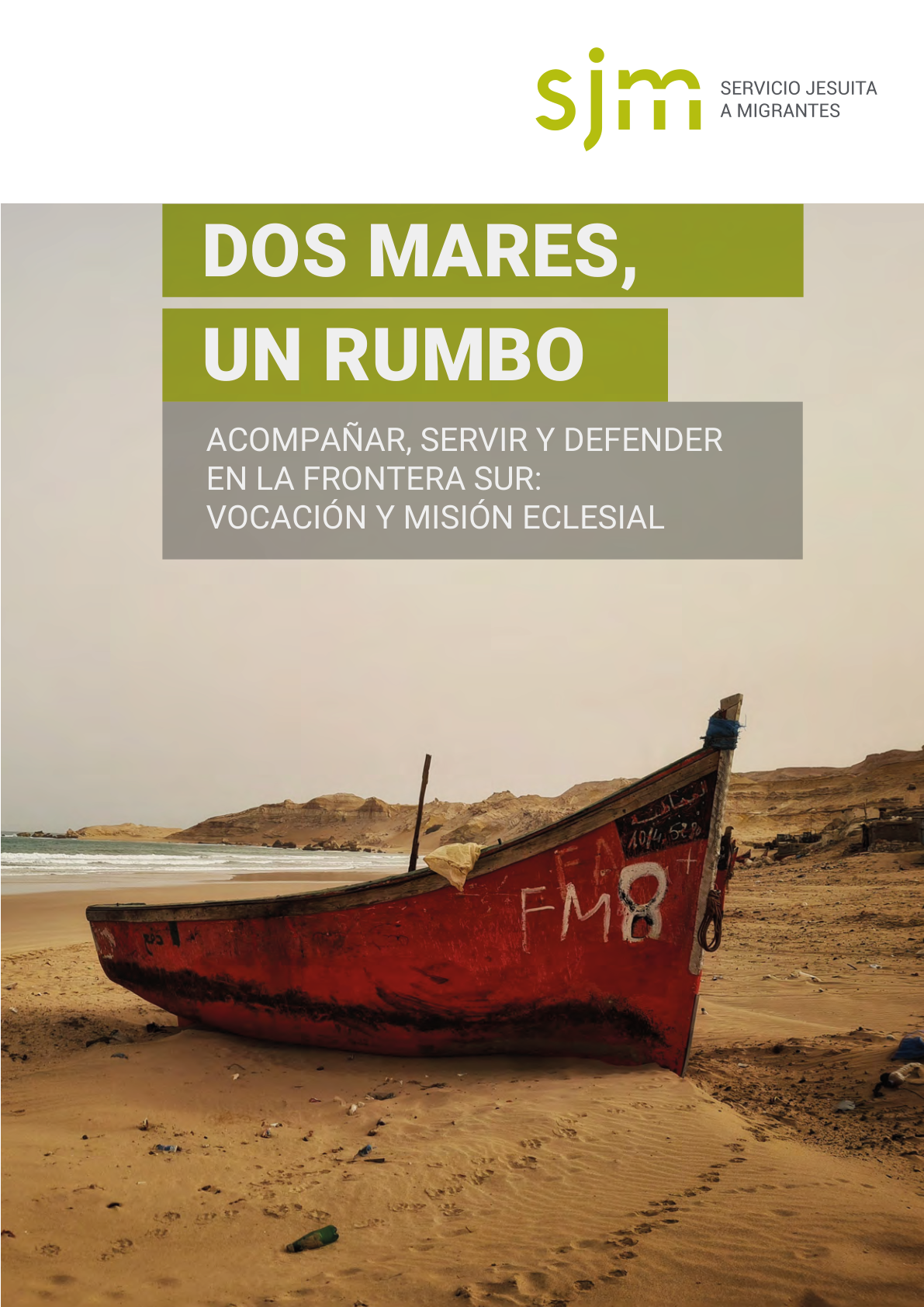
Two Seas, One Course: The 2026 Jesuit Migrant Service Report on Spain’s Southern Border
- Josep Buades
The annual report of the Jesuit Migrant Service (SJM), the social apostolate body of the Society of Jesus in Spain, written by Josep (Pep) Buades Fuster, examines the migratory dynamics of Spain’s ...
publication
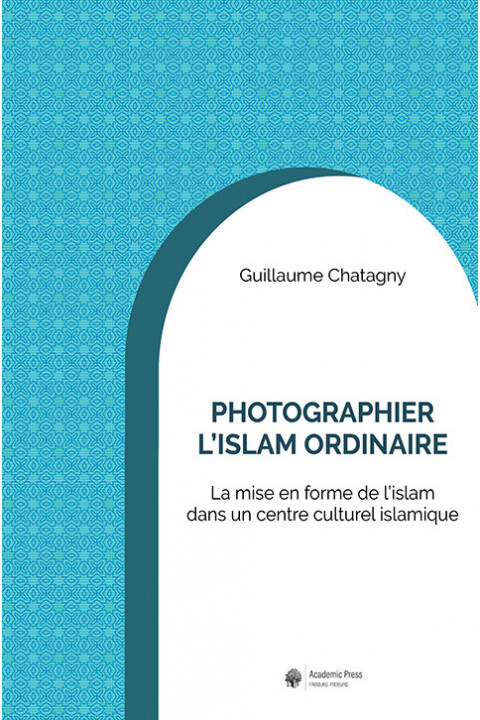
Photographing Ordinary Islam
- Guillaume Chatagny
What does Islam concretely look like within a Muslim association? This is the question addressed by sociologist Guillaume Chatagny in this book, based on fieldwork conducted between 2017 and 2021 w...

article
Leo XIV’s encyclical Magnifica Humanitas and the Pluriel working group on AI-assisted interreligious dialogue
- Wael Saleh
Text by Wael Saleh, researcher at the Université du Québec à Montréal (UQAM) and member of the Pluriel coordination committee. The simultaneous appearance of Leo XIV's encyclical Magnifica Human...
publication
The Recognition of a Hummingbird. Essays on Interreligious Dialogue and Missionary Work (2007-2025)
- Rémi Caucanas
Published in May 2026 by PISAI (Pontifical Institute for Arabic and Islamic Studies, Rome), this collection brings together the essays of Rémi Caucanas on interreligious dialogue and missionary wor...
videos
From Lavigerie to PISAI: The Institutional History of the Missionaries of Africa’s Engagement with Islam
Delivered on 21 May 2026 at the Pontifical Institute for Arabic and Islamic Studies (PISAI) in Rome, this lecture opens the series of conferences marking the institute's centenary (1926-2026). Fr. ...