

French

Islam in Europe or European Islam?
In this conference given on January 30, 2025, at PISAI (Pontifical Institute for Arabic and Islamic Studies) in Rome, political scientist Olivier Roy offers an in-depth analysis of the Muslim presence in Europe and its evolution. He distinguishes between two key concepts: “Islam in Europe” and “European Islam”. Roy first traces the history of relations between Europe and Islam, from early intellectual interactions to the colonial period. He emphasizes that each European country has developed its own legal and institutional approach to managing religious affairs, making it difficult to establish a common European framework.
The political scientist then analyzes the major transformation that occurred with post-war Muslim immigration. He observes the transition from a first generation, which lived a traditional cultural Islam, to a second generation claiming a deculturalized and individualized Islam. This evolution is accompanied by three distinct positions: a demand for integration while maintaining visible religious markers, a multiculturalist approach, and a Salafist tendency advocating separation.
Roy highlights the emergence of a European Muslim middle class, carrying a religious practice compatible with European values. He criticizes state approaches, particularly French, that persist in trying to “format” Islam according to unsuitable administrative models. For him, the future of European Islam depends less on institutional reforms than on the natural sociological evolution of Muslim communities in Europe.
Dans cette conférence donnée le 30 janvier 2025 au PISAI (Institut pontifical d’études arabes et d’islamologie) à Rome, le politologue Olivier Roy propose une analyse approfondie de la présence musulmane en Europe et de ses évolutions. Il distingue deux concepts clés : “l’islam en Europe” et “l’islam européen”. Roy retrace d’abord l’histoire des rapports entre l’Europe et l’islam, depuis les premières interactions intellectuelles jusqu’à la période coloniale. Il souligne que chaque pays européen a développé sa propre approche juridique et institutionnelle de la gestion du fait religieux, rendant difficile l’émergence d’un cadre commun européen.
Le politologue analyse ensuite la transformation majeure survenue avec l’immigration musulmane d’après-guerre. Il observe le passage d’une première génération, qui vivait un islam culturel traditionnel, à une seconde génération qui revendique un islam déculturé et individualisé. Cette évolution s’accompagne de trois positionnements distincts : une demande d’intégration avec maintien de marqueurs religieux visibles, une approche multiculturaliste et une tendance salafiste prônant la séparation.
Roy met en lumière l’émergence d’une classe moyenne musulmane européenne, porteuse d’une pratique religieuse compatible avec les valeurs européennes. Il critique les approches étatiques, notamment française, qui persistent à vouloir “formater” l’islam selon des modèles administratifs inadaptés. Pour lui, l’avenir de l’islam européen repose moins sur des réformes institutionnelles que sur l’évolution sociologique naturelle des communautés musulmanes en Europe.
في هذه المحاضرة التي ألقاها في 30 يناير 2025 في المعهد البابوي للدراسات العربية والإسلامية (PISAI) في روما، يقدم الباحث السياسي أوليفييه روا تحليلًا معمقًا لحضور المسلمين في أوروبا وتطور هذا الحضور. يميز روا بين مفهومين أساسيين: “الإسلام في أوروبا” و”الإسلام الأوروبي”. في البداية، يستعرض روا تاريخ العلاقات بين أوروبا والإسلام، من التفاعلات الفكرية الأولى إلى الحقبة الاستعمارية. ويؤكد أن كل دولة أوروبية طورت نهجًا قانونيًا ومؤسسيًا خاصًا بها لإدارة الشؤون الدينية، مما يجعل من الصعب وضع إطار أوروبي مشترك.
ثم يتناول الباحث السياسي التحول الجذري الذي وقع مع الهجرة المسلمة بعد الحرب العالمية الثانية. ويشير إلى الانتقال من جيل أول عاش إسلامًا ثقافيًا تقليديًا إلى جيل ثانٍ يطالب بإسلام منزوع الطابع الثقافي وفردي النزعة. يرافق هذا التطور ثلاث مواقف متميزة: المطالبة بالاندماج مع الحفاظ على الرموز الدينية الظاهرة، تبني نهج التعددية الثقافية، والنزعة السلفية التي تدعو إلى الانفصال.
يسلط روا الضوء على بروز طبقة وسطى مسلمة أوروبية تمارس دينًا متوافقًا مع القيم الأوروبية. كما ينتقد السياسات الحكومية، خصوصًا في فرنسا، التي تواصل محاولة “تطويع” الإسلام وفق نماذج إدارية غير ملائمة. ويرى أن مستقبل الإسلام الأوروبي يعتمد بدرجة أقل على الإصلاحات المؤسسية، وأكثر على التطور الاجتماعي الطبيعي للجاليات المسلمة في أوروبا.


Resources of this researcher
Resources related to Islam in Europe
publication
Religious Freedom in Italy. An Unfinished Path (1848-2024)
- Alessandro Ferrari
Published under the original title La libertà religiosa in Italia. Un percorso incompiuto (1848-2024), this synthesis by Alessandro Ferrari, professor of ecclesiastical law and comparative religiou...
article
Two Seas, One Course: The 2026 Jesuit Migrant Service Report on Spain’s Southern Border
- Josep Buades
The annual report of the Jesuit Migrant Service (SJM), the social apostolate body of the Society of Jesus in Spain, written by Josep (Pep) Buades Fuster, examines the migratory dynamics of Spain’s ...
videos
From Lavigerie to PISAI: The Institutional History of the Missionaries of Africa’s Engagement with Islam
Delivered on 21 May 2026 at the Pontifical Institute for Arabic and Islamic Studies (PISAI) in Rome, this lecture opens the series of conferences marking the institute's centenary (1926-2026). Fr. ...
videos
Interreligious Dialogue and Ethnic Nationalisms in the Balkans
At the invitation of PISAI (Pontifical Institute for Arabic and Islamic Studies, Rome) and Georgetown University, Ahmet Alibašić, professor of Islamic civilization at the Faculty of Islamic Studies...
article
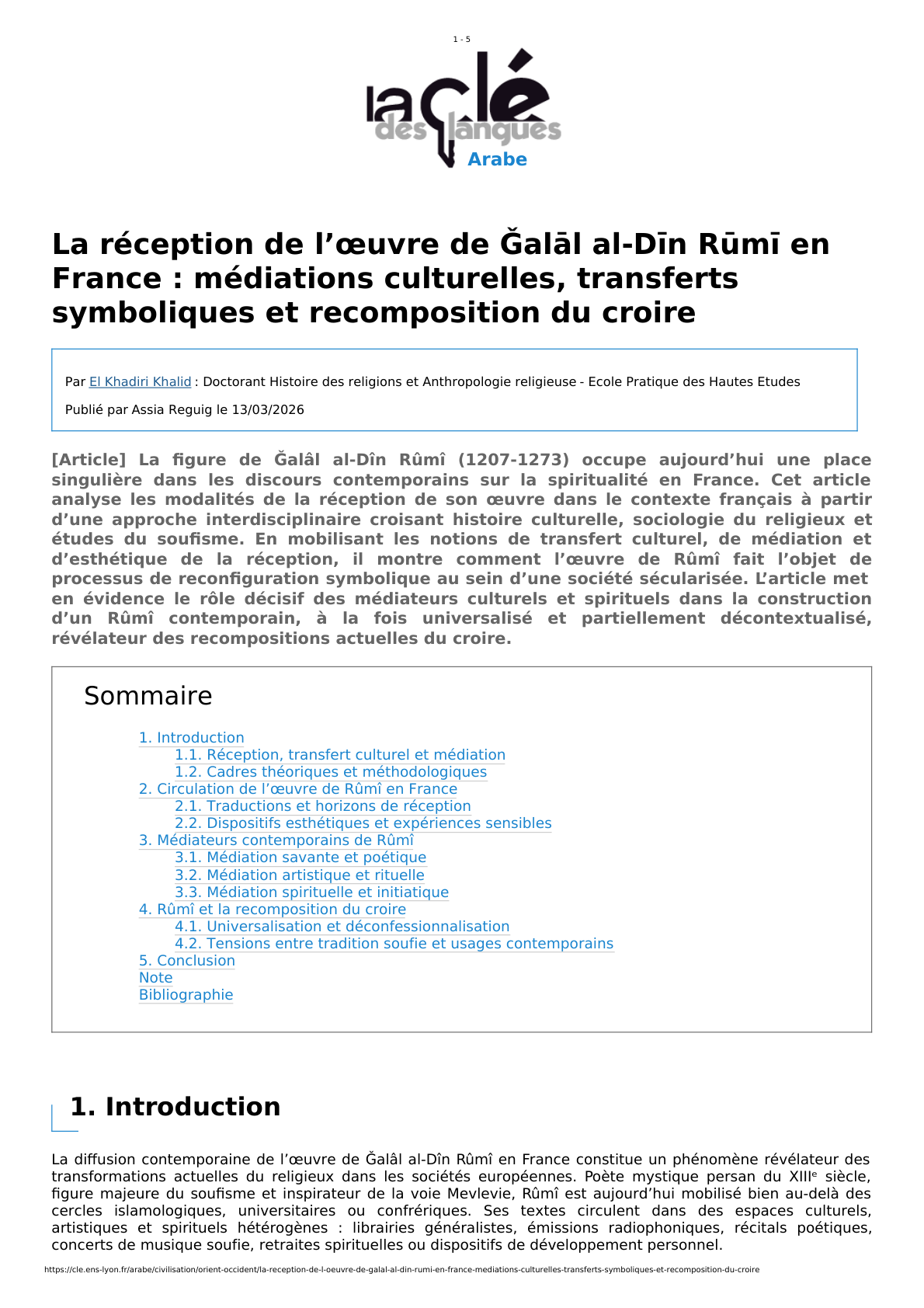
“The Reception of Rūmī’s Work in France: Cultural Mediations, Symbolic Transfers and the Recomposition of Belief”, by Khalid El Khadiri
- Khalid El Khadiri
In the journal La Clé des Langues (ENS de Lyon, March 2026), Khalid El Khadiri, a PhD candidate in the history and sociology of religions at the École pratique des hautes études (EPHE), examines th...

videos
Political and religious anarchism in the musical forms of rebel Islam: from rap to taqwacore
Paper presented at the fifth international congress of the University Platform for Research on Islam (Pluriel), held in Cordoba from 10 to 14 February 2026 on the theme "Ethics and Aesthetics in Is...

videos
From regulating religious sound to transforming it into light: public, legal and architectural debates on the adhān
Paper presented at the fifth international congress of the University Platform for Research on Islam (Pluriel), held in Cordoba from 10 to 14 February 2026 on the theme "Ethics and Aesthetics in Is...
publication
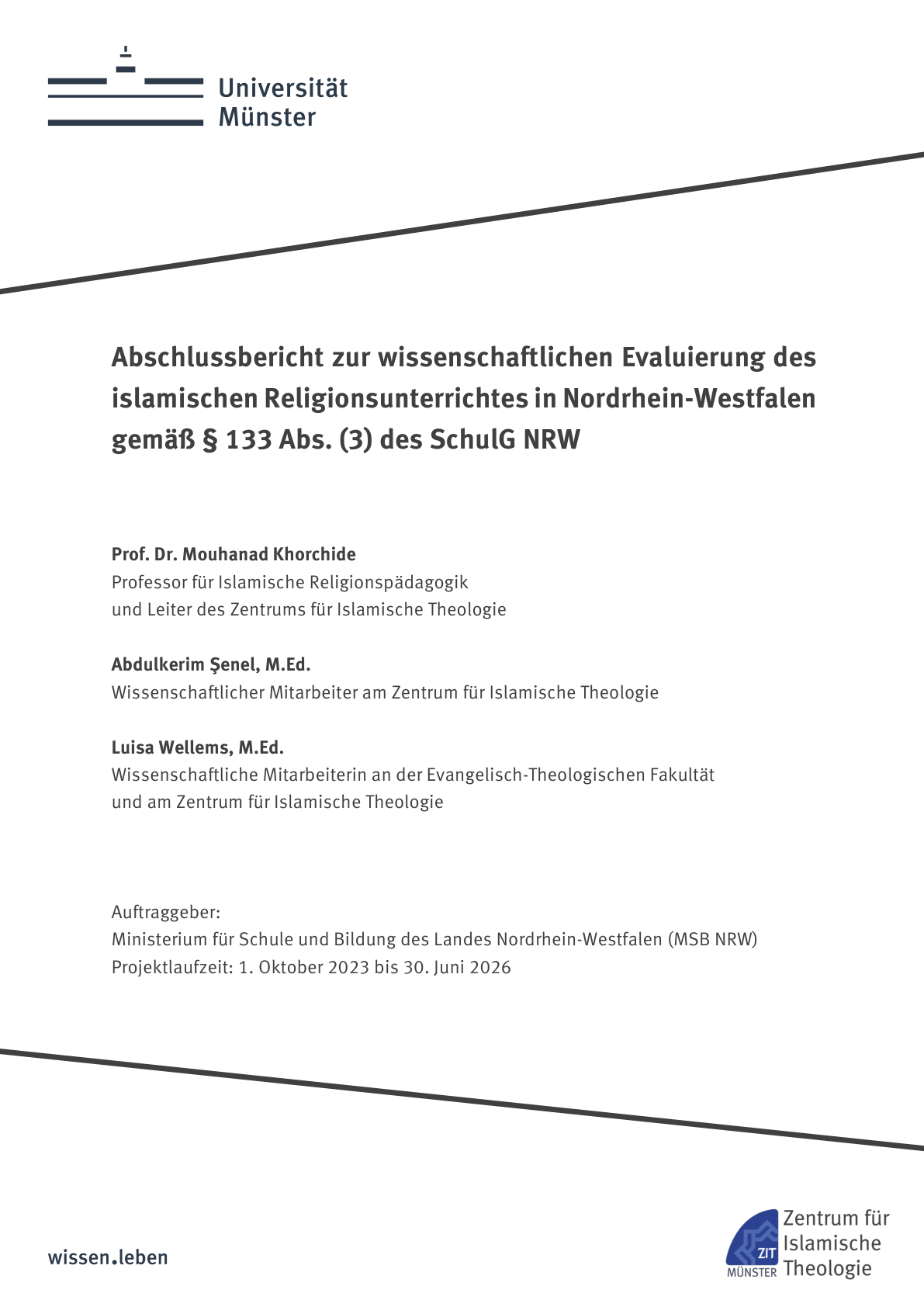
Scientific Evaluation of Islamic Religious Education in North Rhine-Westphalia
- Mouhanad Khorchide
Conducted by the Center for Islamic Theology at the University of Münster (directed by Mouhanad Khorchide) at the request of the Ministry of Education of North Rhine-Westphalia, this final scientif...