
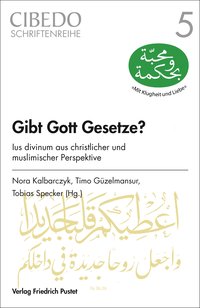
Is God a lawgiver? Christian and Muslim perspectives on Ius divinum
“Is God a lawgiver? Christian and Muslim perspectives on Ius divinum”
CIBEDO-Schriftenreihe vol. 5
Time and again public attention in Germany focuses on regulations which claim a divine origin or other religious justifications – especially when religious law is in conflict with other bodies of law. Notwithstanding some specific differences in legal content, there is also common ground between Christian and Muslim approaches to and reflections on divine law.
The fifth volume of the CIBEDO-Schriftenreihe aims at tracing some of the questions which Christian and Muslim theologians have been and are working on in the context of divine law, for example the question of how divine law relates to revelation or whether it is dependent on the historical context.
The volume is divided into three parts: In the first part Helmut Pree and Rana Alsoufi inquire into the relation between divine law and theology from a Christian and a Muslim point of view respectively: In which way is religious law theologically grounded and how is the interplay between religious legal theory and theology? Subsequently, Serdar Kurnaz and Thomas Meckel asses in the second part of the book how in each of the two traditions revelation and religious law relate to each other; in doing so they also investigate the relation between history and religious law. In the third part Matthias Pulte and Hakki Arslan focus on natural law approaches in Christian and in Muslim legal theory.
Kalbarczyk, Nora/Güzelmansur, Timo/Specker, Tobias SJ (Ed.): Gibt Gott Gesetze? Ius divinum aus christlicher und muslimischer Perspektive (CIBEDO-Schriftenreihe Band 5), Pustet Verlag Regensburg 2018. (ISBN/EAN: 9783791730141)
https://www.verlag-pustet.de/shop/item/9783791730141/gibt-gott-gesetze-kartoniertes-buch
Groupe de recherche thématique de Francfort : Théologie catholique en relation avec l’islam
“Is God a lawgiver? Christian and Muslim perspectives on Ius divinum”
CIBEDO-Schriftenreihe vol. 5
Time and again public attention in Germany focuses on regulations which claim a divine origin or other religious justifications – especially when religious law is in conflict with other bodies of law. Notwithstanding some specific differences in legal content, there is also common ground between Christian and Muslim approaches to and reflections on divine law.
The fifth volume of the CIBEDO-Schriftenreihe aims at tracing some of the questions which Christian and Muslim theologians have been and are working on in the context of divine law, for example the question of how divine law relates to revelation or whether it is dependent on the historical context.
The volume is divided into three parts: In the first part Helmut Pree and Rana Alsoufi inquire into the relation between divine law and theology from a Christian and a Muslim point of view respectively: In which way is religious law theologically grounded and how is the interplay between religious legal theory and theology? Subsequently, Serdar Kurnaz and Thomas Meckel asses in the second part of the book how in each of the two traditions revelation and religious law relate to each other; in doing so they also investigate the relation between history and religious law. In the third part Matthias Pulte and Hakki Arslan focus on natural law approaches in Christian and in Muslim legal theory.
Kalbarczyk, Nora/Güzelmansur, Timo/Specker, Tobias SJ (Ed.): Gibt Gott Gesetze? Ius divinum aus christlicher und muslimischer Perspektive (CIBEDO-Schriftenreihe Band 5), Pustet Verlag Regensburg 2018. (ISBN/EAN: 9783791730141)
https://www.verlag-pustet.de/shop/item/9783791730141/gibt-gott-gesetze-kartoniertes-buch
Franfurt thematic group : Catholic Theology in Dialogue with Islam
«Is God a lawgiver? Christian and Muslim perspectives on Ius divinum»
CIBEDO-Schriftenreihe المجلّد 5
مراراً وتكراراً، يتوجّه الاهتمام العامّ في ألمانيا نحو تشريعات تدّعي أصلاً إلهياً أو تبريراتٍ دينية أخرى، لا سيّما حين يتعارض القانون الديني مع أنظمة قانونية أخرى. برغم بعض الاختلافات المحدّدة في مضامين القانون، ثمّة أرضية مشتركة بين المقاربات المسيحية والمسلمة للقانون الإلهي وتأمّلاتها فيه.
يسعى المجلّد الخامس من CIBEDO-Schriftenreihe إلى تتبّع بعض الأسئلة التي كان اللاهوتيون المسيحيون والمسلمون يعملون عليها ولا يزالون في سياق القانون الإلهي، منها مثلاً كيف يتّصل القانون الإلهي بالوحي، وهل يتوقّف على السياق التاريخي؟
ينقسم المجلّد إلى ثلاثة أجزاء: في الجزء الأوّل، يتناول Helmut Pree وRana Alsoufi العلاقة بين القانون الإلهي واللاهوت من منظور مسيحي ومسلم على التوالي: بأيّ طريقة يُؤسَّس القانون الديني لاهوتياً، وكيف يتفاعل مع النظرية الفقهية الدينية؟ ثم يقيّم Serdar Kurnaz وThomas Meckel في الجزء الثاني كيف يتّصل الوحي بالقانون الديني في كلٍّ من التقليدَين، مع البحث في العلاقة بين التاريخ والقانون الديني. في الجزء الثالث، يُركّز Matthias Pulte وHakki Arslan على مقاربات القانون الطبيعي في النظرية القانونية المسيحية والمسلمة.
Kalbarczyk, Nora/Güzelmansur, Timo/Specker, Tobias SJ (Ed.): Gibt Gott Gesetze? Ius divinum aus christlicher und muslimischer Perspektive (CIBEDO-Schriftenreihe Band 5), Pustet Verlag Regensburg 2018. (ISBN/EAN: 9783791730141)
https://www.verlag-pustet.de/shop/item/9783791730141/gibt-gott-gesetze-kartoniertes-buch
مجموعة البحث الموضوعية في فرانكفورت: اللاهوت الكاثوليكي في علاقته بالإسلام
Ressources lié aux mots clés
publication
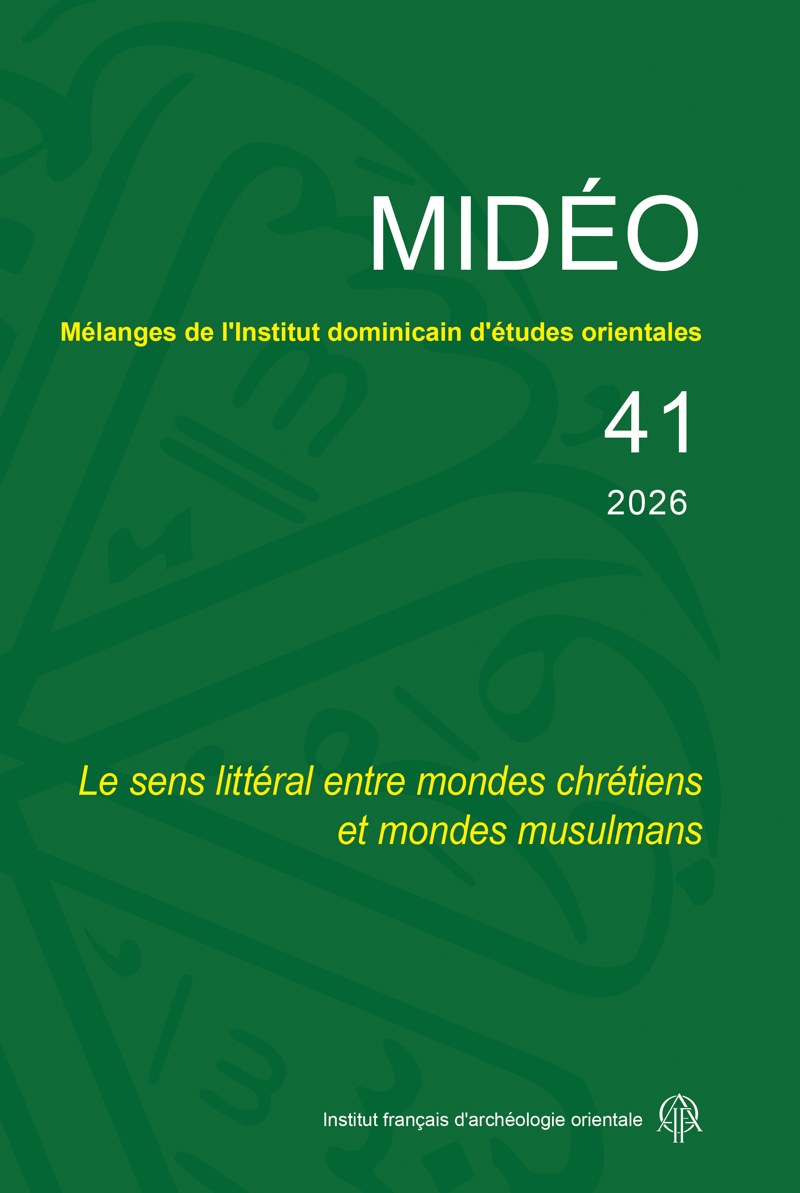
MIDÉO n° 41 : Le sens littéral entre mondes chrétiens et mondes musulmans
- Jean Druel
- Emmanuel Pisani
Intitulé d’après son dossier Le sens littéral entre mondes chrétiens et mondes musulmans, le numéro 41 des Mélanges de l’Institut dominicain d’études orientales (MIDÉO) aborde la ...
publication
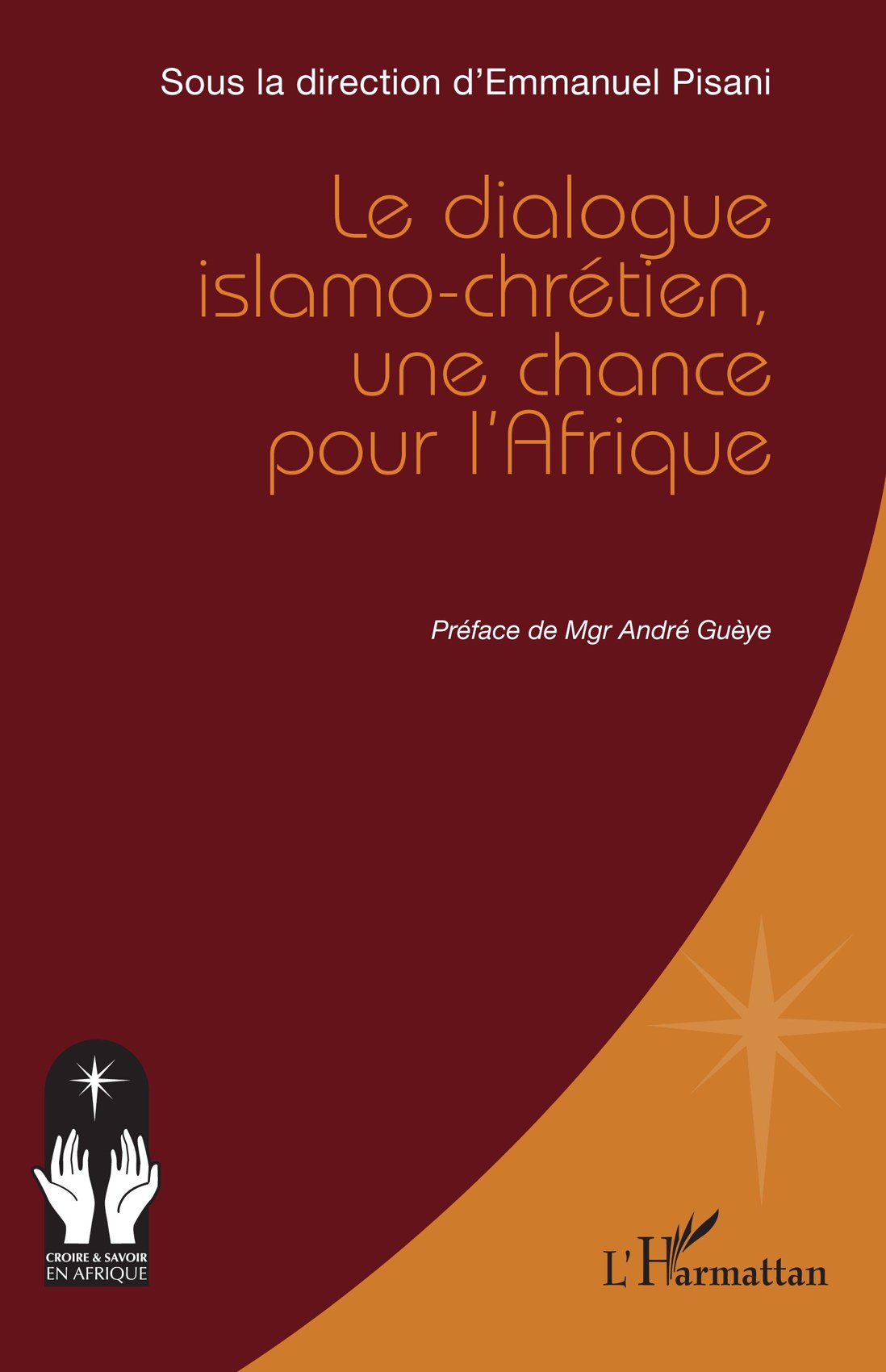
Le dialogue islamo-chrétien, une chance pour l’Afrique
- Emmanuel Pisani
À l’heure où l’Afrique subsaharienne connaît de profondes mutations sociopolitiques et la montée de radicalismes religieux, le dialogue islamo-chrétien se présente comme une exigence in...

publication
Comprendre le salafisme
- Mohamed-Ali Adraoui
Publié en 2022 aux éditions Palgrave Macmillan (Springer) dans la collection The Sciences Po Series in International Relations and Political Economy, cet ouvrage de Mohamed-Ali Adraoui, professeur ...

article
Éprouver une mosquée par la photographie : l’islam comme religion ordinaire
- Guillaume Chatagny
Résumé Publié en 2021 sous le titre original « Experiencing a Mosque Through Photography: Islam As an Ordinary Religion » dans la revue Visual Ethnography (vol. 10, n° 2), cet article de Guillau...

article
L’islam vu par Aziz al-Azmeh
- Wasim Salman
Résumé Publié en arabe dans le numéro 50 (2024) de la revue Islamochristiana (PISAI, paru en avril 2025), cet essai de Wasim Salman, président du PISAI et directeur de la revue, examine la relat...

article
Visions islamiques de Jésus : révélation, prophétie et eschatologie
- Antonio Cuciniello
Résumé Publié sous le titre original « Islamic Visions of Jesus: Revelation, Prophecy, and Eschatology » dans l'ouvrage collectif Jerusalem in Memory and Eschatology: Jewish, Christian, and Musl...

article
Questions sur la sotériologie islamique dans l’islam primitif
- Jaume Flaquer
Résumé Publié sous le titre original « Cuestiones sobre la soteriología islámica en el islam primitivo » dans l'ouvrage collectif Riesgos y fidelidades. Miradas teológicas para un mundo plural, ...

article
Le Coran musulman incréé et le Logos chrétien éternellement engendré
- Jaume Flaquer
Résumé Publié sous le titre original « El Corán musulmán increado y el Logos cristiano eternamente engendrado » dans le monographique Logos, Agape, Sarx. Una dialógica cristiana du numéro 79 (20...