

Référence :
Circoncisione e cittadinanza europea (Circumcision and EU citizenship) (September 28, 2018). University of Milano-Bicocca School of Law Research Paper No. 18-09.

English

Circumcision and EU citizenship
Original title : “Circoncisione e cittadinanza europea”
Abstract
Circumcision is a practice that mainly conforms to Jewish and Muslim religious identities. However, some documents of the Parliamentary Assembly of the Council of Europe tend to consider this practice exclusively as a possible attack on the physical integrity of children, without dwelling on the perspective of religious freedom and its potential inclusive value of its recognition in the interest of of universal citizenship. This is the development that will be considered in this document.
Titre original : “Circoncisione e cittadinanza europea”
Résumé
La circoncision est une pratique qui se conforme principalement aux normes juives et musulmanes. Toutefois, certains documents de l’Assemblée parlementaire du Conseil de l’Europe tendent à considérer cette pratique exclusivement comme une atteinte à l’intégrité physique des enfants, sans s’attarder sur la perspective de la liberté religieuse et de la valeur inclusive de sa reconnaissance dans l’intérêt de la citoyenneté universelle.
يشكٍّلُ الختان ممارسة تتوافقُ أساساً مع الأعراف اليهودية والإسلامية. إلاّ أنّ بعض الوثائق الصادرة عن الجمعية البرلمانية لمجلس أوروبا تميل إلى تصنيف هذه الممارسة حصريًا بمثابة اعتداء يطال سلامة الأطفال الجسدية، من دون أن تبحث في منظور الحرية الدينية والقيمة الشاملة للاعتراف بها لصالح المواطنة العالمية.
Com’è stato notato, in Italia, «[L]a religione è ben presente nella vita degli immigrati, anche quando il processo di inserimento e l’avanzare delle seconde generazioni gettano le basi per divenire cittadini italiani». Questa constatazione, valida anche per tutto il contesto europeo, fa il paio con la considerazione secondo cui «[I] membri della comunità societaria “devono”, in senso normativo, godere di alcune libertà fondamentali», fra cui, non da ultima, quella di religione e di coscienza. Peraltro, se la religione rappresenta il luogo in cui la persona umana ridisegna la sua identità, essa costituisce, a sua volta, un elemento fondamentale della cittadinanza plurale tipica della società contemporanea. L’identità religiosa, inoltre, arricchisce il sistema dei valori societari esprimendo, laddove effettivamente garantita, quella concezione del diritto di libertà religiosa che la giurisprudenza della Corte di Strasburgo considera essenziale per le democrazie. Di conseguenza, la garanzia del diritto di libertà religiosa e, insieme, del pluralismo religioso, diviene ordine costitutivo della cittadinanza democratico-costituzionale. Non mancano resistenze alla costruzione di una siffatta cittadinanza. Gli Stati-nazione, ad esempio, sono attraversati da forme di reazione etnocentriche che cercano di resistere ai complessi fenomeni connessi al processo di globalizzazione sociale, economica e giuridica. Di qui il vastissimo dibattito, con pesanti ricadute ideologico-politiche, sul c.d. vivere insieme e la coesione sociale. Tali reazioni generano stereotipizzazione e paura del migrante (spesso identificato con “il musulmano”), identificato come responsabile di una omogeneizzazione al ribasso della “qualità sociale” europea causata dall’erosione, percepita come perdita e non come trasformazione, dei tradizionali valori culturali, religiosi e civici. Tali resistenze non lasciano indifferenti. Esse lambiscono e influenzano anche gli ambienti e le istituzioni europee costitutivamente più al riparo da ripiegamenti particolaristici come quelli espressi dalle istituzioni del Consiglio d’Europa. Ci si riferisce, in particolare, ad alcuni atteggiamenti dell’Assemblea Parlamentare del Consiglio d’Europa. A partire da questo inquadramento, l’intervento che qui si propone intende soffermarsi sulla gestione giuridica della circoncisione per motivi culturali e religiosi quale cartina tornasole di approcci alla cittadinanza più o meno inclusivi rispetto al radicamento sociale di identità non tradizionali. Tale analisi consentirà di riflettere sul permanente significato politico del diritto di libertà religiosa nelle società globalizzate contemporanee.
 Download PDF


Author(s)

Resources of this researcher
publication
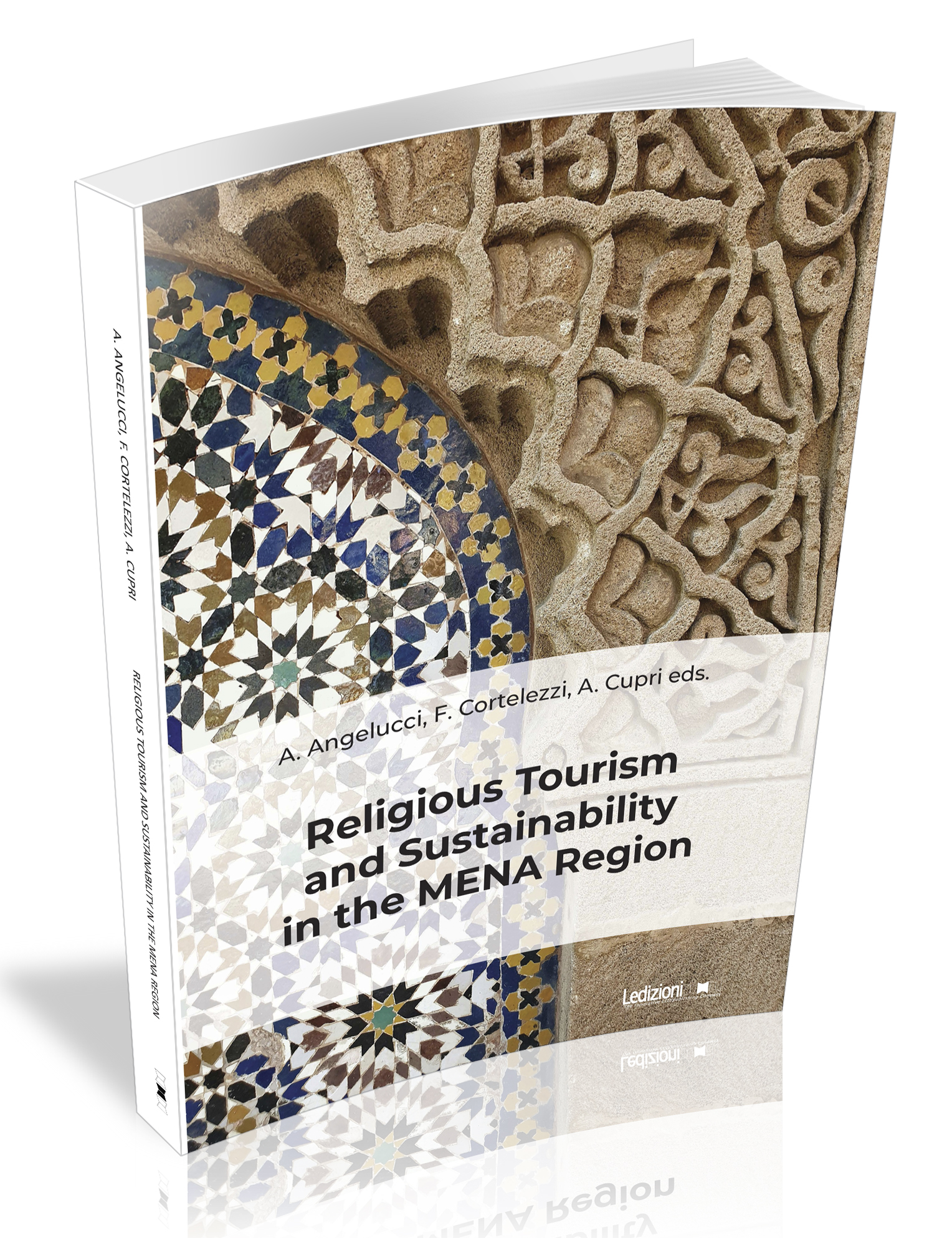
Religious Tourism and Sustainability in the MENA Region
Edited by Antonio Angelucci, Flavia Cortelezzi and Alessandro Cupri (Ledizioni, 2025), this volume offers a theoretical and methodological framework for religious tourism, a continuously expanding ...
article
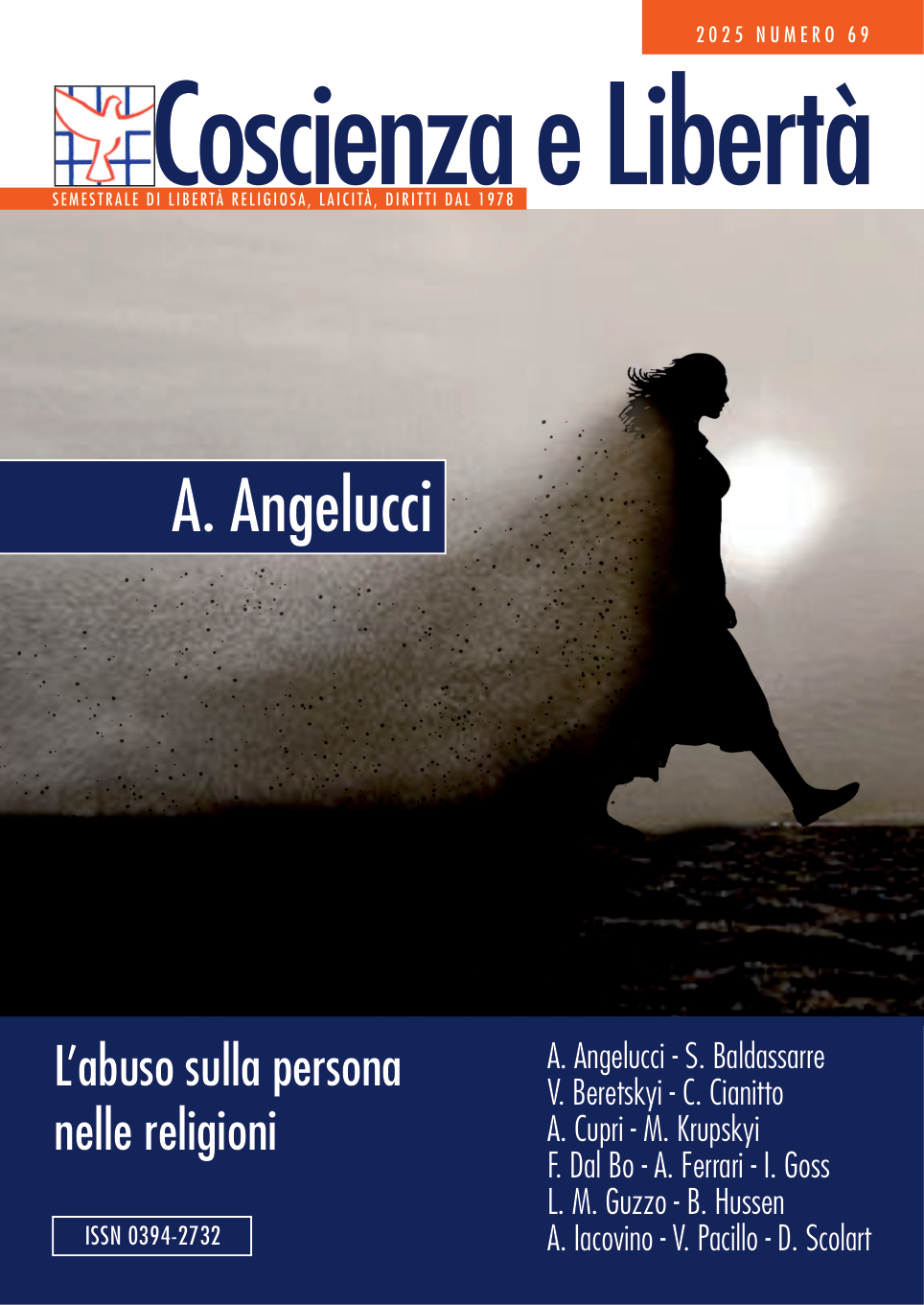
“Inclusive Citizenship, the Right to a Place of Worship and Everyday Peace”, by Antonio Angelucci
In an article published in the Italian journal Coscienza e Libertà (no. 69, 2025), Antonio Angelucci, associate professor of law and religion at the University of Insubria, examines the connection ...
publication
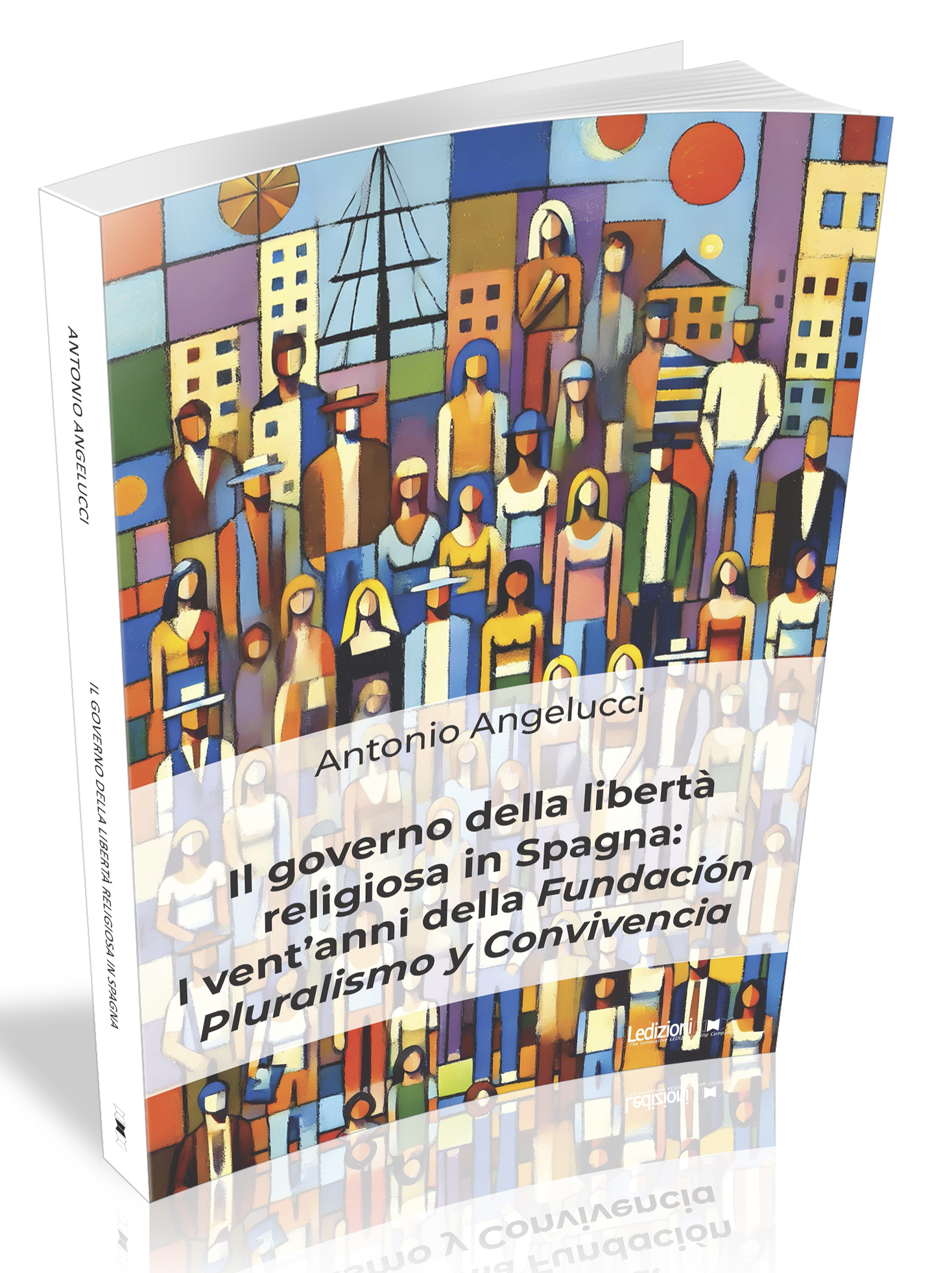
The Governance of Religious Freedom in Spain
Il governo della libertà religiosa in Spagna (Milan: Ledizioni, 2024), by Antonio Angelucci, examines the governance of religious freedom in Spain through the first twenty years of the Fundación Pl...
article
Circumcision and EU citizenship
Original title : "Circoncisione e cittadinanza europea" Abstract Circumcision is a practice that mainly conforms to Jewish and Muslim religious identities. However, some documents of the Parl...
publication
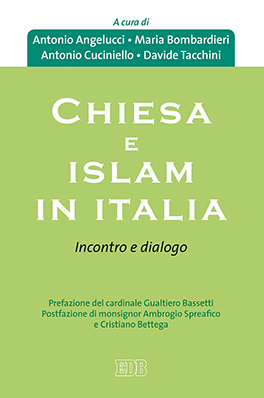
Church and Islam in Italy
This volume, which is one of the initiatives promoted by the Ecumenism and Interreligious Dialogue Office of the Italian Bishops’ Conference, aims to illustrate and encourage the encounter an...
Resources related to Freedom of Religion
publication
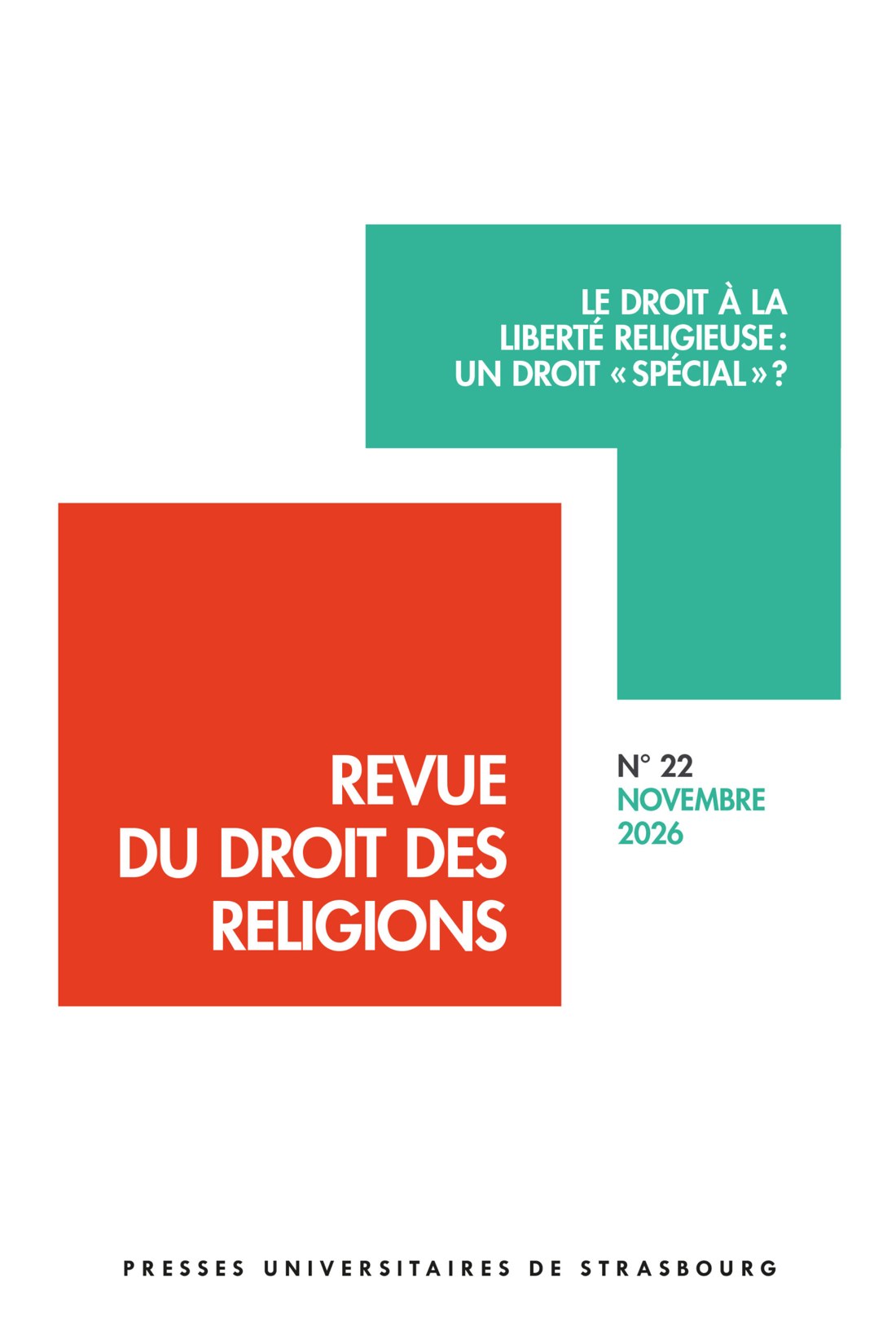
“The Right to Religious Freedom: A ‘Special’ Right?”, Revue du droit des religions No. 22
- Alessandro Ferrari
Issue 22 of the Revue du droit des religions, published by Presses universitaires de Strasbourg, comes out on 19 November 2026. Its thematic section, “Le droit à la liberté religieuse : un dr...
publication
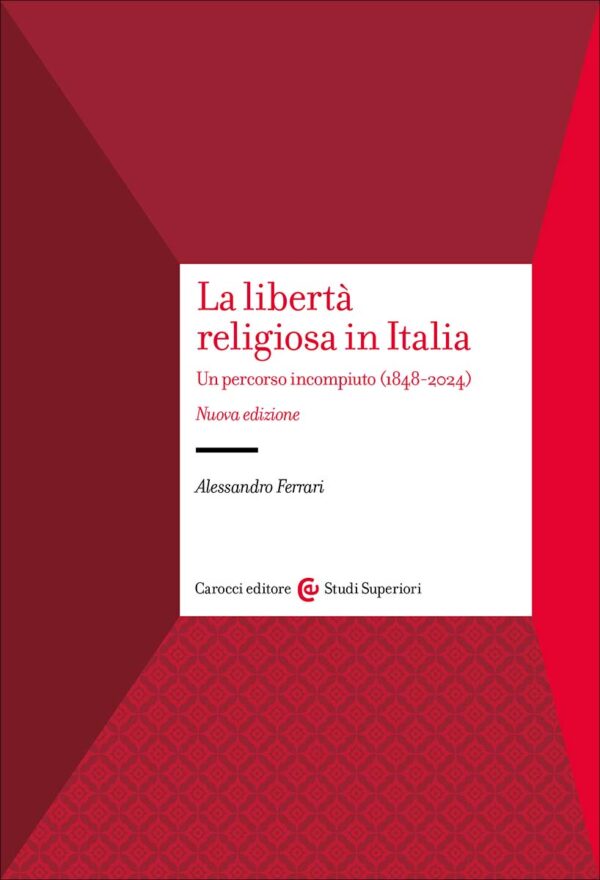
Religious Freedom in Italy. An Unfinished Path (1848-2024)
- Alessandro Ferrari
Published under the original title La libertà religiosa in Italia. Un percorso incompiuto (1848-2024), this synthesis by Alessandro Ferrari, professor of ecclesiastical law and comparative religiou...
article
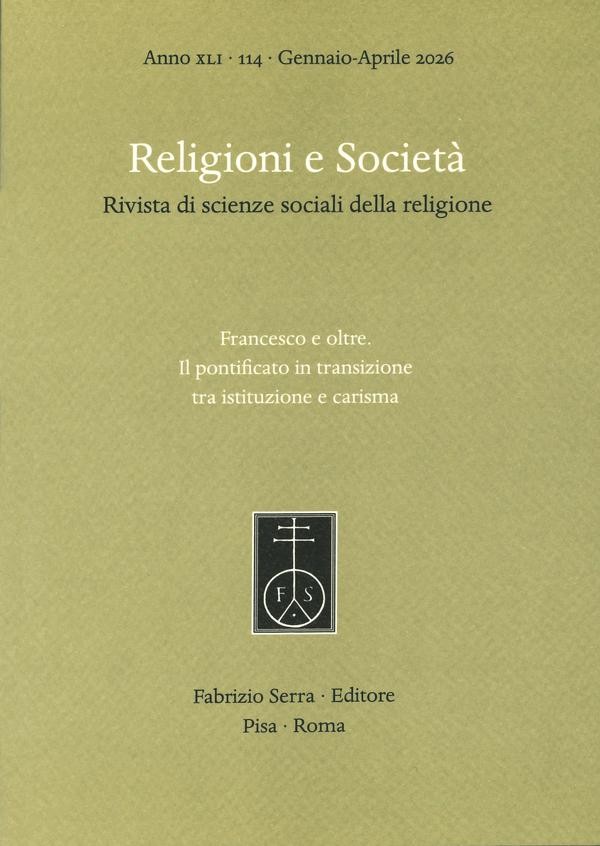
Dialogue as Mission: Paths and Horizons of Muslim-Christian Dialogue in the Time of Pope Francis
- Claudio Monge
Abstract Published in Italian under the title Il dialogo come missione: percorsi e orizzonti del dialogo islamo-cristiano al tempo di Papa Francesco in issue 114 (January-April 2026) of the jour...
article
A Nail in the Coffin of the Representation Monopoly of a Single Community: The Quest for Recognition of Intra-religious Pluralism
- Kerstin Wonisch
Abstract Published in the CUREDI database (Cultural and Religious Diversity under State Law across the World), run by the Department of Law and Anthropology of the Max Planck Institute for Socia...

videos
From regulating religious sound to transforming it into light: public, legal and architectural debates on the adhān
Paper presented at the fifth international congress of the University Platform for Research on Islam (Pluriel), held in Cordoba from 10 to 14 February 2026 on the theme "Ethics and Aesthetics in Is...
article
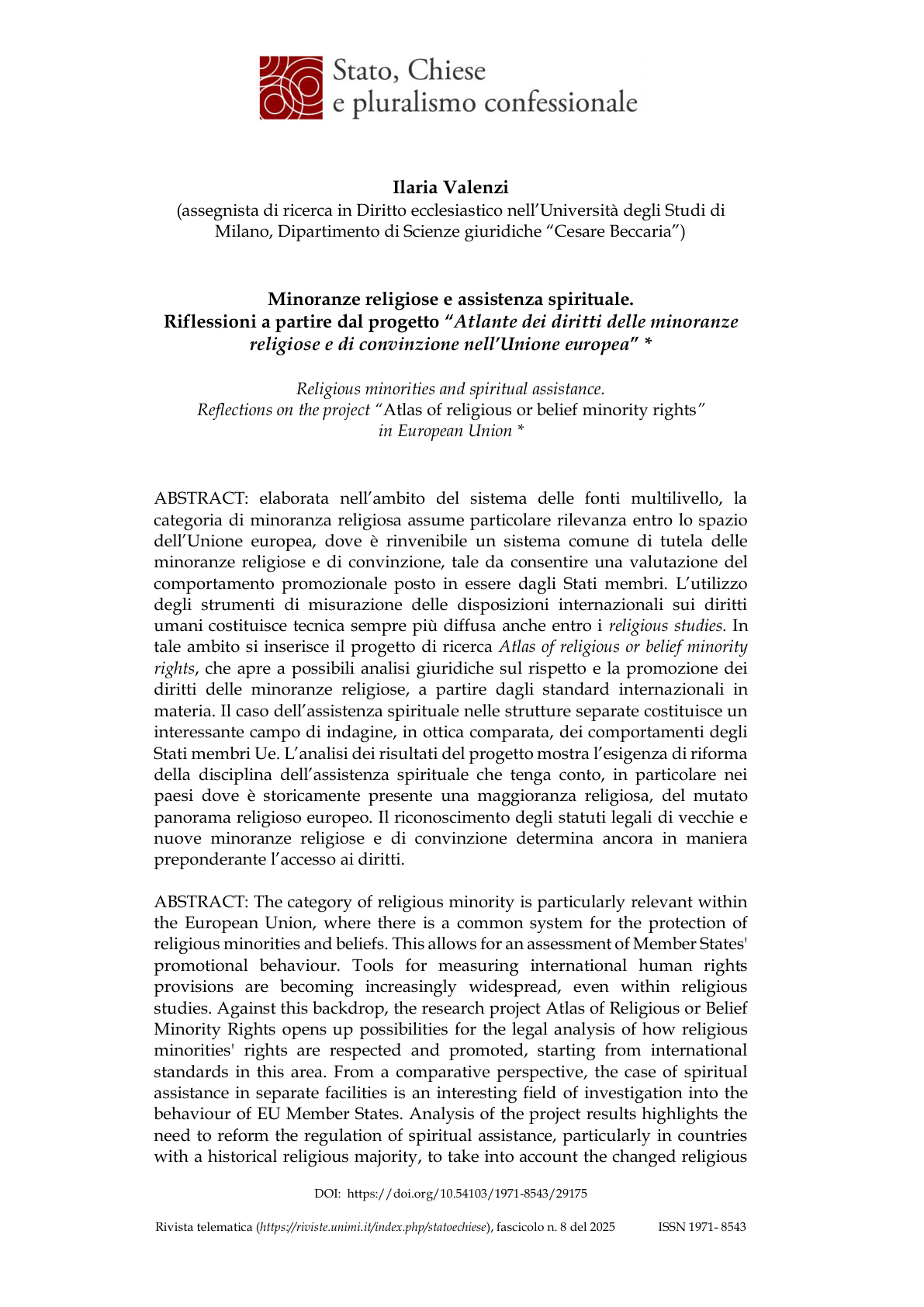
Religious minorities and spiritual assistance. Reflections on the project “Atlas of religious or belief minority rights” in the European Union
- Ilaria Valenzi
Abstract Developed within the multilevel system of legal sources, the category of "religious minority" takes on particular significance within the European Union, where a shared system of protectio...
article
“Inclusive Citizenship, the Right to a Place of Worship and Everyday Peace”, by Antonio Angelucci
- Antonio Angelucci
In an article published in the Italian journal Coscienza e Libertà (no. 69, 2025), Antonio Angelucci, associate professor of law and religion at the University of Insubria, examines the connection ...
article
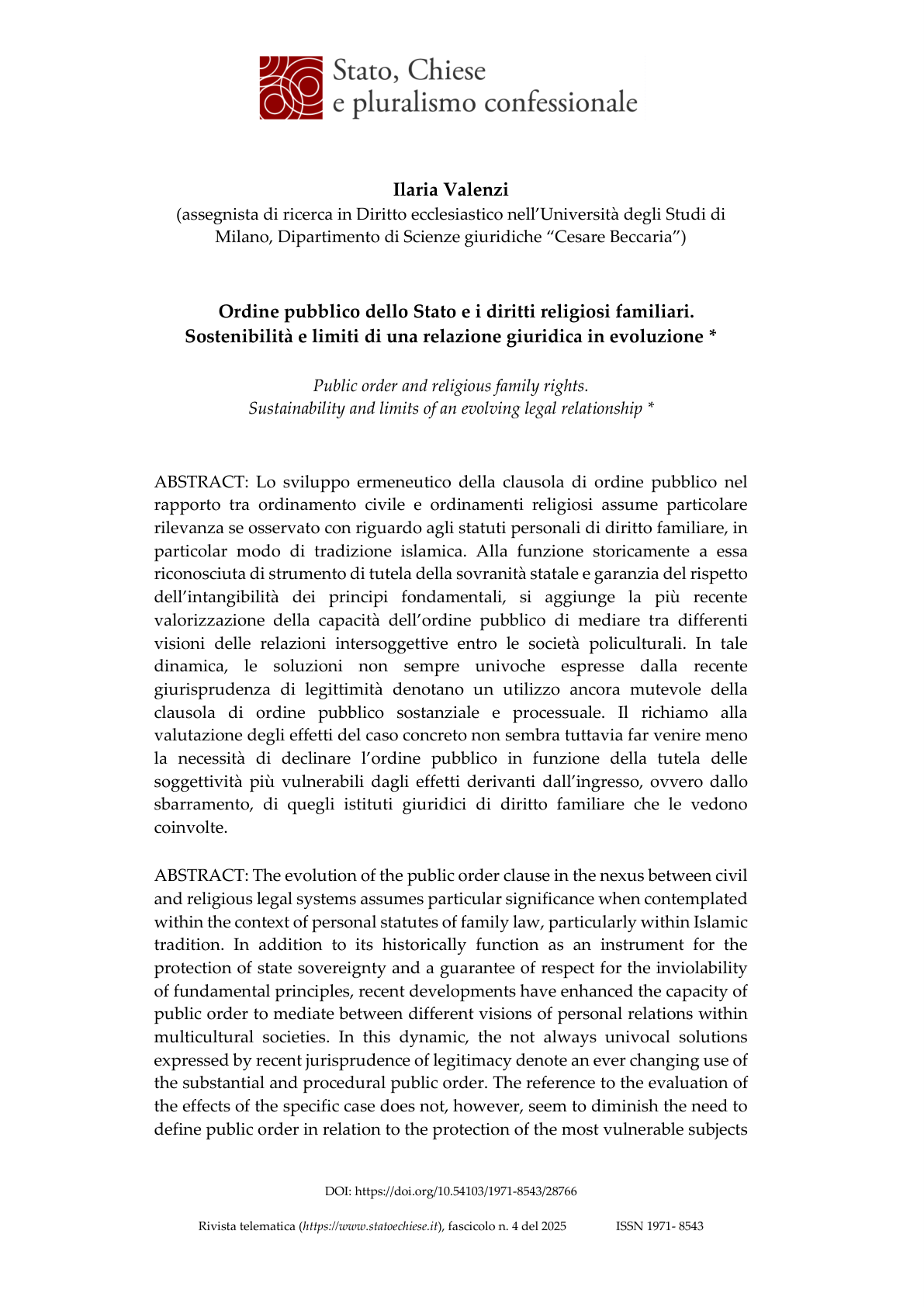
Public order and religious family rights. Sustainability and limits of an evolving legal relationship
- Ilaria Valenzi
Abstract The public-order clause, which safeguards the fundamental principles of the legal order, is today tested by the circulation of family models rooted in religious legal systems. Ilaria Valen...