

Référence :
in Annali di scienze religiosi (ASR 5), 2012

English

The Mihna. Deconstruction and reconsideration of the Mu’tazilite role in the “Inquisition
Abstract
The Miḥna has usually been attributed to the Mu‘tazilite theological school as expression of something unusual, a bid‘ah (Islamic innovation) related to a rationalist group of theologians that tried, in strict political cooperation with al-Ma‘mūn, to subvert the ‘Abbāsid caliphate system.
The full support of relevant political and religious authorities, during the Miḥna, to the caliph’s purpose permitted at the ‘Abbāsids to post-pone for few decades, a period of decadence which started with the murderer of al- Mutawakkil in 861/246.
It is significant to analyze the role played by the Mu‘tazilite school during the Miḥna, which if was theologically evident, it was also politically non-existent; a reconsideration of the importance of this rationalist school is necessary to make clearer who were the main persecutors during this short inquisitorial period in early ‘Abbāsid age.
Titre original : “The Mihna. Deconstruction and reconsideration of the Mu’tazilite role in the ‘Inquisition'”
Résumé
La Mihna a généralement été attribué à l’école théologique Mu’tazilite comme l’expression de quelque chose d’inhabituel, un bid’ah (innovation islamique) liée à un groupe rationaliste de théologiens qui a essayé, dans la coopération politique stricte avec al-Ma’mum, de renverser le califat abbasside.
Le plein soutien des autorités politiques et religieuses compétentes, pendant la Mihna, à la fin du califat, a permis aux Abbassides de reporter de quelques décennies une période de décadence qui a commencé avec le meurtrier d’al-Mutawakkil en 861/246.
Il est significatif d’analyser le rôle joué par l’école Mu’tazilite pendant la Mihna, qui si elle était théologiquement fondée, était aussi politiquement absente ; une réévaluation de l’importance de cette école rationaliste est nécessaire pour clarifier qui étaient les principaux persécuteurs au cours de cette courte période inquisitoire au début de l’ère abbasside.
Titolo originale : The Mihna. Deconstruction and reconsideration of the Mu’tazilite role in the “Inquisition”
Sommario
La Miḥna è stata attribuita alla scuola teologica Mu‘tazilita in quanto espressione di qualche cosa di inusuale, una bid‘ah (innovazione nella fede islamica) legata a un gruppo di teologi razionalisti che cercarono, in stretta collaborazione con il califfo al-Ma‘mūn, di sovvertire il dominio ‘Abbasside.
Il totale sostegno di ragguardevoli autorità politiche e religiose, concesso, durante la Miḥna, all’autorità califfale, permise loro di postporre l’inizio di un periodo di decadenza che sarebbe cominciato con l’omicidio di al-Mutawakkil nell’861/246.
È quindi significativo analizzare il ruolo assunto dalla scuola Mu‘tazilita, il quale, se è stato teologicamente evidente, non lo fu dal punto di vista politico; riconsiderare l’importanza di questa scuola razionalista è necessario per chiarire quali siano state le effettive autorità atte a perseguire alcuni oppositori, in questo breve periodo d’inquisizione durante il primo secolo della storia ‘Abbasside.
 Download PDF



Resources of this researcher
article
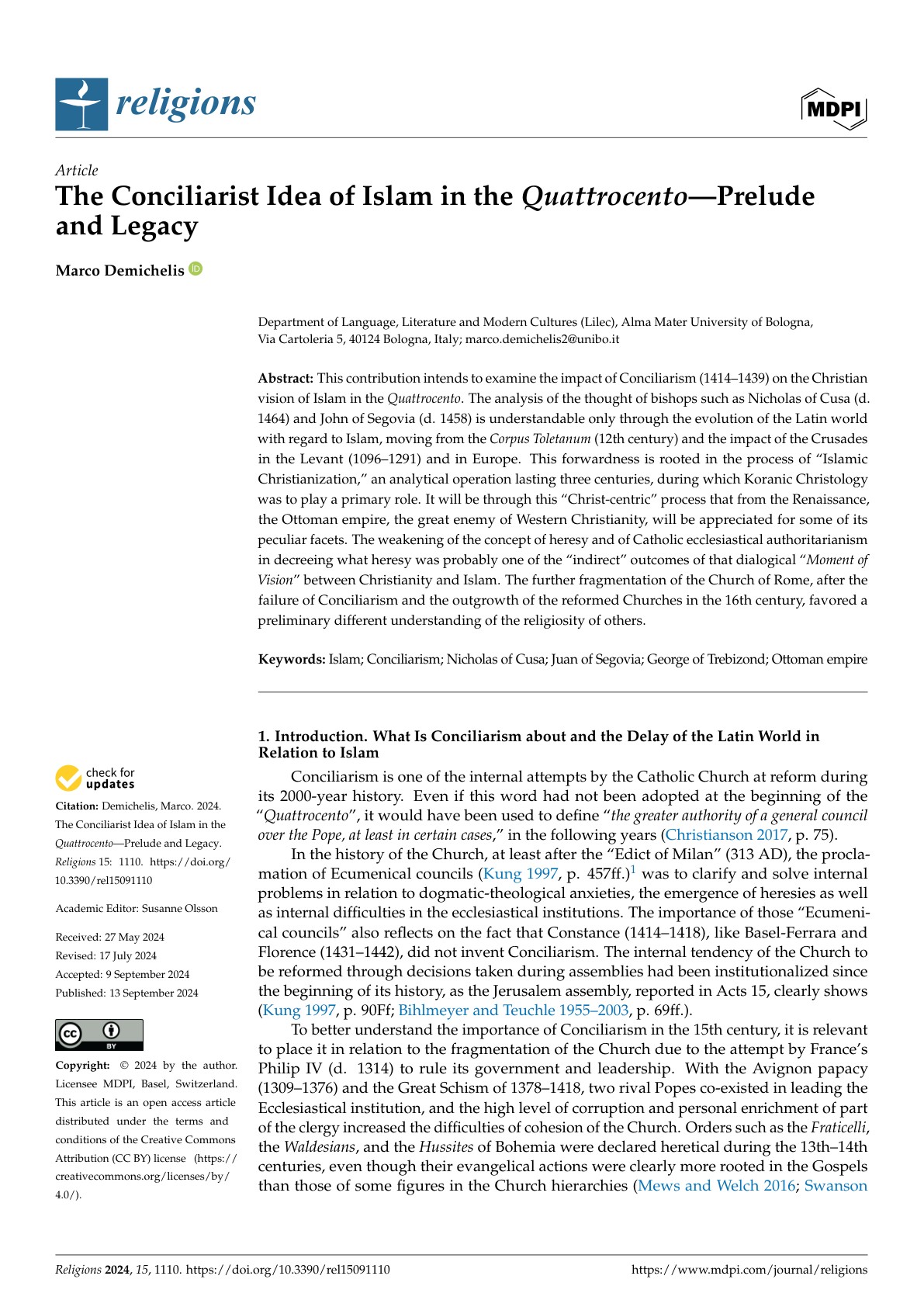
The Conciliarist Idea of Islam in the Quattrocento: Prelude and Legacy
Abstract Published in the journal Religions (vol. 15, no. 9, 2024), this article by Marco Demichelis, Assistant Professor in History of the Islamic World and Islamic Thought at the University of...
publication
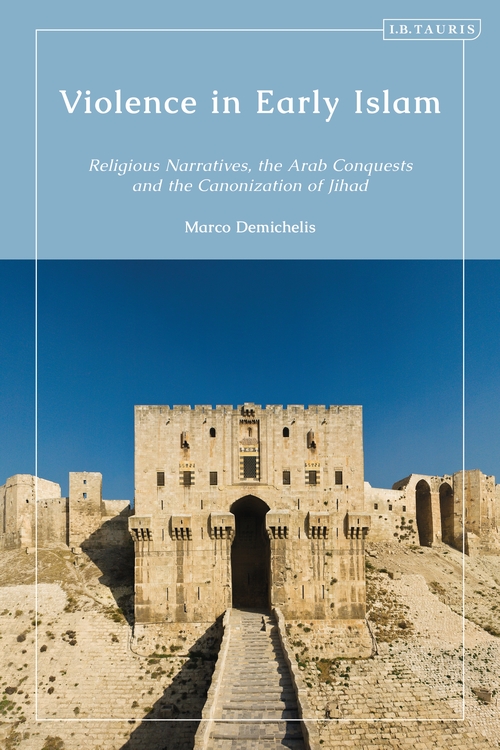
Violence in Early Islam. Religious Narratives, the Arab Conquests and the Canonization of Jihad
Presentation: The concept of jihad holds a prominent place in Islamic thought and history. Beyond its spiritual meanings, the term has historically been associated with the sweeping Arab-Believers ...
article
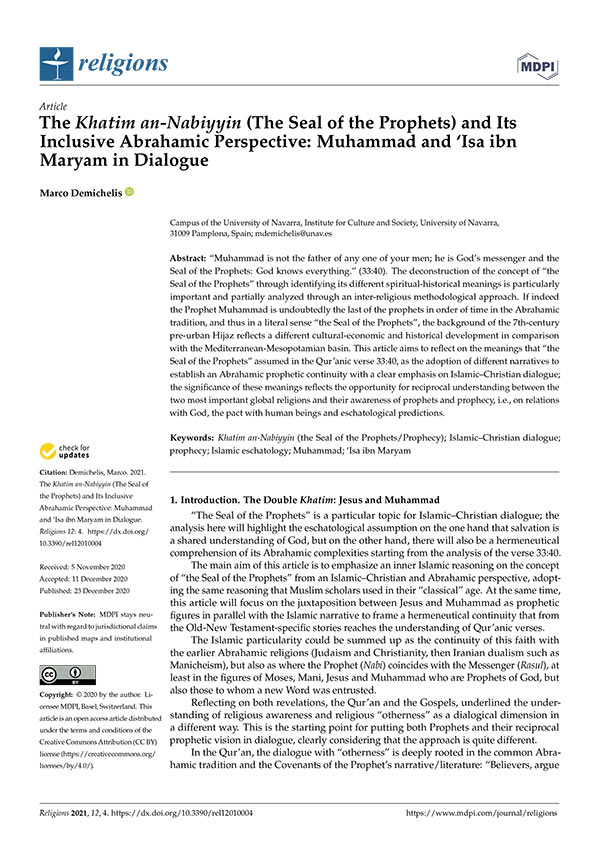
The Khatim an-Nabiyyin (The Seal of the Prophets) and Its Inclusive Abrahamic Perspective: Muhammad and ‘Isa ibn Maryam in Dialogue
Abstract “Muhammad is not the father of any one of your men; he is God’s messenger and the Seal of the Prophets: God knows everything.” (33:40). The deconstruction of the concept of “the Seal of...
publication
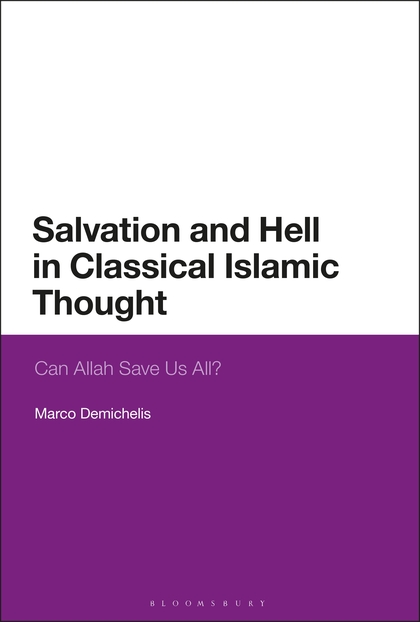
Salvation and Hell in Classical Islamic Thought.
Presentation : Salvation and Hell in Classical Islamic Thought uses classical Islamic sources to trace the development of Islamic eschatology during the formative centuries of Islamic intellectual ...
publication
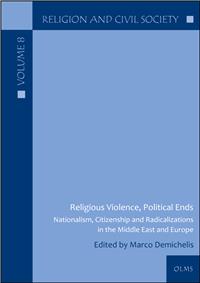
Religious Violence, Political Ends, Nationalism, Citizenship and Radicalizations in the Middle East and Europe
Since antiquity, religious violence based on political motives has been and remains a common practice: the atrocities committed by the Roman Empire against the first Christian communities were quic...

videos
When religion divides the “community”. Dynamics of violence and pacification within Arab Levant
Conference of Marco DEMICHELIS, at the second international Congress of PLURIEL Abstract Since the nineteenth century, the dynamics of inter-religious conflict within the Arab world accentuated...
videos
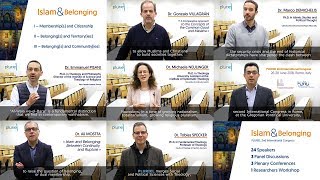
Presentation of the congress “Islam and Belonging” of PLURIEL
With the voices of members of the Scientific Comittee
article
The Mihna. Deconstruction and reconsideration of the Mu’tazilite role in the “Inquisition
Abstract The Miḥna has usually been attributed to the Mu‘tazilite theological school as expression of something unusual, a bid‘ah (Islamic innovation) related to a rationalist group of theologia...
article
The Fate of Others in 14th century Hanbalism
Abstract In a recent publication entitled Ibn Taymiyya’s Theological Ethics, Sophia Vasalou tackles the moral objectivism that Ibn Taymiyya would reworked inspired to the unorthodox thought of M...
Resources related to History
publication
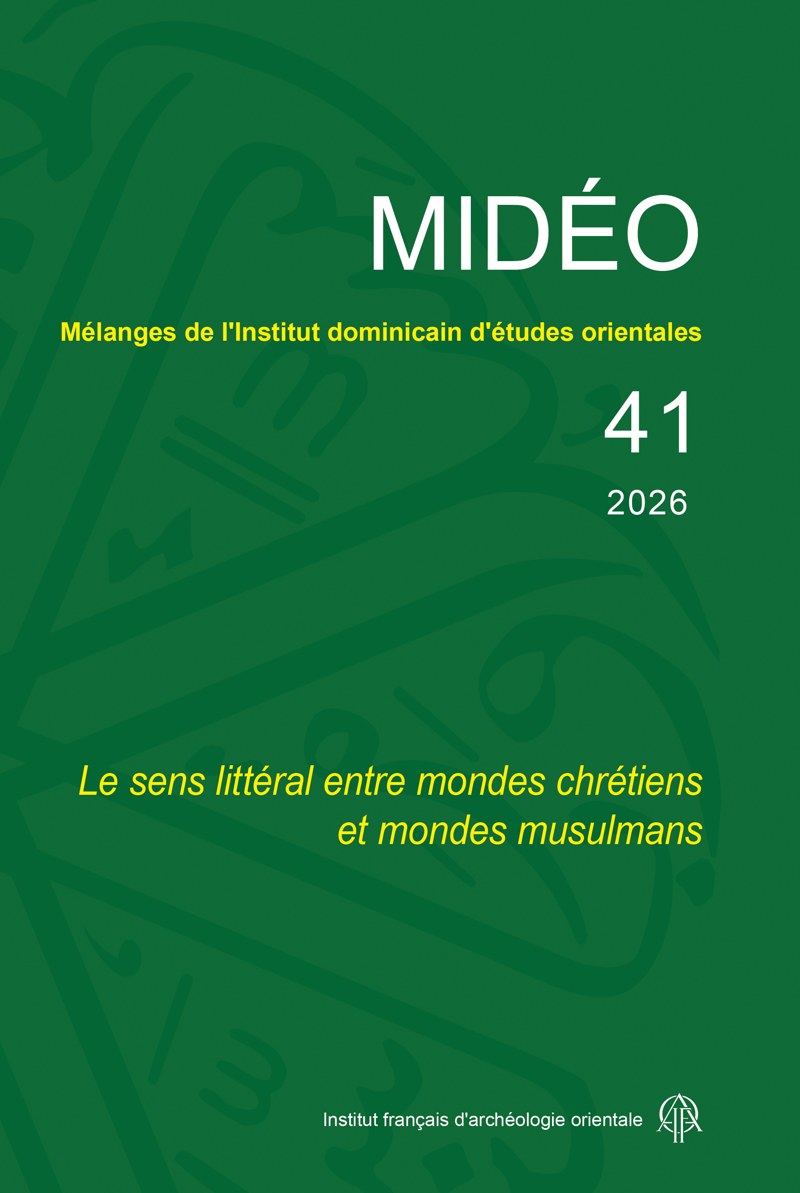
MIDÉO No. 41: The Literal Meaning between Christian Worlds and Muslim Worlds
- Jean Druel
- Emmanuel Pisani
Entitled after its thematic dossier The Literal Meaning between Christian Worlds and Muslim Worlds, issue 41 of the Mélanges de l’Institut dominicain d’études orientales (MIDÉO) address...

article
Experiencing a Mosque Through Photography: Islam As an Ordinary Religion
- Guillaume Chatagny
Abstract Published in 2021 in Visual Ethnography (vol. 10, no. 2) under the title "Experiencing a Mosque Through Photography: Islam As an Ordinary Religion", this article by Guillaume Chatagny, ...

article
Islam Seen through the Work of Aziz al-Azmeh
- Wasim Salman
Abstract Published in Arabic in issue 50 (2024) of Islamochristiana (PISAI, released in April 2025), this essay by Wasim Salman, president of PISAI and director of the journal, examines the rela...

article
Islamic Visions of Jesus: Revelation, Prophecy, and Eschatology
- Antonio Cuciniello
Abstract Published in the collective volume Jerusalem in Memory and Eschatology: Jewish, Christian, and Muslim Visions of the Past and Future of Jerusalem, edited by Emma O'Donnell Polyakov (Blo...

article
The First Council of Nicaea (325) and the Christian-Muslim Dialogue on God’s Unity and Trinity
- Dirk Ansorge
Abstract Published under the original title "Das erste Konzil von Nizäa (325) und der christlich-muslimische Dialog über Gottes Einheit und Dreifaltigkeit" in issue 2/2025 of CIBEDO-Beiträge, th...
publication
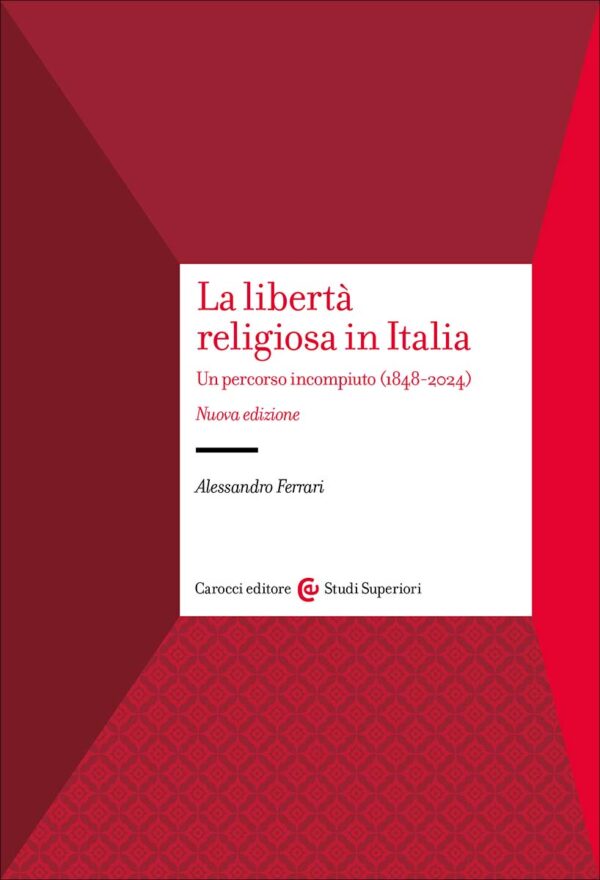
Religious Freedom in Italy. An Unfinished Path (1848-2024)
- Alessandro Ferrari
Published under the original title La libertà religiosa in Italia. Un percorso incompiuto (1848-2024), this synthesis by Alessandro Ferrari, professor of ecclesiastical law and comparative religiou...
article
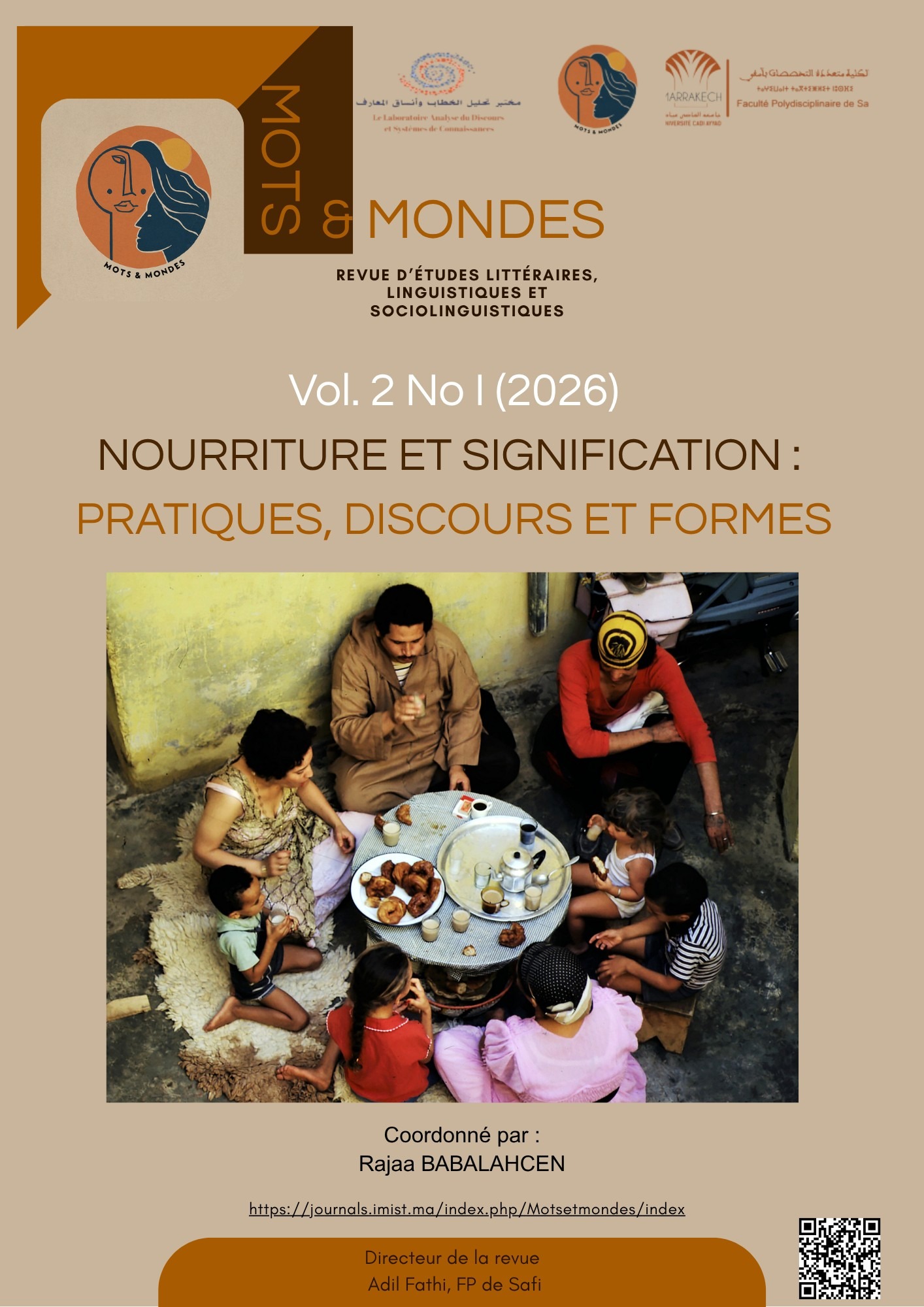
The Table as a Social Language: Food and Norms in al-Ǧāḥiẓ
- Faisal Kenanah
Abstract Published in French in the journal Mots et mondes. Revue d'études littéraires, linguistiques et sociolinguistiques (Cadi Ayyad University, Marrakesh), in the issue "Nourriture et signif...

publication
The Recognition of a Hummingbird. Essays on Interreligious Dialogue and Missionary Work (2007-2025)
- Rémi Caucanas
Published in May 2026 by PISAI (Pontifical Institute for Arabic and Islamic Studies, Rome), this collection brings together the essays of Rémi Caucanas on interreligious dialogue and missionary wor...