

French

The emergence of the Nostra Ætate Declaration at Vatican Council II
“The text of the Declaration on the Church’s Relations with Non-Christian Religions (Nostra Aetate) was undoubtedly one of the final surprises of the Second Vatican Council, because no one had thought of it during the preparation of the Council, although the Catholic world then experienced significant changes in its way of considering the great religions of the world. It is therefore necessary to get an idea of the change in mentality that had already taken place regarding the discernment that Catholics were trying to make of the religion of Muslims, especially since some of the writings did not fail to exert some influence on the Council Fathers. Such a prerequisite makes it possible to better understand how the text of the Declaration appeared before the third session of the Council, knowing several successive drafts to insert into documents that also varied. It was only after these curious adventures that the fourth session took care of assuring him of final drafting, especially as regards the relationship between Christians and Muslims. All these things explain the four divisions of the present inquiry on the subject, for the very commentary on the Declaration and the subsequent use of it by the Popes and the Dicasteries of Rome are the subject of another analysis.”
“Le texte de la Déclaration sur les relations de l’Eglise avec les religions non chrétiennes (Nostra Aetate) a sans doute été une des surprises finales du Concile Vatican II, car nul n’y avait songé lors de la préparation du Concile, bien que le monde catholique ait alors connu des évolutions significatives en sa manière de considérer les grandes religions du monde. Il convient donc de se faire une idée du changement des mentalités qui s’était déjà opéré quant au discernement que les catholiques tentaient de se faire de la religion des musulmans, d’autant plus que certains écrits ne manquèrent pas d’exercer alors quelque influence sur les Pères conciliaires. Un tel préalable permet de mieux comprendre comment le texte de la Déclaration fit son apparition avant la troisième session du Concile, connaissant plusieurs rédactions successives à insérer en des documents qui variaient également. Ce n’est qu’à la suite de ces curieuses aventures que la quatrième session s’occupa de lui assurer une rédaction définitive, surtout en ce qui concerne le rapport des chrétiens avec les musulmans. Toutes choses qui expliquent les quatre divisions de la présente enquête sur le sujet, car le commentaire même de la Déclaration et l’usage qu’en firent ensuite les Papes et les dicastères de Rome relèvent d’une autre analyse.”
Maurice Borrmans
 Download PDF


Resources of this researcher

videos
PISAI from Tunis to Rome 1964-2014
Lecture given at the Institute for Arabic and Islamic Studies (PISAI) in Rome, 22 January 2015.
article
The emergence of the Nostra Ætate Declaration at Vatican Council II
"The text of the Declaration on the Church’s Relations with Non-Christian Religions (Nostra Aetate) was undoubtedly one of the final surprises of the Second Vatican Council, because no one had thou...
article
Muslim morality, Islamic ethics, Šarī’a in situations
Original title : "Morale musulmane, déontologie islamique, Šarī‘a en situations" Sumary Does necessity make legal, in Islam, what is prohibited? It is to this question that this article inten...
article
Massignon, Jesus and Mary, Ḥallāj and Fāṭima
Extract "This admission of the 'Christian re-born' that was then Louis Massignon says quite how decisive were, in his conversion of 1908, the crossed intercessions of Huysmans, Ḥallâj and de Fou...
article
Louis Massignon, Muhammad Hamidullah and his French translation of the Koran
First lines of the introduction "In 1959, in the luxurious collection of the French Book Club, appeared the first translation of the Koran into French made by a Muslim, Mr. Muhammad Hamidullah, ...
publication
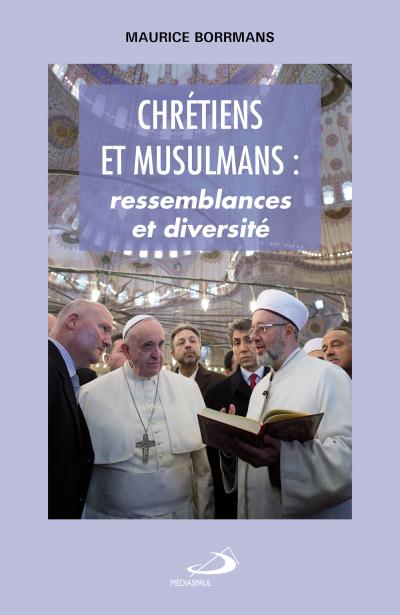
Christians and Muslims: Similarities and Diversity
Publisher Overview Throughout the ages, the Qur’an, the “sacred book”, has often been presented in a polemical form vis-à-vis Jews and Christians, which has given rise to an initi...
Resources related to Muslim-Christian Dialogue
article
Kenneth Cragg and the Event of the Qur’an
- Timo Güzelmansur
Article by Timo Güzelmansur published under the title Kenneth Cragg und das Ereignis des Koran on the theological portal feinschwarz.net (12 June 2026, open access). Timo Güzelmansur presents the A...

article
Leo XIV’s encyclical Magnifica Humanitas and the Pluriel working group on AI-assisted interreligious dialogue
- Wael Saleh
Text by Wael Saleh, researcher at the Université du Québec à Montréal (UQAM) and member of the Pluriel coordination committee. The simultaneous appearance of Leo XIV's encyclical Magnifica Human...

publication
The Recognition of a Hummingbird. Essays on Interreligious Dialogue and Missionary Work (2007-2025)
- Rémi Caucanas
Published in May 2026 by PISAI (Pontifical Institute for Arabic and Islamic Studies, Rome), this collection brings together the essays of Rémi Caucanas on interreligious dialogue and missionary wor...
videos
From Lavigerie to PISAI: The Institutional History of the Missionaries of Africa’s Engagement with Islam
Delivered on 21 May 2026 at the Pontifical Institute for Arabic and Islamic Studies (PISAI) in Rome, this lecture opens the series of conferences marking the institute's centenary (1926-2026). Fr. ...
videos
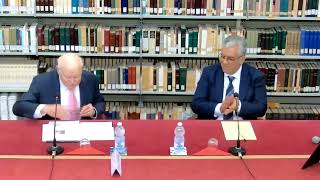
Interreligious Dialogue and Ethnic Nationalisms in the Balkans
At the invitation of PISAI (Pontifical Institute for Arabic and Islamic Studies, Rome) and Georgetown University, Ahmet Alibašić, professor of Islamic civilization at the Faculty of Islamic Studies...
publication
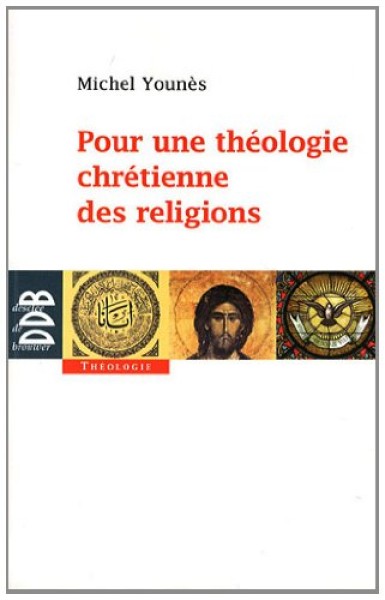
For a Christian Theology of Religions
- Michel Younès
Faced with contemporary religious diversity, how can Christian theology make sense of the place that other religions occupy in God’s design? Michel Younès examines the three traditional ̶...
publication
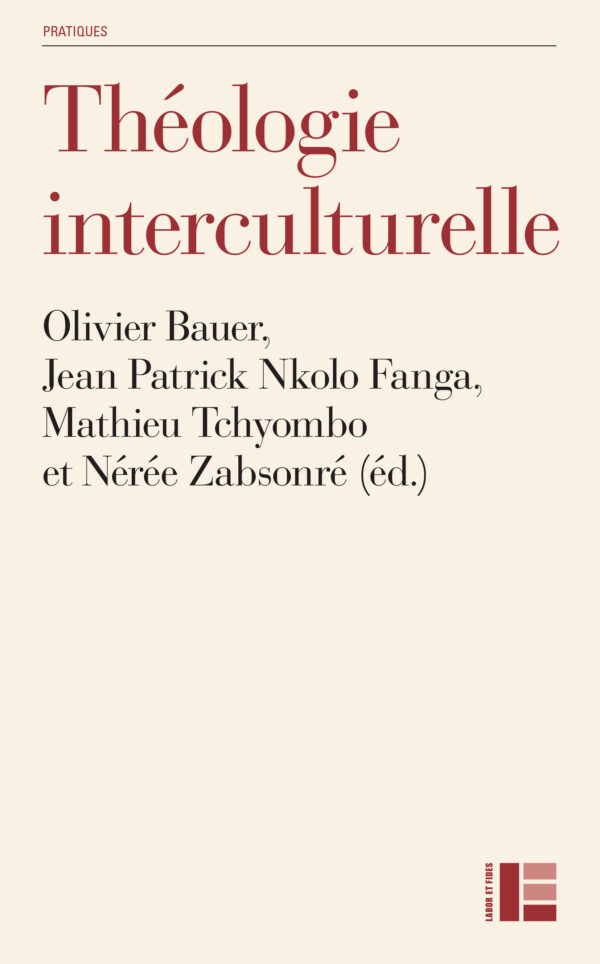
Intercultural Theology
- Jean Patrick Nkolo Fanga
Because every theology is culturally situated, Christian theology is inevitably multicultural. Yet one step remains to be taken: to become intercultural. Crossing languages, contexts, origins, ages...
article
Bells and Muezzin in Harmony: Dialogue with Islam as a Spiritual Responsibility
- Timo Güzelmansur
Article by Timo Güzelmansur published under the title Glocken und Muezzin im Einklang. Der Dialog mit dem Islam als geistliche Verantwortung in Herder Korrespondenz (special issue devoted to Pope L...