
Référence :
Rechtsgeschichte – Legal History Rg 22 (2014) 90-118, online: http://dx.doi.org/10.12946/rg22/090-118

English

The Law of the Other
Abstract
As the Other is indispensable for the construction of self-identity and collective identity, the question of the Other is viscerally linked not only to the question of identity but also to law. Starting from some reflections in philosophy about Otherness and the sociological inquiries of building collective identities a fundamental problem remains: Who is the Other? Or: What does Europe have to gain from rediscovering the History of the Muslim Other and his normative space in order to understand his collective identity and to resituate his Otherness in an inclusive plural albeit value oriented Europe?
There is no doubt that historians recognize the decisive role played by translations and Arab thought for the reception of the heritage of Antiquity and Greek philosophy. But don’t they remain blind about the role of the evolution of the realm of normativity in Europe?
In order to tackle this complex question some Islamic pasts will be remembered in a first step (I). Then a further look is thrown upon Islamic Law in the History of European Law (II), whereas the case of Spain is analysed as a problem of interacting and overlapping legal cultures on the basis of a critical analysis of research traditions (III). New challenges arise for a more complex understanding of a selective collective memory on the one side and the necessity to improve our knowledge of this entangled normative history beyond the case of Al- Andalus on the other side in: Sicily, France, England and East Southern Europe.
Titre original : “The Law of the Other”
Résumé
L’altérité étant indispensable à la construction de l’identité personnelle et collective, la question de l’Autre est intimement liée non seulement à la question de l’identité mais à celle du droit. À partir de quelques réflexions philosophiques sur l’altérité et des enquêtes sociologiques sur la construction des identités collectives, un problème fondamental demeure : qui est l’Autre ? Ou : qu’est-ce que l’Europe a à gagner à redécouvrir l’histoire de l’Autre musulman et son espace normatif pour comprendre son identité collective et resituer son altérité dans une Europe inclusive, plurielle quoiqu’orientée vers certaines valeurs ?
Il ne fait aucun doute que les historiens reconnaissent le rôle décisif joué par les traductions et la pensée arabe dans la réception de l’héritage de l’Antiquité et de la philosophie grecque. Mais ne restent-ils pas aveugles quant au rôle de l’évolution du domaine de la normativité en Europe ?
Afin d’aborder cette question complexe, on rappellera dans un premier temps certains éléments de l’histoire islamique (I). Un nouveau regard sera ensuite porté sur le droit musulman dans l’histoire du droit européen (II), tandis que le cas de l’Espagne sera analysé comme un problème d’interaction et de chevauchement des cultures juridiques sur la base d’une analyse critique des traditions de recherche (III). De nouveaux défis se posent pour une compréhension plus fine d’une mémoire collective sélective d’une part, et d’autre part la nécessité d’améliorer notre connaissance de cette histoire juridique enchevêtrée au-delà du cas d’Al-Andalus avec la Sicile, la France, l’Angleterre et l’Europe du Sud-Est.
بما أنّ الغيريّة أمر ضروري بالنسبة إلى بناء الهويّة الذاتيّة والهوية الجماعيّة، ترتبط هذه المسألة ارتباطًا عميقًا بمسألة الهويّة وبالقانون أيضًا. وبدءًا من بعض الآراء الفلسفيّة حول الغيريّة والاستفسارات الاجتماعيّة حول بناء هويّات جماعيّة، تبقى مشكلة غاية في الأهميّة: من هو الغير؟ أو، ماذا تكسب أوروبا من إعادة استكشاف تاريخ المسلم الغير ومساحته المعياريّة من أجل فهم هويّته الجماعيّة وإعادة موضعة غيريّته في التعدّديّة الشاملة على الرغم من كون أوروبا قارة توجّهها القيمة.
لا شكّ في أنّ المؤرّخين يدركون الدور الحاسم الذي تؤدّيه الترجمات والأفكار العربيّة بالنسبة إلى استقبال الإرث المتبقي من العصور القديمة والفلسفة اليونانيّة. ولكن، هل يدركون أهميّة الدور الذي تؤدّيه في تطوّر النظام المعياري في أوروبا؟
بغية معالجة هذه المسألة المعقّدة، يجب تذكّر جزء من الماضي الإسلامي كخطوة أولى (I)، ثمّ إلقاء نظرة إضافيّة على القانون الإسلامي في تاريخ القانون الأوروبي (II)، في حين أنّ حالة إسبانيا قد حُلِّلت كمشكلة تفاعلٍ وتداخل بين الثقافات القانونيّة على أساس التحليل الحاسم للتقاليد البحثيّة (III). وتبرز تحدّيات جديدة عند محاولة فهم الذاكرة الجماعيّة الانتقائيّة من جهة، وضرورة تحسين معارفنا بهذا التاريخ المعياري المتشابك خارج حالة الأندلس من الجهة الأخرى في كلّ من: سيسيليا، وفرنسا، وإنكلترا، وشرق جنوب أوروبا.
 Download PDF


Resources of this researcher

videos
The Question of Otherness in Classical Islam
Argument: How did Muslims represent the other? Here is a questioning overloaded with history, memory and narrative Islamic identity difficult to decode. Fourteen long centuries of conquests and def...
article
The Ḏhimmī as the Other of Multiple Convivencias in al-Andalus
The figure of ḏhimmī is certainly the most emblematic juristic figure in the history of Islamic law. Strangely, it also has the juristic status of being the most ambiguous and complex, as it lacks a ...
article
The Law of the Other
Abstract As the Other is indispensable for the construction of self-identity and collective identity, the question of the Other is viscerally linked not only to the question of identity but also...
Resources related to Religious Pluralism
article
Wael Saleh: “Recognising Without Confining, to Better ‘De-other’ the Public Debate”
- Wael Saleh
In an op-ed published on 20 July 2026 by Le Devoir, Wael Saleh, a member of the scientific committee of Pluriel, puts forward a new concept for contemporary democratic debate: "de-othering" (in Fre...

article
Leo XIV’s encyclical Magnifica Humanitas and the Pluriel working group on AI-assisted interreligious dialogue
- Wael Saleh
Text by Wael Saleh, researcher at the Université du Québec à Montréal (UQAM) and member of the Pluriel coordination committee. The simultaneous appearance of Leo XIV's encyclical Magnifica Human...
videos
Interreligious Dialogue and Ethnic Nationalisms in the Balkans
At the invitation of PISAI (Pontifical Institute for Arabic and Islamic Studies, Rome) and Georgetown University, Ahmet Alibašić, professor of Islamic civilization at the Faculty of Islamic Studies...
publication
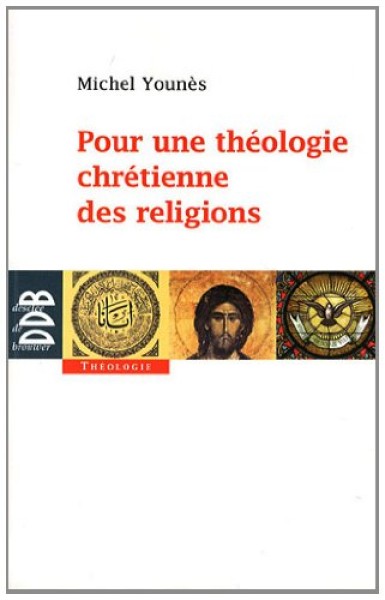
For a Christian Theology of Religions
- Michel Younès
Faced with contemporary religious diversity, how can Christian theology make sense of the place that other religions occupy in God’s design? Michel Younès examines the three traditional ̶...

publication
Intercultural Theology
- Jean Patrick Nkolo Fanga
Because every theology is culturally situated, Christian theology is inevitably multicultural. Yet one step remains to be taken: to become intercultural. Crossing languages, contexts, origins, ages...
publication
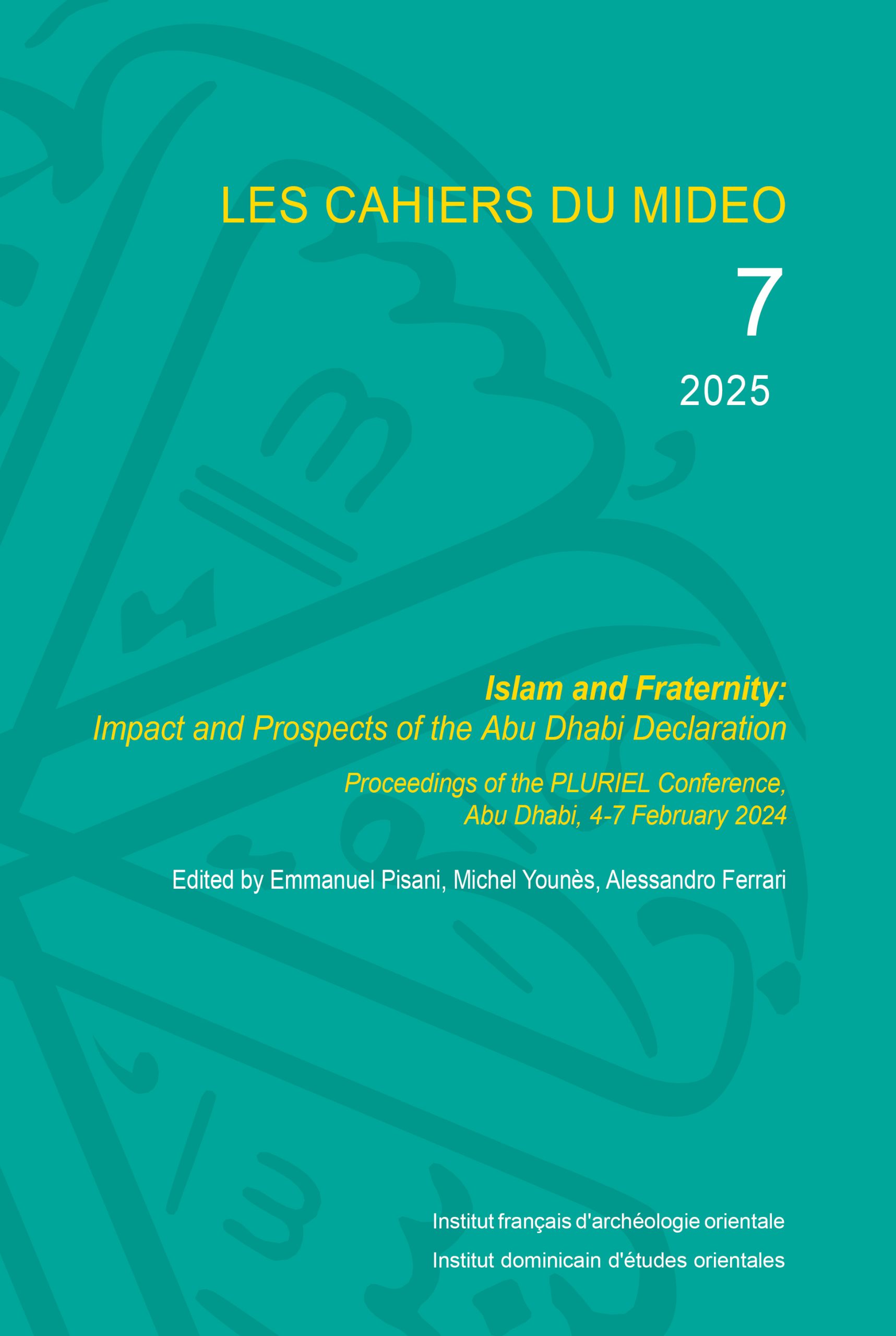
Islam and Fraternity: Impact and Prospects of the Abu Dhabi Declaration
The volume dedicated to the conference “Islam and Fraternity”, held in Abu Dhabi from February 4 to 7, 2024, under the auspices of the PLURIEL network, in partnership with Trends, a research center...

publication
Dialogue for a More Livable World: Toward an Ethics of Encounter
- Mohamed-Ali Mostfa
How can we live in a climate of mistrust, trapped in identity-based withdrawal, and paralyzed by an uncertain future? On what basis can we open new paths to ease suffering—perhaps even reenchant ou...
videos
Inaugural Lecture for the Chair in Mediterranean Studies, Religions and Societies
- Dominique Avon
Lecture given by Professor Dominique Avon on October 13, 2025, at the Pontifical Institute for Arabic and Islamic Studies (PISAI).