
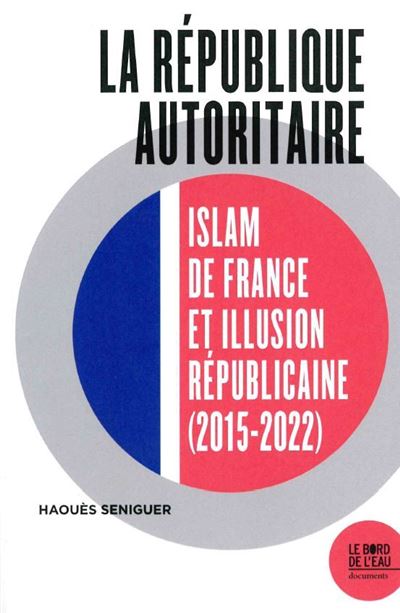
Publisher : Le Bord de l'eau - Lormont

French


The authoritarian republic. Islam in France and the Republican illusion
Publisher’s presentation
The logic of suspicion has become the compass of the French state.
Since 2015 and the attacks of January and November, the preventive and repressive policy of the State has been inflected, through a whole series of new legal devices and means, to the detriment of individual and collective liberties, and to the great displeasure of human rights organisations. Authoritarian practices, which can be seen here and there, have developed and spread from the centres of institutional power, with the direct or indirect support of certain associative actors, activists and, more rarely, some researchers.
The deployment of a security arsenal is neither a novelty nor an incongruity in a democracy, especially when exceptionally serious and deadly phenomena occur. On the other hand, what is certainly new is the target of the repression; today it is concentrated more than in the past on minority groups, perceived as deviant, or supposedly more deviant than others, because of their origin and presumed religion, despite the denials and the conventional speeches.
It is then that republicanism falters, its principles crumble on the altar of, among other things, a blatant instrumentalisation of secularism, transformed by some into a disciplinary tool for bodies and minds, or even a catechism without a Church. It is therefore no longer just the law that is being tightened, but the political discourse that is becoming more rigid, more martial and moralising. The state, its representatives and its relays no longer target exclusively the fomenters and perpetrators of acts of terrorism. An overbidding can now be seen in the appreciation of lifestyles and the content of religious doctrines professed and taught in particular in Muslim circles. A logic of suspicion is thus being insinuated and established, in which the media regularly participate, breaking with the ethics of responsibility. This logic of suspicion bypasses the legalism embodied by Muslim actors and social agents, who are increasingly called upon to prove their republican attachment, even though the financial and economic elites, supported or endorsed by the State, have long since seceded.
Présentation de l’éditeur
La logique du soupçon est devenue la boussole de l’État français.
Depuis 2015 et les attentats de janvier et novembre, la politique préventive et répressive de l’État s’est infléchie, par toute une série de nouveaux dispositifs et moyens légaux, au détriment des libertés individuelles et collectives, et au grand dam des organisations de défense des droits humains. Des pratiques autoritaires, repérables çà et là, se sont développées et étendues depuis les centres du pouvoir institutionnel, avec le concours direct ou indirect de certains acteurs associatifs, activistes et, plus rarement, quelques chercheurs.
Le déploiement d’un arsenal sécuritaire n’est ni une nouveauté ni une incongruité en démocratie, surtout lorsque surviennent des phénomènes exceptionnellement graves et meurtriers. En revanche, ce qui est assurément nouveau, c’est la cible de la répression ; celle-ci se concentre aujourd’hui plus qu’hier sur des groupes minoritaires, perçus comme déviants, ou supposément plus déviants que d’autres, à raison de l’origine et de la religion présumée, malgré les dénégations et les discours convenus.
C’est alors que le républicanisme vacille, ses principes s’effritent sur l’autel entre autres d’une instrumentalisation flagrante de la laïcité, transformé par certains en outil disciplinaire des corps et des esprits, voire en catéchisme sans Église. Ce n’est donc plus seulement la loi qui se durcit, mais véritablement le discours politique qui se rigidifie, se fait plus martial et moralisateur. L’État, ses représentants et ses relais ne visent plus exclusivement les fomenteurs et auteurs d’actes de terrorisme. Une surenchère se lit désormais dans l’appréciation des styles de vie et le contenu des doctrines religieuses professées et enseignées en particulier dans les milieux musulmans. S’insinue et s’installe ainsi une logique du soupçon à laquelle participent régulièrement des médias en rupture avec l’éthique de responsabilité. Cette logique de la suspicion passe outre le légalisme incarné par les acteurs et agents sociaux musulmans, sommés toujours davantage de faire la preuve de leur attachement républicain alors même que les élites financières et économiques, elles, soutenues ou adoubées par l’État, ont fait sécession depuis longtemps.


 publisher's website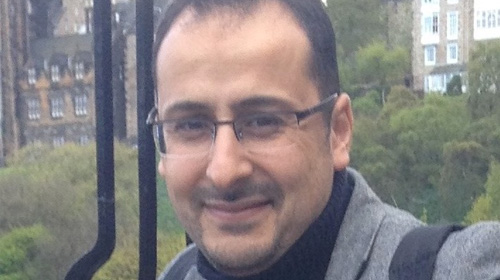
Resources of this researcher
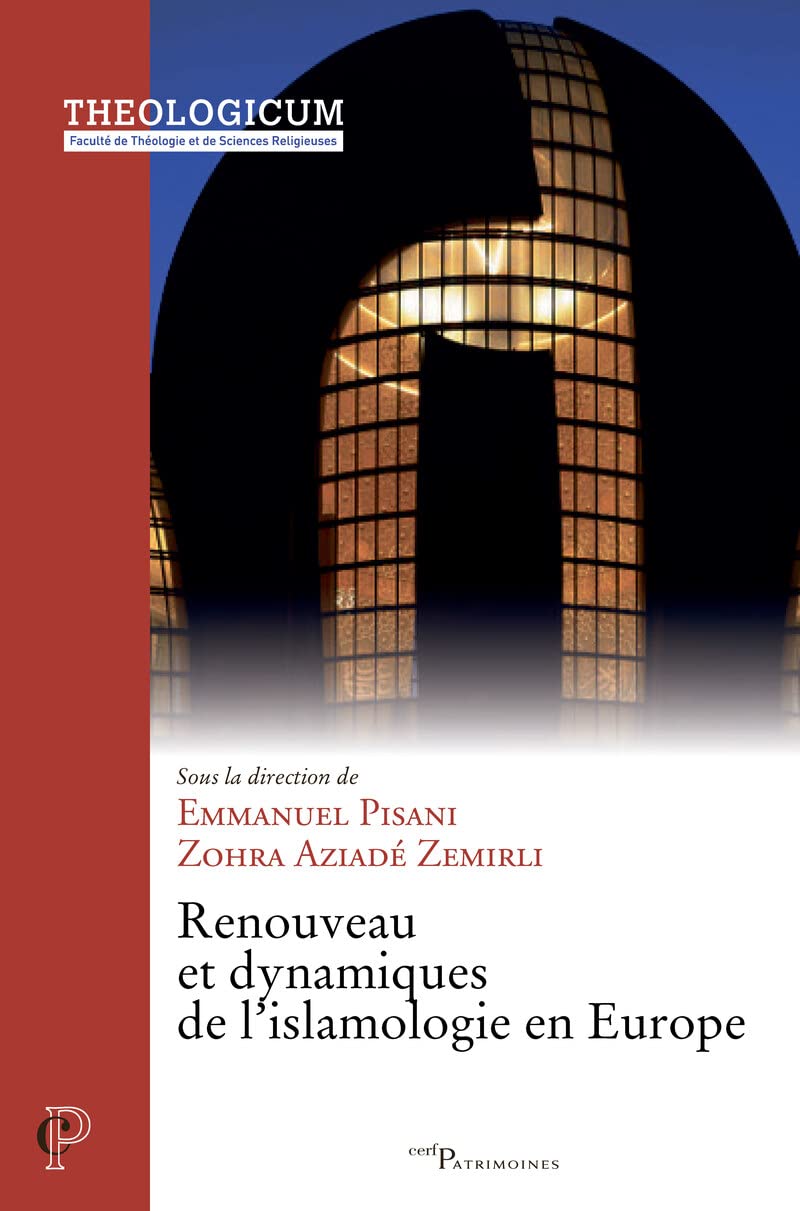
publication
Revival and Dynamics of Islamic Studies in Europe
“In a troubled international context where Islam is sometimes defined as an ideological marker of many conflicts, academic research drawing on history, sociology, and political science has mu...
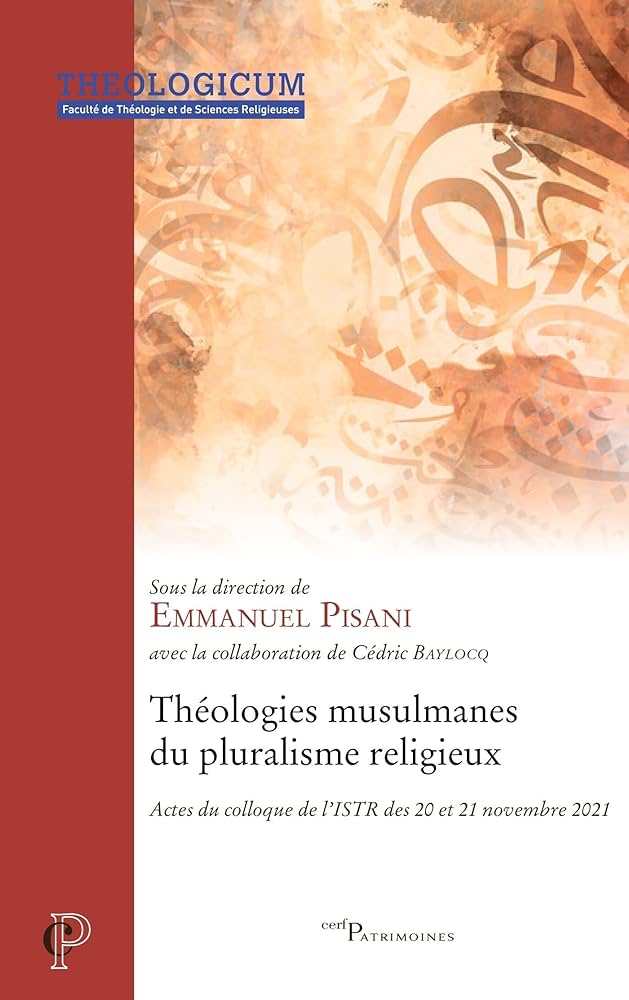
publication
Muslim Theologies of Religious Pluralism. Proceedings of the Colloquium Held on November 20 and 21, 2021
The laboratory of the Institute of Science and Theology of Religions of Paris (Theologicum, ICP) presents here the outcome of four years of research on the theme of religious pluralism in Islam. Wh...
publication
The authoritarian republic. Islam in France and the Republican illusion
Publisher’s presentation The logic of suspicion has become the compass of the French state. Since 2015 and the attacks of January and November, the preventive and repressive policy of the Sta...

videos
Who is an authority in Islam in Switzerland and France?
Elements of answers to a question studied by the research group on the theme "Authority and regulation in Islam" of the Centre for the Study of Cultures and Religions (CECR, UCLy) The question i...

videos
Authority and Regulation in Islam – Research group in Lyon
Presentation of the research group on "Authority and Regulation in Islam" of the Centre for Cultural and Religious Studies (CECR, UCLy) with Michel Younès, Erwin Tanner and Haoues Seniguer. The gr...
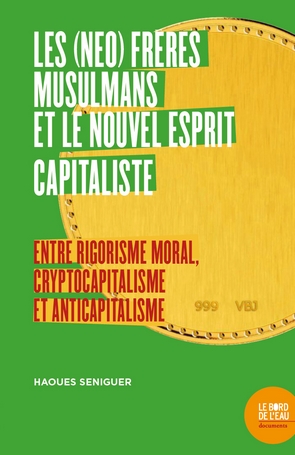
publication
The (neo) Muslim Brothers and the new capitalist spirit
-

videos
The Neo-Salfist galaxy: apoliticism in trompe-l’oeil
First International Congress of the University Platform for Research on Islam in Europe and Lebanon (PLURIEL): geopolitical axis Speaker: Haoues Seniguer, Lecturer in Political Science at Scienc...
Resources related to Islam in Europe
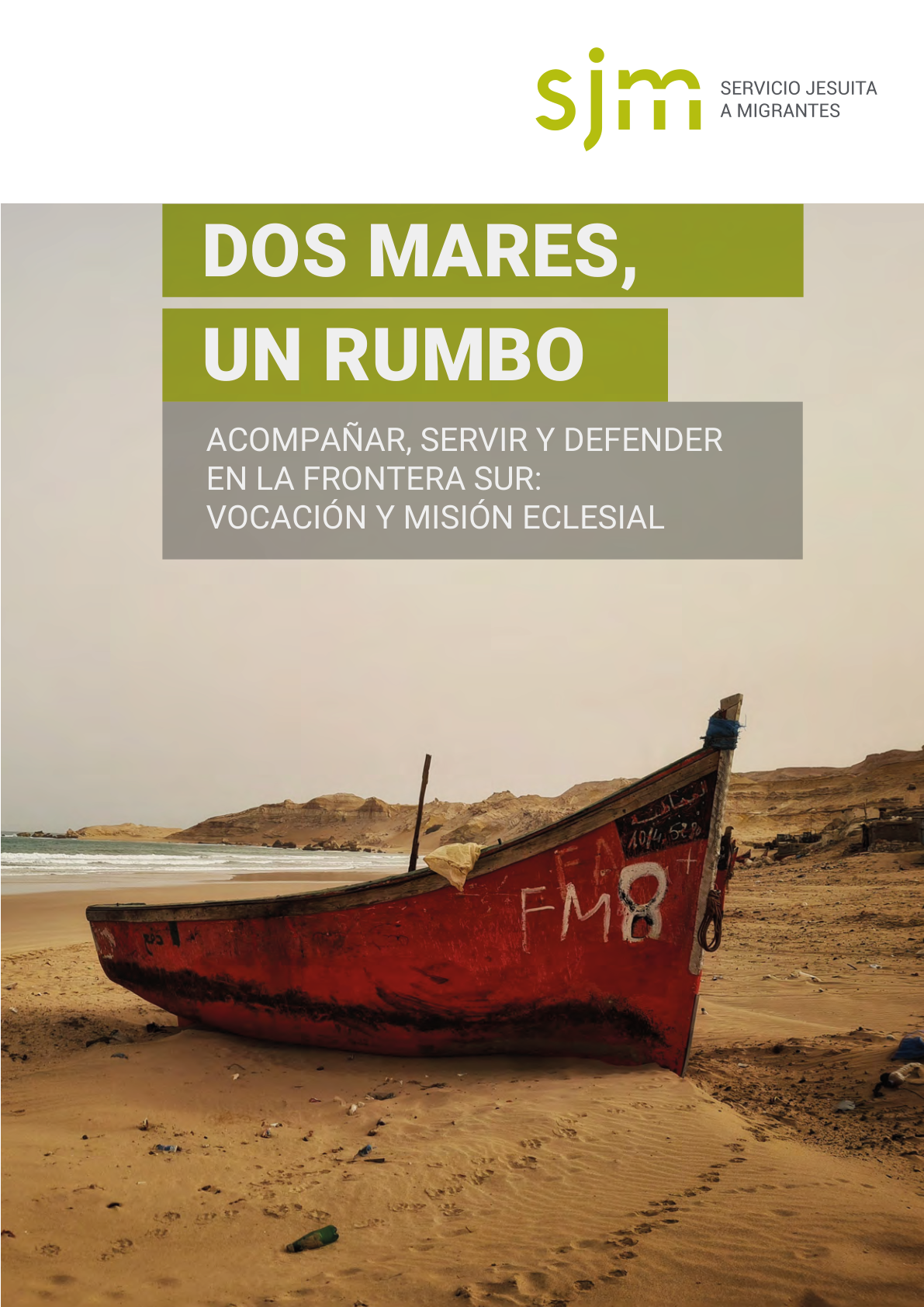
article
Two Seas, One Course: The 2026 Jesuit Migrant Service Report on Spain’s Southern Border
- Josep Buades
The annual report of the Jesuit Migrant Service (SJM), the social apostolate body of the Society of Jesus in Spain, written by Josep (Pep) Buades Fuster, examines the migratory dynamics of Spain’s ...
videos
From Lavigerie to PISAI: The Institutional History of the Missionaries of Africa’s Engagement with Islam
Delivered on 21 May 2026 at the Pontifical Institute for Arabic and Islamic Studies (PISAI) in Rome, this lecture opens the series of conferences marking the institute's centenary (1926-2026). Fr. ...
videos
Interreligious Dialogue and Ethnic Nationalisms in the Balkans
At the invitation of PISAI (Pontifical Institute for Arabic and Islamic Studies, Rome) and Georgetown University, Ahmet Alibašić, professor of Islamic civilization at the Faculty of Islamic Studies...
article
“The Reception of Rūmī’s Work in France: Cultural Mediations, Symbolic Transfers and the Recomposition of Belief”, by Khalid El Khadiri
- Khalid El Khadiri
In the journal La Clé des Langues (ENS de Lyon, March 2026), Khalid El Khadiri, a PhD candidate in the history and sociology of religions at the École pratique des hautes études (EPHE), examines th...

videos
Political and religious anarchism in the musical forms of rebel Islam: from rap to taqwacore
Paper presented at the fifth international congress of the University Platform for Research on Islam (Pluriel), held in Cordoba from 10 to 14 February 2026 on the theme "Ethics and Aesthetics in Is...

videos
From regulating religious sound to transforming it into light: public, legal and architectural debates on the adhān
Paper presented at the fifth international congress of the University Platform for Research on Islam (Pluriel), held in Cordoba from 10 to 14 February 2026 on the theme "Ethics and Aesthetics in Is...
article
The Immigrant-Origin Population in Spain (2025)
- Josep Buades
Report of the Jesuit Migrant Service (SJM), prepared by Josep (Pep) Buades Fuster, offering a statistical portrait of the immigrant-origin population in Spain. It provides a framework for understan...
article
The Immigrant-Origin Population in the Canary Islands (2025)
- Josep Buades
Report of the ECCA Social Foundation, prepared by Josep (Pep) Buades Fuster, on the immigrant-origin population in the Canary Islands, the main gateway of the Atlantic route. It documents a migrato...