


English

Basra, cradle of Islamic culture. An analysis of the urban area that was the early home of Islamic Studies
Abstract
Several factors account for the primacy of Baúra in Islamic studies, some attributable to objective reasons, some to prevailing anthropological, historical and political conditions. Baúra is the only VII-century town that can be considered really free from external constraints, an urban area that had always tried to make its decisions alone. For this reason, it had been defeated often by Umayyad or ‘Abbâsid armies, as during the Zubairid phase (683-691/64-72) or throughout al-Nafs al-Zakiyya uprising in 762/145. Baúra’s defeat as a political factor in the first century, however, allowed it to gain instead a significant role in the rise of early Islamic studies, greater even than that of the capital, Damascus. The Arab Bedouin urbanization process and the simultaneous phase of Islamization brought the appeasement of the Arab pre-Islamic feeling of freedom and independence along with the first Muslim elaboration of religious studies. Baúra’s primacy in Islamic studies un-derlined the lack of distinction concerning the orthodoxy and the unorthodoxy of the singular religious contribution and without censorship because novelty and freshness do not directly imply undesirable innovation (bid‘a). This situation fostered, on the one hand, the emergence of a significant process of elaboration within cultural and religious-Islamic studies, which initially was not able to distinguish the mystics from Tradition, or Quranic studies from theology, and, subsequently, the attempt to elaborate an Islamic ethical society which rejected the division of the Umma (the Islamic community after the fitna al-Kubrâ) and, as such, could promote a process of social moralization completely detached from political intrigue. This quietist approach is exemplified by Baúra’s pre-Sufism movements, early theological schools, the presence of violent and non-violent Æarióites sects and the lack of aüâdíth makers against religious adversaries. Finally, Baúra is the urban area in which free will had been reconciled within God’s transcendence without having considered disrespectful of ‘Allâh’s power, but in full compliance with his justice.
Titre original : “Basra, cradle of Islamic culture. An analysis of the urban area that was the early home of Islamic Studies”
Résumé
Plusieurs facteurs expliquent la primauté de Baúra dans les études islamiques, certains attribuables à des raisons objectives, certains à des conditions anthropologiques, historiques et politiques dominantes. Baúra est la seule ville du VIIe siècle qui peut être considérée comme réellement libre des contraintes extérieures, une zone urbaine qui a toujours essayé de prendre ses propres décisions. Pour cette raison, il a été vaincu souvent par les armées omeyyades ou abbassides, comme pendant la phase Zubairid (683-691/64-72) ou tout au long du soulèvement al-Nafs al-Zakiyya en 762/145. La défaite de Baúra, comprise comme facteur politique au premier siècle, cependant, lui a permis de gagner au contraire un rôle significatif dans la montée des premières études islamiques, plus grande même que celle de la capitale, Damas. Le processus d’urbanisation des Bédouins arabes et la phase simultanée de l’islamisation ont apporté l’apaisement du sentiment pré-islamique arabe de liberté et d’indépendance avec la première élaboration musulmane d’études religieuses. La primauté de Baúra dans les études islamiques a mis en évidence le manque de distinction concernant l’orthodoxie et l’hétérodoxie de la contribution religieuse singulière et sans censure, car la nouveauté et la fraîcheur n’impliquent pas directement une innovation indésirable (bid’a). Cette situation a favorisé, d’une part, l’émergence d’un processus significatif d’élaboration dans les études culturelles et religieuses islamiques, qui n’a d’abord pas été en mesure de distinguer les mystiques de la Tradition, ou études coraniques de la théologie, et, par la suite, la tentative d’élaborer une société islamique éthique qui a rejeté la division de l’Umma (la communauté islamique après le fitna al-Kubrâ) et, en tant que telle, pourrait promouvoir un processus de moralisation sociale complètement détaché de l’intrigue politique. Cette approche silencieuse est illustrée par les mouvements pré-soufistes de Baúra, les premières écoles théologiques, la présence de sectes æarióites violentes et non-violentes et le manque d’aüâdíth mak-ers contre les adversaires religieux. Enfin, Baúra est l’espace urbain dans lequel le libre arbitre a été réconcilié dans la transcendance de Dieu sans avoir considéré comme irrespectueux le pouvoir d’Allah, mais en pleine conformité avec sa justice.
 Download PDF

Resources of this researcher
article
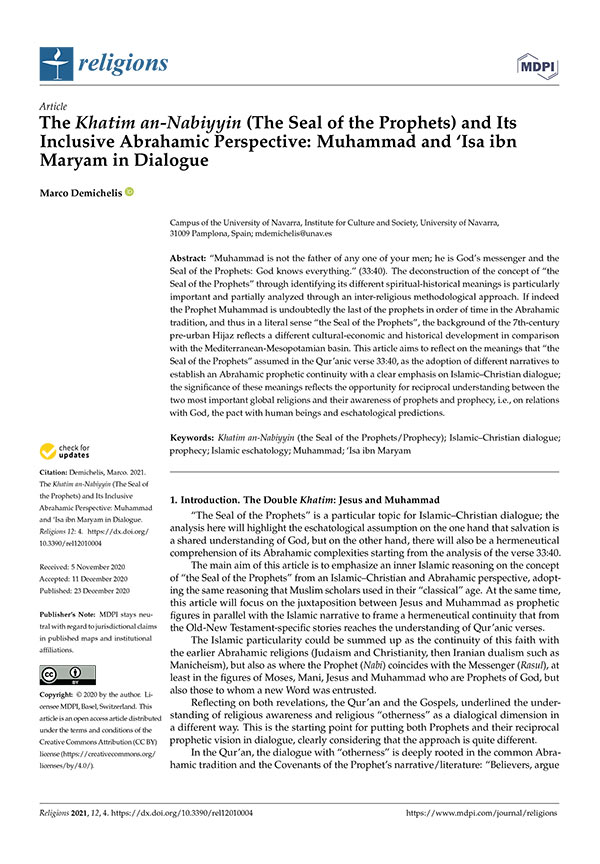
The Khatim an-Nabiyyin (The Seal of the Prophets) and Its Inclusive Abrahamic Perspective: Muhammad and ‘Isa ibn Maryam in Dialogue
Abstract “Muhammad is not the father of any one of your men; he is God’s messenger and the Seal of the Prophets: God knows everything.” (33:40). The deconstruction of the concept of “the Seal of...
publication
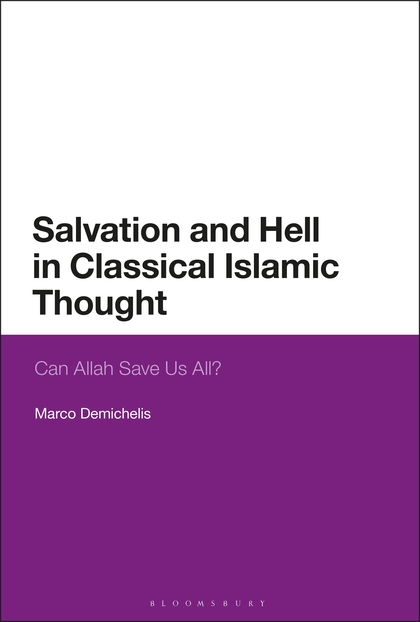
Salvation and Hell in Classical Islamic Thought.
Presentation : Salvation and Hell in Classical Islamic Thought uses classical Islamic sources to trace the development of Islamic eschatology during the formative centuries of Islamic intellectual ...
publication
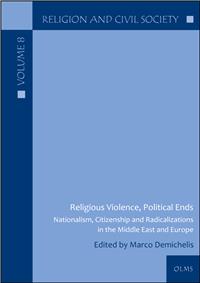
Religious Violence, Political Ends, Nationalism, Citizenship and Radicalizations in the Middle East and Europe
Since antiquity, religious violence based on political motives has been and remains a common practice: the atrocities committed by the Roman Empire against the first Christian communities were quic...

videos
When religion divides the “community”. Dynamics of violence and pacification within Arab Levant
Conference of Marco DEMICHELIS, at the second international Congress of PLURIEL Abstract Since the nineteenth century, the dynamics of inter-religious conflict within the Arab world accentuated...
videos
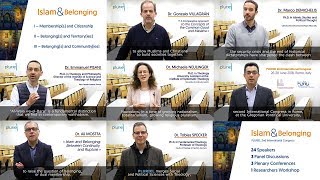
Presentation of the congress “Islam and Belonging” of PLURIEL
With the voices of members of the Scientific Comittee

article
The Mihna. Deconstruction and reconsideration of the Mu’tazilite role in the “Inquisition
Abstract The Miḥna has usually been attributed to the Mu‘tazilite theological school as expression of something unusual, a bid‘ah (Islamic innovation) related to a rationalist group of theologia...
article
The Fate of Others in 14th century Hanbalism
Abstract In a recent publication entitled Ibn Taymiyya’s Theological Ethics, Sophia Vasalou tackles the moral objectivism that Ibn Taymiyya would reworked inspired to the unorthodox thought of M...
article
The Oromo and the historical process of Islamisation in Ethiopia
Abstract The historical interaction between Islam and Christianity in the Horn of Africa is profoundly connected with the region’s specifi c historical, linguistic and cultural characteristics. ...
article
The historical debate on secularisation between F. Antun and M. Abduh.
Full title : 'The historical debate on secularisation between F. Antun and M. Abduh. God's absolutism and Islam's irrationality as cornerstones of orientalist islamic-christian dispute during the N...
Resources related to History

publication
The Recognition of a Hummingbird. Essays on Interreligious Dialogue and Missionary Work (2007-2025)
- Rémi Caucanas
Published in May 2026 by PISAI (Pontifical Institute for Arabic and Islamic Studies, Rome), this collection brings together the essays of Rémi Caucanas on interreligious dialogue and missionary wor...
videos
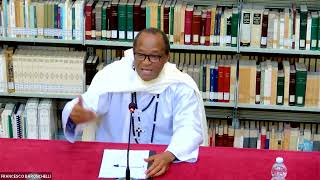
From Lavigerie to PISAI: The Institutional History of the Missionaries of Africa’s Engagement with Islam
Delivered on 21 May 2026 at the Pontifical Institute for Arabic and Islamic Studies (PISAI) in Rome, this lecture opens the series of conferences marking the institute's centenary (1926-2026). Fr. ...
publication
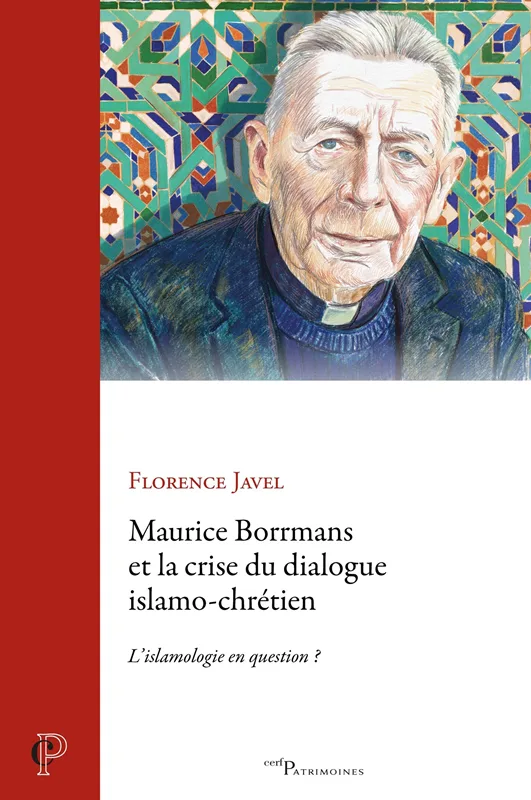
Maurice Borrmans and the Crisis of Christian-Muslim Dialogue. Islamic studies in Question?
- Florence Javel
In 2025-2026, we mark the sixtieth anniversary of the Second Vatican Council and of the declaration Nostra aetate (28 October 1965). One century earlier, in October 1925, Maurice Borrmans was born ...
publication
Islam and Muslims. Doctrines, Schools of Thought, and Current Trends
- Michel Younès
Publication date: April 16, 2026. Islam, as a historical, religious, and civilizational reality, is difficult to define. It can be perceived as a form of political governance, an expression of fait...
publication
Canon and Censorship in Islamic Intellectual History
- Amir Dziri
Published in De Gruyter’s series “Islam: Thought, Culture, and Society” (vol. 16, 2026), this collective volume is edited by Mohammad Gharaibeh and Bacem Dziri (Humboldt University of Berlin)...

videos
Maurice Borrmans (1925-2017), an Islamologist Defending Christian-Muslim Dialogue
- Florence Javel
On 19 February 2026, in the Maurice Borrmans Library of the Pontifical Institute for Arabic and Islamic Studies (PISAI) in Rome, Florence Javel, who holds a PhD in theology from the Catholic Univer...

videos
Landscape and architecture as occasions of contemplation and of interreligious dialogue in the travel narratives of the Sufi ʿAbd al-Ghanī al-Nābulusī
Paper presented at the fifth international congress of the University Platform for Research on Islam (Pluriel), held in Cordoba from 10 to 14 February 2026 on the theme "Ethics and Aesthetics in Is...

videos
Aesthetics of living together: visualising an Islamic ethics of the other in al-Andalus
Paper presented at the fifth international congress of the University Platform for Research on Islam (Pluriel), held in Cordoba from 10 to 14 February 2026 on the theme "Ethics and Aesthetics in Is...