
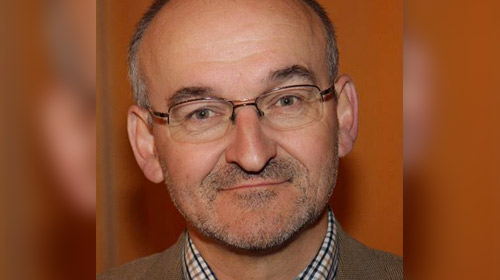

“The Mustard Seed Keeps Growing: Sixty Years of Nostra aetate”, by Roman A. Siebenrock
To mark the sixtieth anniversary of the conciliar declaration Nostra aetate (28 October 1965), Roman A. Siebenrock, professor emeritus of dogmatic theology at the University of Innsbruck, revisits the significance of this text, the shortest of the Second Vatican Council, in an essay published on the theological platform feinschwarz.net.
Taking up the image of the mustard seed, borrowed from Jules Isaac and Cardinal Bea, who shaped the text, he shows how this small conciliar seed has never ceased to grow. Interreligious dialogue appears here not as a tactic or an instrument, but as “a way of life”, rooted in the way one looks at others in the light of Christ.
An entire section is devoted to Islam and Muslims. Siebenrock recalls the Council’s major breakthrough in acknowledging that Muslims “adore with us the one God” and that “God has spoken to them”, while pointing to a persistent gap: to this day, no magisterial text has pronounced on the status of the Qur’an or the place of the Prophet Muhammad, a theological lacuna he calls to be addressed. He stresses, finally, that dialogue presupposes certain conditions, foremost among them religious freedom recognised as a right guaranteed by the state, and not as mere tolerance.
À l’occasion du soixantième anniversaire de la déclaration conciliaire Nostra aetate (28 octobre 1965), Roman A. Siebenrock, professeur émérite de théologie dogmatique à l’université d’Innsbruck, revient sur la portée de ce texte, le plus court du concile Vatican II, dans un essai publié sur la plateforme théologique feinschwarz.net.
Reprenant l’image du grain de sénevé, empruntée à Jules Isaac et au cardinal Bea, artisans du texte, il montre comment cette petite semence conciliaire n’a cessé de croître. Le dialogue interreligieux y est présenté non comme une tactique ou un instrument, mais comme « une manière de vivre », enracinée dans le regard porté sur autrui à la lumière du Christ.
Une section entière est consacrée à l’islam et aux musulmans. Siebenrock rappelle l’avancée majeure du concile, qui reconnaît que les musulmans « adorent avec nous le Dieu unique » et que « Dieu leur a parlé », tout en pointant un manque persistant : à ce jour, aucun texte magistériel ne s’est prononcé sur le statut du Coran ni sur la place du prophète Muhammad, lacune théologique qu’il appelle à combler. Il souligne enfin que le dialogue suppose des conditions, au premier rang desquelles la liberté religieuse reconnue comme un droit garanti par l’État, et non comme une simple tolérance.
بمناسبةِ الذكرى الستّين لإعلانِ المجمعِ المسكونيِّ «في عصرنا» (Nostra aetate) الصادرِ في 28 تشرين الأوّل/أكتوبر 1965، يعودُ رومان أ. سيبنروك، الأستاذُ الفخريُّ للاهوتِ العقائديِّ في جامعةِ إنسبروك، إلى دلالةِ هذا النصِّ، أقصرِ نصوصِ المجمعِ الفاتيكانيِّ الثاني، في مقالٍ نشرَه على المنصّةِ اللاهوتيّةِ feinschwarz.net.
وإذ يستعيدُ صورةَ حبّةِ الخردلِ، المستعارةَ من جول إيزاك والكاردينالِ بيا، صانعَي النصِّ، يُبيّنُ كيف أنّ هذه البذرةَ المجمعيّةَ الصغيرةَ لم تنفكَّ تنمو. فالحوارُ بين الأديانِ يُقدَّمُ لا بوصفِه تكتيكاً أو أداةً، بل «طريقةَ حياة»، متجذّرةً في النظرِ إلى الآخرِ في ضوءِ المسيح.
ويُخصَّصُ فصلٌ كاملٌ للإسلامِ والمسلمين. إذ يُذكّرُ سيبنروك بالنقلةِ الكبرى التي حقّقها المجمعُ حين أقرَّ بأنّ المسلمين «يعبدون معنا الإلهَ الواحد» وبأنّ «اللهَ قد كلّمهم»، بينما يُشيرُ إلى نقصٍ ما زال قائماً: إذ لا يوجدُ إلى اليومِ نصٌّ صادرٌ عن السلطةِ التعليميّةِ الكنسيّةِ يحسمُ في مكانةِ القرآنِ أو في موقعِ النبيِّ محمّد، وهي ثغرةٌ لاهوتيّةٌ يدعو إلى سدِّها. ويؤكّدُ أخيراً أنّ الحوارَ يفترضُ شروطاً، في مقدّمتِها الحرّيّةُ الدينيّةُ المعترَفُ بها حقًّا تكفلُه الدولةُ، لا مجرّدَ تسامح.


Author(s)
Resources of this researcher
publication
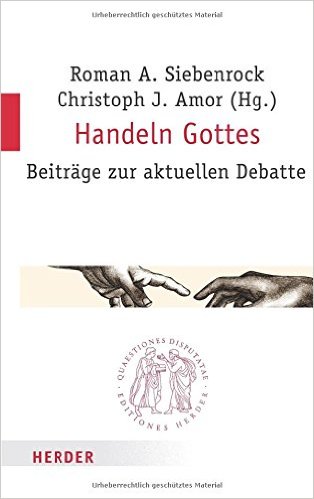
Act of God : contributions to the current debate
Summary In our discourse on the action of God, we touch on the central category of the discourse of Christian God. The living God of the Bible is inconceivable without his action in history among u...
publication
“A Theological Commentary on the Declaration Nostra aetate”, by Roman A. Siebenrock
In the Herders Theologischer Kommentar zum Zweiten Vatikanischen Konzil, the reference commentary on the Second Vatican Council edited by Peter Hünermann and Bernd Jochen Hilberath, Roman A. Sieben...
Resources related to Theology of Religions

article
Leo XIV’s encyclical Magnifica Humanitas and the Pluriel working group on AI-assisted interreligious dialogue
- Wael Saleh
Text by Wael Saleh, researcher at the Université du Québec à Montréal (UQAM) and member of the Pluriel coordination committee. The simultaneous appearance of Leo XIV's encyclical Magnifica Human...
publication
The Recognition of a Hummingbird. Essays on Interreligious Dialogue and Missionary Work (2007-2025)
- Rémi Caucanas
Published in May 2026 by PISAI (Pontifical Institute for Arabic and Islamic Studies, Rome), this collection brings together the essays of Rémi Caucanas on interreligious dialogue and missionary wor...
videos
From Lavigerie to PISAI: The Institutional History of the Missionaries of Africa’s Engagement with Islam
Delivered on 21 May 2026 at the Pontifical Institute for Arabic and Islamic Studies (PISAI) in Rome, this lecture opens the series of conferences marking the institute's centenary (1926-2026). Fr. ...
publication
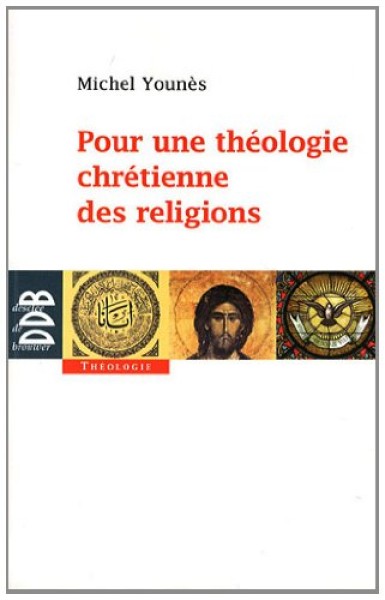
For a Christian Theology of Religions
- Michel Younès
Faced with contemporary religious diversity, how can Christian theology make sense of the place that other religions occupy in God’s design? Michel Younès examines the three traditional ̶...
publication
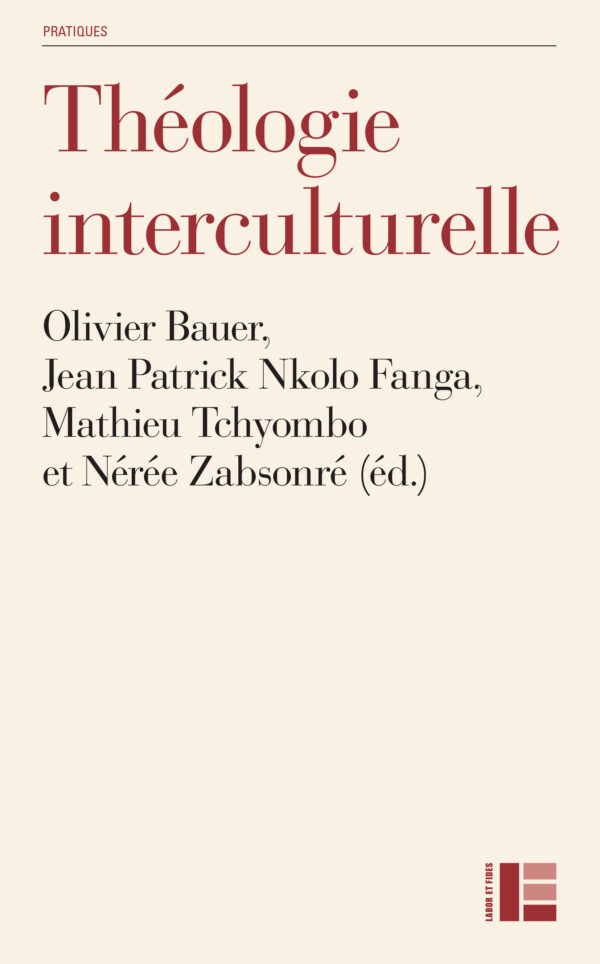
Intercultural Theology
- Jean Patrick Nkolo Fanga
Because every theology is culturally situated, Christian theology is inevitably multicultural. Yet one step remains to be taken: to become intercultural. Crossing languages, contexts, origins, ages...
article
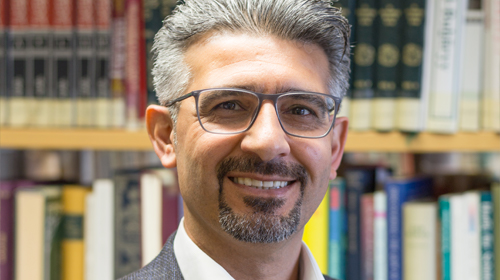
Bells and Muezzin in Harmony: Dialogue with Islam as a Spiritual Responsibility
- Timo Güzelmansur
Article by Timo Güzelmansur published under the title Glocken und Muezzin im Einklang. Der Dialog mit dem Islam als geistliche Verantwortung in Herder Korrespondenz (special issue devoted to Pope L...
publication
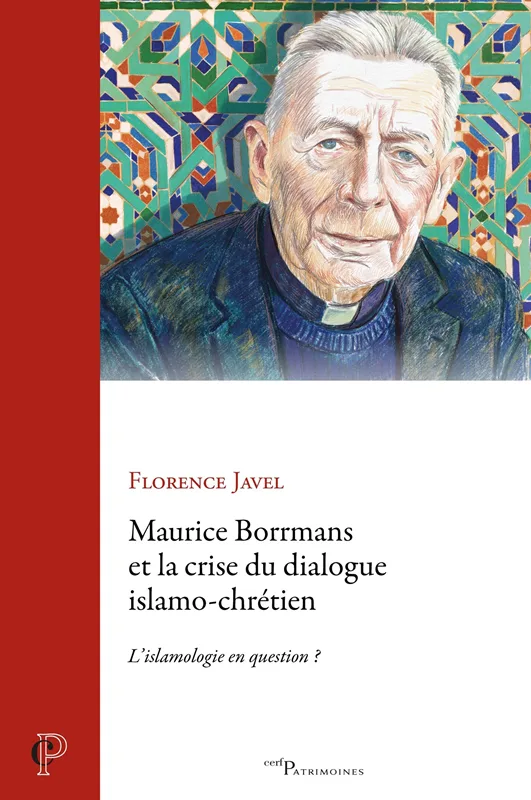
Maurice Borrmans and the Crisis of Christian-Muslim Dialogue. Islamic studies in Question?
- Florence Javel
In 2025-2026, we mark the sixtieth anniversary of the Second Vatican Council and of the declaration Nostra aetate (28 October 1965). One century earlier, in October 1925, Maurice Borrmans was born ...
videos
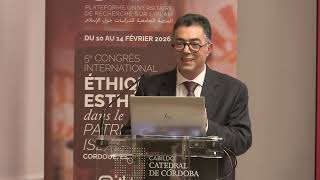
Opening address of the Cordoba congress
- Michel Younès
On Tuesday 10 February 2026 in Cordoba, Michel Younès, general coordinator of Pluriel and dean of the Faculty of Theology of the Catholic University of Lyon (UCLy), delivered the opening address of...