

Publisher : MDPI, Religions 17(3), 318 -

Anglais

Managing Religious Diversity in Italy: Law, Policy, and Practice in a Pluralist Era
In this article published in the journal Religions 17/3 (2026), Alessandro Ferrari offers a comprehensive analysis of Italy’s regime for governing religious diversity, at the intersection of constitutional law, public policy, and administrative practice. The article maps the structural tensions of the Italian model: the primacy of the concordat system, the asymmetry between recognized and non-recognized denominations (chief among them Islam), and the growing role of local authorities in the de facto regulation of places of worship and chaplaincies.
A member of Pluriel’s coordination committee and Professor of Comparative Law of Religions at the University of Insubria, Alessandro Ferrari situates this contribution within his long-term research on religious freedom in Italy and Church-State relations in the European pluralist context.
Read the article (open access): doi.org/10.3390/rel17030318.
Dans cet article paru dans la revue Religions 17/3 (2026), Alessandro Ferrari propose une analyse d’ensemble du régime italien de gouvernance de la diversité religieuse, à la croisée du droit constitutionnel, des politiques publiques et des pratiques administratives. L’article, intitulé « Managing Religious Diversity in Italy: Law, Policy, and Practice in a Pluralist Era », cartographie les tensions structurelles du modèle italien : primauté du système concordataire, asymétrie entre confessions reconnues et non reconnues (au premier rang desquelles l’islam), et rôle croissant des collectivités locales dans la régulation de fait des lieux de culte et des aumôneries.
Membre du comité de coordination de Pluriel et professeur de droit comparé des religions à l’Université d’Insubria, Alessandro Ferrari inscrit cette contribution dans son travail au long cours sur la liberté religieuse en Italie et sur les rapports Église-État en contexte pluraliste européen.
Lire l’article (open access) : doi.org/10.3390/rel17030318.
في هذا المقال المنشور في مجلة Religions 17/3 (2026)، يقدّم أليساندرو فيراري تحليلًا شاملًا للنظام الإيطالي في إدارة التعدّد الديني، حيث تتقاطع فيه أحكام القانون الدستوري والسياسات العامة والممارسات الإدارية. يرسم المقال خطوط التوتّر البنيوية داخل النموذج الإيطالي: مركزية النظام الكونكوردائي، والتفاوت بين الطوائف المعترف بها وغير المعترف بها (وفي مقدّمتها الإسلام)، والدور المتنامي للجماعات المحلية في التنظيم الفعلي لأماكن العبادة والإرشاد الروحي.
أليساندرو فيراري عضو في لجنة تنسيق المنصّة الجامعية للدراسات حول الإسلام، وأستاذ القانون المقارن للأديان في جامعة إنسوبريا. تندرج هذه المساهمة ضمن أبحاثه المتواصلة حول الحرية الدينية في إيطاليا وحول العلاقات بين الكنيسة والدولة في السياق الأوروبي التعدّدي.
لقراءة المقال (وصول مفتوح): doi.org/10.3390/rel17030318.


 publisher's website
Resources of this researcher
publication
Religious minorities between the Mediterranean shores: a study of the status of religious minorities in the Mediterranean context (REMiMEsO) – Final Report
The REMiMESo project, led by Ilaria Valenzi and supported by the Italian Ministry of Foreign Affairs, explores the situation of religious minorities in five Mediterranean countries: Israel, Morocco...
publication
Religious Freedom in Italy. An Impossible Paradigm
Italy, seat of the Pope and Vatican City, has a long and difficult relationship with religious freedom. Often identified as a quintessentially Catholic nation, Italy owes its unification to a polit...
publication
Contemporary Issues in Islamic Law, Economics and Finance
This book explores how Islam can impact the structures and performance of firms, financial institutions and capital markets across a range of countries and industries. The Islamic finance industry ...

videos
Understanding freedom of religion around the Mediterranean
How to manage religious plurality? Three researchers from our network look back at the history of the northern, eastern and southern shores of the Mediterranean to understand the diversity of legal...

videos
The Question of Otherness in Classical Islam | Respondents
Following the lecture: "The question of Otherness in Classical Islam" given by Raja SAKRANI, three members of the scientific committee of the PLURIEL network give answers according to the three axe...

videos
The right of religious freedom between the two shores of the Mediterranean: dynamics and perspectives (Italian)
Speaker: Prof. Alessandro Ferrari Moderator: P. Laurent Basanese, S.J. Pontificia Universita Gregoriana, November 19th, 2018 Original title : "È diritto di libertà religiosa tra le due spo...

videos
The right to religious freedom: a tool for managing citizen pluralism on both sides of the Mediterranean
Original title : "Il diritto di libertà religiosa: strumento di gestione del pluralismo cittadino sulle due rive del mediterraneo" Lecture by Alessandro FERRARI at the second international Congr...
publication
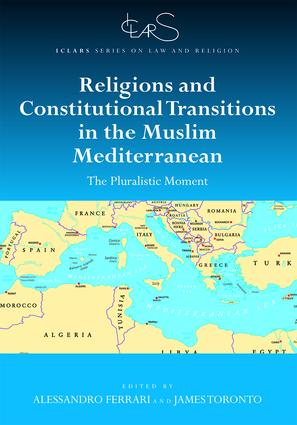
Religions and Constitutional Transitions in the Muslim Mediterranean
This book investigates the role of Islam and religious freedom in the constitutional transitions of six North African and Middle Eastern countries, namely Morocco, Algeria, Tunisia, Egypt, Turkey, ...
publication
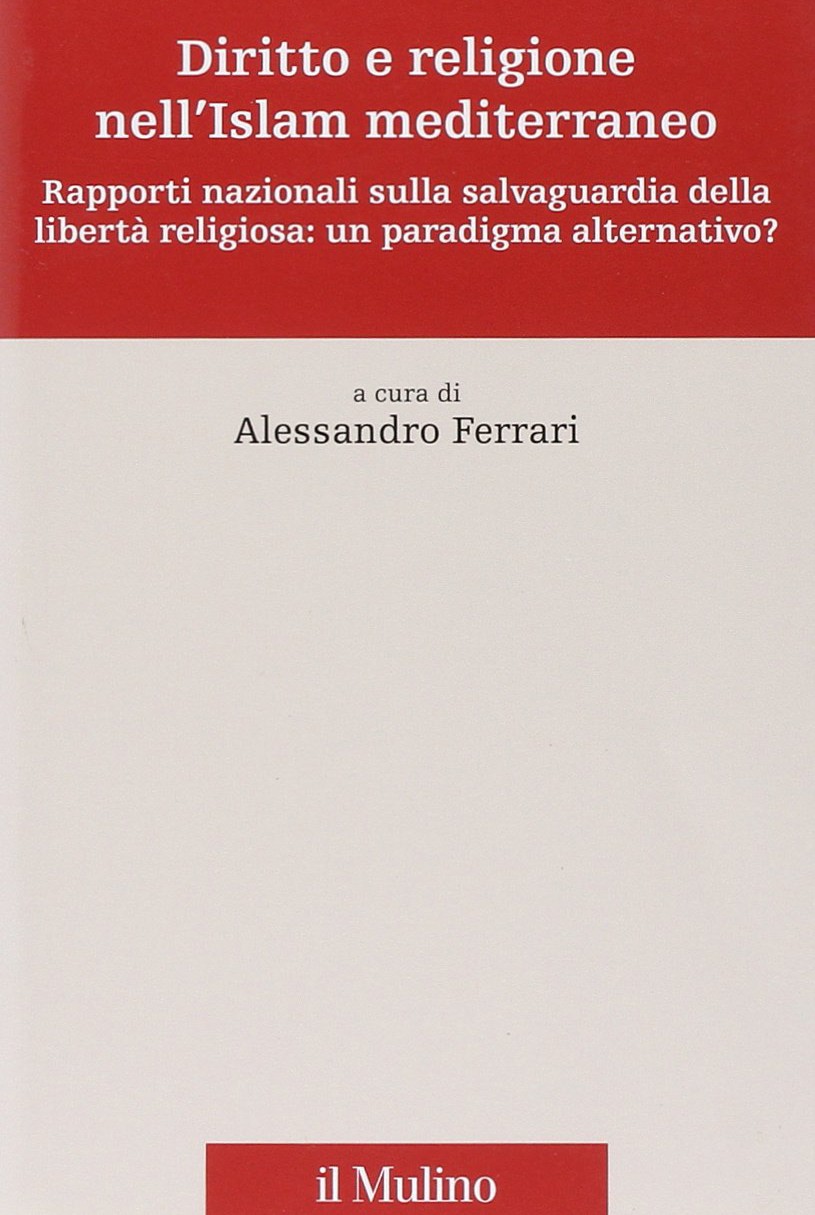
Law and Religion in Mediterranean Islam
Subtitle: National Reports on Safeguarding Religious Freedom: An Alternative Paradigm? In the era of the "Arab Spring" and the profound transformations that the Muslim-majority countries of the ...
Resources related to Political Sciences

publication
Understanding Salafism
- Mohamed-Ali Adraoui
Published in 2022 by Palgrave Macmillan (Springer) in the series The Sciences Po Series in International Relations and Political Economy, this book by Mohamed-Ali Adraoui, professor at Sorbonne Par...
publication
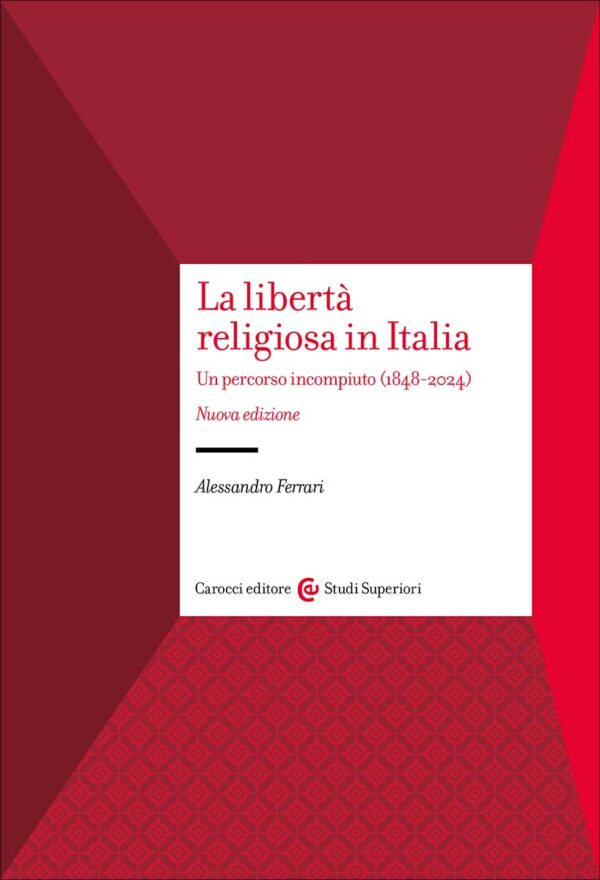
Religious Freedom in Italy. An Unfinished Path (1848-2024)
- Alessandro Ferrari
Published under the original title La libertà religiosa in Italia. Un percorso incompiuto (1848-2024), this synthesis by Alessandro Ferrari, professor of ecclesiastical law and comparative religiou...

article
Wael Saleh: “Recognising Without Confining, to Better ‘De-other’ the Public Debate”
- Wael Saleh
In an op-ed published on 20 July 2026 by Le Devoir, Wael Saleh, a member of the scientific committee of Pluriel, puts forward a new concept for contemporary democratic debate: "de-othering" (in Fre...
publication
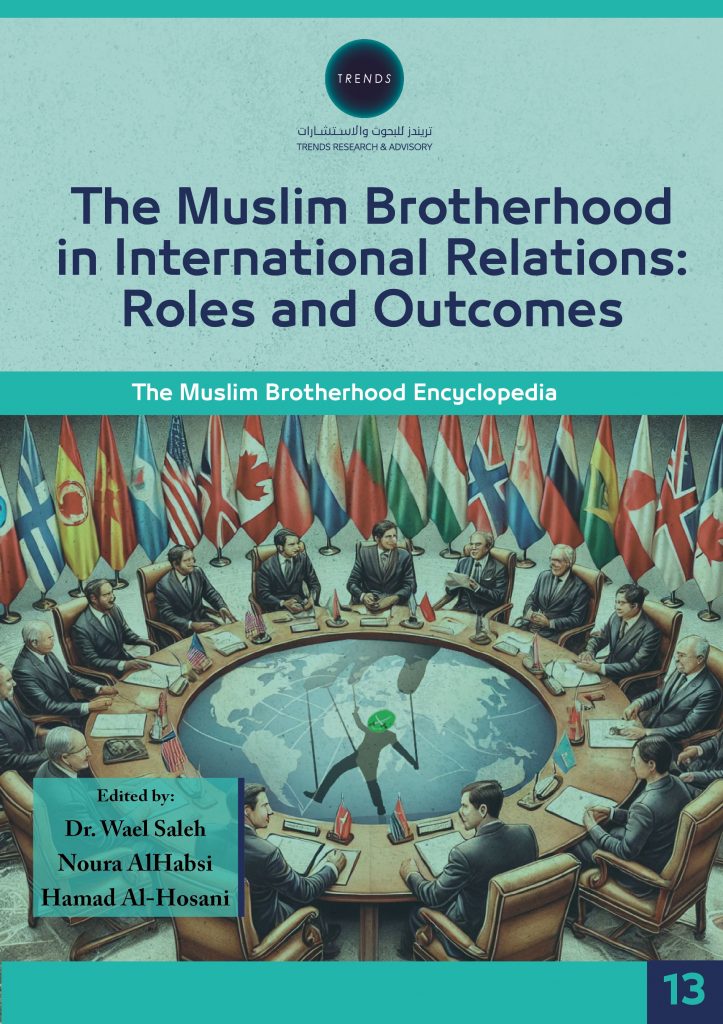
The Muslim Brotherhood in International Relations: Roles and Outcomes
- Wael Saleh
In this book published by TRENDS Research & Advisory (Abu Dhabi, May 2026), Wael Saleh, a member of Pluriel‘s coordination committee, examines the place and modes of action of the Muslim ...
videos
Interreligious Dialogue and Ethnic Nationalisms in the Balkans
At the invitation of PISAI (Pontifical Institute for Arabic and Islamic Studies, Rome) and Georgetown University, Ahmet Alibašić, professor of Islamic civilization at the Faculty of Islamic Studies...
article
Beyond Representation: Systemic Epistemic Alterity and the Architecture of Knowledge in the Contemporary Academy
- Wael Saleh
In this article, published in two parts by Social Epistemology Review and Reply Collective (SERRC), Wael Saleh, a researcher at the University of Quebec in Montreal (UQAM) and a member of Pluriel's...
publication
Managing Religious Diversity in Italy: Law, Policy, and Practice in a Pluralist Era
- Alessandro Ferrari
In this article published in the journal Religions 17/3 (2026), Alessandro Ferrari offers a comprehensive analysis of Italy’s regime for governing religious diversity, at the intersection of ...
publication
The Muslim Brotherhood International Power Index (MBIPI) 2025
- Wael Saleh
- Patrice Brodeur
Published in February 2026 by TRENDS Research & Advisory (Abu Dhabi), The Muslim Brotherhood International Power Index (MBIPI) 2025 offers the first systematic, global measurement of the Brothe...