Pluriel
  • News
  • Congress in Cordoba 2026
  • Previous congresses
  • digital library
  • About us
  • FR
  • EN
  • AR

Plateforme universitaire de recherche

The international academic research network on Islam

Founded in 2014 by the Federation of European Catholic Universities, the Pluriel network connects 222 researchers and 30 research groups across 27 countries. Its strength: bridging research and methods beyond disciplinary and national boundaries.

CONFÉRENCE 21 May 2026

From Lavigerie to PISAI: The Institutional History of the Missionaries of Africa’s Engagement with Islam

Delivered on 21 May 2026 at the Pontifical Institute for Arabic and Islamic Studies (PISAI) in Rome, this lecture opens the series of conferences marking the institute's centenary (1926-2026). Fr.…

ACTUALITÉ 13 May 2026

Does the term “frérisme” clarify or obscure the public debate?

PUBLICATION 4 May 2026

Special issue “Islam and Interreligious Dialogue” in Laval théologique et philosophique

CONFÉRENCE 24 April 2026

Interreligious Dialogue and Ethnic Nationalisms in the Balkans

Rome
ACTUALITÉ 22 April 2026

Antimuslim Racism as Gender Politics

PUBLICATION 18 April 2026

Intercultural Theology

ACTUALITÉ 16 April 2026

Michel Younès: “Shedding academic light on societal issues is one of Pluriel’s core missions”

Calendar

3 juin 2026
Webinar

« 45 Minutes with Lamya Kaddor »: a ZeKK Live Conversation

Online
3JUIN
Webinar « 45 Minutes with Lamya Kaddor »: a ZeKK Live Conversation Online
8JUIN
Conference “The Theology of Religions Reinventing and Transforming Itself” (Paris, 8–9 June 2026) Paris
13JUIL.
Summer School « Islamic Sciences in Dialogue: Azhari Tradition and Critical Islamology » Cairo
10SEPT.
Colloque Diversities that Matter: Being Muslim in Switzerland, Between Ascriptions and the Need for Orientation Fribourg

Further reading

  • ARTICLE The grammar of sacred violence: A critical discourse analysis of radical Islamist writings 25 March 2026
  • PUBLICATION Islam and Muslims. Doctrines, Schools of Thought, and Current Trends 25 March 2026
  • ACTUALITÉ Watch the Congress Videos 23 February 2026
  • ACTUALITÉ Christian–Muslim Dialogue in Focus: symposium of the Higher Education for Social Transformation research group in Innsbruck 13 January 2026
  • ACTUALITÉ 100 Years of the PISAI: Call for Papers for the International Congress in Rome, 11–12 December 2026 12 January 2026

Cordoba congress

Voir tout le congrès →
Browse by content type
  • News→
  • Publications→
  • Articles→
  • Videos→

Coordination committee

Dirk Ansorge

Dirk Ansorge

Professeur en théologie dogmatique  

Francfort, Allemagne

View profile →
Beate Bengard

Beate Bengard

Professeure associée en théologie systématique à la Faculté de théologie autonome de l’Université de Genève

View profile →
Alessandro Ferrari

Alessandro Ferrari

Professeur de droit comparé des religions

Côme, Italie

View profile →
Jaume Flaquer Garcia

Jaume Flaquer Garcia

Professeur de dialogue interreligieux, théologie des religions et islamologie

Grenade, Espagne

View profile →
Renee Hattar

Renee Hattar

View profile →
Claudio Monge

Claudio Monge

Directeur du DoStI, Centre d’Etudes Dominicains d’Istanbul

Beyoğlu/Istanbul, Turquie

View profile →
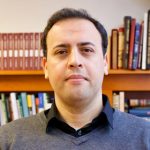
Mohamed-Ali Mostfa

Mohamed-Ali Mostfa

Maître de conférences sur le monde arabo-musulman et les représentations interculturelles

Lyon

View profile →
Emmanuel Pisani

Emmanuel Pisani

Directeur de l’Institut dominicain d’études orientales (IDEO, Le Caire)

Daher, Egypte

View profile →
Michaela Quast-Neulinger

Michaela Quast-Neulinger

Professeure de théologie fondamentale et d’études religieuses à la faculté de théologie catholique d’Innsbruck

Innsbruck, Autriche

View profile →
Wael Saleh

Wael Saleh

Professeur associé à l’Institut d’études internationales de Montréal (IEIM), Université du Québec à Montréal (UQAM).  

QC, Canada

View profile →
Wasim Salman

Wasim Salman

Professeur de pensée arabo-islamique contemporaine à l’Institut pontifical d’études arabes et islamiques (PISAI)

Rome

View profile →
Guy-Raymond Sarkis

Guy-Raymond Sarkis

Enseignant-chercheur à l’Université Saint-Joseph et à l’Université La Sagesse au Liban

Beyrouth

View profile →
Michel Younès

Michel Younès

Professeur en théologie et islamologie  

Lyon

View profile →
See all Pluriel researchers →

Our network

207 members across 27 countries. Hover over the mosaic to pause the scrolling.

Virgilio Sottana Charbel Attallah Ecole pratique des hautes études Maria Prieto-Ursua Roberto Mazzola Agata S. Nalborczyk Andrea Mandonico Cristiana Cianitto Cédric Baylocq Institut français d'islamologie Rémi Caucanas Salma Rouyett Université Mohammed V David Marshall René-Vincent Du Grandlaunay Diego Alonso-Lasheras Michele Brignone Anna Hager Jamel El Hamri Nayla Tabbara Carmen Marquez Janos Jany Adam Dubin Henar Pizzaro José Luis Llaquet de Entrambasaguas Roula Abi Habib Khoury Giovanni Giacalone Ziaka Angeliki Aristotle University Thessaloniki Mariana Rosca Yosra Garmi Gonzalo Villagrán Faisal Kenanah Université de Caen Normandie Julio Martinez Alam Anwar Sepideh Parsapajouh-Terrier Ecoles des hautes études en sciences sociales Roberta Collu Moran Martina Kraml Anna Canton Sapienza Università di Roma Dominique Avon Essaid Labib Université Chouaïb Doukkali Bruno Martín Baumeister Raja Sakrani Vanessa Breidy Thomas Richard Guillaume Chatagny Centre suisse islam et société Geneviève Gobillot Cornelia Dockter Almudena Soler Sánchez Mohamed-Ali Mostfa Roula Talhouk Timo Güzelmansur Roman Siebenrock Yadh Ben Achour Issa Diab Hamideh Mohagheghi Elisa Klapheck Jocelyne Adjizian-Gerard Antonio Navarro Carmona Anja Middelbeck-Varwick Toni Kahwaji Université Saint Joseph de Beyrouth Mallory Schneuwly Purdie Renee Hattar Institut Royal pour les Études Interconfessionnelles, Jordanie Stefano Allievi Hansjörg Schmid Najam Abbas Aga Khan University, London Elyamine Settoul Erwin Tanner Cédomir Nestorovic Ahmed Kaza Université Chouaïb Doukkali Stefano Luca Pontificia Università Gregoriana Nasser Suleiman Gabryel Ignacio Sepúlveda del Río Mouhanad Khorchide Ambrogio Bongiovanni Rafael Vázquez Jiménez Amina Drhimeur Sciences Po Lyon Benjamin Latouche Silvia Pierantoni Giua Sarah Marusek Gianluca Parolin Aga Khan University, London Fouad Gehad Marei Diego Sarrió Cucarella Mohammad Ali Amir-Moezzi Ecole pratique des hautes études Amany Fouad Salib Mohammad Haghani Fazl Beate Bengard Damian Howard Zishan Ahmad Ghaffar Bénédicte Du Chaffaut Eider Muniategi-Azkona Giulia Mezzetti Paolo Gonzaga Paolo Ca’ Foscari University of Venice Laurent Basanese Juan Macias Amoretti Emmanuel Pisani Ilaria Valenzi Baptiste Brodard Université Aix-Marseille Wolfgang Palaver Youssouf Sangare José Carlos Romero Nour Farra Haddad Lucciano Zaccara Pablo López Chaves Ida Zilio-Grandi Mohamed-Ali Adraoui Leïla Tauil Tobias Specker Federico Stella Jean-Claude Angoula Asli Karaca Klaus von Stosch Flavia Cortelezzi Hélène Rey Constance Arminjon Ecole pratique des hautes études Lamia Kenoussi Mohammed Hashas Ca’ Foscari University of Venice Mehdi Azaiez Muna Tatari Michel Boivin Abdul Rahman Al-Khunayfer Marie-Laure Davigo Ecole pratique des hautes études Florence Ollivry Ibn Haldun University Paolo Branca Josep Buades Patrice Brodeur Alberto Priego Moreno Jinan Limam Claudio Monge Youssef Boutahar Adnane Mokrani Pontificia Università Gregoriana Hicham Abdel Gawad Université catholique de Louvain Antonio Cuciniello Elizabeth Shakman Hurd Northwestern University Romain Louge Alberto Fabio Ambrosio Haoues Seniguer Davide Tacchini Zohra Aziadé Zemirli Noemi Trucco Centre suisse islam et société Julien Fragnon Rachad Antonius Michele Esposti Ongaro Marco Demichelis Wasim Salman Michaela Quast-Neulinger Ridouane Bisdaoune Université Ibn Zohr Myriam Di Marco Thierry-Marie Courau Jean-Jacques Pérennès Institut dominicain d’Etudes orientales Christian Troll Cordula Heupts Nadia Saad Farid Bouchiba Silvio Ferrari Karim Kardady Maryam Ballout Michel Younès Thom Sicking Saria Khabsa Chadi Kahwaji Université Saint Joseph de Beyrouth Amin Elias Antonio Angelucci Salim Daccache Gabriel Said Reynolds Pascale Blua Amir Jajé Institut Catholique de Paris Pierre Lacoste Antoine Fleyfel Université Saint Joseph de Beyrouth Malek Chaïeb Samir Arbache Mohamed Ben Mansour École Normale Supérieure de Lyon Mohamed Ourya Ahmed Gomaa Amir Dziri Franziska Honsowitz-Friessnigg Olga Torres Roberta Aluffi Janusz Balicki Houssame Bentabet Institut Catholique de Paris Justin Jones Anja Zalta Anne-Sophie Vivier-Muresan Guy-Raymond Sarkis Jamel Khermimoun Yale School of the Environment Wael Saleh Yesmine Karray École Normale Supérieure de Lyon John L. Esposito Mounia Ait Kabboura Jad Moufarrej Piotr Sękowski Ysé Tardan Masquelier Jean-Marc Balhan Kerstin Wonisch Elizaveta Dorogova Abderrahim El Omari Henda Ghribi Université de Tunis Xavier Gravend-Tirole Souraya Bechealany Mohamed Gamal Ali Dirk Ansorge Jean Druel Alessandro Ferrari Valentino Cottini Lino Panzeri Religioni, Diritti ed Economie nello Spazio Mediterraneo (REDESM) Jean Patrick Nkolo Fanga Institut œcuménique de théologie Al Mowafaqa, Rabat Stéphane Valter Mariangela Laviano Pontificio Istituto di Studi Arabi e d’Islamistica Siham Amraoui City University of New York, Graduate Center Jason Welle Jaume Flaquer Garcia Virgilio Sottana Charbel Attallah Ecole pratique des hautes études Maria Prieto-Ursua Roberto Mazzola Agata S. Nalborczyk Andrea Mandonico Cristiana Cianitto Cédric Baylocq Institut français d'islamologie Rémi Caucanas Salma Rouyett Université Mohammed V David Marshall René-Vincent Du Grandlaunay Diego Alonso-Lasheras Michele Brignone Anna Hager Jamel El Hamri Nayla Tabbara Carmen Marquez Janos Jany Adam Dubin Henar Pizzaro José Luis Llaquet de Entrambasaguas Roula Abi Habib Khoury Giovanni Giacalone Ziaka Angeliki Aristotle University Thessaloniki Mariana Rosca Yosra Garmi Gonzalo Villagrán Faisal Kenanah Université de Caen Normandie Julio Martinez Alam Anwar Sepideh Parsapajouh-Terrier Ecoles des hautes études en sciences sociales Roberta Collu Moran Martina Kraml Anna Canton Sapienza Università di Roma Dominique Avon Essaid Labib Université Chouaïb Doukkali Bruno Martín Baumeister Raja Sakrani Vanessa Breidy Thomas Richard Guillaume Chatagny Centre suisse islam et société Geneviève Gobillot Cornelia Dockter Almudena Soler Sánchez Mohamed-Ali Mostfa Roula Talhouk Timo Güzelmansur Roman Siebenrock Yadh Ben Achour Issa Diab Hamideh Mohagheghi Elisa Klapheck Jocelyne Adjizian-Gerard Antonio Navarro Carmona Anja Middelbeck-Varwick Toni Kahwaji Université Saint Joseph de Beyrouth Mallory Schneuwly Purdie Renee Hattar Institut Royal pour les Études Interconfessionnelles, Jordanie Stefano Allievi Hansjörg Schmid Najam Abbas Aga Khan University, London Elyamine Settoul Erwin Tanner Cédomir Nestorovic Ahmed Kaza Université Chouaïb Doukkali Stefano Luca Pontificia Università Gregoriana Nasser Suleiman Gabryel Ignacio Sepúlveda del Río Mouhanad Khorchide Ambrogio Bongiovanni Rafael Vázquez Jiménez Amina Drhimeur Sciences Po Lyon Benjamin Latouche Silvia Pierantoni Giua Sarah Marusek Gianluca Parolin Aga Khan University, London Fouad Gehad Marei Diego Sarrió Cucarella Mohammad Ali Amir-Moezzi Ecole pratique des hautes études Amany Fouad Salib Mohammad Haghani Fazl Beate Bengard Damian Howard Zishan Ahmad Ghaffar Bénédicte Du Chaffaut Eider Muniategi-Azkona Giulia Mezzetti Paolo Gonzaga Paolo Ca’ Foscari University of Venice Laurent Basanese Juan Macias Amoretti Emmanuel Pisani Ilaria Valenzi Baptiste Brodard Université Aix-Marseille Wolfgang Palaver Youssouf Sangare José Carlos Romero Nour Farra Haddad Lucciano Zaccara Pablo López Chaves Ida Zilio-Grandi Mohamed-Ali Adraoui Leïla Tauil Tobias Specker Federico Stella Jean-Claude Angoula Asli Karaca Klaus von Stosch Flavia Cortelezzi Hélène Rey Constance Arminjon Ecole pratique des hautes études Lamia Kenoussi Mohammed Hashas Ca’ Foscari University of Venice Mehdi Azaiez Muna Tatari Michel Boivin Abdul Rahman Al-Khunayfer Marie-Laure Davigo Ecole pratique des hautes études Florence Ollivry Ibn Haldun University Paolo Branca Josep Buades Patrice Brodeur Alberto Priego Moreno Jinan Limam Claudio Monge Youssef Boutahar Adnane Mokrani Pontificia Università Gregoriana Hicham Abdel Gawad Université catholique de Louvain Antonio Cuciniello Elizabeth Shakman Hurd Northwestern University Romain Louge Alberto Fabio Ambrosio Haoues Seniguer Davide Tacchini Zohra Aziadé Zemirli Noemi Trucco Centre suisse islam et société Julien Fragnon Rachad Antonius Michele Esposti Ongaro Marco Demichelis Wasim Salman Michaela Quast-Neulinger Ridouane Bisdaoune Université Ibn Zohr Myriam Di Marco Thierry-Marie Courau Jean-Jacques Pérennès Institut dominicain d’Etudes orientales Christian Troll Cordula Heupts Nadia Saad Farid Bouchiba Silvio Ferrari Karim Kardady Maryam Ballout Michel Younès Thom Sicking Saria Khabsa Chadi Kahwaji Université Saint Joseph de Beyrouth Amin Elias Antonio Angelucci Salim Daccache Gabriel Said Reynolds Pascale Blua Amir Jajé Institut Catholique de Paris Pierre Lacoste Antoine Fleyfel Université Saint Joseph de Beyrouth Malek Chaïeb Samir Arbache Mohamed Ben Mansour École Normale Supérieure de Lyon Mohamed Ourya Ahmed Gomaa Amir Dziri Franziska Honsowitz-Friessnigg Olga Torres Roberta Aluffi Janusz Balicki Houssame Bentabet Institut Catholique de Paris Justin Jones Anja Zalta Anne-Sophie Vivier-Muresan Guy-Raymond Sarkis Jamel Khermimoun Yale School of the Environment Wael Saleh Yesmine Karray École Normale Supérieure de Lyon John L. Esposito Mounia Ait Kabboura Jad Moufarrej Piotr Sękowski Ysé Tardan Masquelier Jean-Marc Balhan Kerstin Wonisch Elizaveta Dorogova Abderrahim El Omari Henda Ghribi Université de Tunis Xavier Gravend-Tirole Souraya Bechealany Mohamed Gamal Ali Dirk Ansorge Jean Druel Alessandro Ferrari Valentino Cottini Lino Panzeri Religioni, Diritti ed Economie nello Spazio Mediterraneo (REDESM) Jean Patrick Nkolo Fanga Institut œcuménique de théologie Al Mowafaqa, Rabat Stéphane Valter Mariangela Laviano Pontificio Istituto di Studi Arabi e d’Islamistica Siham Amraoui City University of New York, Graduate Center Jason Welle Jaume Flaquer Garcia
See all Pluriel researchers →

Our congresses

Abu Dhabi · 2024

Islam and fraternity

Partner institutions

Fédération des universités catholiques européennes Lyon Fédération internationale des universités catholiques Paris Universidad Loyola Andalucia Séville, Espagne Università Cattolica del Sacro Cuore Milan, Italie Universidad Pontificia Comillas Madrid Universität Innsbruck Innsbruck, Autriche Università degli Studi dell’Insubria Côme, Italie Centre suisse islam et société Fribourg, Suisse Centro Studi Interreligiosi della Gregoriana Rome Universität Paderborn Paderborn, Allemagne Institut dominicain d’Etudes orientales Le Caire Pontificio Istituto di Studi Arabi e d’Islamistica Rome Université de Montréal Montréal, Canada Institut Catholique de Paris Paris Université catholique de Lyon Lyon Université Saint Joseph de Beyrouth Beyrouth

The Pluriel network

Créée en 2014 par la Fédération des universités catholiques européennes (FUCE) et soutenue par la Fédération internationale des universités catholiques (FIUC), Pluriel est une plateforme universitaire consacrée à la recherche sur l'islam. Coordonnée par l'Université catholique de Lyon (UCLy), elle rassemble aujourd'hui 180 chercheurs organisés en 14 groupes de recherche actifs, présents dans 27 pays. Sa mission centrale : favoriser le lien entre les chercheurs travaillant sur l'islam et le dialogue islamo-chrétien, enrichir les approches méthodologiques et déconstruire les préjugés.

Initiée par FUCE Fédération des universités catholiques européennes Soutenue par FIUC Fédération internationale des universités catholiques Coordonnée par UCLy Université catholique de Lyon

Browse by theme

The most prominent research axes within the network. Click on a keyword to view related content.

Islam in the Middle East 9 Citizenship 13 Migrations 13 History 40 Philosophy 29 Theology 88 Arabic Language 16 Quranic Studies 26 Secularism 15 Minorities 8 Islamism 11 Worship Places 7 Theology of Religions 30 Radicalization 16 Law 29 Islamic Theology 19 Eastern Christianism 22 Violence and religion 13 Political Sciences 39 Abrahamic Religions 8 Comparative Studies 38 Identities 15 Ethics 25 Muslim-Christian Dialogue 61 Faith and Reason 7 Arts and Culture 12 Freedom of Religion 15 Islam in Europe 38 Sociology 24 Political Islam 17 Shia Islam 15 Authority 9 Religious Pluralism 31 Anthropology of Religions 13 Sufism 12 Islam in Asia 7 Women in Islam 10 Education 14 Discourse Analysis - Hermeneutics 14 Islam Studies 50
Explore all themes →

Subscribe to the Pluriel newsletter

Once a month, the essentials of academic research on Islam delivered to your inbox.

Sending… Thank you! You will receive a confirmation email. An error occurred, please try again.

About

Pluriel is an academic platform for research on contemporary Islam, bringing together researchers and institutions internationally.

Qui sommes-nous →

Contact

UCLy
10 place des Archives
69288 Lyon, France

pluriel@univ-catholyon.fr

Useful links

  • Legal notice
  • Contact

Social networks

  • Facebook
  • Twitter / X
  • YouTube
  • LinkedIn

© 2026 Pluriel — Academic research platform on Islam.

Political management of religious harmony: the example of Singapore

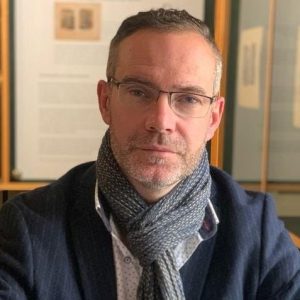
Cedomir Nestorovic

Singapore is a multicultural, multiethnic, and multireligious country. The foundation of political stability in the country is harmony and brotherhood among all religions. Since the end of World War II and well before the formation of the state, an organization called the Inter Religious Organization (IRO) was established, which brings together the largest religions represented on the island. However, it is the state that takes control with the Maintenance of Religious Harmony Bill of 1990. This law stipulates, among other things, the need for religious organizations to practice moderation and tolerance towards Singaporeans of a different faith. An important element is not to engage in proselytism, which can lead to friction, escalation, and conflicts. Brotherhood, which involves considering all men as brothers regardless of their social, cultural, geographical, or religious background, is ensured by the law, but some peculiarities remain. The first is the difference in treatment for Muslims, who have a special law, the Administration of Muslim Law Act (AMLA), which governs the organization of Muslims in Singapore (MUIS), the Islamic tribunal, and the registry of Muslim marriages. This is a lex specialis that does not exist for other religions. Brotherhood was tested during the Covid pandemic when it came to deciding what to do with hundreds of thousands of foreign workers from Bangladesh, India, Sri Lanka, and Pakistan who could no longer work and support themselves. The decision was made to retain their jobs and pay them a salary even if they were not working, unlike some Gulf countries that did not show the same brotherhood, even towards fellow Muslim believers.

Cedomir Nestorovic

Cedomir Nestorovic is a professor of geopolitics and Islamic business at ESSEC Business School. He has been based on the Singapore campus for 13 years. He is the author of several books on Islamic marketing. His latest book, Geopolitics and Business, was published by Springer in December 2023. He is the academic director of ESSEC and Mannheim Executive MBA Asia Pacific, and the co-academic director of the MBA program with Arabian Gulf University, where participants come from Saudi Arabia, Kuwait, and Bahrain. He also teaches at the ESSEC campuses in Cergy and Rabat.

Follow Pluriel on Facebook

Myriam Di Marco

Born in Sorengo, Switzerland, in 1987, Myriam Lucia Di Marco, an Italian-Swiss citizen, has been coordinator of the integration commissions of the Faculty of Theology at the University of Lugano, in Italian-speaking Switzerland, since 2021. She also works as a scientific assistant to Professor René Roux, Rector of the Faculty, and contributes to the Corriere del Ticinos on Israeli politics.

Myriam Di Marco completed her doctorate in philosophy at the Pontifical Lateran University in Rome on the subject of ‘States and monotheisms’, focusing on Western and Mediterranean models in the face of multiculturalism. She pursued a post-doctorate at the University of Haifa, Israel, where she examined aspects of Swiss federalism in the context of the Israeli-Palestinian conflict.

She has taught numerous courses in the field of religious studies, including the seminar “Contemporary Judaism and Human Rights” (2012-2013, Faculty of Lugano), “Which Islam?” (2013-2014), “Secular or Religious State? Western and Middle Eastern political models and the challenge of social multiculturalism” (political philosophy seminar, 2014-2015), the intensive course “Civil religion between the West and the Middle East” (2016-2017), “Religion and Constitution. The role of religions in the constitutional history of Mediterranean countries” (political philosophy seminar, 2021-2022).

During 2022-2023, she is part of a research group entitled “Preventing discrimination and persecution. Models of inclusion of religious minorities in the Euro-Mediterranean area”, supported and funded by the Italian Ministry of Foreign Affairs.

Dirk Ansorge

Born in 1960 in Gelsenkirchen, Germany, Dirk Ansorge has held the chair of dogmatics and the history of dogma at the Sankt-Georgen Faculty of Philosophy and Theology in Frankfurt since 2012. At the same time, he runs the Cardinal Alois Grillmeier Institute for the History of Dogma, Ecumenism and Interreligious Dialogue, and directs the Albertus Magnus scholarship programme. Since January 2023, he has chaired the Association of Catholic Theology Teachers.

His academic career began at the Ruhr University in Bochum, where he studied Catholic theology and philosophy. He then spent an ecumenical year in Jerusalem, supported by a DAAD scholarship, before immersing himself in the study of Catholic theology at the Université des Sciences Humaines in Strasbourg.

Dirk Ansorge’s passion for the dialogue between faith and reason led him to undertake doctoral research. In 1993, he obtained his doctorate in Catholic theology with a study of the Carolingian theologian Johannes Scottus Eriugena. Ses travaux sont reconnus par le Prix Karl Rahner de l’Université d’Innsbruck.

His academic career has taken him to teaching and research posts throughout Germany and Europe, working in particular on Christology, ecclesiology, the theology of creation and the sacraments.

Flavia Cortellezi

Flavia Cortelezzi holds a doctorate in economics from the Alma Mater Studiorum (University of Bologna), and is a lecturer in political economy in the Department of Law, Economics and Culture at Insubria University in Como (Italy). She is also deputy director of the “Religions, Rights and Economies in the Mediterranean Space” (REDESM) research center at the same university.

His research focuses in particular on investment under uncertainty, innovation and capital structure. En 2022, elle dirige avec Alessandro Ferrari un ouvrage intitulé Contemporary Issues in Islamic Law, Economics and Finance : A Multidisciplinary Approach (Routlege, 2022).

The Document on Human Fraternity: A Roadmap Toward a Better Future or an Impossible Utopia?

Diego Sarrió Cucarella

“A universal peace that all can enjoy in this life”, so ends the Document on Human Fraternity. Are these ten words an impossible utopia or an achievable reality? In the latter case, does the Document provide us with an accurate analysis of the current state of humanity and a realistic roadmap towards a better future? This lecture will offer some introductory remarks on several issues debated in connection with the Abu Dhabi declaration. These topics include, among others: the tension between full citizenship and minority rights; the relationship between freedom of conscience and freedom of religion, including the apparent absence of the former in the Document; the prospects for effective secular-religious partnerships in advancing social change; “inclusive citizenship” as a political framework for human fraternity; theological debates around religious pluralism; the role of theology in framing the juridical understanding of basic human freedoms; and different concepts of fraternity.

Diego Sarrió Cucarella

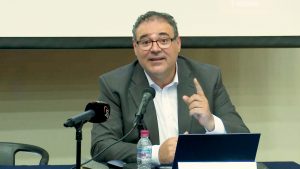
Born in Spain, Diego Sarrió Cucarella has been president of the Pontifical Institute for Arabic Studies and Islamology (PISAI, Rome) since 2018, where he teaches Arabic, Muslim theology, the Qur’an and tafsīr (exegesis). He also teaches Islamic studies at the Pontifical Lateran University. He is acting director of the scientific journal Islamochristiana, published by the PISAI.

His research and publications focus on the intellectual history of Muslim-Christian relations and the theological insights that this history has bequeathed to Christians and Muslims today. A PISAI graduate in Arabic Studies and Islamology (canonical degree), he holds a doctorate in Theological and Religious Studies from Georgetown University, having defended his thesis entitled “The mirror of the other: the splendid responses of Shihāb al-Dīn al-Qarāfī”, a thirteenth-century Egyptian Muslim scholar.

A member of the Society of Missionaries of Africa, better known as the “White Fathers”, Diego Sarrió Cucarella has lived in Sudan, Algeria, Egypt and Tunis, where he directed the Library of Religious Sciences and was a member of the Christian-Muslim Research Group. He is also a consultor to the Vatican’s Dicastery for Interreligious Dialogue.

Wael Saleh

Wael Saleh is a researcher at Trends Research & Advisory and an associate professor at the Institut d’études internationales à Montréal (IEIM) at the Université du Québec à Montréal (UQAM). He is also a research associate at the Observatoire sur le Moyen-Orient et l’Afrique du Nord, Chaire Raoul-Dandurand en études stratégiques et diplomatiques, at the same university.

Wael Saleh’s research interests include the history and geopolitics of ideas in the Arab world; the contemporary Middle East; political Islam; and epistemological and methodological issues. In 2017, he defended his thesis in political science and Islamic studies at the Université de Montréal, in which he examined the continuities, evolutions and ruptures in the conception of the state in modern and contemporary Egyptian thought, through the prism of the link between religion and politics.

The Document on Human Fraternity: An Austrian Perspective

Franziska Honsowitz-Friessnigg

Interreligious and intercultural dialogue are an essential element in Austrian foreign policy. The contribution will highlight some key parts.

The Document on Human Fraternity: An Austrian Perspective

Franziska Honsowitz-Friessnigg

Interreligious and intercultural dialogue are an essential element in Austrian foreign policy. The contribution will highlight some key parts.

Franziska Honsowitz-Friessnigg

Born in 1962 in Austria, Franziska Honsowitz-Friessnigg has headed the Department for Scientific Cooperation and Dialogue between Cultures and Religions at the Austrian Ministry of Foreign Affairs since 2022. A law graduate from the University of Graz (Austria, 1984), she was recruited by the Austrian Ministry of Foreign Affairs to work with the United Nations in Southern and Eastern Europe. From 2014 to 2018, she was Austrian ambassador to Algeria, before being appointed ambassador to the Holy See (2018-2022), also accredited to the Republic of San Marino and the Sovereign Order of Malta.

Laurent Basanese

Born in Lyon (France), Laurent Basanese is “official” of the Holy See’s Dicastery for Interreligious Dialogue and a professor at the Pontifical Gregorian University in Rome. He joined the Jesuits in 1997 and holds a doctorate in Arabic and Islamic studies (Pontifical Institute for Arabic Studies and Islamology, Rome) and a doctorate in the sciences of religions and systems of thought (École pratique des hautes études, Paris). He founded and directed the Centre for Interreligious Studies at the Pontifical Gregorian University (2015-2021). He also relaunched the Interreligious and Intercultural Investigations series, which he directed from 2018 to 2021. In February 2020, he was appointed consultant to the Commission for Religious Relations with Muslims of the Pontifical Council for Interreligious Dialogue.

De la Déclaration Nostra Aetate au Document d’Abu Dhabi. Relecture d’une trajectoire historique et théologique dans l’approche catholique du dialogue islamo-chrétien

Jean-Jacques Pérennès

En se situant sur le registre de l’amitié, le pape François invite les catholiques à dépasser leurs peurs et à prendre le risque de l’amitié. Si ce parti-pris de bienveillance est de nature à redonner le goût de la rencontre, il reste aux deux traditions religieuses à réaliser un travail difficile : fonder théologiquement le pluralisme religieux, pour ne pas en rester à un accord minimal et assez pauvre sur un objectif partagé, la lutte contre l’athéisme et la sécularisation. “J’ai besoin de la vérité de l’autre”, disait Pierre Claverie, qui avait, lui aussi, le goût et le don de l’amitié. Beaucoup reste à faire sur le terrain et par les théologiens, mais le Document d’Abu Dhabi ouvre peut-être une ère nouvelle de la relation islamo-chrétienne.

Azharis, représentations du christianisme et aléas du dialogue islamo-catholique (années 1940-années 2010)

Dominique AVON

Dans un essai intitulé “الاتجاهات الوطنية في الأدب المعاصر” [“Tendances nationales de la littérature contemporaine”], paru en 1946 et plusieurs fois réédité par la suite, l’homme de lettres égyptien Muḥammad Muḥammad Ḥusayn (1912-1982), formé à l’Université du Caire, met en garde contre les tentatives attribuées à des chrétiens de différentes Églises, d’avoir voulu sinon unifier du moins rapprocher le christianisme et l’islam depuis la fin du xixe siècle. Les termes al-waḥda, al-tā’līf, al-ṭawfīq sont utilisés simultanément, les références aux faits sont mal assurées, et le propos traduit une inquiétude ou un malaise qui persiste jusqu’à la fin des années 2010, en dépit d’initiatives concrètes visant à instaurer les conditions d’un dialogue entre sunnites et catholiques en particulier.
Parmi les jalons qui ponctuent ce chemin heurté figurent l’accueil chaleureux réservé par le shaykh Aḥmad Ḥasan al-Bāqūrī (1907-1985) au cardinal Franz König (1905-2004), à al-Azhar, en mars 1965, les tensions qui suivent la visite d’une délégation du Vatican à al-Azhar en 1978, le silence qui accompagne la rencontre de prière pour la paix, à Assise, souhaitée par le pape Jean-Paul II (1920-2005) en 1986, l’espoir suscité par la création d’un comité de liaison avec les organisations islamiques internationales et al-Azhar au sein du Conseil pontifical pour le dialogue interreligieux en 2000, ou le nouveau climat de confiance accompagnant la réception en audience privée du shaykh Aḥmad al-Ṭayyib (n. 1946) par le pape François (n. 1936) en mai 2016.

Les gestes et paroles qui traduisent à la fois une volonté d’agir ensemble mais également des manifestations de défiance s’inscrivent dans un contexte géopolitique qui a singulièrement changé au cours de sept décennies. Ils sont à mettre en relation avec la désignation d’un tiers, tel « l’athéisme », susceptible de servir de repoussoir face aux croyants des « religions célestes ». Ils s’accompagnent d’interrogations sur la désignation des chrétiens : Faut-il continuer à les qualifier de kuffār ou de ḍālūn ? Dans l’affirmative, quelles peuvent être les conséquences juridiques dans un régime qui se réfère constitutionnellement à l’islam ? Dans la négative, comment envisager le salut pour eux et quelle place réserver à la da‘wā à leur égard ?

Le sacrement du frère : une relecture théologique des écrits de Christian de Chergé

Emmanuel PISANI

Après avoir reçu une formation en islamologie, le frère Christian de Chergé a été prieur du monastère de Thibirine en Algérie de 1984 à 1995. Ses intuitions théologiques n’ont jamais fait de se part l’objet d’une reprise systématique. Elles s’expriment dans un corpus disparate composé d’enseignements capitulaires, d’homélies, de conférences, de correspondances. Dans cette communication, nous nous proposons de montrer la pertinence d’une relecture de ses enseignements à partir du concept patristique de “sacrement du frère”. Nous montrerons que l’appréhension du frère comme sacrement rend compte qu’il est un signe sacerdotal, prophétique et royal.

Et le Verbe s’est fait frère. La fraternité vécue à Tibhirine (Algérie)

Marie-Dominique MINASSIAN

“Qui sont mes frères ? Ceux-là qui font la volonté de mon Père” (musulman au sens strict). Ainsi, de part et d’autre, nous nous rejoignons par l’appel d’une FRATERNITÉ née d’une double filiation : celle de la volonté de Dieu et celle de la communauté de l’avenir que tous regardent comme leur mère ». Christian de Chergé, prieur de Notre-Dame de l’Atlas à Tibhirine a nourri très tôt une grande foi dans la fraternité universelle. Cette théologie de la fraternité, forgée dans un contexte violent, est une contribution inspirante à la réception du document d’Abu Dhabi, vitale dans ces temps si troublés.

Pour une fraternité théologique dialogale : une relecture du document sur la Fraternité Humaine à la lumière des premiers écrits théologiques arabes

Romain LOUGE

À partir du VIIIe siècle, les premiers écrits théologiques sont rédigés en arabe, soit dans les communautés chrétiennes ou dans les communautés musulmanes. Cette communication vise par l’études de ces primo-traités chrétiens et musulmans et leurs liens plus ou moins intrinsèques à montrer comment la fraternité, avant d’être une réalité sociale ou politique, a été, dans l’antiquité tardive, une réalité théologique. En présentant quelques textes arabes chrétiens et musulmans, s’esquisse dans un mode dialogal une certaine fraternité théologique, ou tout du moins rationnelle. Il s’agit alors de relire le document sur la Fraternité humaine à la lumière de ce qui s’est vécu aux prémices de la relation entre chrétiens et musulmans.

Le dialogue intra-ecclésial en vue d’une fraternité inter-religieuse. Quel débat possible avec des courants exclusivistes au sein de l’Église catholique ? Illustration avec la Mission Ismérie en France

Benjamin LATOUCHE

Cette allocution présente les différents membres de la fédération Mission Ismérie qui vise à accompagner les musulmans convertis au christianisme, à témoigner de la Bonne Nouvelle et à former des chrétiens aux enjeux de l’islam, par le biais de grandes controverses. Cette fédération est devenue un acteur important dans le paysage ecclésial français. Elle impacte les relations islamo-chrétiennes. Notre contribution cherche à voir en quoi un dialogue intra-ecclésial, peut être fécond afin de comprendre les divergences de points de vue et d’envisager une altérité possible. Comment ce dialogue trace-t-il une piste pour que la Déclaration ne reste pas fermée à un public de convaincus ?

Impact et perspectives de la déclaration d’Abu Dhabi sur la coexistence entre chrétiens et musulmans

Sylvestre Olivier EVES

En Afrique, le dialogue interreligieux représente le socle de la stabilité et de la cohésion sociale dans nombre de pays, notamment dans le Sahel. L’intervention se propose d’analyser l’expérience vécue dans le contexte de l’Afrique Centrale, en s’appuyant sur 15 années d’effort dans le domaine pastoral et d’enseignant du dialogue interreligieux dans les grands séminaires au Cameroun, afin de présenter une réponse de l’effort de l’Afrique où le christianisme et l’islam peuvent développer leur potentiel pour faire avancer une notion de fraternité qui englobe toute la famille humaine.

Fraternité humaine et paternité divine - Enjeux théologiques et sociétaux entre musulmans et chrétiens

Samir ARBACHE

La fraternité en Adam est conjuguée avec la fraternité dans la foi. La fraternisation des croyants entre eux est fondée sur des références coraniques comme : « Lorsque vous étiez ennemis, c’est Lui qui a réconcilié vos cœurs. Puis par son bienfait vous êtes devenus frères » (3, 103). Dans leur prière quotidienne, les chrétiens s’adressent à Dieu en osant l’appeler « Notre Père » (Matthieu 6, 9-13). S’impose donc le besoin d’un travail d’exégèse des textes en vue de clarifier les compréhensions, ouvrant la voie à un échange théologique.

Human Fraternity in the Islamic Worldview: A Study of the Indonesian Intellectual Muslim Community

Yanuardi SYUKUR

INSISTS, an Indonesian Muslim intellectual community, promotes the Islamic worldview, which encompasses Islam as both a religion and civilization. They emphasize the teachings of Syed Muhammad Naquib Al Attas and ISTAC in Malaysia. INSISTS has organized seminars, publications, and regeneration efforts to cultivate Muslims aligned with this worldview. Their intellectuals, such as Adian Husaini, Hamid Fahmy Zarkasyi, and Syamsuddin Arif, have written extensively on Islamic thought, Western civilization, and the relationship between Islam and Christianity today. While critical of the West, INSISTS remains open to new concepts, including initiatives for a respectful society. This paper examines how the INSISTS intellectual community, from an Islamic worldview, interprets the document on human brotherhood declared by Pope Francis and the Grand Imam Ahmad Al-Tayyeb in 2019. It explores their perspective and engagement with the concept of human fraternity in light of their critical yet respectful approach to Western discourses.

Muslims, Christians and social coexistence in family context in Cameroon

Edouard SONSARE

In this paper, two cases of social coexistence between Muslims and Christians within the family context in Cameroon are explored. The first case examines Muslim converts with predominantly Christian family members, while the second case focuses on individuals born into Muslim families with mostly Christian extended family members. Despite initial conflicts arising from religious differences, both cases demonstrate the ability to find common ground and maintain peaceful coexistence. The study emphasizes the importance of family, ethnic, and religious brotherhoods that coexist harmoniously, promoting religious tolerance and conviviality. Qualitative research is employed to gather narratives on past and present religious experiences, shedding light on the role of family religious plurality in fostering peace and tolerance in contemporary Cameroon. This work highlights the daily reality of religious tolerance practiced by Muslims and Christians within Cameroonian families, contributing to a deeper understanding of interfaith relationships in the country.

الحوار والتعددية والأخوة في فكر الإمام الطيب

Wassim SALMAN

يتميز الإمام أحمد الطيب بموقع بارز على الساحة العالمية، وذلك بفضل وثيقة “الأخوة الإنسانية من أجل السلام العالمي والتعايش”. وأكد البابا فرنسيس مؤخرًا على الروابط العميقة للصداقة التي تجمعه به في رسالته “فراتيلي توتي عن الأخوة والصداقة الاجتماعية”. كان لي الفرصة لمقابلة الإمام أحمد الطيب في أبو ظبي، وهو من شجعني على كتابة هذه الرسالة لتذكير العالم بأن الله خلق جميع البشر متساوين في الحقوق والواجبات والكرامة ودعاهم للعيش كأخوة. يركز بحثنا على فهم مفهوم الأخوة في فكر الإمام الطيب، من خلال استكشاف النقاط التالية:
تجديد الفكر الديني ومؤسساته: يدافع الإمام الطيب عن التجديد الذي يحافظ على الأسس والقيم الأساسية، ويتبنى منهجًا معقولًا للنقل والتفسير. يعارض أيضًا أولئك الذين يسعون لتدمير التقاليد المسلمة الأولى بتراثها وجذورها. لا يمكن أن يكون هناك حوار وانفتاح حقيقي مع الآخرين دون تجديد فهمنا من خلال تفسير جديد للتراث.
الحرية الدينية ومكافحة التعصب: لا يمكن أن تكون هناك أخوة من دون حرية، ولذلك يرفض الإمام الطيب التفكير التكفيري والجهادي الذي يمثل تأويلًا خاطئًا للنصوص الدينية. يدين ذلك في كتابه “مفهوم الجهاد في الإسلام”. وقد وضع أيضًا ميثاق الأخوة الإنسانية في عام 2020، الذي يعتبر تمديدً

Cosmopolitanism and minority rights: moving beyond the protection of ethnoreligious minorities in the Middle East

Hélène REY

This paper challenges traditional approaches to ethnoreligious diversity in the Middle East, arguing that the focus on “protecting minority rights” is inadequate. It demonstrates how such approaches maintain the status quo and exclude marginalized communities. Drawing on Saba Mahmood’s critique of state neutrality and Kwame Anthony Appiah’s concept of cosmopolitanism, it combines the lived experiences of ethnoreligious communities with insights from feminist, disability, and queer studies. These fields, often overlooked in discussions of minority rights in the region, offer valuable perspectives on marginalization and alternative paths forward. The paper advocates for an interdisciplinary approach that values diversity, promotes shared belonging, and rejects assimilation. It emphasizes the need to challenge structures that perpetuate marginalization and recognizes the rights and agency of all individuals and groups within society, drawing from research on constitutional law and minority rights, as well as field experience in Egypt, Syria, and Iraq.

الأخوة في القصة القرآنية مدخلا للأخوة الانسانية إخوة يوسف أنموذجا

Abdel Aziz RAJIL

الدين يسعى إلى بناء أمة عالمية كونية تتشارك رؤية ومصير مشترك، ويسعى لتحقيق أخلاق مشتركة وظهور أخلاق عالمية جديدة من خلال التفاعل بين الأديان. الأخوة الإنسانية هي أساس هذا البناء، وقد تجسدت في القصص القرآنية التي تتناول أنواعًا مختلفة من الأخوة. تشمل ذلك الأخوة الدموية والنسبية، وتعد قصة الأخوين هابيل وقابيل أحد هذه الأمثلة، حيث قدما قرابين لله وقبل الله قربان أحدهما ورفض الآخر، فارتكب قابيل جريمة قتل وندم على فعلته. القرآن يسجل أيضًا نموذجًا للأخوة بين نبيين مثل موسى وهارون، ويوضح كيفية تعاملهما مع الاختلاف والتحديات. هذه الأمثلة تستحق تحليلًا وفهمًا لما تحمله من قيمة للعلاقات الإنسانية بين الأديان. الدراسة تهدف إلى تعزيز التواصل والتفاهم بين المسلمين والمسيحيين وغيرهم، استنادًا إلى “وثيقة الأخوة الإنسانية” وتوسيع المساحة المشتركة بين أتباع الديانات

La fraternité dans le Bulletins du Ribâṭ es-Salâm et son lien avec la déclaration d’Abou Dhabi sur la coexistence entre chrétiens et musulmans

Livia PASSALACQUA

Le prieur de Tibhirine, Fr. Christian de Chergé, a commencé son parcours dans le dialogue interreligieux en Algérie dans les années 1960. Le meurtre de son ami musulman, Mohammad, a renforcé sa vocation monastique. Les moines de Tibhirine ont développé des liens étroits avec la communauté musulmane locale, basés sur leur engagement envers Dieu, leur entraide et leur hospitalité. En 1979, Fr. Christian et Claude Rault ont fondé le groupe “Ribâṭ es-Salâm”, qui réunit des chrétiens et des musulmans autour d’une vie spirituelle commune. Le groupe publie un bulletin mettant en avant des thèmes tels que le dialogue interreligieux, l’amitié et la théologie de la différence. Cette étude examine les bulletins de 1979 à 2018 pour présenter le thème de la fraternité selon la vision de Christian de Chergé et comment les membres ont développé une fraternité inclusive pour toute l’humanité.

Human fraternity for world peace and living together, Christian and Muslim theologies of religions and their understanding of mission

Stefano LUCA

This paper explores rethinking Christian and Muslim theologies of religions and mission in light of the joint declaration on Human Fraternity. It suggests that embracing and preserving differences could be God’s mission for humanity. A Catholic “theology of difference” is presented, emphasizing fraternity through understanding and valuing diversity. The paper promotes living fraternity within difference, moving from uniformity to embracing diverse languages and traditions. It highlights the importance of meeting, dialogue, and love in the Catholic approach. The goal is to build renewed relationships and a shared future, aligning with Pope Francis’s vision.

المنظور الاجتماعي القانوني لجهود دولة الإمارات العربية المتحدة لتحقيق مبادئ وثيقة الأخوّة الإنسانية

Khalid Mubarak Al-Madhani

تتناول الورقة البحثية تطبيقات “وثيقة الأخوة الإنسانية” التي تم توقيعها في عاصمة دولة الإمارات في عام 2019، وحضور ممثلين من الديانتين الإسلامية والمسيحية لتأكيد أهمية الرابط الإنساني بين الأديان المختلفة لتحقيق مستقبل أفضل. يسلط البحث الضوء على جهود دولة الإمارات العربية المتحدة في تنفيذ “وثيقة الأخوة الإنسانية” وتطبيقها عمليًا من خلال إصدار سياسات وتشريعات تعزز مفهوم الأخوة الإنسانية والتعايش السلمي، وترفض أي تمييز قائم على العقيدة أو الدين.
تعتنق دولة الإمارات منهج التسامح واحترام الآخر وصون الحقوق الدينية للأفراد منذ تأسيسها في عام 1971، وهو ما يتجلى في دستور الدولة والتشريعات اللاحقة التي تنظم شؤون غير المسلمين وتحمي حقوق الإنسان في العيش على أرض الإمارات وفقًا لمعتقداتهم الدينية.
تتناول الورقة البحثية تجربة دولة الإمارات العربية المتحدة في صياغة وتنفيذ التشريعات التي تحمي حقوق الأفراد غير المسلمين الذين يعيشون على أرض الدولة، بهدف تحقيق الاستقرار والأمن الروحي وتعزيز التوافق بين المؤمنين بالله ولقائه وحسابه، في إطار نموذج عالمي يعزز الحكمة والعدالة لصالح الإنسان.
في 4 فبراير 2019، شكّلت مدينة أبو ظبي نقطة تحول جريئة في تاريخ الأخوة الإنسانية التي عانت من الصراعات والاختلافات والمصالح الاقتصادية والسياسية.

Islam and the Quest for Human Fraternity: The Role of Al-Azhar in the Muslim-Christian civil war in the Central African Republic

Ibrahim GEMEAH

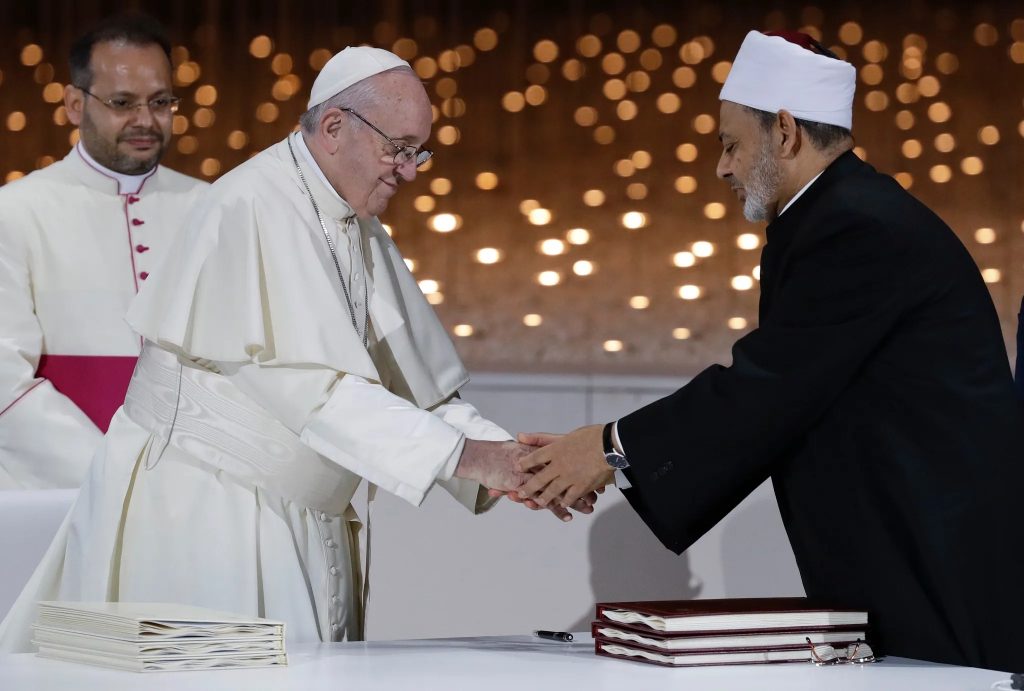
Religion and inter-faith dialogues are often overlooked in the study of international relations, despite their significance in shaping global affairs. Recent scholarly efforts have focused on non-state actors and social movements, neglecting the role of state institutions in utilizing religion for peacemaking. The meeting between Sheikh Ahmad al-Tayyeb and Pope Francis in Abu Dhabi in 2019, resulting in the signing of The Document on Human Fraternity, provides an opportunity to explore how religions and their official institutions can contribute to global peacemaking. This paper examines the use of religion by secular governments and religious institutions to promote peace and diffuse interfaith tensions, using the case of the Central African Republic. It highlights the positive role of al-Azhar in utilizing Islam and interreligious dialogue to combat extremism and prevent civil war.

يواكيم مبارك والمجمع الفاتيكاني الثاني: التأثير والتعقيبات

Rita FARAJ

شكّل المجمع الفاتيكاني الثاني تحولاً جذرياً في موقف الكنيسة الكاثوليكية تجاه المسلمين، حيث تم الاعتراف بهم بشكل رسمي لأول مرة في تاريخ المسيحية. ترك لويس ماسينيون، المستشرق الفرنسي، أثراً فكرياً على موقف الفاتيكان من المسلمين، وتأثيره انتقل إلى تلميذه يواكيم مبارك. شارك مبارك في تشكيل لجنة فرعية حول الإسلام بتوجيه من الفاتيكان، وكانت له تعليقات وتعقيبات على وثائق المجمع الفاتيكاني الثاني. كان مهتماً بأصالة الإسلام الإبراهيمية ودعا إلى الاعتراف الكامل بمكانة الإسلام في العالم الديني المكشوف. تسلط الورقة البحثية الضوء على تعليقات مبارك وتناقش النقاشات اللاهوتية التي أثارها، مع التركيز على الأصالة الإبراهيمية للإسلام. تأتي هذه الورقة البحثية في سياق تعزيز العلاقات بين المسلمين والفاتيكان، وتعكس تطورات العلاقة بين الطرفين بعد توقيع “وثيقة الأخوة الإنسانية” في عام 2019، وتعزز الأرومة الإبراهيمية الجامعة للأديان التوحيدية الثلاثة..

أثر مفهوم الأخوة على ترسيخ مبدأ المواطنة في المجتمعات ذات الأقلية المسلمة - ألمانيا نموذجًا

Abdassamad EL-YAZIDI

يهدف هذا البحث إلى استكشاف مفهوم الأخوة ومدى تأثيره على الحرية الدينية في سياق المجتمع المتعدد الأديان في ألمانيا. يتناول البحث الأبعاد الفكرية والقانونية والاجتماعية لهذه المسألة. يتساءل البحث عن إمكانية تقديم الدول المتعددة الأديان نموذجًا يحقق المرونة التي تنص عليها وثيقة الأخوة الإنسانية، وما هي القيود التي تفرضها الدولة للحفاظ على هويتها الدينية والسياسية. يتناول البحث أيضًا التحديات الاجتماعية وانتشار خطابات الكراهية والتمييز ضد المسلمين في ألمانيا. يقدم البحث نظرة عامة على التدخلات والأحداث المرتبطة بوثيقة الأخوة الإنسانية وتأثيرها في المجتمع الألماني. وفي النهاية، يلخص البحث الوضع الحالي لمفهوم الأخوة في العلاقات بين المسلمين والمسيحيين والتواصل مع النظام القائم في الدولة

Contextualizing Islam and Muslims in the Italian Public School in the Light of the Abu Dhabi

Antonio CUCINIELLO

Italy’s school system has been impacted by the growing migration phenomenon, necessitating intercultural education to promote innovative pedagogical approaches and prevent radicalization. In the 2020/2021 academic year, 865,388 students with non-Italian citizenship, comprising 10.3% of the total school population, were enrolled, with a majority being “second generations.” However, textbooks often exhibit a Eurocentric and stereotypical view of Islam and Muslims, failing to provide a balanced understanding. This paper examines the portrayal of Muslims and Islam in modern Italian textbooks, considering the call in the Document on Human Fraternity to incorporate its teachings into educational institutions. Religious illiteracy is also addressed, emphasizing the need to educate future generations to uphold the rights of the oppressed and promote peace.

La fraternité humaine comme dépassement et aboutissement du dialogue inter-religieux et inter-culturel

Antoine COURBAN

Les échanges interreligieux et interculturels dans notre monde globalisé reflètent l’empathie humaine et la diversité. Cependant, ces échanges restent souvent limités aux groupes plutôt qu’à l’individu. Le dialogue est essentiel pour comprendre et apprécier nos différences tout en reconnaissant notre appartenance commune à la famille humaine. La Déclaration d’Al-Azhar sur la citoyenneté et le vivre-ensemble ouvre la voie à une compréhension de la patrie comme unité et universalité. La Fraternité du Document d’Abu-Dhabi ne vise pas à une dilution dans un ordre mondial impersonnel, mais à mettre en pratique la recommandation d’Al-Azhar dans nos propres patries, en cultivant des liens de fraternité et de philia.

من أجل السلام العالمي والعيش المشترك في ضوء مشروع هانس كينج

Assia CHEKIREB

يتناول هذا المقال تحليلًا فكريًا لمشروع “الأخوة الإنسانية”، مقدمًا إجابة على هذه المسألة. تتقاطع عبارة البابا فرنسيس “لا يوجد بديل: إما أن نبني المستقبل معًا أو لن يكون هناك مستقبل” مع مقولات اللاهوتي هانس كينج، حيث يتوقعان مستقبل العالم على أساس الحوار والسلام بين الأديان. يتقاطع مشروع “الأخوة الإنسانية” مع مقولات هانس كينج في التركيز على الأخوة الفطرية بين جميع البشر والتركيز على القيم الإنسانية المشتركة. يدعو هانس كينج إلى وضع الإنسان كهدف نهائي وتعزيز الأخوة الإنسانية كهدف. يتكامل مشروع “الأخلاق العالمية” لهانس كينج مع وثيقة “الأخوة الإنسانية” في الاهتمام بالقيم المشتركة وتعزيز التعايش السلمي بين الأديان. يتم تقديم تساؤل حول مدى تقاطع وثيقة “الأخوة الإنسانية” مع مشروع هانس كينج وقدرته على تحقيق التوجهات المتعلقة بالأخلاق والسلام العالمي

Impact and prospects of the Abu Dhabi declaration for the living together of Christians and Muslims: the Case of Canada/Quebec

Patrice BRODEUR

This presentation explores the establishment of a new official Catholic-Muslim dialogue initiative in Canada following the Abu Dhabi Declaration for the Living Together of Christians and Muslims. Led by the Canadian Conference of Catholic Bishops and the Canadian Council of Imams, the initiative involves representatives, religious leaders, and experts who have developed six documents for an upcoming website. The aim is to promote grassroots dialogue between local Catholic and Muslim communities across Canada. The initiative addresses the backdrop of media coverage of extremist behaviors and increasing Islamophobia in Canada, including the Quebec mosque shooting in 2017 and the adoption of Bill 21 by the Quebec government in 2019. The presentation analyzes this geopolitical context using postcolonial and systemic racism theories.

الأخوة الإنسانية في الفكر الإسلامي "نظرات تأصيلية "

AL-AFRI Abdallah Hamid

في هذه الورقة، نحاول تنشيط الحوار حول المعرفة الإسلامية المغيبة في ظل العالم المضطرب والصراعات العنيفة التي تعيشها البشرية. نقوم بتحليل المصطلحات وإعادة النظر في النصوص التراثية لتوضيح الحقائق المخفية. هناك علماء معاصرين يعارضون استخدام مصطلح “الأخ” لغير المسلمين، لكن هذا يتعارض مع رأي كثير من علماء الماضي والحاضر. يؤكد النصوص الشرعية وجود الأخوة الإنسانية في الإسلام ولها حقوق وواجبات. من خلال البحث في الكتب التراثية، يمكننا الوصول إلى ثروة علمية هائلة تدعم فكرة إطلاق مفهوم الأخوة على غير المسلمين. وعليه، نتساءل هل الأخوة في الإسلام هي الأخوة الإيمانية فقط؟ هل أهمل الإسلام الأخوة الإنسانية بكل ما تشتمله من أنواع الأخوة؟ هل جاء في النصوص الشرعية ما يفيد باعتبار أنواع الأُخوات؟ هل جاء في نصوص الأئمة والعلماء السابقين ما فيه اعتبار للأخوة الإنسانية؟ سنجيب على هذه الأسئلة وغيرها في هذه الورقة بإجابات غير مطروقة في تاريخ التأليف الإسلامي.

Re-defining the notion of “Equal Citizenship” in Post-2011 Morocco: A Critical Reading of the Marrakech and Abu Dhabi Declarations

Youssef BOUTAHAR

Recent global developments, including the Arab Spring, authoritarianism, and religious extremism, have sparked discussions on promoting peace, human fraternity, tolerance, and the protection of legal rights. This paper aims to redefine the concept of “equal citizenship” in light of the Marrakech and Abu Dhabi declarations and the Pope’s visits to Muslim countries. These declarations reject the classification of religious minorities as a self-evident and paradigmatic “other.” However, the marginalization and coercive social control against such groups undermine the implementation of these declarations. The paper also explores how underrepresented religious groups seek to shape new performances of citizenship outside normative models, constructing new political subjectivities and civic identities oriented toward social justice.

Minorités religieuses et Document sur la Fraternité Humaine: la nouvelle responsabilité publique du dialogue islamo-chrétien

Alessandro FERRARI

Malgré les droits de l’homme, la notion de « minorité religieuse » reste un obstacle à la pleine citoyenneté et au pluralisme. Les droits humains eux-mêmes peuvent parfois limiter la liberté religieuse. Les communautés religieuses continuent d’exister, tant en nombre réduit face aux majorités religieuses qu’en tant que minorités face à une interprétation sécularisée des droits fondamentaux. Le Document sur la Fraternité Humaine aborde ces questions en soulignant le risque discriminatoire du terme « minorités » et en promouvant la pleine citoyenneté et les droits humains communs. Cette intervention évaluera les conséquences du document d’Abu Dhabi sur les communautés religieuses catholiques et musulmanes dans la région méditerranéenne, en mettant en évidence leurs responsabilités théologiques et politiques. La question des « minorités religieuses » sera clairement abordée.

مفهوم المواطنة في ضوء "وثيقة الأخوة الإنسانية": دراسة تحليلية
Ardawan Mustafa ISMAEL
لقد قدمت “وثيقة الأخوة الإنسانية”، التي وُقِعَت بين شيخ الأزهر أحمد الطيب والبابا فرنسيس، خطوة مهمة في الحوار الإسلامي المسيحي. تعزز هذه الوثيقة بناء السلام العالمي والتعايش المشترك بين أتباع الأديان. تناولت الوثيقة مفهوم المواطنة والجدل المحيط به وتطبيقه، خاصة فيما يتعلق بـ “الأقليات”. اعتمدت الوثيقة تعريفًا دقيقًا لمفهوم المواطنة ودعت إلى ترسيخه بشكل كامل في المجتمعات. قدمت الوثيقة خطوة جريئة وحيوية بالتخلي عن استخدام مصطلح “الأقليات” بسبب الدونية والعزلة التي يشعرون بها، ولتجنب بذور الشقاق والفتن. سيتناول بحثنا دراسة مفهوم المواطنة في ضوء هذه الوثيقة وتأثير تحول مفهومي “المواطنة والأقليات” فيها وتأثيراتها على الواقع المعاش.
Déclaration d´Abu Dhabi entre projection utopique et projet réalisable : Réflexion sur la conception islamique du “vivre ensemble”

Raja SAKRANI

Cinq ans après la naissance du Document sur la fraternité humaine, des interrogations persistent. La fraternité dans la diversité et la coexistence dans la tolérance sont-elles réalisables dans un contexte marqué par les conflits ethniques et les replis religieux ? Une fraternité qui transcende les communautés religieuses est-elle un mythe ou une idéologie ? Cette contribution cherche à élucider ces questions. Les termes théologiques utilisés dans le document ont des connotations spécifiques aux religions monothéistes. Comment surmonter les résistances des autorités religieuses ? Comprendre les impacts socio-normatifs du document dans le monde arabo-islamique est essentiel pour évaluer les chances de réalisation de la fraternité humaine. Une analyse rigoureuse des cultures normatives islamiques et du vivre ensemble est nécessaire. Mes recherches et expériences antérieures m’ont permis de développer des outils analytiques pour relever les défis du Document sur la fraternité humaine.

Pleine citoyenneté et pluralité des statuts personnels en Égypte et au Liban

Zohra Aziadé ZEMIRLI

Le grand imam Al-Tayeb a rejeté l’utilisation discriminatoire du terme “minorités” et a souligné l’importance de la citoyenneté égalitaire. Certains considèrent cela comme un moyen de surmonter les discriminations entre citoyens, tandis que d’autres pensent que les minorités religieuses ont besoin d’une reconnaissance et d’une protection juridiques. Nous examinerons si les non-musulmans dans les pays arabes souhaitent être traités comme des minorités religieuses, en nous concentrant sur les lois familiales égyptiennes et libanaises qui régissent les ressortissants non musulmans. Nous étudierons si le principe de la personnalité des lois entrave la pleine citoyenneté et s’il y a des revendications pour son abolition ou au contraire, une volonté de le maintenir pour préserver une identité religieuse minoritaire. Notre contribution se basera sur nos recherches et entretiens dans le cadre de notre post-doctorat.

Freedom of conscience in the light of the document on Human Fraternity for World Peace and Living Together: the cases of Tunisia and Lebanon

Benedetta PANCHETTI
Tommaso VIRGILI

The Document on Human Fraternity emphasizes freedom of belief and full citizenship based on equality, rejecting discrimination against minorities. This paper explores these principles in the context of freedom of conscience, particularly in Muslim countries where religious minorities and non-believers face persecution. The focus is on Tunisia and Lebanon, where secular and religious aspects interact within the legal system. Apostasy/blasphemy and interreligious marriage are examined to highlight the tensions between religious norms and freedom of conscience, resulting in legal contradictions. The study employs a multi-method approach, analyzing legal provisions and case law while considering the social context through media sources and interviews. International standards recognize the right to change one’s religion, but the reality in some Muslim countries differs due to restrictive laws and societal pressures.

Le statut des femmes chrétiennes dans les communautés musulmanes : une vision sur l’application de la déclaration d’Abou Dhabi sur la coexistence entre chrétiens et musulmans

Nada AMIN

Selon la déclaration d’Abou Dhabi, la liberté est un droit pour tous, et le pluralisme religieux et culturel est une volonté divine. Cette communication se concentrera sur le statut des femmes chrétiennes dans les communautés musulmanes arabes. Malgré les aspirations à la fraternité, les femmes, qu’elles soient musulmanes ou chrétiennes, sont souvent victimes d’inégalités résultant de manipulations politiques et sociales de la religion. Certains aspects juridiques inspirés de l’islam, tels que les règles successorales, peuvent s’appliquer de manière discriminatoire aux femmes chrétiennes. Cette communication cherche à déterminer comment les gouvernements et les organisations peuvent mettre en place des mesures politiques et juridiques pour protéger les femmes chrétiennes contre la discrimination basée sur le genre et la religion.

La fraternité humaine comme fondement de la loyauté envers les non-musulmans

Abdessamad BELHAJ

Cette présentation examine la fraternité humaine comme fondement de la loyauté envers les non-musulmans, à travers les perspectives éthiques de trois leaders musulmans en France (T. Oubrou, A. Bidar et M. Zenati). Leurs écrits et discours reflètent les sensibilités réformistes musulmanes dans l’espace francophone européen, abordant les enjeux éthiques et sociétaux de la construction d’une communauté de destin entre musulmans et non-musulmans. Ces discours s’opposent aux conceptions communautaristes et collectivisées promues par des interprétations religieuses traditionnalistes, notamment l’idée d’alliance et de désaveu envers les non-musulmans. L’objectif principal est de comprendre comment ces leaders intègrent la loyauté envers les non-musulmans dans l’identité des citoyens musulmans en France, tout en résolvant les tensions entre loyautés communautaires, fraternité humaine et individualisme.

How can governments and international organizations promote common global ambitions such as sustainable development, human rights and peace? A snapshot from EU

Flavia CORTELEZZI

The Document on Human Fraternity promotes interreligious dialogue, emphasizing women’s rights, child protection, and political freedom. However, the MENA region faces economic challenges, limited integration, climate change, terrorism, and migration issues. Sustainable development, human rights, and peace are common global ambitions. Can religious authorities play a role in achieving these goals? The EU implements policies through instruments like the Neighbourhood, Development, and International Cooperation Instrument, supporting political initiatives in the ENP, and the Union for the Mediterranean (UfM), focusing on regional cooperation, dialogue, and projects for stability, human development, and integration. Cooperation, peace, and respect for human rights are foundational principles in the EU’s relationship with its Mediterranean neighbors.
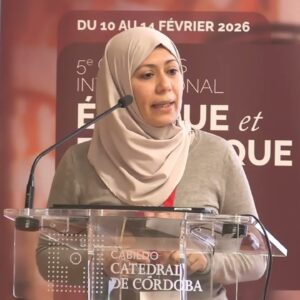
Human Brotherhood and sustainable development in the 2030 horizon: theological perspectives vs geopolitical strategies?

Antonio ANGELUCCI

The Ukraine war reveals non-military strategies like geopolitical tactics such as grain and gas wars, risking fragile economic and ecological balances. Extreme poverty could undermine the achievement of the UN’s Sustainable Development Goals by 2030. The Document on Human Fraternity emphasizes the need for collaboration with religious actors to promote sustainable development, poverty eradication, and peace. This contribution analyzes four key points: cooperation between Abrahamic religions and UN agencies for Agenda 2030 goals, their geopolitical implications, implementation and increased engagement of religious agencies, perspectives on human rights and environment, and the theme of Fraternity and Corporate Citizenship exploring interactions among religions, banks, and the World Bank.


Shifting sands of policy: geopolitics and interfaith dialogue in the Middle East

Stephen SCALET

In the 21st century, scarce resources, cultural/religious hatred, and climate change drive conflict. This paper explores whether interfaith dialogue can reduce global competition for political and economic hegemony. In the Middle East, interfaith dialogue has moved beyond civil society to become a policy matter, exemplified by the Abraham Accords fostering cultural exchanges, cross-border projects, and collaborations. However, the Israeli-Palestinian conflict remains unresolved. The research examines geopolitical impacts since the Accords, highlighting areas where interfaith dialogue can normalize religious discourse. The Middle East is also reevaluating its alliances, expanding economic cooperation beyond traditional U.S. and European ties to include China and others. This section investigates how greater economic and cultural connections create space for interfaith dialogue within a globally connected cooperation framework. Lastly, the paper assesses Egypt and the UAE as global convenors for climate action, exploring the role of religious communities in fostering global climate cooperation. Specific interfaith initiatives and processes that universalize climate efforts among states will be identified.
الاتفاقيات الإبراهمية كرافد للرؤية الإماراتية بشأن الإخوة الإنسانية
محمد الظهوري

وثيقة الأخوة الإنسانية تعكس مقاربة الإمارات في تعزيز التعاون والتعايش بين البشرية، وترتبط برؤية الدولة للمستقبل التنموي. تحث الوثيقة على المصالحة والتآخي بين جميع المؤمنين بالأديان وتعزز قيم التعارف والتعاون والتعايش. توقعات الورقة تستكشف ما إذا كان حوار الأديان يمكن أن يقلل من المنافسة العالمية للهيمنة السياسية والاقتصادية. تركز البحث على تجربة الشرق الأوسط، حيث يرصد تأثير وثيقة الإخوة الإنسانية في تطبيقها عبر اتفاقيات السلام الإبراهيمية ومبادرات أخرى. كما يدرس البحث الارتباط بين التعاون الاقتصادي والثقافي والفرصة المتاحة لتعزيز حوار الأديان ضمن إطار تعاون عالمي. أيضًا، يتناول البحث دور مصر والإمارات كمستضيفين لمؤتمرات تغير المناخ ودور المجتمعات الدينية في بناء تعاون عالمي لمواجهة التحديات المناخية. تهدف الورقة إلى تحليل النموذج الإماراتي في التآخي والتسامح وتقييمه بشكل علمي

Protection of Places of Worship" for World Peace: Legal and Religious Perspectives

Dirk ANSORGE

The Abu Dhabi document highlights the importance of safeguarding places of worship. This paper examines the justifications through secular law and religious traditions. The sacredness of these spaces varies across religions and denominations, posing challenges when imposing legal guidelines. The study explores the different views on the status of worship places in Judaism, Christianity, and Islam, probing the meaning of “places of worship” and their symbolic impact. It compares religious norms with international laws to protect these sites. The paper raises questions about legal frameworks that ensure vibrant religious practice while preventing political exploitation. How can we foster peaceful coexistence among believers from diverse religious backgrounds in shared spaces of devotion?


The Document on Human Fraternity" and the "Abraham Accords": Religion and Peace in the Middle East

Myriam DI MARCO

The Document on Human Fraternity,” signed by Pope Francis and Sheikh Ahmad al-Tayyib, anticipates the spirit of reconciliation reflected in the subsequent Abraham Accords. Both initiatives emphasize the need to build a shared future. Religion plays a significant role in the Middle East, legitimizing political behavior and influencing social life. Religion’s increasing presence in the public space contributes to peace-building and fosters pluralism. Judaism, for instance, contributes to Israel’s constitutional and political context, promoting coexistence among diverse ethnic groups. The concept of peace resonates in the speeches of Israel’s President, urging other Arab states to follow the path of stabilization. The call for tolerance and peaceful coexistence expands from religious and moral responsibility to geopolitics. These efforts aim to spread a culture of tolerance with the support of religion.

وثيقةُ الأُخوَّة الإنسانيَّة" ونظريَّةُ العلاقات الدَّولية منطقٌ جديدٌ في إدماجِ دور الدّين وحلِّ النّزاعات
د. جلة سماعين

تحليلٌ مُقارَن لـ “وثيقة الأخوَّة الإنسانية” من خلال مقارَبات العلاقات الدولية وحل النزاعات يُظهِر تميُّزها عن التحليلات السابقة التي لم تأخذ في الاعتبار دور الدين في الشؤون الدولية. تشتمل الوثيقة على مبادئ متميزة، مثل الأخوَّة والتسامح والدافع الإيماني، وتسعى إلى حل النزاعات وتحقيق العدالة والتربية. تُشير هذه الوثيقة إلى قدرة البُعد الروحي على تصحيح الأفعال السياسية وتحقيق الوساطة وإدارة الأزمات. يُشدد على دور الفواعل ذات البعد الإيماني في وقف العنف والنزاعات. يُمكن مقارَنة هذه الوثيقة بالمواثيق الدولية، مثل الإعلان العالمي لحقوق الإنسان، حيث تؤكد على أهمية القيم الدينية والأخلاقية في تحديد السياسات العالمية. تدعو إلى إعادة النظر في الفلسفة التي تقوم عليها المؤسسات الدولية، بحيث تأخذ بالاعتبار الجوانب الدينية والروحانية في فهم مشاكل الإنسان المعاصر

La fraternité humaine face à l’extrémisme - Les enjeux d’un principe controversé

Ali MOSTFA

Le Document sur la fraternité humaine souligne l’urgence de lutter contre les violences religieuses. La fraternité est présentée comme un moyen d’action transcendant les croyances, mais son principe peut être controversé, car il peut favoriser le repli sur sa propre famille. Le document propose un paradigme religieux de “réenchantement” du monde basé sur la fraternité. Cependant, certaines interprétations religieuses restreignent la fraternité aux membres d’une même confession. Cela soulève des questions sur l’islam et son rapport à la tradition. En examinant les réaménagements du rapport à la tradition islamique, cette proposition se réfère aux ouvrages d’Al Jabri, Sabila et Laroui. Il interroge la vision totalisante de l’islam et la nécessité d’une réforme.

أنواع التدين في العالم العربي وأثرها على إعلان أبو ظبي للعيش المشترك

وائل صالح

تدين “وثيقة الإخوة الإنسانية” التلاعب السياسي بالدين وتسعى لتفكيك أفكار الجماعات المتطرفة ودعم التدين المتوافق مع التعايش المشترك والسلام. يتم تحقيق ذلك من خلال جهود المفكرين والمؤسسات في العالم العربي. تساهم مبادرات مثل “وثيقة مكة المكرمة” ووثائق الأزهر المتعددة في تقوية وضع “وثيقة الأخوة الإنسانية”. المفكرين مثل عبد الجواد ياسين وسعد الدين الهلالي وفتحي المسكيني يقدمون تحليلات وكتابات تعزز التفكيك والتعايش المشترك. تسلط الضوء على قيم مثل التجديد في الفكر والعلوم الإسلامية، والسلام، والمواطنة والعيش المشترك، ونبذ العنف وتعزيز الحريات. هذه الجهود تهدف إلى إزالة أثار التطرف وتعزيز التعايش وتدعيم رسالة الوثيقة

La notion de « Fraternité » dans la pensée islamique contemporaine : Entre conception et application

Amin ELIAS

Les termes “Akh”, “Ikhwân” et “Ikhwa” sont présents dans le Coran, désignant parfois le partage d’héritage familial et parfois une fraternité de la foi ou de la religion, principalement l’islam. Au XXIe siècle, des intellectuels musulmans libéraux comme Jamâl al-Bannâ et des institutions telles qu’Al-Azhar ont cherché à moderniser la notion de fraternité. Ils l’ont associée à des idées contemporaines comme la liberté de conscience, la citoyenneté et les droits de l’homme. Des documents importants ont été publiés, tels que “le document d’Al-Azhar sur les libertés” (2012), “la déclaration d’Al-Azhar sur la citoyenneté et le vivre ensemble” (2017) et “le document sur la fraternité humaine” (2019). Cette évolution intellectuelle cherche à promouvoir la fraternité en tant que valeur universelle au sein des sociétés majoritairement musulmanes, mais son application pratique reste à mesurer.

Enquête sur la réception du document sur la Fraternité d’Abou Dhabi parmi les centres islamiques d’Andalousie

Jaume FLAQUER

La signature du document d’Abou Dhabi entre le Pape François et le Grand Imam d’al-Azhar a suscité diverses réactions. La réception dans la communauté musulmane est incertaine en raison de l’absence de structure hiérarchique dans l’islam sunnite. La légitimité du document peut être renforcée par la signature de l’autorité de l’Azhar. Cependant, le contexte politique des Émirats Arabes en guerre contre les Frères musulmans peut influencer une réception négative. La relation avec la Déclaration de Marrakech, notamment sur la citoyenneté, sera examinée, notamment pour les musulmans d’origine marocaine en Espagne. Une étude de la fraternité en tant que concept vaste, sa signification concrète et ses résonances coraniques sera menée à travers des entretiens avec des imams et responsables de mosquées en Espagne, notamment en Andalousie, et présentée lors d’un congrès ou d’un panel.

الإخوة عند جماعة الإخوان المسلمين كمضاد إبستمولوجي للأخوة الإنسانية

تنص وثيقة الإخوة الإنسانية على أن “التعددية والاختلاف في الدين واللون والجنس والعرق واللغة حكمة لمشيئة إلهية، قد خلق الله البشر عليها، وجعلها أصلى ثابتا تتفرع عنه حقوق حرية الاعتقاد، وحرية الاختلاف، وتجريم إكراه الناس على دين بعينه أو ثقافة محددة، أو فرض أسلوب حضاري لا يقبله الآخر”.

كيف ينظر الإخوان المسلمين لموضوع التعدد وحرية الاعتقاد وحرية الاختلاف؟ ما هي أركان بيعة الإخوة العشرة التي يبايع عليها أفراد جماعة الإخوان المسلمين؟ ما هي شروطها وحقوقها؟ ما هي تأثيرها على العيش المشترك معا؟ هل تلك تتفق الأركان مع الأفكار المؤسسة لوثيقة الأخوة الإنسانية؟

تحاول تلك المداخلة الإجابة عن تلك الأسئلة من خلال تحليل مضمون للنصوص المؤسسة لجماعة الإخوان المسلمين؟

More of the same? Reading the Document on Human Fraternity in the Context of Women’s Rights

Michaela NEULINGER

The contested issue of women’s dignity and rights in interreligious relations, particularly in Christian-Muslim dialogue, is complex. The Document on Human Fraternity dedicates a paragraph to women’s rights, but lacks detail. The paper aims to address this gap and assess if the document goes beyond “equity, but no equality” on doctrinal and performative levels. It will outline the role of women’s rights in previous Christian-Muslim dialogue, including their participation in related processes. A close reading of the document’s passages will determine if they surpass previous statements. The paper will also analyze the reception process and the involvement of women, questioning if it has tangible effects or remains confined to doctrinal discussions. Both Pope Francis and Grand-Imam Al-Tayyeb reject empty dialogue without real-life consequences.